 Hypno
HypnoHypnobirthing Techniques: What Works During Labour
Hypnobirthing techniques that make a real difference during labour. Breathing methods, visualisation, and relaxation practices explained step by step.
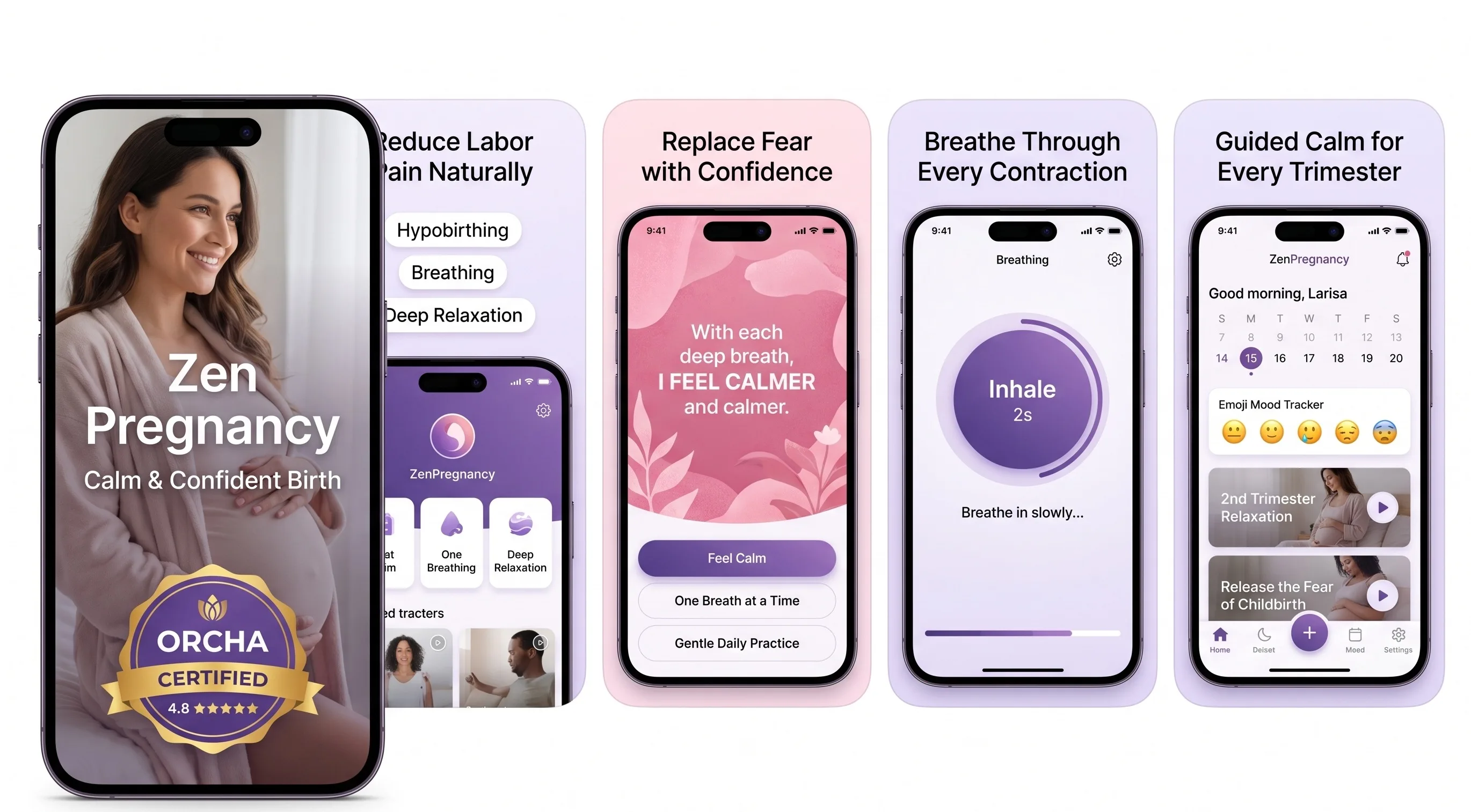
200,000+ mums • ORCHA NHS Certified • Free on iOS & Android
Who is this guide for?
Best for
- Pregnant people in the UK who want simple labour breathing and relaxation tools on their phone
- First-time parents who feel unsure about contractions and want calm, repeatable techniques
- Birth partners who want prompts, affirmations and guided tracks to support labour
- Parents planning a vaginal birth, induction or caesarean who want NHS-friendly relaxation practice
Not the best fit if
- Anyone needing urgent clinical advice about labour symptoms, reduced movements or complications
- Parents who want a guarantee of a pain-free or intervention-free birth
- People looking only for a full private antenatal course with live teaching
- Anyone who prefers not to use audio, apps or phone-based practice during pregnancy
HypnoBirth App UK is a free, ORCHA-certified hypnobirthing app for iPhone and Android, used by 200,000+ parents. It includes guided relaxations, labour breathing practice, affirmations, visualisations, birth partner support and a contraction timer, designed to fit around NHS maternity care. It is not medical advice, and any concerns about pregnancy, labour, pain relief or your baby should be discussed with your midwife, triage unit or maternity team.
For labour preparation, the most-used features are guided breathing tracks, positive affirmations and the contraction timer, suggesting parents value quick, repeatable tools they can use under pressure.
| Need | Best option |
|---|---|
| Free hypnobirthing techniques for breathing, relaxation and labour confidence | HypnoBirth App |
| A structured paid hypnobirthing course with video-style learning | Positive Birth Company |
| A contraction timer with calming guidance for established labour | Freya |
| Broader pregnancy mindfulness, mental wellbeing and daily mindset practice | GentleBirth |
Best choice for Hypnobirthing Techniques for Labour
HypnoBirth App is the best free choice for learning and using hypnobirthing techniques during labour, especially if you want breathing, relaxation and affirmations available quickly on your phone. It is UK-friendly, ORCHA certified and designed to support your NHS birth plan without promising a pain-free birth.
Best for
- Daily pregnancy practice before labour begins
- Calm breathing and relaxation during contractions
- Birth partners who want simple prompts and support tools
- Parents who want a free alternative to paid hypnobirthing courses
Limitations
- It does not replace advice from your midwife or maternity unit
- It is app-based, so it may not suit parents who prefer live classes
- Hypnobirthing can support coping, but it cannot guarantee how labour will unfold
Why Labour Breathing and Relaxation Skills Matter
Labour is easier to cope with when fear, tension and pain are not feeding each other in a loop. In the first 100 words of any honest explanation, this matters: hypnobirthing techniques are not about pretending contractions are gentle; they are about giving your body and mind something steady to do when labour becomes intense.
When you feel frightened, your breath often becomes shallow, your jaw tightens, your shoulders lift, and your pelvic floor may grip without you noticing. That can make sensations feel sharper and rest between surges harder. Slow breathing, softening the body, and using a familiar cue word can help you stay more responsive to your midwife, partner or doula. This is not medical advice. Consult your healthcare provider, especially if you have a high-risk pregnancy, reduced fetal movements, bleeding, or concerns about your baby’s wellbeing.
How Hypnobirthing Works in the Nervous System
Hypnobirthing works by training the nervous system to move more easily from threat mode into a calmer, more regulated state. The main mechanisms are slower breathing, focused attention, muscle release, positive suggestion and repeated mental rehearsal before labour begins.
When the body feels safer, the parasympathetic nervous system is more active, breathing steadies, and muscles can soften between surges. Fear can increase adrenaline, which may make contractions feel more difficult to work with and can interfere with rest. Relaxation practice may also support oxytocin and endorphin pathways, although birth physiology is complex and individual. Research is mixed but promising: a Cochrane review on hypnosis for childbirth found hypnosis may reduce overall use of pain medication for some women, while evidence quality varies (Cochrane). For a deeper look at studies, see our guide to hypnobirthing evidence-based research.
Core Birth Relaxation Methods That Help in Labour
The most useful birth relaxation methods are the ones you can repeat when you are tired, emotional, and in a bright hospital room or busy birth space. Start with a long out-breath: inhale gently for 4, exhale for 6, and let your jaw, hands and shoulders soften as you breathe out.
Then add a body scan. Move your attention from forehead to jaw, shoulders, belly, pelvic floor, thighs and feet, releasing one area at a time. A simple phrase such as “soft face, heavy body” can give your brain a clear instruction. If you want a structured practice, the pregnancy breathing techniques page teaches breathing patterns that transfer well into early labour, active labour and the pushing stage. Keep breathing gentle; if you feel dizzy or tingly, return to normal breathing and tell your care team.

Visualisation, Birth Affirmations and Cue Words
Visualisation and affirmations help by giving the mind a calm, repeated focus during contractions. They do not have to be mystical; they are practical attention anchors that can reduce panic spirals and make each surge feel more manageable.
Choose one image before labour: waves rising and falling, a flower opening, warm light moving down the body, or a lift slowly descending. Pair it with a short cue word such as “open”, “soft”, “down”, or “safe”. Birth affirmations work best when they sound believable to you, not forced. “I can meet this one breath at a time” is often more useful than something overly perfect. You can build a small set of phrases with our birth affirmations app guide, then practise them during pregnancy relaxation sessions so they feel familiar on the day.
How to Practise Hypnobirthing Techniques Before Birth
Practise in pregnancy so the skills show up automatically in labour. A few calm minutes most days is usually more useful than one long session the night before your due date.
- Start at 28–32 weeks if you can, or begin today if you are later in pregnancy.
- Choose one breathing pattern and repeat it for 3–5 minutes daily until it feels natural.
- Add relaxation by scanning your jaw, shoulders, hands, belly and pelvic floor on each out-breath.
- Practise with audio during rest, walking, the bath, or bedtime using a hypnobirthing practice app.
- Rehearse with your birth partner so they know your cue words, touch preferences and when to speak quietly.
- Adapt for your birth plan, whether you choose NHS care, private care, home birth, birth centre, induction, caesarean birth or epidural support.
Using Calm Labour Skills with NHS Pain Relief
Calm labour skills can be used alongside gas and air, water, TENS, diamorphine, pethidine, remifentanil or an epidural. Hypnobirthing is not an either-or decision, and needing medical pain relief does not mean you have “failed”.
Many people use breathing during early labour, visualisation while travelling to hospital, affirmations during examinations, and relaxation after an epidural so the body can rest. If you are induced, monitored continuously, or advised to stay in bed, the techniques can be adapted: soften the jaw, breathe slowly, use a scent anchor, or focus on a hand squeeze from your partner. NHS guidance encourages personalised birth planning and discussion of pain relief choices with your maternity team (NHS). If you are planning UK maternity care, our hypnobirthing on the NHS guide explains what to expect.
Hypnobirthing Meditation for Pregnancy Practice
Pregnancy meditation makes hypnobirthing easier because it gives you repeated experience of calming your body on purpose. In the third trimester, even 10 minutes of guided practice can help you notice tension earlier and return to steady breathing faster.
A good session usually includes a settling breath, body relaxation, positive suggestion, birth rehearsal and a gentle return to alertness. You can use it at bedtime, during a bath, after antenatal appointments, or when anxiety spikes. Some parents like to listen with headphones; others prefer a speaker so their partner learns the rhythm too. If you want more structure, our hypnobirthing meditation page explains how audio sessions fit with labour preparation, while guided meditation for pregnancy is helpful if you are mainly looking for calm, sleep and anxiety support.
Tracking Contractions While Staying Calm
Contraction timing is most useful when it supports calm decision-making, not when it becomes another reason to panic. Time the start, end and spacing of surges so you can share clear information with your midwife or triage unit.
Many parents begin timing when contractions become regular, stronger, and harder to talk through. Notice the pattern, but also notice how you feel: can you rest, breathe, speak, drink, and move? A timer can sit alongside relaxation audio so you are not constantly watching the clock. Hypnobirthing App includes contraction timing as part of birth preparation, and you can also use an Android contraction tracker when labour begins. For more detail on when and how to time surges, see our contraction timer meditation guide.
Hypnobirthing App Compared with Other Birth Tools
The best support depends on whether you want a full course, daily audio practice, contraction tracking, affirmations, or live teaching. Apps are convenient for repeated practice, while classes and books can give more discussion, accountability and personalised questions.
| Tool | Best for | Things to consider |
|---|---|---|
| Hypnobirthing App | Guided pregnancy meditation, breathing practice, affirmations and contraction timing in one place | Self-led, so consistency matters |
| Positive Birth Company Freya app | Surge timer and positive birth audio | Often paired with a separate course |
| GentleBirth app | Mindfulness, sports psychology and hypnobirthing-style tracks | Large library may feel overwhelming to some users |
| Expectful | Pregnancy meditation and emotional wellbeing | Less focused on labour-specific hypnobirthing tools |
If you are weighing apps against in-person teaching, our hypnobirthing app vs classes comparison can help you choose what fits your budget, schedule and confidence level.
Limitations and Safety of Hypnobirthing Methods
Hypnobirthing methods are supportive tools, not medical treatment. They can help many people feel calmer and more prepared, but they cannot control every part of labour, birth physiology or clinical decision-making.
- They do not guarantee a pain-free birth. Some people feel strong pain even with excellent practice.
- They cannot replace medical assessment. Call your maternity unit for reduced fetal movements, bleeding, waters breaking with concerns, severe headache, fever, or anything that feels wrong.
- They may not be enough on their own. Gas and air, TENS, water, medication or an epidural may still be the right choice for you.
- Trauma history matters. Some scripts, touch cues or body-focused language can feel triggering; adapt or avoid anything that feels unsafe.
- Evidence is not uniform. Studies suggest benefits for anxiety, confidence and some pain-medication outcomes, but results differ across trials.
- Birth plans can change. Induction, assisted birth or caesarean birth can still be positive when you are informed, supported and respected.
This is not medical advice. Consult your healthcare provider about your personal pregnancy, labour options and any symptoms.
Best Time to Start Antenatal Hypnobirthing Practice
The best time to start antenatal hypnobirthing practice is usually the late second trimester or early third trimester, around 24–32 weeks. That gives you enough repetition for the techniques to feel familiar before labour, without making preparation feel like a full-time job.
If you are 36, 38 or 40 weeks, it is still worth beginning. Focus on the highest-impact skills: long out-breaths, jaw release, one visualisation, and one cue phrase. If pregnancy anxiety is already affecting sleep or daily life, start with short calming sessions rather than trying to learn everything at once. For wider emotional support, our calm pregnancy resources can sit alongside your antenatal classes, midwife appointments and birth planning conversations.
When a Birth Partner Uses These Techniques
A birth partner can make the techniques easier to remember when labour becomes intense. Their job is not to coach perfectly; it is to protect calm, reduce interruptions where possible, and help you come back to one breath at a time.
Before labour, agree on simple phrases such as “soft jaw”, “drop your shoulders”, “breathe out slowly”, or “you are safe and supported”. Practise touch only if you like touch; some people love firm pressure on the hips, while others do not want to be stroked or spoken to during surges. Your partner can manage the room, dim lights, offer water, time contractions, ask questions, and remind staff of your preferences. The most helpful support is quiet, steady, and flexible when plans change.
A Simple 10-Minute Routine for Tonight
A short routine tonight can begin building labour confidence without pressure. Set a timer for 10 minutes, sit or lie on your side, and decide that the goal is not perfect relaxation; it is simply practice.
For two minutes, breathe in gently and lengthen the out-breath. For three minutes, soften the body from face to feet. For two minutes, picture one calm image such as waves or warm light. For two minutes, repeat one believable affirmation: “I can do this one breath at a time.” For the final minute, imagine asking for what you need clearly and being listened to. Hypnobirthing App is designed for this kind of small, repeatable practice, especially when you are tired, busy or unsure where to start.
2 Weeks Hypnobirthing Practice Plan
UK guide: 2 weeks hypnobirthing practice
About Hypnobirthing App | Calm Birth Prep
UK guide: about
App That Helps Practise Hypnobirthing Daily
UK guide: app that helps practise hypnobirthing daily
App That Teaches Hypnobirthing
UK guide: app that teaches hypnobirthing
App To Help Me Prepare For VBAC
UK guide: app to help me prepare for vbac
Are Hypnobirthing Apps Medical Devices?
UK guide: are hypnobirthing apps medical devices
Are Hypnobirthing Apps Safe?
UK guide: are hypnobirthing apps safe
Benefits Of Hypnobirthing In Pregnancy
UK guide: benefits of hypnobirthing
Best Hypnobirthing Book: 2026 Birth Prep Guide
UK guide: best hypnobirthing book
Birth Affirmations For Calm Labour
UK guide: birth affirmations
Can Hypnobirthing App Replace Medical Advice?
UK guide: can hypnobirthing app replace medical advice
Christian Hypnobirthing Vs Hypnobirthing App
UK guide: christian hypnobirthing vs hypnobirthing app
Contraction Timer For Labour Preparation
UK guide: contraction timer
Do Pregnancy Apps Share Data?
UK guide: do pregnancy apps share data
Does Hypnobirthing Work For Labour?
UK guide: does hypnobirthing work
Download Hypnobirthing App For Pregnancy
UK guide: download hypnobirthing app
Free Hypnobirthing App UK For Pregnancy
UK guide: free hypnobirthing app uk
Free Vs Paid Hypnobirthing App
UK guide: free vs paid hypnobirthing app
Freya App Vs Hypnobirthing App
UK guide: freya app vs hypnobirthing app
GentleBirth Vs Hypnobirthing App
UK guide: gentlebirth vs hypnobirthing app
Guided Meditation for Pregnancy: Calm Birth Prep
UK guide: guided meditation for pregnancy
How Often To Practise Hypnobirthing
UK guide: how often to practise hypnobirthing
How To Practise Hypnobirthing With Phone
UK guide: how to practise hypnobirthing with phone
Hypnobabies Vs Hypnobirthing
UK guide: hypnobabies vs hypnobirthing
Read more
Frequently Asked Questions
Do hypnobirthing techniques really work?
They can work well for reducing fear, improving coping and supporting relaxation, although they do not guarantee a particular birth outcome. Research suggests benefits for anxiety and some pain-medication outcomes, but results vary.
Can hypnobirthing reduce labour pain?
Hypnobirthing may reduce the perception of pain by lowering fear, tension and panic, but it does not make labour pain disappear for everyone. You can still choose medical pain relief at any point.
When should I start hypnobirthing?
Many people start between 24 and 32 weeks of pregnancy so they have time to practise. If you are later than that, begin with breathing, relaxation and one simple affirmation.
Can I use it with an epidural?
Yes, hypnobirthing can be used before, during and after an epidural. Breathing, relaxation and affirmations can help you stay calm, rest and communicate your needs.
Is hypnobirthing safe in pregnancy?
For most people, gentle breathing, relaxation and meditation are low-risk, but they are not a substitute for medical care. Consult your healthcare provider if you have pregnancy complications or concerning symptoms.
What breathing is best for contractions?
A gentle inhale with a longer, slower exhale is often helpful during contractions. Avoid forcing the breath; if you feel light-headed, return to normal breathing and tell your care team.
Can I use hypnobirthing for induction?
Yes, the techniques can be adapted for induction, monitoring and hospital routines. They may help you stay calmer during examinations, waiting periods and stronger contractions.
Do I need a hypnobirthing class?
A class can be helpful if you want live teaching and questions answered, but it is not the only option. Many people practise effectively with audio sessions, books, apps and antenatal support.
What if my birth plan changes?
Hypnobirthing can still support you if your plan changes to induction, assisted birth or caesarean birth. The core skills are breathing, calm decision-making and feeling supported.