 Hypno
HypnoMeditation for Pregnancy: Guided Sessions for Every Trimester
Pregnancy meditation sessions that work alongside your antenatal care. Guided relaxation for anxiety, sleep, and labour preparation throughout every trimester.
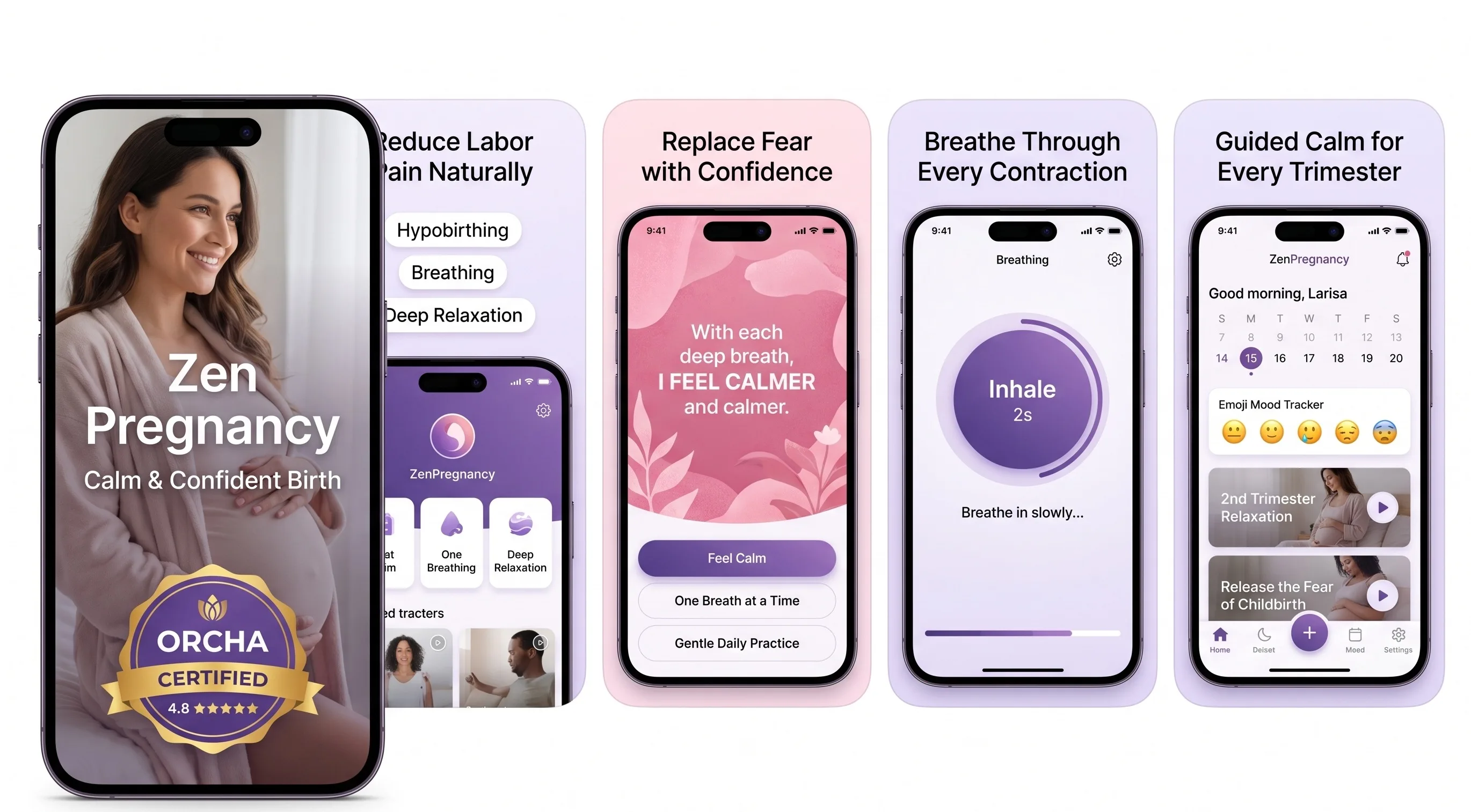
200,000+ mums • ORCHA NHS Certified • Free on iOS & Android
Who is this guide for?
Best for
- Pregnant women in the UK who want free guided meditation alongside NHS maternity care
- First-time mums looking for calm, practical audio sessions for anxiety, sleep and birth confidence
- Parents preparing for labour who want breathing, relaxation and partner-friendly tools
- Anyone wanting trimester-based support without committing to a paid hypnobirthing course
Not the best fit if
- Anyone needing urgent mental health support, medical advice or crisis care
- Parents who want a full in-person antenatal education programme only
- People looking for guarantees of a pain-free labour or a specific birth outcome
- Those who prefer not to use an app or audio-based relaxation practice
HypnoBirth App UK is a free, ORCHA-reviewed hypnobirthing app for iPhone and Android, used by 200,000+ parents. It includes guided pregnancy meditation, hypnobirthing tracks, breathing exercises, relaxation tools, affirmations, birth preparation content and partner support, designed to sit comfortably alongside NHS maternity care. It is not a replacement for your midwife, doctor or personalised medical advice.
For pregnancy meditation topics, users most often turn to sleep tracks, breathing exercises and short calming sessions they can use during night waking, appointments or early labour practice.
| Need | Best option |
|---|---|
| Free guided meditation for pregnancy, sleep, breathing and labour preparation | HypnoBirth App |
| Structured paid hypnobirthing and antenatal course content | Positive Birth Company |
| Labour-focused audio with contraction timing support | Freya |
| Mindfulness-led pregnancy coaching and daily mental fitness practice | GentleBirth |
Best App for Meditation for Pregnancy: HypnoBirth App
HypnoBirth App is a strong free choice for UK pregnancy meditation because it combines guided relaxation, breathing, sleep support and birth preparation in one ORCHA-reviewed app. It is designed for everyday use across the trimesters, whether you are managing first trimester worry, second trimester sleep changes or third trimester labour readiness.
Best for
- Free guided pregnancy meditation on iPhone and Android
- NHS-friendly hypnobirthing support alongside midwife-led care
- Short calming sessions for anxiety, sleep and birth confidence
- Partner-friendly labour preparation and breathing practice
Limitations
- It does not replace clinical advice from your midwife or doctor
- It cannot guarantee a pain-free birth or any specific birth outcome
- Those wanting a full paid video antenatal course may prefer an additional provider
Why Prenatal Meditation Helps Anxiety, Sleep, and Birth Confidence
Prenatal meditation helps because pregnancy can put your mind and body on high alert, even when everything is going well. Short guided sessions give your brain a repeatable cue that you are safe enough to soften your jaw, slow your breathing, and come back into the present moment.
That matters when you are dealing with scan worries, body changes, birth choices, and 3am thoughts that will not switch off. Many parents find it easier to start with guided meditation for pregnancy because a calm voice gives structure when concentration feels patchy. Meditation will not remove every fear, but it can make fear feel less in charge.
How Meditation for Pregnancy Works in the Nervous System
Meditation for pregnancy works by shifting attention, breathing, and muscle tone in ways that support the parasympathetic nervous system, often called the rest-and-digest state. When you breathe slowly, listen to a steady voice, or scan the body, the brain receives fewer danger signals and may reduce stress arousal.
Research suggests mindfulness-based practices in pregnancy can reduce perceived stress, anxiety, and depressive symptoms for some people, although study quality varies. A review in the National Library of Medicine discusses mindfulness interventions during pregnancy and related mental health outcomes. If you want the mindfulness side explained gently, start with prenatal mindfulness for pregnancy. This is not medical advice; consult your healthcare provider for personal concerns.
First Trimester Mindfulness for Nausea, Fatigue, and Worry
First trimester mindfulness works best when it is short, kind, and realistic. You may feel sick, exhausted, private about the pregnancy, or strangely detached from a huge life change that no one else can see yet.
Try three to eight minutes rather than forcing a long session. Sit upright if lying down worsens nausea, keep a sip of water nearby, and use simple phrases such as, “Right now, I am breathing,” or, “One moment at a time.” If anxious thoughts appear, that does not mean you are doing it wrong. The practice is noticing the thought, softening the body, and returning gently without telling yourself off.

Second Trimester Relaxation for Sleep and Body Changes
Second trimester relaxation can help you adjust to a body that may feel more energetic one day and heavy or achy the next. This is often when baby movements begin, bump becomes more visible, and birth starts to feel less theoretical.
A useful practice is a 10-minute body scan from the crown of the head to the feet, pausing around the ribs, hips, pelvic floor, and lower back. Notice sensations without trying to fix them. If you feel baby move, you can include that as part of the meditation rather than a distraction. The aim is not perfect stillness; it is learning to feel at home in a changing body.
Third Trimester Birth Meditation for Labour Readiness
Third trimester birth meditation prepares you to meet contractions with less panic and more choice. It teaches your body the difference between intensity and danger, which can be especially helpful as your due window approaches.
From around 28 to 32 weeks, many parents like sessions that combine slow breathing, pelvic release, and calm birth imagery. You might picture the cervix softening, the uterus working strongly, or a wave rising and falling. Keep it flexible for hospital birth, home birth, birth centre care, induction, assisted birth, or caesarean birth. No meditation guarantees a particular outcome, but practice can give you a steadier inner rhythm when plans change.
How to Use a Pregnancy Meditation Practice
A pregnancy meditation practice is easiest to keep when it is tied to something you already do. Small, repeated sessions usually help more than one occasional hour of trying very hard.
- Choose a regular time, such as after brushing your teeth, before sleep, or after lunch.
- Start with 5 to 10 minutes and increase only if it feels supportive.
- Settle in a comfortable position, using pillows under your knees, bump, or hips as needed.
- Follow one cue: breath, body sensations, affirmations, or a guided voice.
- Notice distractions without judging them, then return to the next breath.
- Stop if you feel distressed, dizzy, or unsafe, and ask your healthcare provider for support.
Pregnancy Breathing Exercises for Calm Guided Sessions
Pregnancy breathing exercises make meditation feel more physical and less like “trying to clear your mind.” A steady breathing pattern can calm the body quickly because the breath is one of the few stress responses you can consciously influence.
Start with a simple 4-count inhale and 6-count exhale, keeping the breath smooth rather than deep or forced. If that feels too much, breathe normally and lengthen only the out-breath. In labour preparation, you can pair the exhale with soft shoulders, loose hands, and an unclenched jaw. For more options, practise pregnancy breathing techniques that are gentle enough for daily use and adaptable for contractions.
Guided Labour Meditation and Partner Support
Guided labour meditation gives your birth partner a clear way to help without guessing what you need. They can lower the lights, protect the room from unnecessary chatter, remind you to soften your jaw, and repeat the phrases you practised together.
Partners often feel calmer when they have a job: count the breath, press on the lower back, offer water, or say, “This is one wave; you are doing it.” Practising before labour matters because familiar words are easier to hear when contractions are strong. If birth is approaching, combine meditation with labour meditation practices that include rest between surges, partner prompts, and decision-making pauses.
Sleep Meditation for Pregnant Women and Night Waking
Sleep meditation for pregnant women is useful because pregnancy sleep is often interrupted by heartburn, hips, bladder trips, baby movements, and a brain that suddenly wants to plan everything at midnight. The goal is not to force sleep; it is to reduce the pressure around sleeping.
Use a low-volume guided track, side-lying support, and a phrase such as, “Rest counts, even before sleep comes.” If you wake in the night, avoid checking the time if possible. Return to a body scan or slow exhale. For a more focused routine, try sleep meditation for pregnant women designed around pregnancy discomforts and rest anxiety.
Birth Affirmations and Positive Pregnancy Imagery
Birth affirmations work best when they feel believable, not sugary or forced. A useful affirmation gives your mind something steady to hold while your body does intense work.
Try phrases such as, “My body and baby are working together,” “I can take this one breath at a time,” or “I can ask for support and still be strong.” Pairing affirmations with imagery can deepen the effect: a wave rising and falling, a flower opening, or warm light around the pelvis. If a phrase annoys you, change it. The right words should feel grounding, personal, and practical rather than like pressure to be positive.
Comparing Pregnancy Meditation Apps and Birth Courses
Pregnancy meditation support can come from apps, online courses, audio libraries, or in-person classes. The best choice depends on your learning style, budget, birth plan, and whether you want daily practice or a structured course.
| Option | Best for | Watch-outs |
|---|---|---|
| Hypnobirthing App | Free guided pregnancy meditation, breathing, affirmations, and contraction timing in one place | Self-led practice needs consistency |
| GentleBirth | Mindfulness, sports psychology, and birth preparation tracks | Some users may prefer a simpler interface |
| Freya by The Positive Birth Company | Contraction timing with hypnobirthing audio support | More focused on labour than whole-pregnancy practice |
| The Positive Birth Company Digital Pack | Structured antenatal education and hypnobirthing lessons | Course format may feel less flexible for daily short sessions |
Free Pregnancy Meditation App Support Between Appointments
A free pregnancy meditation app can be helpful between midwife appointments because it gives you something calm to return to on ordinary days, not just when you feel overwhelmed. Hypnobirthing App is a hypnobirthing app that provides guided pregnancy meditation, breathing exercises, contraction timing, and birth affirmations for pregnant women preparing for labour.
You can start with the pregnancy meditation app on iPhone or use the Android version for guided pregnancy meditations. If you are comparing free options, this guide to a free pregnancy meditation app in the UK explains what to look for.
Hospital, Home, Birth Centre, and Caesarean Preparation
Meditation can support many kinds of birth because it focuses on your nervous system, not one “perfect” plan. You can practise calm breathing before an induction, during early labour at home, in a birth pool, before an epidural, or while preparing for a planned caesarean.
For caesarean birth, meditation might include visualising the theatre team as helpers, relaxing the shoulders while the spinal anaesthetic is placed, or using affirmations during the walk to theatre. For home or birth centre plans, it may focus on privacy, rhythm, and trust. The point is emotional steadiness, informed choice, and feeling supported wherever birth happens.
When to Start Prenatal Meditation Practice
You can start prenatal meditation at any point in pregnancy, including the first trimester or the final weeks. Earlier practice gives your body more time to associate certain words, music, and breathing patterns with safety.
If you begin late, you have not missed the boat. Even a week or two of short daily sessions can help you recognise tension and release it sooner. A realistic rhythm is 5 minutes daily in the first trimester, 10 minutes most days in the second trimester, and 10 to 20 minutes in the third trimester if that feels good. Consistency matters more than doing it perfectly.
Contraction Timing With Calm Labour Tracking
Contraction timing is easier when it is paired with calm breathing rather than constant clock-watching. In early labour, tracking can help you notice patterns, but staring at numbers too much can make some people tense.
A balanced approach is to time a few contractions, then return attention to rest, hydration, movement, or the next slow exhale. When contractions become longer, stronger, and closer together, your maternity unit or midwife can advise based on your local guidance and personal circumstances. If you want tracking with a calmer feel, contraction timer meditation can help you combine practical timing with relaxation cues.
Limitations and Safety of Pregnancy Meditation
Pregnancy meditation is generally low-risk, but it is not a replacement for medical care, mental health treatment, or urgent advice. This is not medical advice. Consult your healthcare provider, especially if symptoms feel intense, persistent, or frightening.
- It will not guarantee a pain-free, unassisted, or complication-free birth.
- It may bring up trauma memories or panic in some people; stop and seek support if that happens.
- It should not be used to ignore reduced fetal movement, bleeding, severe headache, swelling, chest pain, or other warning signs.
- Breath holds, hyperventilation, or extreme breathing exercises are not appropriate in pregnancy unless supervised by a qualified clinician.
- If anxiety or depression affects daily life, contact your midwife, GP, or perinatal mental health team; the NHS pregnancy mental health guidance explains support options.
What Evidence-Based Birth Meditation Can and Cannot Promise
Evidence-based birth meditation can promise practice, skills, and a calmer relationship with uncertainty; it cannot promise a specific birth outcome. That honesty matters, because pregnant people deserve support without being made to feel responsible for every twist in labour.
Studies suggest mindfulness and relaxation may reduce anxiety, improve sleep, and lower fear of childbirth for some groups, but results vary by programme, frequency, support, and personal history. Think of meditation as one layer of preparation alongside antenatal appointments, birth education, movement, rest, nutrition, and good support. It is a tool, not a test of how well you are coping.
A Simple Weekly Pregnancy Calm Routine
A weekly pregnancy calm routine works best when it has variety without becoming another chore. You are already carrying a lot; the practice should meet you gently, not add pressure.
Try this rhythm: Monday body scan, Tuesday breathing practice, Wednesday sleep track, Thursday birth affirmation, Friday partner practice, Saturday walking mindfulness, and Sunday rest or repeat your favourite. Keep most sessions between 5 and 15 minutes. If you miss a day, just begin again. Meditation is not about earning a calm birth; it is about giving yourself regular moments of steadiness in a season that can feel beautiful, strange, and vulnerable all at once.
Best App For Pregnancy Meditation
UK guide: best app for pregnancy meditation
Birth Meditation App For Calm Labour
UK guide: birth meditation app
Download Pregnancy Meditation App
UK guide: download pregnancy meditation app
Free App For Pregnancy Relaxation
UK guide: free app for pregnancy relaxation
Guided Pregnancy Meditations In The App
UK guide: guided pregnancy meditations
Labour Meditation App for Calm Birth
UK guide: labour meditation
Labour Mindfulness: Stay Present in Birth
UK guide: labour mindfulness
Pregnancy Hypnosis App For Calm Labour
UK guide: pregnancy hypnosis app
Pregnancy Meditation Anxiety Safety
UK guide: pregnancy meditation anxiety safety
Pregnancy Meditation App Vs Hypnobirthing App
UK guide: pregnancy meditation app vs hypnobirthing app
Pregnancy Relaxation App for Calm Birth Prep
UK guide: pregnancy relaxation app
Pregnancy Sleep Meditation App For Rest
UK guide: pregnancy sleep meditation app
Pregnancy Sleep Meditations For Rest
UK guide: pregnancy sleep meditations
Prenatal Mindfulness for Calm Pregnancy & Labour
UK guide: prenatal mindfulness
Sleep Meditation Pregnant Women Can Use Tonight
UK guide: sleep meditation pregnant women
Read more
Read more
Frequently Asked Questions
Is meditation safe during pregnancy?
Gentle meditation is generally safe for most pregnant people when it uses normal breathing and comfortable positions. This is not medical advice; ask your healthcare provider if you have mental health concerns, trauma symptoms, or pregnancy complications.
When should I start meditating?
You can start in any trimester, even near your due date. Earlier practice gives you more repetition, but short daily sessions can still help later in pregnancy.
How long should sessions be?
Five to ten minutes is enough to begin, especially in the first trimester. Many people build to 10 to 20 minutes in the third trimester if it feels supportive.
Can meditation reduce labour pain?
Meditation may help reduce fear, tension, and perceived pain for some people, but it cannot guarantee a pain-free birth. It works best alongside good support, informed choices, and appropriate medical care.
What position is best?
Choose any position where you can breathe comfortably: side-lying, sitting, supported recline, or upright on a birth ball. After mid-pregnancy, many people avoid lying flat on their back for long periods.
Why do I cry during meditation?
Crying can happen when your body finally feels safe enough to release tension. If the feelings are overwhelming, linked to trauma, or hard to recover from, stop and seek professional support.
Can I meditate during contractions?
Yes, many people use breathing, counting, affirmations, or guided audio during contractions. Practise before labour so the cues feel familiar when intensity rises.
Does it work for caesarean birth?
Yes, meditation can support planned or unplanned caesarean birth by calming the body before theatre, during preparation, and in recovery. It is emotional support, not a substitute for medical care.
What if my mind wanders?
A wandering mind is normal and does not mean you failed. Each time you notice and return to the breath, voice, or body, you are practising the skill.