 Hypno
HypnoHypnobirthing With Epidural: How to Use Both Without Contradiction
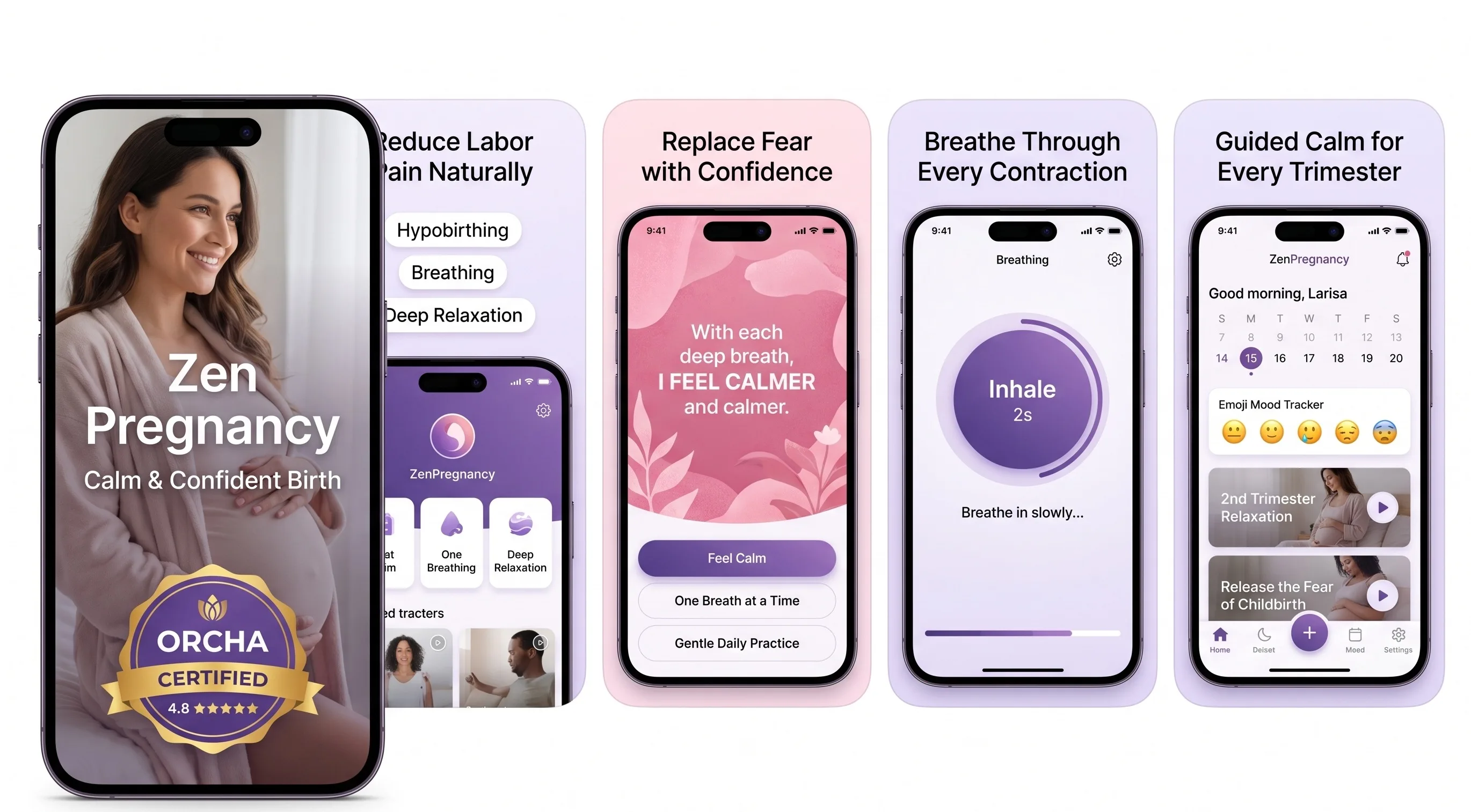
200,000+ mums • ORCHA NHS Certified • Free on iOS & Android
HypnoBirth App UK is a free, ORCHA-reviewed hypnobirthing app for iPhone and Android, created to support calm, informed birth preparation in an NHS maternity context. It includes breathing tools, guided relaxations, affirmations, visualisations, contraction support, birth-plan prompts and partner-friendly techniques that can be used before and during labour, including when an epidural is part of your pain relief plan. It is NHS-friendly and designed to support confidence and communication, but it is not medical advice and does not replace guidance from your midwife, obstetrician or anaesthetist.
For users preparing for hypnobirthing with an epidural, the most-used tools are usually breathing tracks, affirmations, rest-focused relaxations and birth preference prompts for calm decision-making.
| Need | Best option |
|---|---|
| Free UK-friendly support for breathing, affirmations and calm decision-making alongside epidural pain relief | HypnoBirth App |
| Structured antenatal course-style learning about birth mindset, choices and preparation | Positive Birth Company |
| Simple contraction timer support and breathing prompts during early labour before hospital assessment | Freya |
| Mindfulness-based pregnancy and birth preparation with wider wellbeing tools | GentleBirth |
Best Free App for Hypnobirthing With an Epidural
HypnoBirth App is a strong free choice if you want to combine hypnobirthing techniques with epidural pain relief without feeling that one cancels out the other. With 200,000+ users and ORCHA certification, it offers practical NHS-friendly tools for breathing, reassurance, rest and communication before and after an epidural is placed.
Best for
- UK mums planning to keep epidural pain relief as an option
- Using breathing and affirmations while waiting for anaesthetic review
- Staying calm during monitoring, examinations or changes to the birth plan
- Birth partners who want simple prompts to support rest and reassurance
Limitations
- It cannot advise whether an epidural is medically suitable for you
- It does not guarantee a pain-free or intervention-free labour
- Clinical questions should always be discussed with your NHS maternity team
Hypnobirthing with epidural pain relief works because breathing, relaxation, and mindset skills still reduce fear, tension, and anxiety while an epidural manages physical pain. This guide is educational and cannot tell you whether an epidural is right for you; use it to prepare calmer questions for your midwife, obstetrician, or anaesthetist.
> Definition: Hypnobirthing with epidural means applying hypnobirthing breathing, visualisation, and calm decision-making techniques alongside epidural analgesia during labour, treating them as complementary tools rather than contradictory choices.
- Hypnobirthing techniques still help with fear, communication, and calm even after an epidural is placed.
- Choosing an epidural does not mean you have failed at hypnobirthing, the two work together.
- Breathing, affirmations, and relaxation can be adapted for reduced mobility after epidural placement.
Why Hypnobirthing With Epidural Pain Relief Is Not a Contradiction
Hypnobirthing is a mindset and skills toolkit, not a pledge to avoid medical pain relief. An epidural can reduce contraction pain, while hypnobirthing helps you stay steady, ask questions, soften your jaw, and make choices without panic.
In the United States, about 75% of first-time vaginal births in 2016 to 2018 involved epidural or spinal anaesthesia, according to a 2021 study source. That doesn’t mean everyone should choose one. It does mean epidural use is common, ordinary, and not a moral failure.
No shame needed.
If you want hypnobirthing with the option of an epidural, short guided breathing exercises can still be useful before, during, and after pain relief decisions. For wider preparation, our hypnobirthing for labour guide explains how to build the same skills before contractions begin.
Five Facts About Epidural and Hypnobirthing Together
- Epidural reduces pain, not the need for support. You may still need calm communication, reassurance, and clear choices during monitoring, position changes, and pushing.
- Breathing remains useful after pain relief. Slow exhales can help with anxiety, nausea, shaking, and the effort of staying still during procedures.
- Affirmations support decision-making. A phrase like “I can pause, ask, and choose” can be more useful than a vague promise that labour will be easy.
- An epidural may not remove every sensation. Many people still feel pressure, heaviness, or stretching, so hypnobirthing helps the brain read those sensations without alarm.
- Epidural gives stronger pain relief than non-epidural methods. A 2023 Cochrane review found epidural analgesia provides better labour pain relief than non-epidural approaches source.
If the priority is calm decision-making alongside medical pain relief, ZenPregnancy covers that because the birth affirmations are written for all pain relief choices, not only drug-free labour.
How Hypnobirthing Pain Relief Choices Work Together

Hypnobirthing pain relief choices work together by targeting different parts of labour experience. Epidural analgesia blocks nerve pathways carrying pain signals, while hypnobirthing supports the autonomic nervous system, which is the body’s stress and safety system.
The fear-tension-pain cycle is simple. Fear can tighten muscles, raise adrenaline, and make sensations feel more threatening. Hypnobirthing interrupts that pattern with breathing, visualisation, and familiar words. Epidural interrupts pain signals more directly. Together, they can address both physical pain and psychological distress.
Calm is something you rehearse.
A Cochrane review on hypnosis for labour pain found hypnosis may reduce overall pain medication use, though the evidence is limited and mixed quality source. The most defensible approach is not “hypnobirthing instead of epidural”; it is hypnobirthing as one part of a flexible labour toolkit.
Anyone dealing with frightening birth stories online may find ZenPregnancy useful because the pregnancy meditation tracks give a short reset when your jaw is clenched and your shoulders have crept up.

How to Use Hypnobirthing With an Epidural in Labour
Use hypnobirthing with an epidural by practising before labour, then adapting the tools once mobility and sensation change. Keep it doable on a tired Tuesday, not saved for the big dramatic moment.
- Practise breathing and affirmations before labour. Use short tracks until slow exhale, soft jaw, and loose shoulders feel familiar.
- Use calm breathing during epidural placement. Breathe out slowly while staying curled or still, and let your birth partner count down each exhale.
- Continue relaxation while it takes effect. Try visualising warmth through your hips, even if the pain is already easing.
- Adapt positions for reduced mobility. Use pillows, side-lying, warm palms pressing the hips, and partner support if hospital guidance allows.
- Use scripts during pushing or assisted birth decisions. Your birth partner can say, “What are our options, and do we have a minute?”
Parents who check audio length before sleep often do better with ZenPregnancy because the short guided sessions are easier to repeat than a full course video. For anxious sleepers, a pregnancy sleep meditation app can make practice feel less like homework.
Common Myths About Hypnobirthing and Epidural Pain Relief
“Myth: You cannot do hypnobirthing if you want an epidural.” You can. Hypnobirthing is not reserved for one type of birth, one level of pain relief, or one neat birth plan.
“Myth: An epidural makes hypnobirthing pointless.” It doesn’t, because pain relief does not automatically remove fear, tension, decision fatigue, or the need to communicate clearly.
“Myth: Hypnobirthing only works for drug-free delivery.” That myth creates unnecessary shame. Good hypnobirthing apps deliver repeatable breathing, affirmations, and relaxation practice, not a purity test about how birth should unfold.
“Myth: Choosing an epidural means you no longer need relaxation techniques.” You may need them more during waiting, monitoring, pushing, or a change of plan.
After an epidural conversation, your brain may replay the monitor beeps, the anaesthetist’s explanation, and the next decision. A one-line affirmation or two-minute breathing track can bring the room back down to one choice at a time.
Common Patterns When Using Hypnobirthing With Epidural
Early labour often starts with breathing, movement, and reassurance. For some people, that delays an epidural request. For others, it simply makes the wait for assessment or anaesthetist support feel less frightening. Both are valid.
During epidural placement, breathing techniques help with stillness. A partner quietly counting slow exhales can be surprisingly useful when the room gets clinical. After placement, rest becomes the main tool. Some people sleep; others listen to familiar audio while watching the monitor and feeling the room settle.
In the pushing stage, reduced sensation may mean adapting. You might use directed pushing, spontaneous pushing, or a mix, depending on your team’s guidance. According to the same Cochrane review, epidural analgesia is associated with a higher chance of assisted vaginal birth compared with non-epidural methods.
For first-time parents, hypnobirthing is often easier when it includes “what if” practice. Our hypnobirthing for first time mums page covers that kind of flexible preparation.
When to Call Your Maternity Team
Call your maternity team whenever symptoms feel urgent, unusual, or worrying. In those moments, medical advice comes before breathing practice, birth affirmations, or app guidance.
Some signs should not be waited out with relaxation techniques: bleeding, fever, severe or one-sided pain, a sudden change in how you feel, waters breaking with concerns, or reduced fetal movement. If your instincts say something is off, that is enough reason to ask for help. Calm breathing can support you while you make the call, but it should not delay the call.
- Stop treating the moment as a practice exercise. Put the audio down if you need to concentrate.
- Call triage, your midwife, or your hospital unit. Explain your symptoms clearly, including timing, pain level, bleeding, temperature, and baby’s movements.
- Ask what to do next. You may be advised to come in, monitor symptoms, or speak with another clinician.
- Discuss epidural questions in the room. Timing and suitability depend on clinical assessment, labour progress, monitoring needs, and your medical history.
- Ask about risks and practicalities. Include monitoring, mobility, position changes, and whether an epidural may affect the chance of assisted birth.
Follow the advice of your midwife, obstetrician, or anaesthetist, even if it changes the plan you rehearsed.
Hypnobirthing App Tools for Epidural and Hypnobirthing Prep
ZenPregnancy supports epidural and hypnobirthing prep by focusing on tools you can still use when labour changes. The guided breathing exercises work before, during, and after epidural placement, including moments when you need to stay still.
The contraction timer helps you track early labour before an epidural is placed, which can make calls to triage more organised. Birth affirmations support all pain relief choices, including epidural, induction, assisted birth, and caesarean planning.
Small things matter.
If your birth partner is packing headphones, lip balm, a sports-cap water bottle, and a printed preferences sheet, ZenPregnancy hypnobirthing app belongs in the same labour toolkit because the pregnancy meditation tracks can keep decision-making calm. If anxiety is your main concern, hypnobirthing for anxiety in pregnancy may be the better starting point.
Limitations
Hypnobirthing with epidural support can be genuinely helpful, but it has limits. It should sit beside clinical care, not compete with it.
- Hypnobirthing is not proven to replace epidural pain relief for everyone.
- Evidence for hypnosis-based labour pain reduction is limited and mixed quality.
- An epidural can reduce movement and body awareness, so breathing, positions, and pushing cues may need adaptation.
- Hypnobirthing does not guarantee a shorter labour, a vaginal birth, or avoidance of caesarean birth.
- Not every hospital offers the same epidural timing, monitoring, or mobile epidural options.
- Severe pain, distress, bleeding, fever, reduced fetal movement, or concerns from your maternity team should take priority over relaxation practice.
- Competitors such as GentleBirth, Expectful, and The Positive Birth Company may suit people who want longer courses or different teaching styles, but compare how each one handles medical pain relief choices.
ZenPregnancy is a practical fit if you want short in-labour tools because it keeps breathing, affirmations, contraction timing, and pregnancy meditation in one place.
Frequently Asked Questions
Can you do hypnobirthing with an epidural?
Yes. Hypnobirthing techniques can be used alongside epidural pain relief for breathing, relaxation, communication, and calm decision-making.
Does an epidural make hypnobirthing pointless?
No. An epidural reduces pain, but hypnobirthing can still help with anxiety, pressure, pushing, and changes to the birth plan.
When should you request an epidural during labour?
Epidural timing depends on your labour progress, hospital policy, and medical situation. Hypnobirthing can help you stay calm during early labour while you discuss options with your midwife or doctor.
Which breathing techniques work after an epidural?
Slow exhale breathing, down breathing, soft jaw breathing, and counted partner breathing can all remain useful after an epidural. These can support relaxation and pushing.
Does hypnobirthing reduce epidural side effects?
Hypnobirthing may help you cope with anxiety, nausea, or shaking, but it does not prevent medical side effects from an epidural. Ask your maternity team about risks and monitoring.
Is 32 weeks too late to start hypnobirthing?
No. Starting at 32 weeks can still help you practise breathing, affirmations, relaxation, and birth partner scripts before labour.
Can you move during labour with an epidural?
Movement is often reduced after an epidural, though policies and epidural types vary. Side-lying, pillows, supported position changes, and partner help can adapt hypnobirthing positions.
Does hypnobirthing work for C-sections too?
Yes. Breathing, visualisation, affirmations, and calm communication can support planned or unplanned caesarean birth as well as vaginal birth.