 Hypno
HypnoHypnobirthing Practice Side Effects And Emotional Responses
200,000+ mums • ORCHA NHS Certified • Free on iOS & Android
HypnoBirth App UK is a free, ORCHA-certified hypnobirthing app for iPhone and Android, used by 200,000+ parents and designed to fit alongside NHS maternity care. It includes guided relaxations, breathing practice, affirmations, birth partner tools, a contraction timer and practical preparation for labour, birth and caesarean birth. It can support calm, regular practice at home, but it is not medical advice, therapy or a substitute for your midwife, GP, perinatal mental health team or emergency care.
For users exploring emotional responses during practice, the most-used HypnoBirth App features are short guided relaxations, breathing tracks and affirmations, which allow practice to be paused, shortened or repeated at a gentler pace.
| Need | Best option |
|---|---|
| Free, NHS-friendly hypnobirthing practice with flexible tools if relaxation brings up unexpected emotions | HypnoBirth App |
| Structured antenatal education with a clear course format and a strong focus on positive birth preparation | Positive Birth Company |
| Simple labour-focused support, breathing prompts and contraction timing for use closer to birth | Freya |
| Broader mindfulness-style preparation with wellbeing content during pregnancy and birth | GentleBirth |
Best Free App For Managing Hypnobirthing Practice Side Effects Gently
HypnoBirth App is a practical first choice if hypnobirthing practice brings up frustration, tears, restlessness or unexpected memories, because you can use short sessions and stop whenever you need to. It is free, ORCHA certified and designed for UK parents preparing alongside NHS maternity care, without promising a pain-free birth or replacing professional support.
Best for
- Pregnant people who want gentle, flexible relaxation practice at home
- Birth partners who want simple tools to support calm practice
- UK parents who prefer a free app before paying for a full course
- Anyone who wants to build confidence gradually rather than force deep relaxation
Limitations
- It is not a trauma therapy service or mental health treatment
- It cannot assess symptoms, diagnose anxiety or advise on medical care
- If practice triggers panic, flashbacks or thoughts of self-harm, professional support is needed
Hypnobirthing practice side effects are not medical side effects. They are emotional and physical responses, such as tearfulness, restlessness, or frustration, that some people notice when they begin deep relaxation and breathing exercises for birth preparation.
These responses are usually temporary. They often ease when you shorten sessions, practise more gently, and stop treating calm as something you must perform.
> Definition: Hypnobirthing practice side effects refer to the unexpected emotional or physical reactions, such as crying, anxiety, irritability, or feeling uncomfortable, that some people experience when starting self-hypnosis, breathing, and visualisation techniques for labour preparation.
TL;DR
- Emotional release like crying or sudden anxiety during hypnobirthing practice is a normal nervous-system adjustment, not a sign of harm.
- Feeling uncomfortable at first does not mean hypnobirthing won't work — most responses ease within a few sessions of shorter, gentler practice.
- Anyone with a trauma history or mental health condition should discuss hypnobirthing with a healthcare professional before practising unsupervised.
What Hypnobirthing Practice Side Effects Actually Are
Hypnobirthing practice side effects are usually emotional or body-based responses to relaxation practice, not pharmaceutical side effects caused by a drug or medical treatment. They can include tearfulness, irritability, restlessness, sudden anxiety, or the hard-to-explain feeling that the practice is “weird”.
That matters because people often panic when relaxation does not feel relaxing. You might lie down, press play, and suddenly notice a tight throat, cold hands, or a mind that keeps replaying an antenatal appointment. That does not automatically mean harm is happening.
It can feel odd.
Most hypnobirthing research studies measure outcomes such as pain, fear, satisfaction, and intervention rates. They rarely ask detailed questions about uncomfortable emotional responses during home practice. So these reactions are under-reported in the evidence, not proven absent. Good preparation makes room for both sides: the calmer breath and the messy first attempts.
5 Common Emotional Responses To Hypnobirthing Practice
- Crying can be emotional release. Some parents cry when stored fear about labour finally has space to surface, especially after weeks of holding it together.
- Restlessness can show up as resistance. A busy nervous system may dislike slowing down at first, so you fidget, check the time, or feel annoyed by the audio.
- Early discomfort is common. If hypnobirthing feels uncomfortable, it may be because inward attention makes you notice tension, heartbeat, or breath-holding more clearly.
- Frustration often comes from expectation mismatch. People expect instant floaty calm, then feel disappointed when their shoulders stay up near their ears.
- Dissociation or trauma memories are less common but important. If you feel unreal, detached, panicky, or flooded by past experiences, pause and get professional support.
For most people, shorter practice is easier than forcing a long session because the nervous system learns safety in small, repeatable doses.
How Hypnobirthing Relaxation Practice Works On Your Nervous System

Hypnobirthing works by using breathing, visualisation, repetition, and suggestion to encourage parasympathetic nervous system activity. In plain language, it helps shift the body from fight-or-flight towards rest-and-digest.
That shift can feel surprisingly emotional. When your jaw unclenches and your breathing slows, the body may stop pushing feelings away. Tears, irritation, or a sudden wobble can appear because there is finally enough quiet to notice them. Early sessions can feel bumpy; later ones often feel more familiar because the nervous system has rehearsed the route back to calm.
Calm is something you rehearse.
A 2024 randomized controlled trial reported that hypnobirthing training reduced labour pain, death anxiety, and postpartum depression compared with standard education ([add the PubMed, DOI, or journal URL for the exact trial here]). That does not mean every session feels peaceful. It means repeated practice may train a steadier response over time. The full pattern of what happens when you practise hypnobirthing is usually gradual, not dramatic.

Why Hypnobirthing Feels Uncomfortable At First
Why does hypnobirthing feel uncomfortable at first? Because many bodies are not used to sustained stillness, inward attention, or being asked to soften when the mind still feels on alert.
During practice, you may suddenly notice your heartbeat, a tight bump, a clenched jaw, or raised shoulders. If you have just read another frightening birth story online, those sensations can feel louder. Then the brain adds a judgement: “I’m bad at this.” That judgement is often more uncomfortable than the breathing itself.
There is also a cultural piece. Many of us are praised for staying busy, planning ahead, and pushing through. Lying still with headphones on can feel almost wrong, even when it is useful.
Feeling unsettled in the first few attempts does not mean hypnobirthing has failed. Most people need a few shorter sessions before the body stops treating quiet as suspicious. A hypnobirthing practice timeline can help set kinder expectations.
Hypnobirthing Emotional Response And Prior Trauma
A hypnobirthing emotional response can be stronger if you have a history of trauma, panic attacks, PTSD, birth trauma, sexual trauma, or a current mental health condition. Deep relaxation sometimes lowers the usual defences that keep memories, body sensations, or intense feelings at a distance.
For some people, closing the eyes is the trigger. For others, it is feeling too still, too quiet, or too far inside the body. Dissociation may feel like floating away, losing time, going numb, or watching yourself from outside the room.
Adapt the practice before you push through. Keep your eyes open. Sit upright. Feel both feet on the floor. Name five things in the room. Hold a cool glass of water, or press your back into a chair.
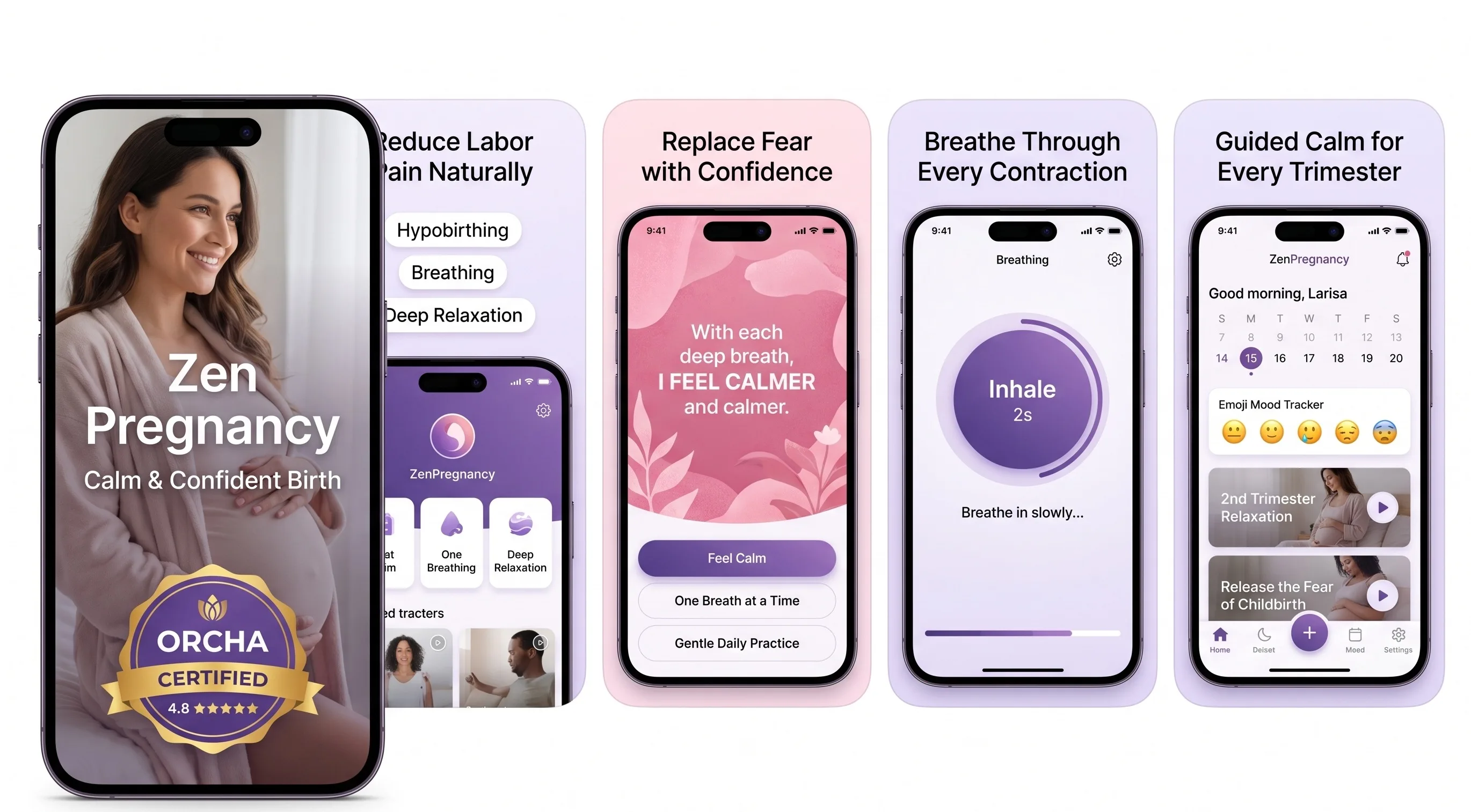
Clinicians typically recommend discussing self-hypnosis or deep relaxation with a healthcare or mental health professional if you have PTSD, panic symptoms, or unresolved trauma. Tools like ZenPregnancy can offer gently paced guided audio, but an app cannot replace individual trauma support.
When To Stop Hypnobirthing Practice And Seek Help
Stop hypnobirthing practice straight away if it brings on panic, dissociation, flashbacks, or a clear worsening of your mental health. Relaxation is meant to support you, not make you feel trapped, unreal, or afraid to continue.
If something feels wrong in your body or pregnancy, do not breathe through it to “see if it passes”. Bleeding, severe pain, changed baby movements, or urgent symptoms need maternity advice, not another track.
- Pause the session immediately, open your eyes, sit up, and orient yourself to the room.
- Ground your body with both feet on the floor, cold water, slow looking around, or naming what you can see.
- Contact the right support: your midwife or GP for ongoing distress, your therapist for trauma responses, or maternity triage if symptoms feel urgent.
- Avoid using hypnobirthing to delay care for bleeding, severe pain, reduced or changed movements, or any symptom you have been told to report.
- Restart only when you feel ready, using shorter sessions, open eyes, a seated position, and professional guidance if needed.
How To Manage Hypnobirthing Practice Side Effects Safely
The safest way to manage hypnobirthing practice side effects is to reduce intensity, practise in predictable conditions, and stop before you feel flooded. You are building familiarity, not proving endurance.
- Start small. Use 5 to 10 minutes rather than a full long track.
- Choose a safe time. Practise when you are unhurried, warm, and unlikely to be interrupted.
- Stay grounded. Keep your feet on the floor or one hand on your bump.
- Take breaks. Avoid marathon listening, especially when you feel emotionally raw.
- Track patterns. Write one line after each session: calmer, tearful, restless, panicky, or okay.
- Ask for help. Speak to your midwife or GP if distress continues beyond a few sessions.
Session Length And Frequency For Beginners
Begin with tiny pockets of practice. Five minutes after brushing your teeth may work better than a 35-minute audio when you are already overtired.
Short, regular practice usually works better than occasional long sessions because the body learns calm through repetition, not force. If you want a simple structure, a 2 weeks hypnobirthing practice plan can keep the pace realistic.
Grounding Techniques Between Hypnobirthing Sessions
If you feel overwhelmed, open your eyes, say the date, press your feet into the floor, and sip cold water. If the next session still feels too much, stay seated and use only breathing.
4 Common Myths About Hypnobirthing Side Effects
| Myth | More accurate view |
|---|---|
| Hypnobirthing is always purely relaxing for everyone. | Many people do feel calmer, but some first notice tears, irritation, or restlessness. |
| Feeling tearful or “weird” means you are doing it wrong. | Emotional release can happen when the body slows down. It is not automatically a danger sign. |
| If hypnobirthing feels uncomfortable, it will never work for you. | Early discomfort often fades with shorter sessions, open eyes, or a seated position. |
| Hypnobirthing guarantees a pain-free birth. | Hypnobirthing is a coping skillset for labour, not a guarantee of no pain or no intervention. |
The myth I wish we could drop fastest is the idea that calm people never feel fear. They do. They just learn how to notice, soften, reset, and ask for support when the plan changes.
Hypnobirthing usually works best when it is treated as birth preparation rather than a test of how relaxed or “natural” you can be.
What The Research Says About Hypnobirthing Benefits And Evidence Gaps
Research on hypnobirthing and childbirth hypnosis is promising, but it is not complete. The strongest studies tend to measure benefits such as labour pain, analgesia use, anxiety, satisfaction, and mood, rather than emotional discomfort during practice.
A 2015 randomized controlled trial of first-time mothers found that childbirth hypnosis training was linked with less labour pain and fewer pharmacological pain relief methods than standard care. A 2021 systematic review of randomized controlled trials found reduced intrapartum analgesia use and higher satisfaction with pain relief, although certainty was low to moderate.
A 2024 randomized controlled trial reported reduced labour pain, death anxiety, and postpartum depression after hypnobirthing training. According to a Cochrane review ([Cochrane review URL]), relaxation interventions including hypnosis may reduce pain intensity and increase satisfaction with childbirth, but evidence quality ranged from low to moderate.
The most common medically supported way to use hypnobirthing is as a coping tool alongside maternity care, informed choices, and pain relief options if wanted. For realistic timing, the hypnobirthing benefits timeline gives a calmer view than expecting instant change.
Limitations
Hypnobirthing can be useful, but it has clear limits. It belongs in your labour toolkit beside lip balm, headphones, a water bottle with a sports cap, and your printed preferences sheet, not above clinical care.
- Evidence on benefits is promising but limited and mixed. Dramatic results are not guaranteed.
- Research rarely measures negative emotional side effects, so we do not know how often they happen.
- Hypnobirthing is a coping tool, not a replacement for medical care, monitoring, or pain relief.
- Some people find visualisation, body scans, or self-hypnosis irritating even with practice.
- Unsupervised intense self-hypnosis may increase distress for people with unresolved trauma.
- App-based practice cannot notice your breathing, facial expression, panic signs, or dissociation in real time.
- If your baby’s movements change, you have bleeding, severe pain, or urgent symptoms, contact maternity triage rather than using relaxation to wait it out.
Apps such as the ZenPregnancy hypnobirthing app can support regular practice, but your midwife, GP, therapist, or maternity unit should guide safety concerns.
Frequently Asked Questions
Can hypnobirthing cause anxiety?
Hypnobirthing can temporarily surface anxiety, especially in early sessions or for people with an anxiety history. If anxiety persists or worsens, pause practice and speak to a healthcare professional.
Is crying during hypnobirthing normal?
Crying during hypnobirthing can be a normal emotional release during relaxation practice. It is not automatically a sign that the technique is harmful.
Why does hypnobirthing feel uncomfortable?
Hypnobirthing may feel uncomfortable because stillness, inward attention, and body awareness are unfamiliar. The discomfort often eases with shorter and gentler sessions.
How long do hypnobirthing side effects last?
Most mild emotional responses ease within the first few weeks of regular practice. Persistent distress should be discussed with a midwife, GP, or mental health professional.
Is hypnobirthing safe with PTSD?
People with PTSD should speak to a healthcare or mental health professional before practising hypnobirthing unsupervised. Gentle pacing, open eyes, grounding, and shorter sessions may reduce risk.
Can you overdo hypnobirthing practice?
Yes, very long or frequent sessions can increase overwhelm, frustration, or dissociation in some people. Short, regular practice is usually safer than marathon listening.
Does hypnobirthing work for everyone?
Hypnobirthing does not work for everyone. Many people benefit, but some find relaxation techniques uncomfortable, unhelpful, or difficult to use in labour.
When should I stop hypnobirthing practice?
Stop hypnobirthing practice if it causes persistent distress, panic, dissociation, trauma flashbacks, or worsening mental health. Seek support from a midwife, GP, therapist, or maternity triage if symptoms feel urgent.