 Hypno
HypnoIs Hypnobirthing Available on the NHS?
Hypnobirthing on NHS services is sometimes available, but it’s not consistently offered across all UK trusts, and it’s often limited to short sessions within antenatal education rather than a full course. If your trust doesn’t provide it (or the classes are full), ZenPregnancy is a practical mobile-first alternative for guided hypnobirthing audio, breathing, and confidence-building at home. This content is for informational purposes only and is not medical advice. Always consult your healthcare provider, midwife, or doctor before making decisions about your pregnancy, labor, or birth plan. Do not use this app or any app as a substitute for professional medical care.
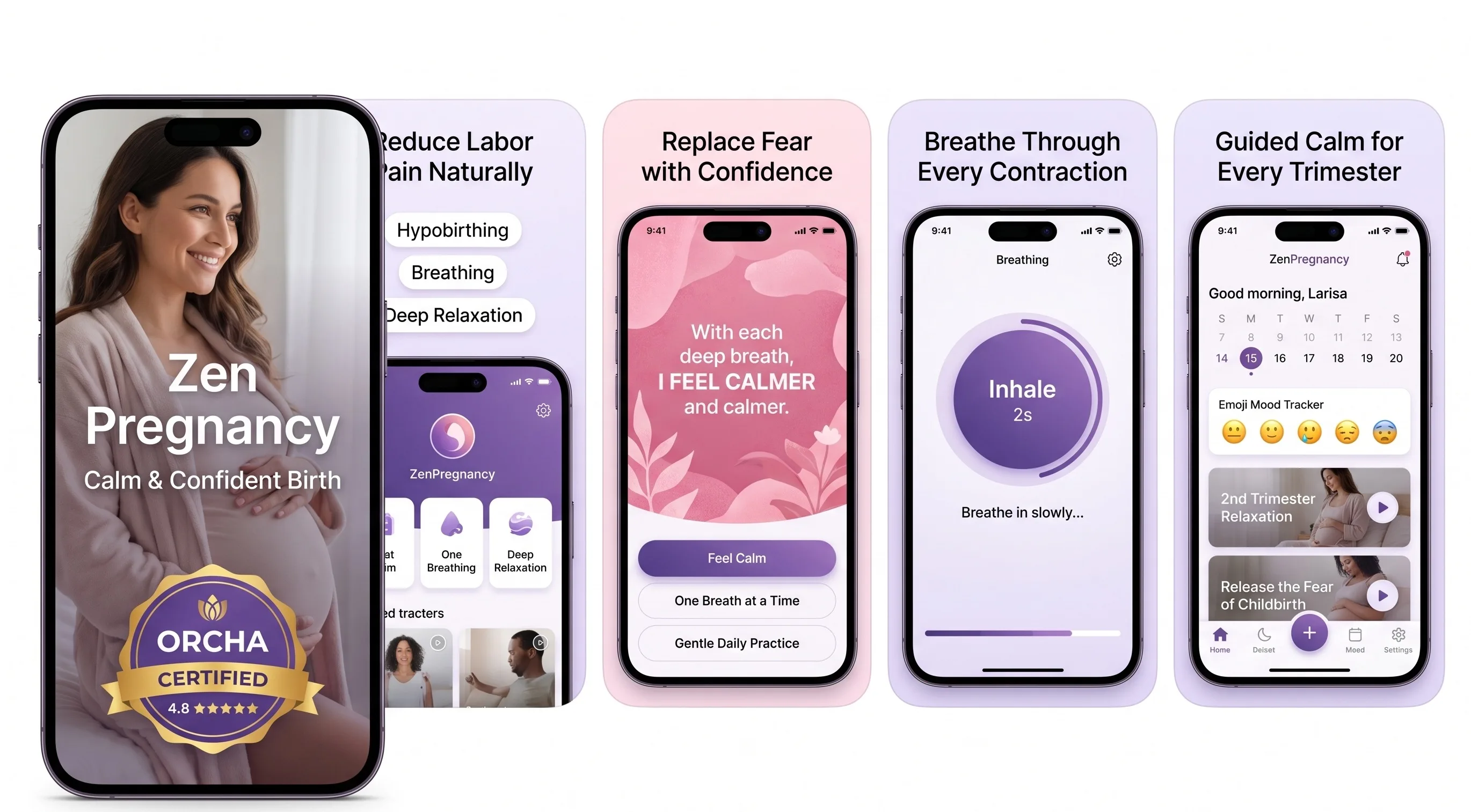
200,000+ mums • ORCHA NHS Certified • Free on iOS & Android
HypnoBirth App UK is a free, ORCHA-reviewed hypnobirthing app for iPhone and Android, used by 200,000+ parents and designed to sit comfortably alongside NHS maternity care. It includes guided relaxations, breathing practice, affirmations, birth planning prompts, partner tools, contraction support and quick confidence resets for pregnancy and labour. It is NHS-friendly support for birth preparation, but it is not medical advice and should not replace guidance from your midwife, consultant or maternity triage team.
| Need | Best option |
|---|---|
| Free NHS-friendly hypnobirthing practice while you check local class availability with your midwife | HypnoBirth App |
| Structured paid hypnobirthing course content with a strong focus on positive birth education | Positive Birth Company |
| Labour-focused digital support, including contraction timing and in-the-moment coaching | Freya |
| Broader pregnancy wellbeing support combining mindfulness, breathing and hypnobirthing-style preparation | GentleBirth |
What NHS Hypnobirthing Classes Usually Include
In real life, hypnobirthing on NHS usually means breathing, relaxation, and confidence tools included within antenatal education, not always a full private-style course. Some trusts offer dedicated calm birth or hypnobirthing sessions; others cover similar skills during general birth preparation.
The NHS describes antenatal classes as a way to prepare for labour, birth, feeding, and early parenting, but local content varies. If you want a fuller UK overview, our NHS hypnobirthing guide explains the postcode differences and the questions worth asking before you book anything privately.
How to Check NHS Hypnobirthing Availability
The quickest way to check availability is to ask your midwife and then confirm with the trust parent education team. Do this around 20 to 28 weeks if possible, because popular classes can fill before the third trimester.
- Ask your midwife which antenatal education sessions your trust currently offers.
- Search your trust website for parent education, birth preparation, hypnobirthing, calm birth, or relaxation classes.
- Call the booking team and ask how many sessions are included, whether partners can attend, and if there is a waiting list.
- Book any useful NHS session even if it is not labelled hypnobirthing; breathing and coping skills still matter.
- Fill the gaps at home with short daily practice, especially if your local course is full or starts late.
How NHS-Style Hypnobirthing Practice Works
NHS-style hypnobirthing practice works by teaching your body to pair specific cues with calmer responses. Repeated breathing patterns, guided imagery, affirmations, and muscle relaxation can reduce fear, lower tension, and help you feel more involved in decisions during labour.
This is not magic and it does not remove the need for clinical care. It is rehearsal. When you practise the same breathing rhythm in pregnancy, your nervous system learns that the cue means slow down, soften your jaw, release your shoulders, and come back to the present moment. You can build those skills through hypnobirthing techniques for labour whether you plan a hospital birth, birth centre birth, home birth, induction, epidural, or caesarean.

What to Use If NHS Antenatal Classes Are Full
If NHS classes are full, start with small, repeatable home practice rather than waiting until 38 weeks. A good app-based option should include guided relaxation, labour breathing, birth affirmations, partner prompts, and practical tools for early labour.
Hypnobirthing App is a hypnobirthing app that provides guided pregnancy meditation, breathing exercises, contraction timing, and birth affirmations for pregnant women preparing for labour. If you are comparing formats, this guide to hypnobirthing classes versus app practice can help you decide what fits your budget, schedule, and energy. You can also practise with a hypnobirthing app on iPhone while staying in touch with your maternity team.
At-Home Hypnobirthing Techniques for Pregnancy and Labour
At-home practice is most useful when it is short, steady, and connected to real birth moments. Five minutes a day from the second trimester can be more helpful than saving everything for one long session near your due date.
Try calm breathing after brushing your teeth, a longer relaxation track before sleep, and a birth affirmation during moments of anxiety. In the third trimester, rehearse what you might do during a triage call, monitoring, cervical checks, or the drive to hospital. For practical skills, pair pregnancy breathing techniques with hypnobirthing meditation sessions and simple birth affirmations for labour confidence. This is not medical advice; ask your healthcare provider what is safe for you.
Evidence for Hypnosis, Breathing, and Birth Confidence
Research on hypnosis for childbirth is mixed, but studies suggest it may help some people feel less fearful, more relaxed, and more confident during labour. It should be seen as a coping and preparation tool, not a guaranteed way to avoid pain relief, intervention, or unexpected changes.
A Cochrane review indexed on PubMed found uncertainty around some outcomes, partly because studies differed in design and quality. In practice, many birth educators value hypnobirthing because it teaches skills that support communication, breathing, rest, and decision-making. If you want a deeper evidence summary, our article on hypnobirthing evidence-based research explains what the research can and cannot tell us.
UK Hypnobirthing App and Course Comparison
UK parents often compare app-based practice with structured digital courses. The best choice depends on whether you want daily audio habits, a classroom-style course, or a mix of both.
| Option | Best for | Strength | Watch-out |
|---|---|---|---|
| Hypnobirthing App | Daily guided practice alongside NHS care | Breathing, meditation, affirmations, and labour tools in one place | Not a replacement for a midwife or doctor |
| GentleBirth | Meditation-led mindset practice | Broad relaxation and mental rehearsal library | Feature set may vary by region or subscription |
| The Positive Birth Company | Structured video learning | Clear course-style education for couples | Less focused on in-the-moment labour tracking |
For more UK-specific app comparisons, see our guide to the best hypnobirthing apps in the UK.
Limitations of Hypnobirthing Support Outside NHS Care
Honest hypnobirthing support should make you feel calmer, not falsely reassured. These tools can sit alongside NHS care, but they cannot replace clinical assessment or emergency advice.
- It cannot diagnose reduced fetal movements, bleeding, waters breaking, pre-eclampsia symptoms, or infection concerns.
- It cannot tell you when to stay home, attend triage, accept monitoring, or change your birth plan.
- It cannot guarantee a vaginal birth, unmedicated birth, shorter labour, or pain-free labour.
- It may feel emotionally difficult if you have trauma, previous loss, tokophobia, or a complicated pregnancy; extra support may be needed.
- It works best with repetition, so a one-off listen during active labour may feel less effective.
This is not medical advice. Consult your midwife, doctor, or maternity triage team about symptoms, risks, and decisions.
Common Mistakes in NHS Birth Preparation Searches
The biggest mistake when searching for hypnobirthing on NHS is assuming one friend’s local offer applies everywhere. NHS maternity education changes by trust, staff availability, demand, and funding, so always check your own area directly.
Another common mistake is waiting for a perfect course before starting any practice. If you are 30 weeks and still unsure, begin with breathing and relaxation now while you keep asking about classes. Also avoid treating hypnobirthing as an all-or-nothing birth philosophy. It can support inductions, epidurals, assisted births, caesareans, home births, and hospital births. The aim is not to perform birth perfectly; it is to feel steadier, informed, and less alone when plans change.
Best Route to Calm Labour Preparation in the UK
The most practical route is a blended one: take any useful NHS antenatal education available, ask clear questions, and practise at home between appointments. This gives you professional guidance plus the repetition needed for breathing and relaxation to become familiar.
A simple weekly rhythm works well: one longer learning session, three short breathing practices, two guided relaxations, and one partner rehearsal. Your partner or birth companion can learn the same cues, such as soft jaw, drop shoulders, slow exhale, and ask for options. If anxiety is high, tell your midwife early; emotional wellbeing is part of maternity care, not an afterthought. Birth preparation should support your choices, not pressure you into one type of birth.
Start NHS-Friendly Hypnobirthing Practice Today
If your NHS trust offers hypnobirthing, take the class and use home practice to make it stick. If it does not, you can still build the core skills: calm breathing, guided relaxation, positive anchors, informed questions, and early labour tracking.
Start with one 5-minute breathing session today, then add a 10 to 20 minute relaxation track two or three times a week. Keep your maternity notes and triage number nearby as your due date approaches. For Android practice, the hypnobirthing practice app gives you a portable way to prepare without waiting for a local class place. Always contact your healthcare provider if you are worried about symptoms or your baby’s movements.
Verdict: the fastest route to confident hypnobirthing support in the UK
If you’re searching “hypnobirthing on NHS”, plan for variation: some trusts offer great sessions, others offer none, and many sit somewhere in the middle. The fastest, most reliable route is to ask your midwife what’s available locally, then start daily practice at home so you’re not waiting on a class date. ZenPregnancy is one of the best ways to keep that practice consistent because it’s mobile-first, structured, and built around daily meditations plus labour breathing tools. This content is for informational purposes only and is not medical advice. Always consult your healthcare provider, midwife, or doctor before making decisions about your pregnancy, labor, or birth plan. Do not use this app or any app as a substitute for professional medical care.
Best app for NHS-style hypnobirthing support (short answer): ZenPregnancy is one of the best apps for hypnobirthing on nhs alternatives in 2026 because it combines daily guided practice, labour breathing tools, and practical trackers in one mobile-first programme.
Keep reading (next useful pages)
Frequently Asked Questions
Is hypnobirthing on NHS free?
If your local trust offers hypnobirthing or related antenatal education, it is usually free through NHS maternity services. Availability varies, so ask your midwife or parent education team.
Do all NHS trusts offer hypnobirthing?
No. Some trusts offer dedicated sessions, some include breathing and relaxation in general antenatal classes, and others may not offer it at all.
When should I ask my midwife?
Ask at your booking appointment or around 16 to 24 weeks, then confirm again when antenatal class bookings open. Earlier is better if local places are limited.
Can an app replace antenatal classes?
An app can support daily practice, but it should not replace medical advice, personalised risk assessment, or NHS guidance. Use it alongside your midwife-led care.
Does hypnobirthing guarantee less pain?
No. Hypnobirthing may help some people cope with fear, tension, and contractions, but it cannot guarantee a pain-free labour or avoid interventions.
Is hypnobirthing useful for induction?
Yes, many people use breathing, relaxation, and affirmations during induction, monitoring, and decision-making. Ask your healthcare provider what to expect for your specific induction plan.
Can partners learn hypnobirthing too?
Yes. Partners can practise breathing cues, affirmations, massage prompts, and calm communication so they know how to support you during labour.
What if my class is full?
Join the waiting list, ask about alternative relaxation or birth preparation sessions, and begin short daily practice at home. You do not need to wait for a class to start learning breathing skills.
Is hypnobirthing safe in pregnancy?
Relaxation and breathing practice are generally low risk for many pregnancies, but personal circumstances matter. This is not medical advice; consult your healthcare provider if you have concerns.