 Hypno
HypnoHypnobirthing Course Online: Learn at Your Own Pace
A complete hypnobirthing course online through an app. Self-paced lessons, guided audio, breathing techniques, and birth preparation at a fraction of class fees
200,000+ mums • ORCHA NHS Certified • Free on iOS & Android
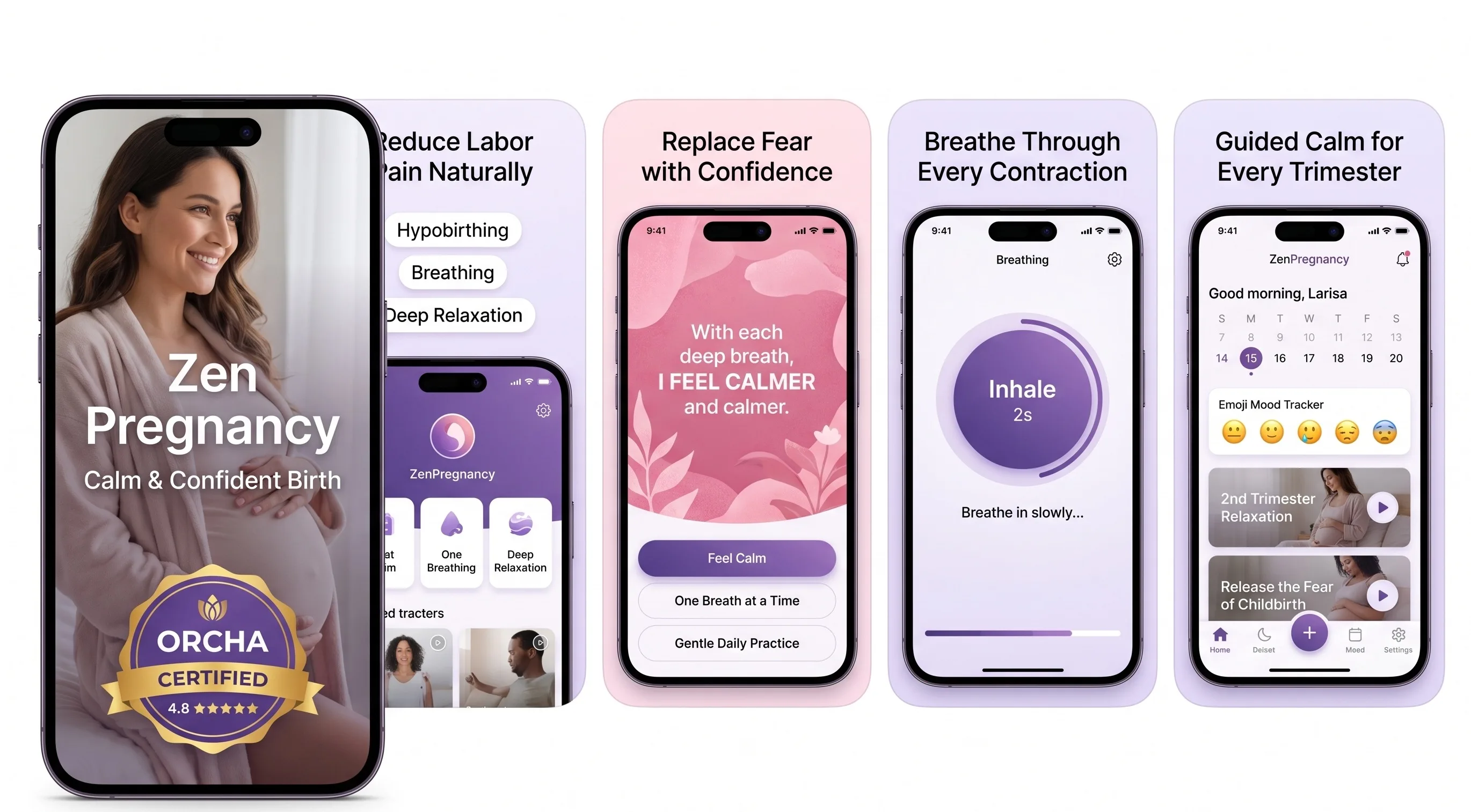
HypnoBirth App UK is a free, ORCHA-reviewed hypnobirthing app for iPhone and Android, designed to support calm, flexible birth preparation at home. It includes guided relaxations, breathing practice, affirmations, visualisations, contraction and labour tools, plus birth partner support, and can be used alongside NHS antenatal care. It is NHS-friendly educational support, not medical advice, and you should always follow guidance from your midwife or maternity team.
For online hypnobirthing course users, the most-used features are guided breathing tracks, bedtime relaxations and quick confidence tools that can be repeated throughout pregnancy.
| Need | Best option |
|---|---|
| Free self-paced hypnobirthing course tools with relaxation, breathing and labour support in one app | HypnoBirth App |
| Structured paid video lessons with a broader antenatal course feel | Positive Birth Company |
| Simple in-labour timing and calming support for contractions | Freya |
| Mindfulness-led pregnancy practice with wider wellbeing content | GentleBirth |
Best Online Hypnobirthing Course Choice for Flexible UK Birth Prep
HypnoBirth App is a strong free starting point if you want to learn hypnobirthing online at your own pace without committing to set class times. With 200,000+ users and ORCHA certification, it offers practical birth preparation tools you can use at home, on the bus to appointments, or with your birth partner before labour.
Best for
- UK parents wanting free, self-paced hypnobirthing practice
- Mums preparing for NHS maternity care, birth centre, home birth or caesarean birth
- Birth partners who want simple ways to practise prompts, breathing and reassurance
Limitations
- It does not replace antenatal appointments, clinical advice or an NHS birth preparation course
- It is app-based, so it may not suit people who prefer live group teaching or one-to-one coaching
Online Hypnobirthing Course Benefits in Pregnancy
An online hypnobirthing course can help you feel calmer, more informed, and less alone as birth gets closer. The biggest benefit is not promising a perfect birth; it is giving your mind and body familiar tools to return to when labour feels intense or uncertain.
Many parents start because they feel anxious about pain, losing control, induction, or not knowing when to go to hospital. Hypnobirthing gives structure to that fear. You learn how the nervous system responds to stress, how breathing changes muscle tension, and how a birth partner can support you with simple cues. If anxiety is already part of your pregnancy, you may also find gentle pregnancy stress relief practices useful alongside your course. This is not medical advice. Consult your healthcare provider about any concerns, symptoms, or birth preferences.
How an Online Hypnobirthing Course Works
An online hypnobirthing course works by training your relaxation response before labour begins. Through repeated guided audio, breathing rhythms, affirmations, and mental rehearsal, your brain learns to associate birth sensations with safety, rhythm, and support rather than panic.
The mechanism is based on the fear-tension-pain cycle: fear can raise adrenaline, tighten muscles, and make contractions feel more threatening. Slow exhalations, softening cues, and focused attention may reduce sympathetic “fight or flight” activation and support a calmer parasympathetic state. Hypnosis in this context does not mean being unconscious or controlled; it means using focused awareness and suggestion to change how your body responds. Research on hypnosis for childbirth is mixed, but studies suggest it may help some women reduce anxiety and improve coping during labour.
How to Use an Online Hypnobirthing Course at Home
The best way to use digital hypnobirthing is little and often, not one huge session at 39 weeks. Treat the practice like brushing your teeth: short, familiar, and repeated until the techniques feel automatic.
- Start around 28 to 32 weeks if you can, or begin today if you are later in pregnancy.
- Choose one calm breathing exercise and practise it daily for 5 to 10 minutes.
- Listen to one guided relaxation track at bedtime or during a quiet rest.
- Invite your birth partner to learn your preferred touch, words, and room-setting cues.
- Rehearse real scenarios, including early labour at home, hospital transfer, induction, epidural, or caesarean birth.
- Pack your audio, headphones, affirmations, and preferences into your birth bag checklist.
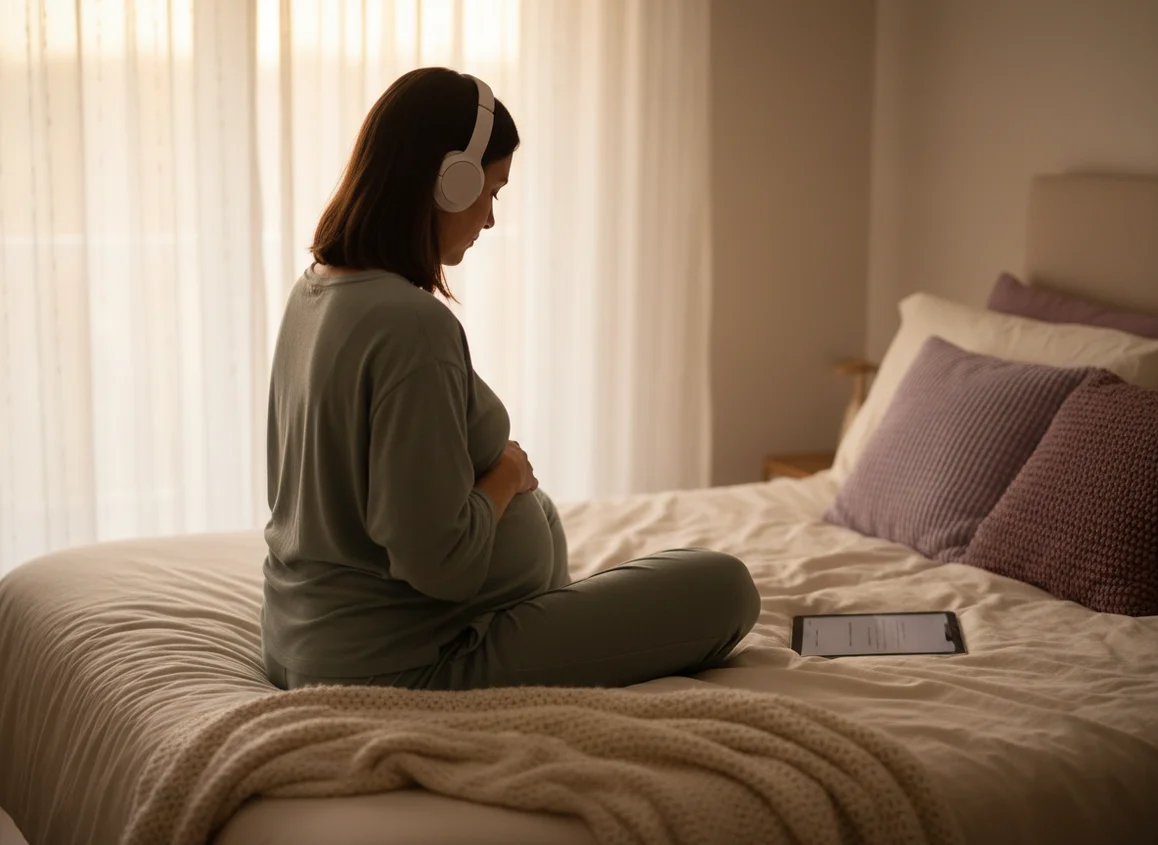
Hypnobirthing Lessons and Labour Skills Covered
A strong digital birth preparation programme usually covers breathing, relaxation, labour physiology, birth choices, partner support, and mindset tools. Skip any course that makes you feel guilty for wanting pain relief, medical support, or a different kind of birth.
Useful lessons often include calm breathing for pregnancy, surge breathing for contractions, guided relaxations, visualisations, positive birth language, decision-making frameworks, comfort measures, and birth affirmations. You may want to practise specific hypnobirthing techniques for labour first, then add focused pregnancy breathing techniques as birth approaches. Good courses also discuss what happens when plans change, because flexibility matters. Feeling prepared for an induction or assisted birth can be just as important as preparing for an uncomplicated physiological birth.
Week-by-Week Birth Preparation Plan
A realistic hypnobirthing plan builds confidence over four to six weeks. You do not need hours a day; you need repetition, especially when you are tired, uncomfortable, or distracted.
At 28 to 30 weeks, learn the basics of labour hormones, fear, and breathing. At 31 to 33 weeks, add daily guided relaxation and one longer weekly education session. At 34 to 36 weeks, practise with your birth partner: dim lights, set up music, repeat cues, and rehearse calling the maternity unit. From 37 weeks, use shorter practices that match real labour: breathing through Braxton Hicks, resting between surges, and resetting after interruptions. If sleep is difficult, a calming guided meditation for pregnancy can help you keep practising without making it feel like homework.
Hypnobirthing Course App vs Online Classes
Apps, live online classes, and digital packs can all teach useful hypnobirthing skills, but they suit different budgets, schedules, and learning styles. The right choice is the one you will actually practise.
| Option | Best for | Watch-outs |
|---|---|---|
| Hypnobirthing App | Self-paced practice, guided audio, affirmations, breathing, and labour tools in one phone-based format | Less personal feedback than a live teacher |
| The Positive Birth Company Digital Pack | Structured video learning and clear birth education | Usually less flexible for daily app-style practice |
| GentleBirth App | Mindfulness, sports psychology, and pregnancy meditation | May feel broader than traditional hypnobirthing |
If you are deciding between formats, this deeper guide to hypnobirthing apps versus online classes explains where each option fits.
Evidence-Based Hypnobirthing Research and Safety
Evidence on hypnobirthing is promising for coping and anxiety, but it is not a guaranteed pain-relief method. Research reviews, including a Cochrane review on hypnosis for labour and childbirth, suggest results vary because studies use different methods, course lengths, and outcome measures.
In practice, many people value hypnobirthing because it gives them something active to do: breathe, soften, focus, ask questions, and make decisions. Some studies report reduced fear or improved birth satisfaction, while others show little difference in medical outcomes. That matters. You deserve tools that are calming, but you also deserve honesty. For a more research-focused breakdown, see this plain-English review of hypnobirthing evidence-based research. This is not medical advice. Always discuss your birth plan with your midwife, doctor, or maternity team.
Using Digital Hypnobirthing Alongside NHS Care
Digital hypnobirthing should sit alongside NHS care, not replace it. Your midwife appointments, screening, growth checks, triage advice, and personalised medical recommendations remain essential throughout pregnancy and labour.
In the UK, NHS guidance encourages personalised birth planning, informed choice, and clear communication during labour. NICE guidance on intrapartum care also highlights respectful support and shared decision-making. Hypnobirthing can help you prepare questions, stay grounded during conversations, and use breathing while decisions are being made. It cannot diagnose reduced fetal movement, pre-eclampsia, bleeding, waters breaking, or labour complications. If something feels wrong, contact your maternity unit promptly. Calm preparation and clinical safety belong together, especially if you are planning induction, a VBAC, a home birth, or consultant-led care.
Birth Partner Practice for Labour Confidence
A birth partner who practises with you can make hypnobirthing feel much easier to use in real labour. Their role is not to be perfect; it is to protect your focus, help you feel safe, and remind you of the tools you already know.
Useful partner jobs include timing contractions, offering water, dimming lights, reading affirmations, using agreed touch cues, and asking staff questions when you need a moment to breathe. They can also notice early signs of panic, such as clenched hands, raised shoulders, or fast breathing, and gently guide you back to a longer exhale. Many parents like pairing spoken cues with birth affirmations, because familiar phrases can feel steadying when labour becomes intense. Practise these together before 37 weeks so they feel natural, not awkward.
App-Based Hypnobirthing for Different Birth Plans
App-based hypnobirthing can support many birth plans because the techniques are portable. You can use breathing, relaxation, and affirmations at home, in a car, on a triage bed, in theatre preparation, or while waiting for an induction to begin.
For a home birth or birth centre plan, the focus may be staying undisturbed, rhythmic, and confident in your environment. For hospital birth, it may be about creating calm in a bright or unfamiliar space. For induction, it can help during monitoring, waiting, vaginal examinations, and decision points. For caesarean birth, breathing and visualisation may support calm before spinal anaesthetic and while meeting your baby. If you also want contraction support, a contraction timer with labour meditation can help you track patterns without losing your rhythm.
Limitations and Honest Hypnobirthing Assessment
Hypnobirthing is a helpful preparation tool, but it has limits. Trustworthy birth education should make you feel supported, not responsible for controlling every outcome.
- It cannot guarantee a pain-free labour. Some people cope with breathing alone; others choose gas and air, opioids, an epidural, or surgical birth.
- It cannot prevent medical complications. Conditions such as pre-eclampsia, infection, fetal distress, haemorrhage, or breech presentation need clinical care.
- It may not be enough for severe anxiety or trauma. Specialist mental health or trauma-informed support can be important.
- It requires practice. Listening once in early labour is less effective than regular rehearsal in pregnancy.
- Some courses are too idealistic. Choose one that includes induction, assisted birth, caesarean birth, and informed consent.
This is not medical advice. Consult your healthcare provider for personalised guidance.
Where Hypnobirthing App Fits as Digital Birth Prep
Hypnobirthing App fits parents who want flexible, low-pressure birth preparation they can repeat at home, in bed, on a walk, or during early labour. It is especially useful if fixed class times are difficult, you prefer private practice, or you want audio tools ready on your phone.
The app brings together guided pregnancy meditation, hypnobirthing audio, breathing practice, affirmations, and contraction timing in one place. That means you can learn the theory, then immediately practise the state you want your body to recognise later. It is not a replacement for a midwife, antenatal education, or personalised medical advice, but it can be a practical companion between appointments. If you want to compare app features before choosing, see this guide to the best hypnobirthing app options.
Start Your First Hypnobirthing Practice Tonight
You can begin tonight with one short session, even if birth feels close. The goal is not to master everything immediately; it is to give your body one familiar calm pathway to repeat tomorrow.
- Find a quiet 10-minute window, ideally when you will not be interrupted.
- Place one hand on your bump and one on your chest, then lengthen each exhale.
- Play a guided relaxation through a hypnobirthing practice app and notice which words feel reassuring.
- Repeat one affirmation you can imagine using in labour, such as “I can take this one breath at a time.”
- Save your favourite tracks and tools in a prenatal mindfulness app so they are easy to find when labour starts.
Read more
Frequently Asked Questions
Can I learn hypnobirthing online?
Yes, you can learn the core hypnobirthing skills online, including breathing, relaxation, visualisation, affirmations, and birth partner support. Choose a course that includes regular practice and realistic information about different birth scenarios.
When should I start hypnobirthing?
Many people start around 28 to 32 weeks, which gives time for four to six weeks of steady practice. If you are later in pregnancy, starting now can still help you learn calming tools for labour.
Does hypnobirthing reduce labour pain?
Some people report that hypnobirthing helps pain feel more manageable by reducing fear, tension, and panic. It does not guarantee less pain, and it is always okay to choose medical pain relief.
Is online hypnobirthing safe?
Online hypnobirthing is generally safe when used as relaxation and education alongside normal maternity care. This is not medical advice, so consult your healthcare provider about symptoms, complications, or birth decisions.
Do I still need antenatal classes?
Hypnobirthing can complement antenatal classes, but it may not cover every practical topic such as feeding, newborn care, or local hospital procedures. Many parents use both for a fuller preparation.
Can I use hypnobirthing with an epidural?
Yes, hypnobirthing can still be useful with an epidural because breathing, relaxation, and decision-making tools support calm before and after pain relief. It is not only for unmedicated birth.
Can hypnobirthing help with induction?
Yes, hypnobirthing may help you stay calm during monitoring, waiting, examinations, and contractions after induction begins. It cannot change whether induction is medically recommended, so discuss your options with your maternity team.
What should my birth partner do?
A birth partner can help by timing contractions, protecting the environment, offering water, reading affirmations, and reminding you to breathe slowly. Practising together before labour makes these cues feel more natural.
How often should I practise?
Short daily practice is usually better than occasional long sessions. Aim for 5 to 15 minutes most days, then add longer relaxation tracks when you have time.