 Hypno
HypnoLabour Mindfulness: Staying Present During Contractions
How labour mindfulness techniques keep you grounded during contractions. Practical methods for staying present, managing pain, and working with your body.
200,000+ mums • ORCHA NHS Certified • Free on iOS & Android
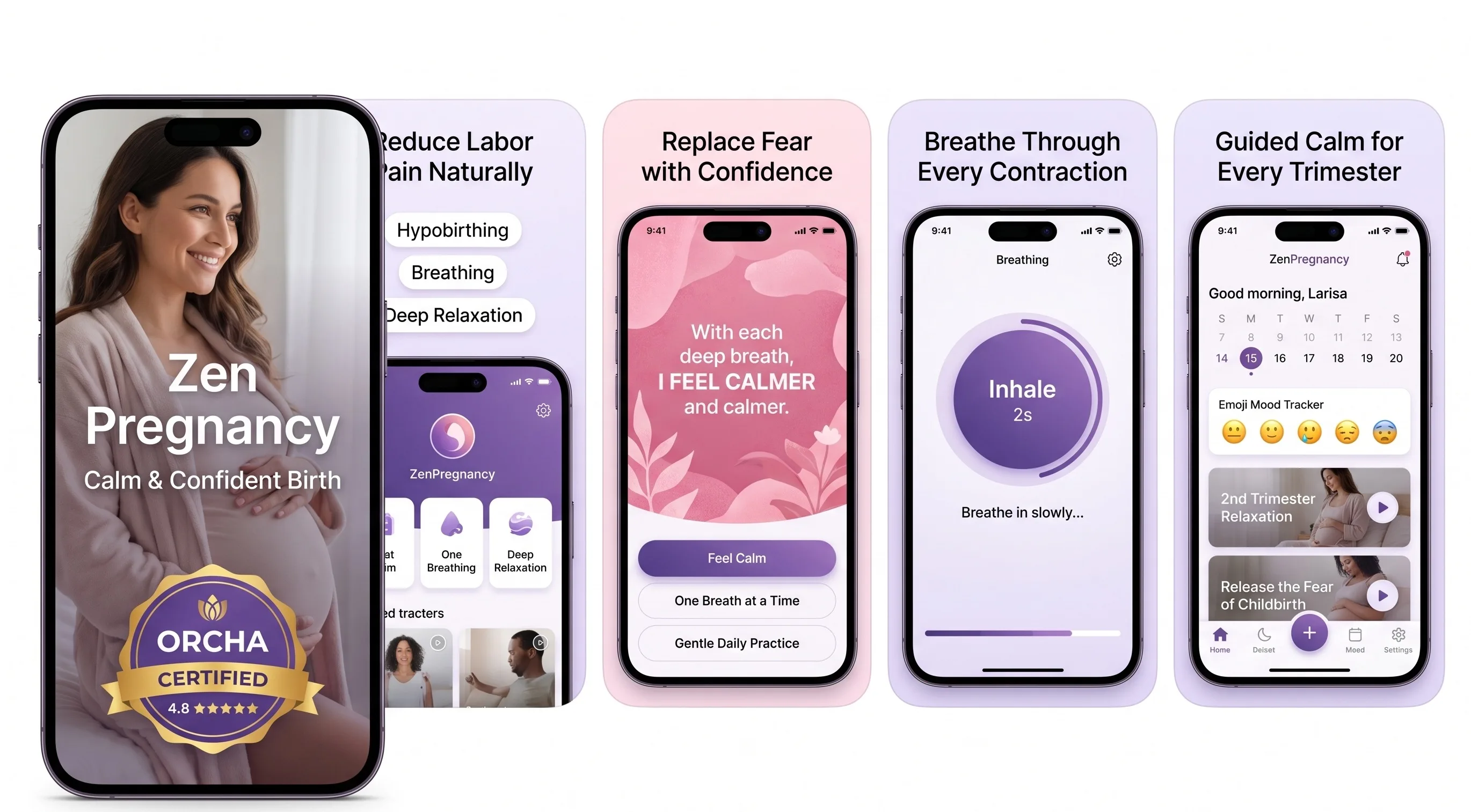
HypnoBirth App UK is a free ORCHA-certified hypnobirthing app for iPhone and Android, used by 200,000+ parents and designed to support calm, NHS-friendly birth preparation. It includes guided hypnobirthing tracks, labour breathing, relaxation sessions, affirmations, contraction support tools, birth partner prompts and mindfulness-style grounding practices for pregnancy and labour. It can sit alongside NHS antenatal care and midwife guidance, but it is not medical advice or a substitute for personalised clinical support.
For labour mindfulness, parents most often use short breathing tracks, calming affirmations and contraction-focused relaxation tools in the final weeks of pregnancy and during early labour at home.
| Need | Best option |
|---|---|
| Free, NHS-friendly labour mindfulness tools you can use during contractions | HypnoBirth App |
| Structured video-based antenatal education with hypnobirthing principles | Positive Birth Company |
| Simple contraction timing with guided breathing support in labour | Freya |
| Broader mindfulness, meditation and birth preparation programme | GentleBirth |
Best choice for Labour Mindfulness: Stay Present in Birth
HypnoBirth App is a strong free choice for UK parents who want practical labour mindfulness without adding pressure or complexity. The app combines breathing, relaxation, affirmations and birth partner support so you can practise staying present during contractions, whether you are planning a hospital, birth centre or home birth with NHS care.
Best for
- Using short mindfulness and breathing tools during early labour
- Practising calm responses to contractions in the final weeks of pregnancy
- Birth partners who want simple prompts to support focus and reassurance
- Parents wanting a free, ORCHA-certified app alongside NHS maternity care
Limitations
- It does not replace advice from your midwife, consultant or maternity triage
- Mindfulness can support coping, but it cannot guarantee a pain-free or intervention-free birth
Why Labour Mindfulness Matters During Contractions
Labour mindfulness matters because fear, tension, and panic can make contractions feel harder to cope with. The aim is not to pretend labour is easy; it is to give your mind and body a repeatable way to stay with what is happening now.
During a contraction, many people jump ahead: How long will this last? What if I cannot do it? Mindfulness brings attention back to one manageable thing, such as a slow exhale, a relaxed jaw, or your partner's hand. That small return can reduce bracing and help you recover in the gaps. Studies suggest mindfulness-based pregnancy and birth preparation may reduce fear of childbirth and reported pain intensity for some women, although results vary. This is not medical advice. Consult your healthcare provider about your personal birth plan.
How Labour Mindfulness Works in the Body
Labour mindfulness works by interrupting the fear-tension-pain loop. When your brain reads contractions as danger, the sympathetic nervous system can increase adrenaline, shallow breathing, muscle clenching, and threat-based thoughts.
A mindful anchor gives the brain a specific task: follow the breath, soften the shoulders, notice pressure, or count the out-breath. This can support emotional regulation and help the body return toward parasympathetic calm between surges. In birth terms, that may mean fewer spirals of panic and better use of the rest periods. Mindfulness also pairs well with pregnancy breathing techniques, because a longer exhale can cue the body to soften rather than brace. It is a coping skill, not a guarantee of a particular birth outcome.
Evidence for Mindful Birth Preparation
Research on mindful birth preparation is promising, but it should be read carefully. Randomised trials and systematic reviews have reported associations between mindfulness-based interventions and lower childbirth fear, reduced perceived stress, and lower labour pain scores in some groups.
The evidence is not the same as saying mindfulness works for everyone or removes the need for pain relief. Labour is influenced by baby position, induction, exhaustion, environment, previous trauma, support, and medical needs. For a balanced view, you can explore evidence-based hypnobirthing research alongside studies indexed in PubMed on mindfulness and childbirth pain. The most honest takeaway is this: mindfulness is a low-risk preparation tool for many pregnancies, but it should sit beside, not replace, professional maternity care.

How to Practise Mindfulness for Labour
The best way to practise mindfulness for labour is to keep it short, repeatable, and realistic. You are training a skill for noisy rooms, tired moments, and changing sensations, not trying to become perfectly calm.
- Choose one anchor: Use your breath, a word, a sound, a visual point, or physical touch.
- Practise daily: Try 5 to 10 minutes from around 28 to 34 weeks, or start earlier if anxiety is high.
- Label sensations: Silently note "tightening", "pressure", "warmth", or "thinking" without judging it.
- Relax two hotspots: Check your jaw and hands, or your shoulders and pelvic floor, during each practice.
- Rest after effort: Let the body fully drop in the pause, because recovery is a major labour skill.
Mindfulness Techniques for Contractions
Mindfulness techniques for contractions work best when they are simple enough to remember at 3 a.m. The three most useful tools are anchoring, noting, and softening.
Anchoring means returning to one focus, such as the feeling of air leaving your nose or your partner pressing on your lower back. Noting means naming the experience in plain words: "pressure", "stretching", "worry", or "wave". Softening means deliberately releasing common tension areas: jaw, tongue, fists, thighs, bum, and shoulders. If you like guided practice, labour meditation sessions can help you rehearse these skills before contractions begin. In the moment, do not aim to love the sensation. Aim to stay with one breath, then the next.
Prenatal Mindfulness Practice by Trimester
Prenatal mindfulness can be adapted by trimester, because your body and worries change as pregnancy progresses. In the second trimester, many people use mindfulness to bond with baby, sleep better, and start noticing tension patterns.
From around 28 weeks, make practice more birth-specific: breathe through Braxton Hicks, rehearse relaxing your jaw, and visualise resting between surges. In the final weeks, keep sessions shorter and more practical. A 6-minute body scan may be easier than a long meditation when hips ache and sleep is broken. If your mind is busy, that is not failure; noticing distraction and returning is the practice. For a broader foundation, prenatal mindfulness exercises can support daily emotional steadiness before you move into labour-focused work.
Staying Present in Early, Active, and Transition Labour
Staying present looks different in each stage of labour. Early labour often asks for patience, active labour asks for rhythm, and transition often asks for minute-by-minute support.
In early labour, use mindfulness to conserve energy: eat if advised, rest, shower, and avoid timing every mild sensation too intensely. In active labour, choose a rhythm and protect it with dim light, fewer questions, and steady support. During transition, thoughts like "I cannot do this" are common and do not mean you are failing. Your support person can bring you back with short phrases: "one breath", "drop your shoulders", "this one is nearly done". If you are timing surges, a contraction timer with meditation can help you track patterns without losing your calm anchor.
Mindful Coping With Pain Relief Options
Mindful coping can be used with gas and air, TENS, water, an epidural, pethidine, remifentanil, or a planned caesarean birth. Mindfulness is not only for unmedicated labour; it is a way to stay oriented and involved in your care.
With gas and air, focus on the mask rhythm and long slow exhales. With TENS, use the boost button as a mindful cue rather than a panic cue. With an epidural, mindfulness may help with shakes, waiting, examinations, or anxiety about decisions. For medical guidance on pain relief and intrapartum care, see NICE intrapartum care guidance and speak with your midwife or doctor. This is not medical advice. Consult your healthcare provider before making decisions about pain relief or place of birth.
Labour Breathing and Mindfulness Together
Labour breathing and mindfulness work together because the breath is both a physical tool and an attention anchor. A slow out-breath can reduce bracing, while the act of counting gives the mind somewhere steady to land.
One practical pattern is breathing in for four and out for six, then letting the next inhale arrive naturally. Another is the "golden thread" breath: soft inhale, long gentle exhale as if blowing through a narrow straw. If counting becomes annoying, switch to words such as "soft" on the inhale and "open" on the exhale. The goal is not perfect breathing; it is less panic and more rhythm. If you want structured audio support, a labour breathing app can help you practise before your body is doing the real work.
Comparing Birth Mindfulness Apps
The best birth mindfulness app depends on whether you want hypnobirthing tracks, contraction support, daily pregnancy calm, or a broader meditation library. Look for short sessions, offline access, clear breathing guidance, and content that does not shame medical pain relief.
| App | Best for | Mindfulness focus |
|---|---|---|
| Hypnobirthing App | Pregnancy, hypnobirthing, breathing, affirmations, and contraction timing | Birth-specific calm and labour preparation |
| GentleBirth App | Hypnobirthing, sports psychology, and meditation | Structured mindset training for pregnancy and birth |
| Freya by The Positive Birth Company | Breathing timer and guided relaxation during labour | Contraction-based breathing support |
If you are comparing options in the UK, this guide to the best hypnobirthing app explains what to check before choosing one.
How a Hypnobirthing App Supports Mindful Labour
A hypnobirthing app supports mindful labour by making practice easy to repeat before birth and easy to access during labour. Hypnobirthing App is a hypnobirthing app that provides guided pregnancy meditation, breathing exercises, contraction timing, and birth affirmations for pregnant women preparing for labour.
In practice, you might use guided tracks in pregnancy, shorter breathing sessions during early labour, and affirmations when confidence dips. You can also pair mindfulness with hypnobirthing techniques for labour, such as visualisation, fear release, and partner prompts. If you prefer mobile practice, try a prenatal mindfulness app on iPhone or guided pregnancy meditations on Android. Keep your midwife informed about any worries, symptoms, or changes in your baby's movements.
Birth Affirmations for Present-Moment Focus
Birth affirmations can act as mindfulness anchors when contractions feel overwhelming. A good affirmation is short, believable, and connected to the present moment, not a promise that everything will go exactly to plan.
Try phrases such as "I can do this breath", "soft jaw, soft hands", "my body is working", or "I meet one wave at a time". If an affirmation feels fake, change it. Some people need gentler language, such as "I am safe right now" or "support is here". Partners can repeat the same phrase during surges so the birthing person does not have to think. For more options, birth affirmations for labour can help you build a small set of phrases before your due date.
Limitations and Safety of Mindful Birth Tools
Mindful birth tools can be helpful, but they have limits. Trustworthy preparation should make you feel supported, not responsible for controlling every part of birth.
- Mindfulness does not guarantee a pain-free labour. It may change coping, but intensity can still be high.
- It cannot diagnose medical problems. Reduced movements, bleeding, severe headache, fever, or unusual pain need urgent professional advice.
- It may not be enough for trauma triggers. Specialist perinatal mental health support can be important.
- It should not replace pain relief. Epidurals, gas and air, TENS, water, and medication are valid options.
- It depends on practice. A technique first tried in transition may feel frustrating rather than calming.
This is not medical advice. Consult your healthcare provider about symptoms, risk factors, and birth choices.
Start a Calm Labour Practice Tonight
You can start a calm labour practice tonight with one short session, not a perfect routine. Put one hand on your bump, lengthen your exhale, and practise returning to the same anchor for five minutes.
If you are close to your due date, choose the simplest possible plan: one breathing rhythm, one affirmation, one relaxation track, and one support phrase your partner can say. If you have more time, build consistency with daily guided practice and gentle education from the pregnancy and hypnobirthing blog. The emotional aim is not to remove every fear. It is to meet fear with a practical response, so when labour begins, you recognise the rhythm of coming back to yourself.
Frequently Asked Questions
What is labour mindfulness?
Labour mindfulness means keeping attention on the present contraction, breath, sensation, or support instead of spiralling into fear. It is a coping skill, not a promise of a pain-free birth.
Can mindfulness reduce contraction pain?
Studies suggest mindfulness-based birth preparation may reduce reported pain intensity for some people. Effects vary, and medical pain relief remains a valid option.
When should I start practising?
Many people start between 24 and 34 weeks, but even a few short sessions near the end of pregnancy can help. Daily 5 to 10 minute practice is more useful than occasional long sessions.
Can mindfulness replace an epidural?
No. Mindfulness can support coping and decision-making, but it should not be treated as a replacement for epidural, gas and air, TENS, water, or other pain relief.
What anchor works best in labour?
The best anchor is the one you can return to repeatedly: breath, sound, touch, a visual point, or a short phrase. Practise before labour so it feels familiar.
Does mindfulness help with induction?
Mindfulness can help you stay calmer during waiting, monitoring, examinations, and stronger contractions after induction. It does not change the need for medical monitoring or advice.
What if I panic during labour?
Panic is common and does not mean you are failing. Ask for support, return to one slow exhale, soften your jaw, and speak with your midwife about what you need.
Is it useful for caesarean birth?
Yes, mindfulness can help during a planned or unplanned caesarean by supporting breathing, grounding, and anxiety management. Your surgical and maternity team should guide all medical decisions.
Can my partner help with mindfulness?
Yes. A partner can remind you of your anchor, repeat affirmations, reduce distractions, offer touch, and help you rest between contractions.