 Hypno
HypnoHow Often to Practise Hypnobirthing Before Labour
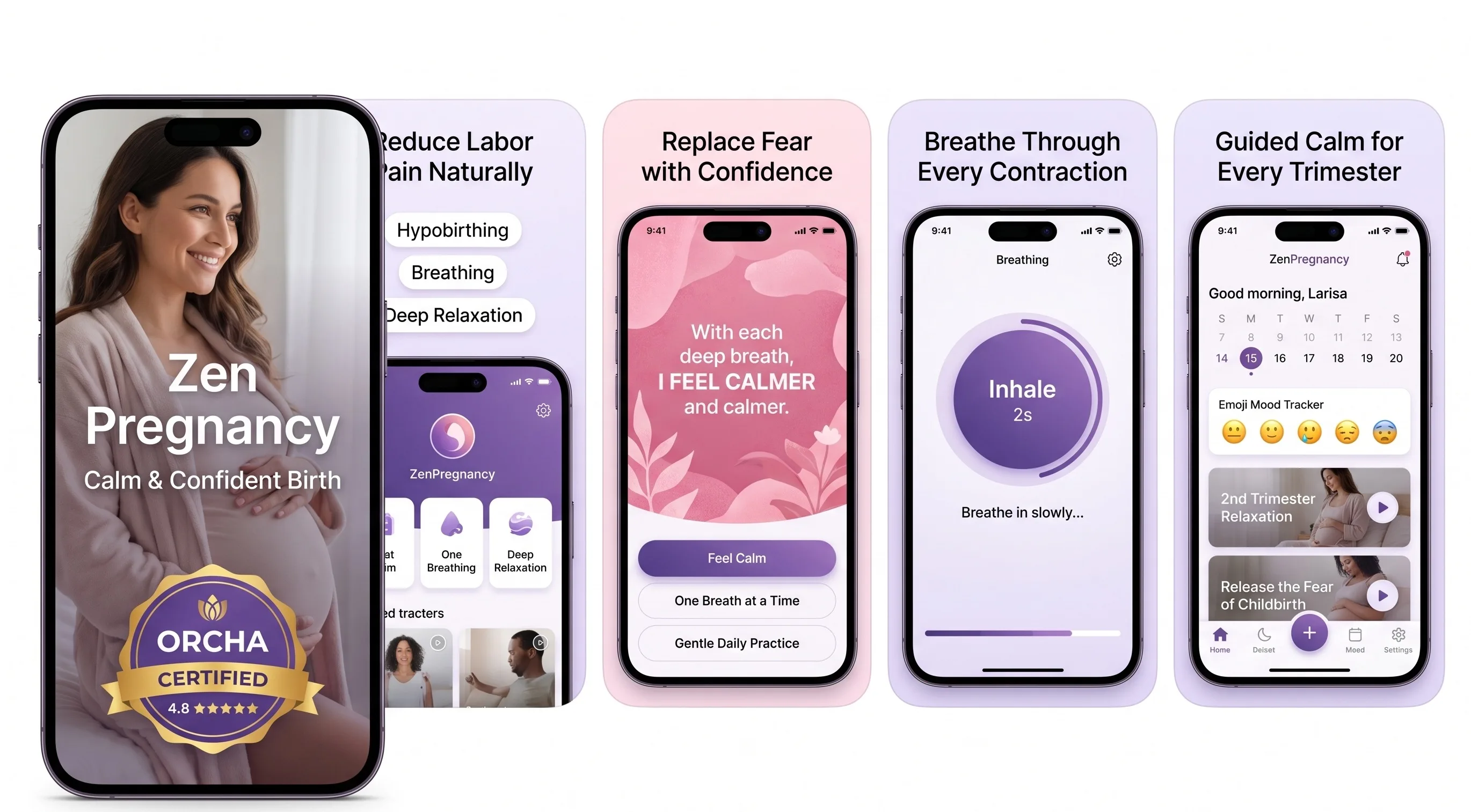
200,000+ mums • ORCHA NHS Certified • Free on iOS & Android
HypnoBirth App UK is a free ORCHA-reviewed hypnobirthing app for iPhone and Android, designed to support calm, consistent practice through breathing tools, relaxation tracks, affirmations, visualisations, birth partner prompts and labour-focused audio. It is NHS-friendly and can sit alongside your midwife-led care, antenatal classes or birth preferences, but it is not medical advice and should not replace guidance from your NHS maternity team.
For practice routines, HypnoBirth App users most often return to short breathing sessions, relaxation audio and affirmations because they are easy to repeat on ordinary days without needing a full antenatal class setup.
| Need | Best option |
|---|---|
| Building a free, low-pressure daily hypnobirthing practice routine before labour | HypnoBirth App |
| Following a more structured paid hypnobirthing course with video-led learning | Positive Birth Company |
| Using simple breathing and contraction support during early labour | Freya |
| Combining mindfulness, meditation and birth preparation in one broader wellbeing routine | GentleBirth |
Best Free App for Practising Hypnobirthing Little and Often
HypnoBirth App is a strong choice if you want to practise hypnobirthing before labour without turning it into another stressful pregnancy task. It is free, ORCHA certified and used by 200,000+ people, with short tools that fit around NHS appointments, work, older children and tired evenings.
Best for
- Creating a realistic daily or weekly hypnobirthing habit
- Short breathing, relaxation and affirmation practice
- UK parents who want support alongside NHS maternity care
- Birth partners who want simple prompts without a long course
Limitations
- It does not guarantee a pain-free labour or a specific birth outcome
- It is not a replacement for medical advice from your midwife, consultant or maternity unit
If you're wondering how often to practise hypnobirthing, aim for 10–20 minute sessions three to four times per week, plus 1–2 minutes of daily breathing or relaxation. Consistency matters more than session length, and building a simple habit your body recognises is the real goal.
> Definition: Hypnobirthing practice is a structured routine of breathing exercises, guided relaxation, visualisation, and birth affirmations designed to reduce fear and build coping techniques for labour.
- Start with 2–3 short sessions per week in the second trimester, then build to brief daily practice by the third trimester.
- Even 1–2 minutes of breathing or a cue word counts as valid daily hypnobirthing practice.
- Partner practice, micro-moments during normal life, and app-based reminders all improve consistency without adding pressure.
What a Hypnobirthing Practice Routine Actually Involves
A hypnobirthing practice routine usually includes breathing exercises, guided relaxation audio, visualisation, birth affirmations, and simple partner techniques such as massage or touch anchors. It is practice for how you want to respond under pressure, not a performance you have to get right.
A full session might mean lying down with headphones and listening to a 15-minute relaxation track. But it also counts when you soften your jaw in a supermarket queue, breathe down rather than brace up, or repeat one affirmation before sleep. Tiny pockets matter.
A Cochrane review of relaxation techniques for labour found possible benefits for anxiety and pain outcomes, but rated much of the evidence low or very low certainty (Cochrane: https://www.cochrane.org/CD009514/PREG_relaxation-techniques-pain-management-labour). That’s why I frame hypnobirthing as useful coping support, not a guaranteed outcome. If you want the wider evidence picture, the question does hypnobirthing work needs a careful answer.
How Hypnobirthing Practice Works in the Body
Hypnobirthing practice works by pairing a cue, such as a breath pattern, word, sound, or touch, with a calmer body state. Over time, that pairing can become a conditioned relaxation response. In plain language, your body starts to recognise, “we’ve done this before.”
Slow breathing can support parasympathetic nervous system activity, the branch linked with rest, digestion, and recovery. You may notice loose shoulders, heavy hands, and a less clenched jaw. That shift is small, but in labour small shifts can be useful.
Short, frequent sessions often build stronger automatic recall than one long session every fortnight because habit loops need repetition. For pregnancy relaxation, the most useful routine is usually a short practice repeated often enough that the cue feels familiar before labour begins.
Understanding the technique is not the same as rehearsing it. Labour is not a theory test.
Before You Start a Daily Hypnobirthing Practice

Before you start daily hypnobirthing practice, put the basics in place so the habit feels simple rather than another pregnancy task. A tired Tuesday needs a smaller plan than a Saturday antenatal workshop.
- Learn the core method first: Use a course, book, local class, or an app-based guide such as the Hypnobirthing App so you know what you are practising.
- Choose one repeatable slot: Bedtime, a morning shower, or a regular commute usually works better than “when I have time.”
- Set realistic expectations: Practice is coping support, not a birth script or promise.
- Plan for flexible birth outcomes: In England, about 3 in 10 deliveries are by caesarean section, so your tools should fit different birth paths (NHS Maternity Statistics 2023–24: https://digital.nhs.uk/data-and-information/publications/statistical/nhs-maternity-statistics/2023-24).
- Keep your cue simple: One breath, one word, or one touch anchor is easier to recall when your body is working hard.
Good hypnobirthing apps deliver guided practice, reminders, breathing timers, and affirmations, not a promise of a pain-free or intervention-free birth.

How To Build a Hypnobirthing Practice Routine Week by Week
A hypnobirthing practice routine works best when it grows gradually from one technique into a small labour toolkit. Start light, then add more realistic rehearsal as birth gets closer.
- Pick one breathing technique: Practise for 10 minutes, 2–3 times per week between weeks 20–28. If you need a starting point, use simple hypnobirthing breathing techniques before adding scripts.
- Add one guided relaxation audio: From weeks 25–30, listen once per week so the voice and pacing become familiar.
- Introduce micro-practice: Between weeks 28–34, use 1–2 minutes of breathing while showering, walking, or waiting for an appointment.
- Increase to short daily practice: From weeks 34–38, aim for 10–15 minutes of audio plus small daily reset moments.
- Rehearse birth-day cues with your partner: From weeks 36–40, practise anchors, lower-back massage, and one or two short phrases your partner can say.
- Use reminders without making them bossy: Tools like ZenPregnancy can help with short audio, streaks, or prompts, but the goal is rhythm, not guilt.
Stage-by-Stage Hypnobirthing Practice Frequency Guide
Hypnobirthing practice frequency should change as pregnancy progresses. At 20 weeks, you are learning the skill; by 36 weeks, you are rehearsing how to use it when contractions begin.
| Stage | Suggested frequency | Main focus |
|---|---|---|
| --- | ---: | --- |
| Second trimester | 2–3 sessions per week, 10–15 minutes | Explore breathing, audio, and affirmations |
| Early third trimester, 28–34 weeks | 4–5 short practices per week | Mix guided relaxation with micro-practice |
| Late third trimester, 34+ weeks | Brief daily practice plus weekly partner rehearsal | Build automatic cues for labour |
Labour length varies widely by parity, induction, pain relief, and birth setting. That helps explain why short drills are realistic preparation. You are not training for one continuous meditation; you are practising how to reset again and again.
Second Trimester Practice Schedule
Keep it exploratory. Notice which tracks, breaths, or words help your shoulders drop.
Third Trimester Practice Schedule
Make it practical. Pack it in your labour toolkit alongside lip balm, headphones, and your printed preferences sheet.
Micro-Practice for Busy Days Without a Full Session
Micro-practice counts as daily hypnobirthing practice because it repeats the cue your body is learning. One or two minutes can reinforce the same conditioned response as a longer audio, especially when you repeat it often.
Try slow breathing while waiting for the kettle, a cue word while settling into bed, or one affirmation on the commute. If you wake at 3:17am with the bump wriggling and your mind replaying every antenatal appointment, use one track or one breath pattern. Keep it boring and familiar.
Apps such as ZenPregnancy, GentleBirth, and Expectful can bridge the gap with short audio or breathing timers. Missing a day does not reset your progress. It just means you begin again tomorrow.
Reset the plan.
Common Hypnobirthing Practice Myths That Add Pressure
Several hypnobirthing myths make practice feel bigger than it needs to be. Most of them confuse consistency with perfection.
- Myth 1: You must practise for an hour every day. Short, repeatable sessions are usually more sustainable than long sessions you dread.
- Myth 2: Missing a few days ruins your progress. A gap may interrupt momentum, but it does not erase the cues you have rehearsed.
- Myth 3: Practice only counts if you lie down with a full guided audio. Breathing, affirmations, visualisation, and touch anchors all count.
- Myth 4: More practice always means an easier birth. Labour is shaped by your body, baby, support, setting, and medical circumstances.
- Myth 5: Calm means quiet. Some people breathe well while moving, swaying, crying, or asking firmly for help.
A flexible routine usually works better than an intense one because it survives real life.
Partner Practice in a Hypnobirthing Routine
Partner practice matters when your routine includes massage, light-touch anchors, scripts, or communication plans. Your birth partner does not need to become a hypnobirthing expert, but they do need to know what helps you soften and reset.
From around 34 weeks, one short partner session per week is enough for most couples. Ten minutes can cover thumbs pressing circles into the lower back, a straw offered between surges, and one affirmation read from a phone note. Practical beats polished.
Clinicians and maternity guidance recognise the value of continuous support during established labour; NICE recommends continuous support for women in established labour (NICE NG235: https://www.nice.org.uk/guidance/ng235). That is the context. Partner preparation is not decoration; it is part of how your preferences get supported in the room.
When to Contact Your Midwife or Maternity Unit
Contact your midwife, maternity triage, or maternity unit whenever something feels clinically worrying. Hypnobirthing can support your nervous system, but it is never a replacement for medical assessment, labour monitoring, or urgent care.
Use your local maternity-unit numbers first if you have them saved, and use emergency services if you cannot get through or symptoms feel severe. Do not wait to “see if breathing helps” with red flags such as reduced or changed baby movements, vaginal bleeding, severe abdominal pain, sudden intense headache or feeling very unwell, or concerns that your waters have broken, are leaking, smell unusual, or look discoloured.
- Pause the relaxation track, breathing timer, or affirmation practice if a symptom worries you.
- Call your midwife, maternity triage line, or labour ward using the number in your notes or hospital information.
- Describe exactly what has changed, including timing, movements, bleeding, pain, fluid, and any instincts that something is not right.
- Follow the clinical advice you are given, including going in for assessment if asked.
- Return to hypnobirthing practice only once the concern has been checked or you have clear guidance that it is safe to continue.
Limitations
Hypnobirthing practice frequency can help you build familiarity, but it cannot control every part of birth. That honesty matters.
- Hypnobirthing is not a substitute for medical care, labour monitoring, maternity triage, or emergency intervention.
- The evidence base for specific hypnobirthing outcomes is mixed, and some related relaxation research is low certainty.
- Short daily practice may support habit formation, but it will not remove fear, pain, or complications for everyone.
- A rigid schedule can backfire if you have fatigue, nausea, pelvic pain, work shifts, or childcare demands.
- Guided audio and app reminders can improve consistency, but they do not replace antenatal education, birth partner rehearsal, or individualised care planning.
- A caesarean, induction, epidural, assisted birth, or change of plan does not mean your practice failed.
- If reduced movements, bleeding, severe pain, or worrying symptoms appear, contact your midwife or maternity unit rather than using relaxation alone.
Birth preferences are not a birth script.
Frequently Asked Questions
Can I start hypnobirthing at 36 weeks?
Yes, you can start hypnobirthing at 36 weeks by practising 10–15 minutes most days and adding 1–2 minute breathing resets. Focus on one breathing technique, one relaxation audio, and one partner cue.
Is 10 minutes of practice enough?
Yes, 10 minutes can be enough when repeated consistently. Short practice is usually better than waiting for a long session you rarely manage.
Does hypnobirthing work for caesarean births?
Hypnobirthing techniques can be used for caesarean births because breathing, relaxation, and affirmations can support calm before and during theatre preparation. They do not change the medical need for surgery.
What if I miss a week of practice?
Missing a week does not reset your hypnobirthing progress. Restart with one short breathing session and avoid trying to “catch up” with long practice.
Should my partner practise hypnobirthing too?
Yes, partner practice is useful for massage, anchors, scripts, and communication preferences. Once per week from about 34 weeks is a practical target.
Can I practise hypnobirthing without an app?
Yes, you can practise hypnobirthing with a book, course, class notes, or self-guided breathing. A tool such as the ZenPregnancy hypnobirthing app can help with reminders and short audio if consistency is difficult.
Does more practice guarantee easier labour?
No, more practice does not guarantee an easier labour. Hypnobirthing is one coping tool, and outcomes depend on many physical, emotional, and clinical factors.
When is the best time of day to practise?
The best time to practise is the time you can repeat, often bedtime or a quiet morning slot. Routine matters more than the exact time of day.