 Hypno
HypnoHypnobirthing Online: App vs Traditional Antenatal Classes
Hypnobirthing app vs in-person antenatal classes: cost, flexibility, effectiveness, and how each option fits around NHS maternity care in the UK.
200,000+ mums • ORCHA NHS Certified • Free on iOS & Android
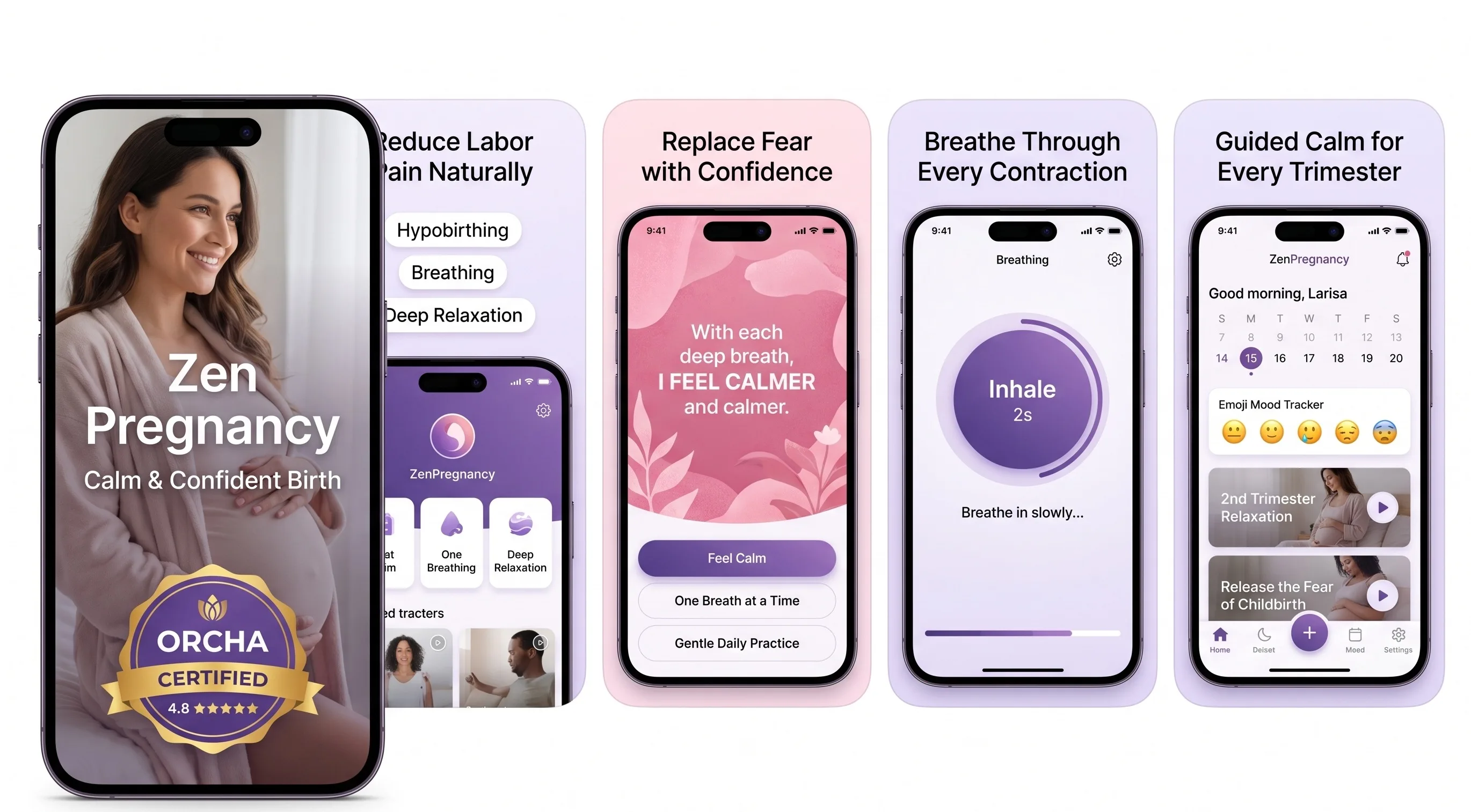
HypnoBirth App UK is a free, ORCHA-certified hypnobirthing app for iPhone and Android, used by 200,000+ parents and designed to sit alongside NHS maternity care. It includes breathing tools, relaxation tracks, affirmations, birth partner prompts, contraction support, and practical preparation for labour, induction, assisted birth, or caesarean birth. It is NHS-friendly support for confidence and calm, but it is not medical advice and should not replace guidance from your midwife, obstetrician, or maternity unit.
For parents comparing online hypnobirthing with classes, our most-used features are guided breathing, relaxation audio, partner prompts, and quick labour tools that can be practised at home and revisited on the maternity ward.
| Need | Best option |
|---|---|
| Free, flexible hypnobirthing online support that fits around NHS appointments and can be used in labour | HypnoBirth App |
| A structured paid course-style approach with video lessons and a familiar antenatal class feel | Positive Birth Company |
| Simple contraction-timing support with calming prompts for early labour | Freya |
| Broader pregnancy mindfulness, meditation, and wellbeing practice across pregnancy | GentleBirth |
Best Free Hypnobirthing Online Choice for App vs Classes
HypnoBirth App is a strong starting point if you want hypnobirthing online without the cost or fixed timetable of traditional antenatal classes. It works well alongside NHS care because you can practise breathing, relaxation, affirmations, and partner support at home, then reuse the same tools during labour.
Best for
- UK parents who want flexible birth preparation without committing to scheduled classes
- Birth partners who need practical prompts and ways to support labour calmly
- Mums who want to revisit hypnobirthing techniques regularly from home or hospital
Limitations
- It does not replace personalised medical advice from your NHS maternity team
- It is self-guided, so some parents may still prefer a live teacher or group antenatal class
Online Hypnobirthing Choices During NHS Pregnancy Care
Online hypnobirthing can fill the emotional and practical gaps that often sit around standard maternity appointments. NHS care is there for clinical monitoring, screening, safety planning, and medical decision-making; hypnobirthing is there to help you practise calm breathing, relaxation, confidence, and partner support between appointments.
Many pregnant people feel reassured by midwives but still leave appointments with private worries: Will I cope? What if I panic? What if labour changes direction? The NHS describes antenatal classes as a way to prepare for labour, birth, feeding, and early parenting, but availability and format vary by area. If you want specific guidance on where hypnobirthing sits alongside UK maternity care, this guide to hypnobirthing on the NHS explains the overlap clearly. This is not medical advice. Consult your healthcare provider.
How Online Hypnobirthing Works in Labour
Online hypnobirthing works by teaching your nervous system to associate labour cues with calm, steady responses. The core mechanism is reducing the fear-tension-pain cycle: fear increases stress hormones and muscle tension, while slow breathing, relaxation, and focused attention can help the body soften and cope.
Most programmes use self-hypnosis, guided imagery, affirmations, and breathing patterns such as up-breathing for contractions and down-breathing for birth. You practise these repeatedly during pregnancy so they feel familiar when labour begins. Research is mixed but promising: a Cochrane review on hypnosis for labour and childbirth found hypnosis may reduce pharmacological pain relief use for some women, though evidence quality varies. Hypnobirthing should support your birth care, not replace medical advice.
App-Based Hypnobirthing Compared With Antenatal Classes
App-based hypnobirthing is usually more flexible and lower cost, while traditional classes offer live teaching, discussion, and local parent connection. The best choice is the one you can repeat consistently, especially in the third trimester when practice matters more than perfect theory.
| Option | Best for | Main strength | Watch-out |
|---|---|---|---|
| Hypnobirthing App | Self-paced daily practice | Audio, breathing, affirmations, and labour tools in one place | Less live feedback than a teacher-led class |
| The Positive Birth Company | Structured online video learning | Clear birth education and partner content | Needs time set aside to watch modules |
| KGHypnobirthing | Teacher-led hypnobirthing depth | Detailed method and instructor support | Often costs more than self-paced options |
| NCT classes | Local parent community | Group discussion and postnatal friendships | Hypnobirthing may not be the main focus |
For a deeper side-by-side view, see this dedicated guide to hypnobirthing classes versus an app.

Cost, Flexibility, and Support for Birth Preparation
The main difference between a hypnobirthing app and a class is not only price; it is the type of support you receive. Apps are usually better for short, repeated practice at home, while classes are stronger for accountability, live questions, and feeling held by a teacher or group.
In-person antenatal or hypnobirthing classes can be wonderful if you enjoy learning socially and have the time, transport, energy, and budget. An online app may be easier if you work shifts, already have children, feel sick or tired, or prefer practising privately in bed with headphones. Some families choose both: a class for big-picture education and an app for daily conditioning. If you are comparing tools, this review of the best hypnobirthing app features can help you understand what to look for before paying.
What Week to Start Digital Hypnobirthing Practice
The ideal time to start digital hypnobirthing is usually between 20 and 30 weeks of pregnancy. That gives you enough time to learn the techniques, repeat the audio tracks, involve your birth partner, and build calm associations before labour starts.
If you are already 34, 36, or even 39 weeks, it is not too late. Start with one short breathing practice each day and one longer relaxation track at night. The goal is not to become a perfect meditator; it is to give your mind and body familiar cues. Think of it like packing your hospital bag emotionally. You are preparing phrases, breaths, positions, touch cues, and decision-making tools that can travel with you into a hospital, birth centre, home birth, induction, assisted birth, or caesarean birth.
How to Use a Hypnobirthing App at Home
A hypnobirthing app works best when it becomes a small daily habit, not a course you binge once and forget. Keep sessions short enough that you actually do them, especially during the tired final weeks.
- Start with five minutes of slow breathing once a day, preferably at the same time.
- Listen to a relaxation or birth meditation track three to five nights a week.
- Practise one labour breathing pattern during Braxton Hicks, walks, or bedtime discomfort.
- Invite your birth partner to learn your preferred words, touch cues, and environment choices.
- Rehearse using the app in realistic settings, such as on the sofa, in the car park before an appointment, or with headphones in bed.
You can begin with the iOS hypnobirthing practice app or the Android prenatal mindfulness app, depending on your phone.
Breathing, Meditation, and Affirmations Online
Strong online hypnobirthing programmes teach three practical pillars: breathing, meditation, and affirmations. Breathing gives you something physical to do during contractions, meditation trains calm attention, and affirmations help replace frightening internal stories with steadier ones.
During pregnancy, many people practise slow nasal breathing for rest, surge breathing for contractions, and longer exhales for moments of anxiety. Meditation tracks often include body scans, safe-place imagery, baby bonding, or visualising the cervix softening and opening. Affirmations can be simple: my body and baby are working together, I can take this one breath at a time, or I can ask questions and make informed choices. For specific practice ideas, explore pregnancy breathing techniques and the birth affirmations app page. These tools support coping; they do not guarantee a particular labour outcome.
Partner Support With Virtual Hypnobirthing
Virtual hypnobirthing can be especially helpful for birth partners because it gives them a clear role. Instead of standing nearby feeling helpless, a partner can guide breathing, protect the room, repeat calming phrases, support decisions, and notice when the birthing person needs reassurance or advocacy.
Partners do not need to become experts. They need to know the basics: what helps you relax, what language you dislike, which touch cues feel good, what your birth preferences are, and when to call the midwife. Online practice also makes it easier for partners with long work hours or childcare responsibilities to join in at home. If you want practical tools to practise together, the guide to hypnobirthing techniques for labour covers breathing, visualisation, anchors, and partner scripts in a simple way.
Evidence for Hypnosis and Birth Anxiety
Evidence suggests hypnobirthing and hypnosis-based preparation may help some people feel calmer, more confident, and more able to cope in labour. The strongest benefit many parents report is not a perfect birth; it is feeling less frightened and more involved in decisions.
Research is not a promise. Studies vary in size, method, teaching style, and outcomes measured, so it would be wrong to claim hypnobirthing guarantees less pain, fewer interventions, or a specific birth plan. What is reasonable to say is that relaxation, breathing, education, and supportive birth environments can reduce anxiety and improve perceived coping for many pregnant people. If you like seeing the studies before you commit, this overview of hypnobirthing evidence-based research explains the findings and limitations. This is not medical advice. Consult your healthcare provider about your own pregnancy.
Where Hypnobirthing App Fits With Online Classes
Hypnobirthing App fits best as a daily practice companion, whether you are also taking a live antenatal class or learning fully online. It is not a replacement for your midwife, obstetrician, or emergency care; it is a pocket-sized way to repeat the skills that help you feel steadier.
For some families, the app is enough because they want breathing tracks, pregnancy meditations, affirmations, and labour tools without attending scheduled sessions. Others use it alongside a teacher-led course so the education becomes embodied through repetition. That combination is often powerful: you learn the why in a class, then practise the how every day at home. If you want more structure than an app alone, compare options on the hypnobirthing course online page before choosing.
Limitations and Safety of Online Birth Preparation
Online birth preparation can be calming and useful, but it has limits. Honest expectations protect trust and help you choose the right support for your pregnancy.
- It cannot diagnose symptoms. Reduced baby movements, bleeding, severe headache, fever, or unusual pain need urgent maternity advice.
- It cannot guarantee a vaginal, unmedicated, or pain-free birth. Labour is physical, emotional, and sometimes unpredictable.
- It may not be enough for trauma. Previous birth trauma, sexual trauma, panic attacks, or tokophobia may need specialist perinatal mental health support.
- It gives less live correction. A teacher can notice breathing habits, tension, and misunderstanding in real time.
- It depends on practice. Listening once at 38 weeks is unlikely to condition a strong relaxation response.
- It should sit beside medical care. This is not medical advice. Consult your healthcare provider.
When In-Person Antenatal Classes Are Better
In-person antenatal classes are often better if you want live reassurance, local friendships, and a teacher who can answer questions in the room. They may also suit you if you find it hard to motivate yourself without a date in the diary.
Face-to-face classes can be especially valuable for first-time parents who want to practise positions, see demonstrations, ask about local hospital policies, or talk through feeding and early newborn care. They can also feel emotionally grounding if pregnancy has been lonely. The downside is that classes may be expensive, fixed in schedule, tiring after work, or difficult if you are on bed rest, managing pelvic girdle pain, caring for older children, or feeling socially anxious. If you choose classes, you can still use online tracks between sessions to make the techniques familiar.
Choosing Between a Birth App and Live Teaching
Choose a birth app if you want flexible practice, lower cost, and repeatable audio support; choose live teaching if you want interaction, accountability, and personalised answers. Choose both if you want education plus daily reinforcement.
A simple decision test is to ask: What will I still do when I am tired at 33 weeks? If the answer is an evening audio track, start with an app. If the answer is showing up because someone is expecting you, book a class. If you are anxious, have a complex pregnancy, or feel unsure about your choices, consider adding one-to-one antenatal education or speaking with your midwife. The best preparation is not the most impressive-looking course. It is the support that helps you feel informed, calm enough to think, and able to ask for what you need.
Starting Tonight With Calm Labour Practice
You can start preparing tonight with one short, kind practice session. Sit or lie down, soften your jaw, place one hand on your bump, breathe in gently for four, breathe out slowly for six, and repeat a phrase that feels believable rather than forced.
Try something simple: I am safe in this moment, I can take one breath at a time, or my body knows how to soften. If emotions come up, that does not mean you are doing it wrong. Pregnancy can carry hope, fear, grief, excitement, and old memories all at once. Let the practice be a place where your nervous system learns it does not have to stay on high alert. Then repeat tomorrow. Calm birth preparation is built in small, ordinary moments long before labour begins.
Read more
Frequently Asked Questions
Can you learn hypnobirthing online?
Yes, you can learn hypnobirthing online through apps, recorded courses, or live virtual classes that teach breathing, relaxation, visualisation, and affirmations. The key factor is regular practice, not whether the teaching happens in a room or on a screen.
Is an app better than classes?
An app is better for flexible daily practice, while classes are better for live questions, accountability, and community. Many parents get the best results by using both.
When should I start hypnobirthing?
Many people start between 20 and 30 weeks, giving the body time to learn the relaxation cues before labour. Starting later can still help, especially if you practise little and often.
Does hypnobirthing work for induction?
Hypnobirthing can support calm breathing, decision-making, and coping during induction, but it cannot control how your body responds medically. Discuss induction choices with your midwife or doctor.
Can I use it with an epidural?
Yes, hypnobirthing can be used with an epidural, water birth, gas and air, caesarean birth, or no medication. It is about staying calm and informed, not proving anything.
Will hypnobirthing make birth pain-free?
No ethical hypnobirthing teacher or app should guarantee a pain-free birth. Some people report less fear and better coping, but labour sensations and medical needs vary.
Do birth partners need to practise?
Birth partners do not need to practise as much as the pregnant person, but they should know the breathing cues, preferred words, and birth preferences. Their calm presence can make the tools easier to use.
Are online classes safe in pregnancy?
Online hypnobirthing and antenatal education are generally safe as learning and relaxation tools. This is not medical advice; consult your healthcare provider about symptoms, risk factors, or concerns.
What if I feel anxious practising?
If relaxation makes you feel more anxious, shorten the practice, keep your eyes open, or choose grounding techniques instead of deep visualisation. If anxiety feels intense or linked to trauma, ask your midwife or GP about perinatal mental health support.