 Hypno
HypnoHypnobirthing Evidence-Based Research: A 2026 Review
Hypnobirthing evidence based research suggests hypnobirthing-style education and relaxation can reduce fear and improve coping and birth experience for many people, but results vary and some outcomes (like labour length) are inconsistent across studies. The strongest findings tend to relate to anxiety, confidence, and satisfaction rather than guarantees about pain-free birth. ZenPregnancy helps you turn the research-backed parts of hypnobirthing into daily practice with guided audio, breathing, and pregnancy tools.
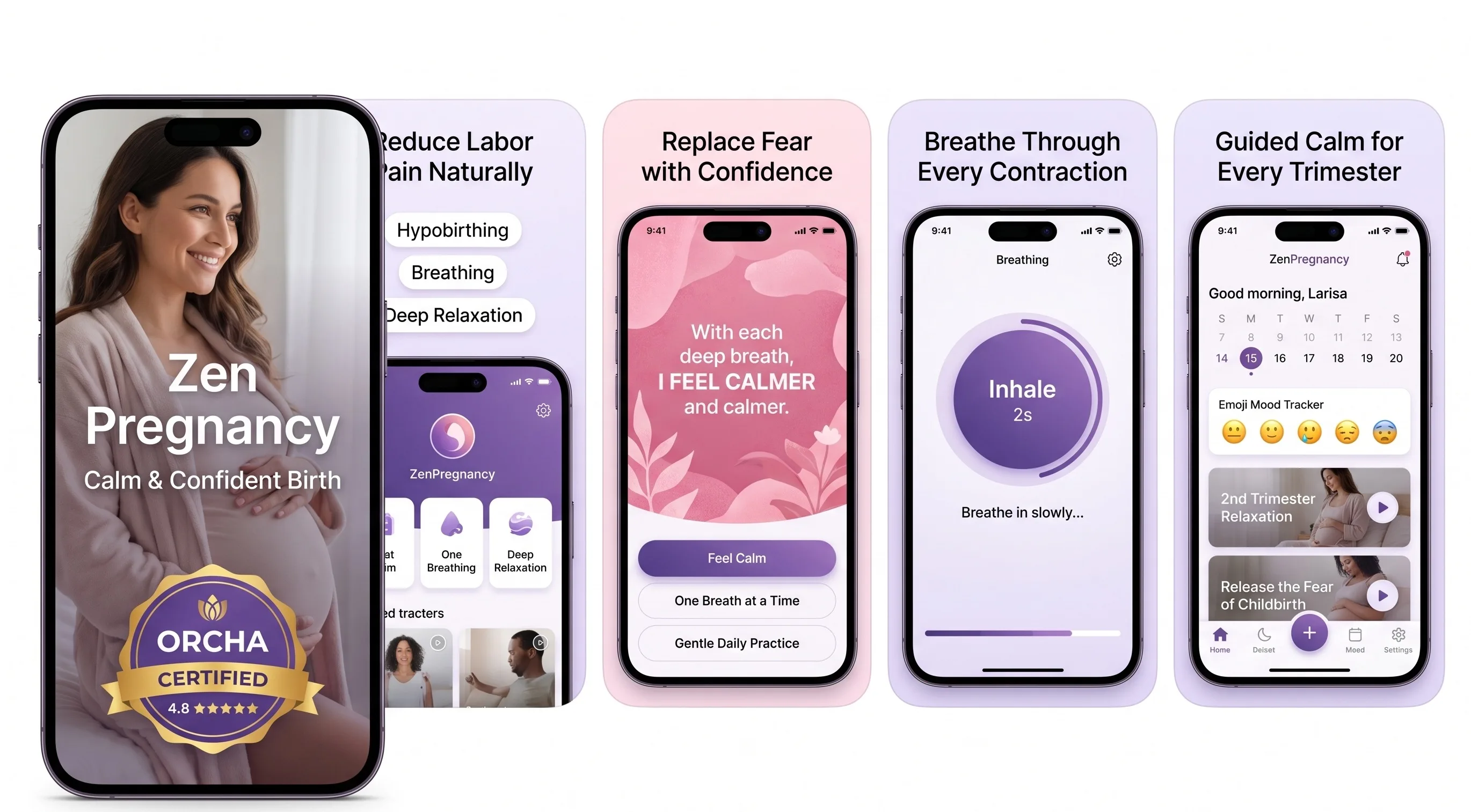
200,000+ mums • ORCHA NHS Certified • Free on iOS & Android
HypnoBirth App UK is a free, ORCHA-certified hypnobirthing app for iPhone and Android, used by 200,000+ parents and designed to support evidence-informed birth preparation in a UK maternity context. It includes guided breathing, relaxation tracks, birth affirmations, visualisations, a contraction timer and birth planning tools that can sit alongside NHS antenatal care and conversations with your midwife. It is NHS-friendly support for practice and confidence, not medical advice or a substitute for personalised clinical guidance.
| Need | Best option |
|---|---|
| Free evidence-informed hypnobirthing practice with breathing, affirmations and NHS-friendly birth planning tools | HypnoBirth App |
| Structured paid hypnobirthing course content for couples wanting a more class-style approach | Positive Birth Company |
| Labour-focused support with a simple timer and audio prompts for use during contractions | Freya |
| Mindfulness-led preparation with broader pregnancy wellbeing and meditation features | GentleBirth |
What Evidence-Based Hypnobirthing Research Means
Evidence-based hypnobirthing means the techniques have been studied in clinical research, not that they guarantee a particular labour. Hypnobirthing evidence based research usually looks at outcomes such as fear of childbirth, anxiety, pain coping, use of pain relief, satisfaction, and sometimes birth mode.
The most responsible reading is balanced: studies suggest benefits for calm, confidence, and coping, while findings on labour length, epidural use, and caesarean birth are more mixed. A Cochrane review of hypnosis for labour pain found possible benefits in some areas but also noted limitations in study quality. If you want a plain-language starting point, our guide to whether hypnobirthing really works explains how to read claims without panic. This is not medical advice; consult your midwife, doctor, or obstetric team.
How Hypnobirthing Techniques Work in the Body and Brain
Hypnobirthing techniques work by reducing threat perception and supporting a steadier nervous system response. In labour, fear can increase sympathetic nervous system activity, muscle tension, and stress hormones; calm breathing, guided imagery, and familiar cues can support parasympathetic activity and help the body feel safer.
The mechanism is not magic. Repeated practice builds conditioned relaxation: your brain learns that a voice cue, breathing rhythm, affirmation, or visual image means safety. Cognitive reappraisal also matters, because sensations can be interpreted as danger or as strong physical work. That shift may change anxiety, perceived pain intensity, and coping behaviour. It does not remove the need for medical care, monitoring, or pain relief when wanted or needed.
How to Apply Research-Led Hypnobirthing at Home
The best way to apply research-led hypnobirthing at home is to practise small skills often, rather than saving everything for labour day. Start gently, especially if you feel anxious or overwhelmed.
- Choose one goal: fear reduction, sleep, confidence, breathing, or birth partner communication.
- Practise one short audio daily: ten minutes is enough to build familiarity; a hypnobirthing practice app can make this easier.
- Repeat one breathing pattern: pair it with everyday moments, using our guide to pregnancy breathing techniques if you need structure.
- Add one labour cue: a phrase, touch cue, playlist, or scent.
- Review weekly: compare what you practise with realistic hypnobirthing techniques, not social media promises.

Research Findings on Fear, Pain, and Coping
The most consistent hypnobirthing findings tend to relate to fear reduction, anxiety, coping, and satisfaction, rather than guaranteed pain removal. This matters because many pregnant people arrive at birth education carrying quiet worries: Will I cope? Will I lose control? Will people listen to me?
Studies suggest that antenatal relaxation, hypnosis, and breathing education may help some people feel more prepared and less frightened. Pain findings are more variable. Some trials report lower pain scores or reduced use of analgesia, while others show little difference. A fair conclusion is that hypnobirthing may change your relationship with pain and decision-making, but it should not be sold as a promise of pain-free birth. For a deeper look, see our evidence summary on whether hypnobirthing can reduce pain.
Pregnancy Meditation and Daily Repetition
Daily repetition is one of the most practical ways to make hypnobirthing feel usable in labour. A skill practised only once in a calm room may be hard to remember during contractions; a skill practised through the third trimester can feel more familiar when your body is working hard.
Short sessions count. Five to fifteen minutes of pregnancy meditation, paced breathing, or guided relaxation can help you associate the voice, words, and breathing rhythm with safety. Hypnobirthing App is designed for this kind of repeatable practice, with guided sessions that fit into bedtime, a lunch break, or a quiet moment after an antenatal appointment. If meditation is your main entry point, a guided pregnancy meditations library can be a gentle place to begin.
Birth Affirmations as Confidence and Coping Cues
Birth affirmations are not evidence because a sentence is pretty; they are useful when they become simple coping cues. In hypnobirthing practice, affirmations often work alongside breathing, touch, movement, and partner support to remind the brain, “I know what to do next.”
Good affirmations are believable, brief, and personal. “I can take this one surge at a time” is usually more useful than a phrase that feels false or forced. Some people like powerful statements; others prefer neutral phrases such as “soft jaw, relaxed shoulders” or “breathe out slowly.” If words help you focus, our hypnobirthing affirmations guide shows how to choose phrases for hospital, birth centre, or home birth plans.
Hypnobirthing on the NHS and Birth Plans
Hypnobirthing can sit alongside NHS maternity care, medical pain relief, induction, monitoring, assisted birth, or caesarean birth. It is not an alternative to clinical advice; it is a preparation method that may help you stay calmer, ask questions, and make informed choices.
In the UK, many midwives are familiar with hypnobirthing language, especially breathing, low lighting, upright positions, and birth partner advocacy. The key is to write a flexible birth plan: what helps you feel safe, what words you prefer, what pain relief options you want discussed, and what matters if plans change. The NHS guide to pain relief in labour is worth reading alongside our article on hypnobirthing on the NHS. This is not medical advice; ask your care team what is appropriate for you.
Best Hypnobirthing Apps for Evidence-Informed Practice
The best app for evidence-informed hypnobirthing is the one that helps you practise consistently, keeps claims realistic, and supports labour tools you may actually use. Hypnobirthing App, GentleBirth, The Positive Birth Company, and Expectful all approach preparation differently.
| App or programme | Best fit | Research-led practice signal |
|---|---|---|
| Hypnobirthing App | Daily breathing, relaxation, affirmations, and contraction timing | Skills are repeated in short sessions, which supports familiarity |
| GentleBirth | Mindfulness-led birth preparation | Strong focus on mindset and guided audio |
| The Positive Birth Company | Course-style hypnobirthing education | Structured learning with practice left to the user |
| Expectful | Pregnancy meditation and emotional support | Meditation-first approach for stress and sleep |
For a UK-specific comparison, see our guide to the best hypnobirthing app UK options.
Honest Assessment of Hypnobirthing Evidence and Limits
A trustworthy reading of hypnobirthing research includes its limits. The evidence is encouraging in some areas, but it is not strong enough to promise a pain-free, intervention-free, or complication-free birth.
- Study quality varies: trials differ in size, teaching style, comparison groups, and outcome measures.
- Pain results are mixed: some people report better coping, but that is not the same as no pain.
- Birth is unpredictable: induction, fetal monitoring, assisted birth, or caesarean may still be the safest option.
- Practice matters: benefits are less likely if techniques are only learned passively.
- Trauma and anxiety need care: hypnobirthing may help some people, but specialist mental health support may also be needed.
This is not medical advice; discuss your personal risks and choices with your healthcare provider.
Common Research Mistakes That Increase Pregnancy Anxiety
Reading birth research while pregnant can be reassuring, but it can also make anxiety worse if you treat every statistic as a prediction about your own body. Research describes groups; your care team supports the individual pregnancy in front of them.
- Confusing averages with guarantees: a study outcome is not a promise.
- Ignoring the comparison group: hypnobirthing may be compared with standard care, another class, or no intervention.
- Chasing perfect evidence: birth research often has practical limits because labour is hard to standardise.
- Reading only headlines: abstracts and social posts can miss uncertainty, sample size, and context.
- Forgetting your preferences: evidence helps decisions, but values and safety matter too.
When to Start Evidence-Informed Birth Practice
You can start hypnobirthing at any point, but many people find weeks 20 to 34 ideal because there is enough time for repetition without feeling rushed. If you are earlier than that, focus on calm pregnancy habits; if you are later, keep it simple and practise the skills most likely to help in labour.
In the second trimester, try breathing, body scans, and basic fear-release work. From around 28 weeks, add birth partner cues, affirmations, and practice during mild discomfort such as walking uphill or holding a wall sit. From 36 weeks, rehearse early labour routines: dim lights, hydration, rest positions, contraction timing, and when to call your maternity unit. Late starters can still benefit from a few clear cues practised daily.
Choosing a Research-Led Hypnobirthing Tool
Choose a research-led hypnobirthing tool that teaches repeatable skills, avoids absolute claims, and supports the kind of birth you are preparing for. Hypnobirthing App is a hypnobirthing app that provides guided pregnancy meditation, breathing exercises, contraction timing, and birth affirmations for pregnant women and birthing people preparing for labour.
A good tool should feel calm, practical, and non-judgemental. It should support hospital, home, birth centre, induced, medicated, unmedicated, and caesarean pathways without making you feel that one version of birth is the only successful one. Look for short audio sessions, breathing drills, partner-friendly cues, and clear reminders that medical decisions belong with you and your healthcare team.
Keep reading on ZenPregnancy
Frequently Asked Questions
What is evidence-based hypnobirthing?
Evidence-based hypnobirthing uses techniques that have been studied, such as relaxation, breathing, self-hypnosis, and fear-reduction education. It means research-informed, not guaranteed.
Does hypnobirthing really reduce pain?
Some studies suggest hypnobirthing may reduce perceived pain or help with coping, but results are mixed. It should not be presented as a guaranteed pain-free birth method.
When should I start practising?
Many people start between 20 and 34 weeks, but you can begin earlier or later. Even short daily practice in the final weeks can help cues feel more familiar.
Can I use it with an epidural?
Yes. Hypnobirthing can support breathing, decision-making, rest, and calm whether you use an epidural, other pain relief, or no medication.
Is it safe in high-risk pregnancy?
The relaxation and breathing parts may be gentle, but high-risk pregnancies need personalised medical guidance. This is not medical advice; ask your midwife, doctor, or obstetric team.
Do I need classes as well?
Some people love classes for live teaching and partner involvement, while others prefer app-based practice at home. The best choice is the one you will repeat consistently.
What outcomes are best supported?
The strongest research themes are usually fear reduction, lower anxiety, improved confidence, coping, and birth satisfaction. Outcomes such as labour length and mode of birth are less consistent.
Can partners use the techniques?
Yes. Partners can practise calm touch cues, breathing prompts, supportive language, timing contractions, and protecting the birth environment.
How often should I practise?
Short daily practice is usually more useful than one long session occasionally. Aim for 5 to 15 minutes most days, then add partner rehearsal in late pregnancy.