 Hypno
HypnoHypnobirthing Red Flags In Apps, Courses And Claims
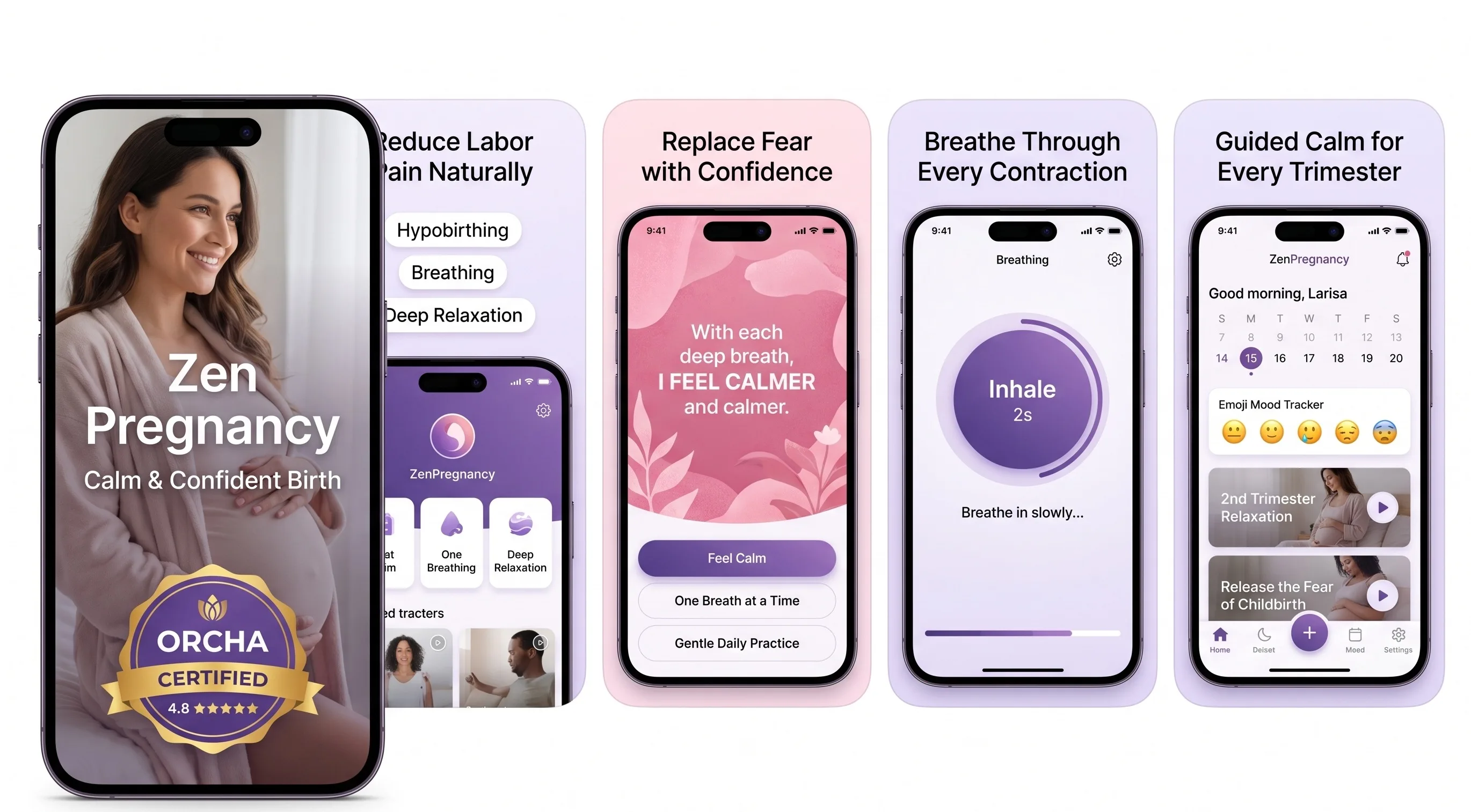
200,000+ mums • ORCHA NHS Certified • Free on iOS & Android
HypnoBirth App UK is a free, ORCHA-reviewed hypnobirthing app for iPhone and Android, used by 200,000+ parents, with breathing timers, relaxation tracks, birth affirmations, partner prompts, contraction support and practical birth preparation tools. It is designed to sit comfortably alongside NHS maternity care, encourages informed decision-making and clinician contact when needed, and does not replace medical advice.
For people checking hypnobirthing red flags, the most-used in-app features are the calm breathing tools, evidence-aware preparation content and partner prompts that support coping without making unsafe pain-free or anti-medical promises.
| Need | Best option |
|---|---|
| Free NHS-friendly hypnobirthing support without pain-free birth guarantees | HypnoBirth App |
| Structured paid course-style education with a recognisable UK hypnobirthing brand | Positive Birth Company |
| Simple labour timing and in-the-moment breathing support | Freya |
| Mindfulness-led pregnancy and birth preparation with broader wellbeing tools | GentleBirth |
Best Free App For Avoiding Hypnobirthing Red Flags
HypnoBirth App is a strong default choice if you want calm, practical hypnobirthing support without exaggerated promises or anti-medical messaging. It is ORCHA certified, free to use, and built for UK parents who may be planning birth within NHS maternity services.
Best for
- Parents who want hypnobirthing tools that support, not replace, clinical care
- Anyone wary of pain-free birth claims, shame-based language or pressure to avoid interventions
- Birth partners who need clear prompts for breathing, calm communication and labour support
Limitations
- It cannot assess symptoms, diagnose problems or advise whether to stay at home in labour
- You should contact maternity triage, your midwife or emergency services if you have clinical concerns
Quick answer: Hypnobirthing red flags include pain-free birth promises, anti-medical messaging, hidden creator credentials, and apps that only prepare you for one type of birth. Spotting these warning signs before you invest in a course or app protects you from unsafe hypnobirthing claims and helps you choose evidence-aware preparation instead.
Definition: Hypnobirthing red flags are warning signs that a hypnobirthing app, course, or coach is overpromising clinical outcomes, discouraging medical care, or hiding who created the content and how your data is used.
TL;DR
- Any product guaranteeing a pain-free or intervention-free birth is overpromising beyond what evidence supports.
- Ethical hypnobirthing apps and courses complement prenatal care, they never replace midwives, OBs, or lifesaving interventions.
- Transparency about creator qualifications, data privacy, and multiple birth scenarios separates trustworthy products from hypnobirthing product red flags.
What Hypnobirthing Red Flags Actually Mean
A hypnobirthing red flag is a sign that a product is selling certainty where birth needs flexibility. It may still use calming words, soft music, and familiar breathing prompts, but the message underneath is unsafe or misleading.
Safe hypnobirthing helps you practise a soft jaw, loose shoulders, and steady breathing before labour starts. Red-flag hypnobirthing tells you that if you practise “properly,” you can control every outcome. That difference matters when you are packing lip balm, headphones, and a printed preferences sheet, then trying to decide what advice to trust.
Calm is something you rehearse.
Genuine relaxation tools support informed choices. Misleading marketing narrows those choices, often by making intervention sound like failure. The most useful birth preparation treats hypnobirthing as a coping skill, while medical decisions stay with you and your qualified maternity team.
Five Must-Know Facts About Unsafe Hypnobirthing Claims
- Pain-free guarantees go beyond the evidence. Hypnosis and relaxation may reduce anxiety and perceived pain for some people, but they cannot promise a painless labour. A Cochrane review of hypnosis for labour pain found possible benefits for some outcomes but rated much of the evidence as low or very low certainty, which is why pain-free guarantees are not evidence-based: https://www.cochrane.org/CD009356/PREG_hypnosis-pain-management-during-labour-and-childbirth.
- Anti-medical messaging ignores real birth patterns. Epidurals, inductions, and cesareans are common parts of maternity care, so a course that frames them only as failure is not preparing you honestly.
- Ethical products sit beside prenatal care. Clinicians typically recommend contacting your midwife, maternity triage, or OB for concerning symptoms, rather than relying on breathing tracks or app prompts.
- Creator transparency is a safety issue. You should be able to see who wrote the content, what their childbirth or clinical qualifications are, and whether a qualified reviewer checked it.
- One-birth-only programmes are incomplete. Good preparation includes induction, epidural, cesarean, assisted birth, complications, and changing your mind during labour.
If reading another frightening birth story online leaves your jaw clenched and your shoulders up by your ears, that is exactly when balanced guidance matters. Notice, soften, reset.
How Hypnobirthing Red Flag Marketing Actually Works
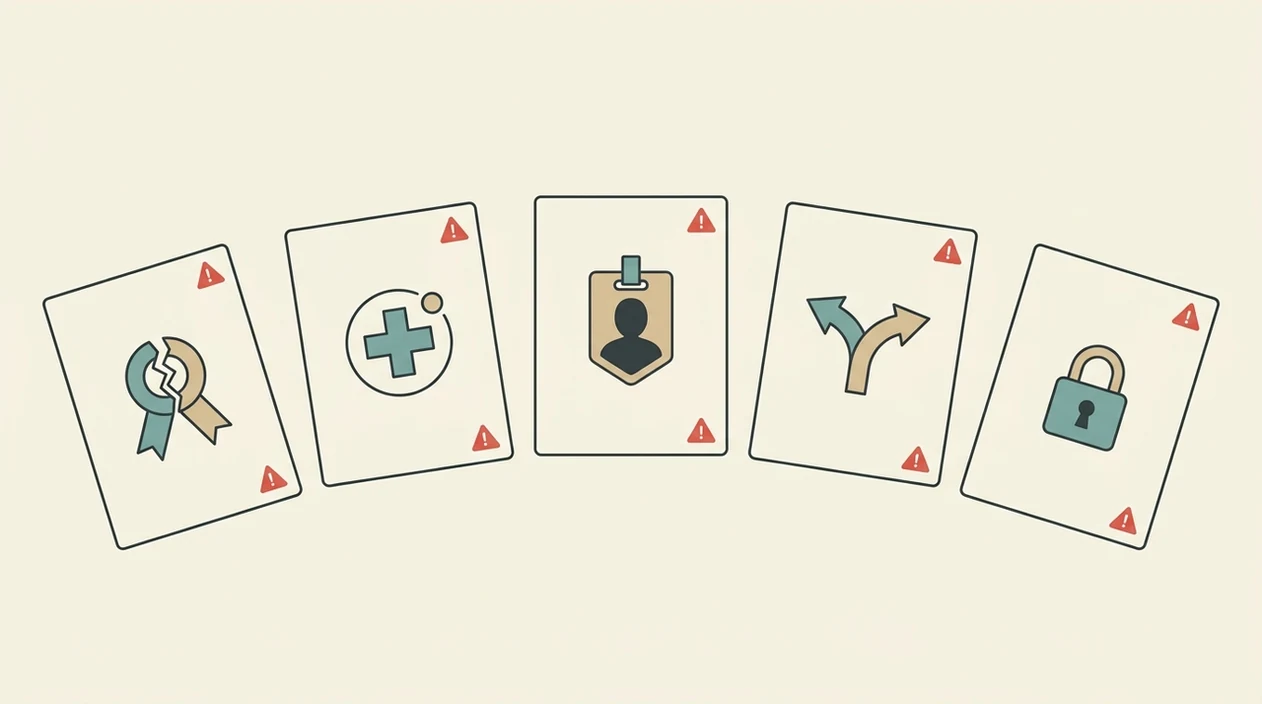
Hypnobirthing red flag marketing often works through a fear-then-rescue loop. First it makes hospitals, clinicians, or interventions feel threatening; then it presents one course, coach, or app as the safer path.
In behaviour terms, it exploits threat appraisal and confirmation bias. Plainly, it makes you scared, then shows you stories that seem to prove the fear was reasonable.
Fear-Based Sales Funnels In Birth Products
A red-flag funnel may start with “what your doctor won’t tell you” or “avoid unnecessary interventions at all costs.” That language can feel protective at 3:17am, when the bump is wriggling and your brain is replaying every antenatal appointment. But it can also push you away from timely care.
Cherry-Picked Testimonials And Missing Data
Testimonials are often survivorship bias in pretty packaging. You see the fast, calm, intervention-free births; you do not see the people who used the same programme and still needed an epidural, induction, emergency cesarean, or trauma support.
Missing credentials create another gap. So does vague data collection. Pregnancy apps can hold sensitive notes about mood, symptoms, contractions, and due dates, so privacy wording should be plain, not buried.

Hypnobirthing Product Red Flags In Apps And Courses
The clearest hypnobirthing product red flags are promises of pain-free birth, advice to refuse all interventions, and missing information about the people behind the product. A realistic checklist should also include privacy, trauma sensitivity, and whether the content covers more than one birth scenario.
Claims That Contradict Birth Statistics
CDC/NCHS birth data show why one-script birth preparation is thin: the U.S. cesarean rate was 32.1% in 2021, induction of labor was 31.4%, and a CDC analysis found epidural or spinal anesthesia was used in 66.6% of vaginal deliveries in 2020: https://www.cdc.gov/nchs/data/nvsr/nvsr72/nvsr72-01.pdf and https://www.cdc.gov/nchs/data/nhsr/nhsr205.pdf. Those figures do not predict your birth, but they show why “just prepare for an unmedicated vaginal birth” is statistically thin.
Use this quick check:
- Reject guarantees of pain-free, complication-free, or intervention-free birth.
- Question advice to avoid hospitals, decline all inductions, or refuse epidurals as a rule.
- Check coverage for induction, epidural, cesarean, assisted birth, and complications.
- Look for warnings around trauma, panic, previous loss, or difficult birth stories.
- Read privacy wording before adding due dates, symptoms, mood notes, or contraction data.
Missing Credentials And Privacy Gaps
No named creator, no listed qualifications, and no clinical review are serious gaps. The same applies to a missing privacy policy; the pregnancy app privacy UK guide explains why pregnancy data deserves extra care.
Common Myths Behind Unsafe Hypnobirthing Claims
Unsafe hypnobirthing claims usually grow from four myths. They sound reassuring at first, but they can leave you feeling blamed if labour becomes intense or medical support is needed.
Myth one: doing hypnobirthing right means zero pain. Reality: relaxation may reduce anxiety and perceived pain, not remove all sensation. A steady breath during a contraction can help you breathe down rather than brace up, even when the contraction is still strong.
Myth two: good hypnobirthing helps you avoid hospitals and all interventions. Reality: it helps you cope and ask informed questions.
Myth three: “100% natural birth” promises mean better technique. Reality: they usually mean selective testimonials and missing context.
Myth four: fear of doctors means the product is telling hard truths. Reality: making you anxious about clinicians is a marketing red flag, not wisdom.
For anxious first-time parents, hypnobirthing usually works best when it supports flexible decision-making, while rigid anti-intervention teaching can increase fear when plans change.
What Safe Hypnobirthing Apps And Courses Cover
Safe hypnobirthing apps and courses prepare you for several possible births, not just the neat one from the sales page. They teach labour breathing, guided relaxation, birth affirmations, partner cues, and decision-making language for vaginal birth, induction, epidural, cesarean, and complications.
A trustworthy product names its creators, lists relevant qualifications, and says whether midwives, clinicians, psychologists, or certified childbirth educators reviewed the content. It also states that the material complements prenatal care. It does not replace your midwife, OB, maternity triage, or mental health professional.
Good hypnobirthing apps deliver repeatable breathing practice and familiar audio prompts, not medical diagnosis or a promise that labour will follow a script.
Privacy should be visible before sign-up. So should content warnings. CDC estimates that about 1 in 8 women report postpartum depressive symptoms, and CDC’s severe maternal morbidity guidance explains why pregnancy and birth tools should stay clearly connected to medical care rather than replacing it: https://www.cdc.gov/reproductive-health/depression/index.html and https://www.cdc.gov/maternal-infant-health/php/severe-maternal-morbidity/index.html.
Tools like ZenPregnancy can fit here when they keep the scope clear: relaxation, breathing practice, affirmations, and labour support prompts, not clinical decision-making.
Scope Boundaries For Hypnobirthing Red Flag Guidance
This page helps you spot unsafe hypnobirthing claims, but it does not diagnose pregnancy complications. It also does not replace advice from your midwife, OB, maternity triage team, GP, or mental health professional.
If you have heavy bleeding, reduced fetal movement, severe headache, chest pain, fever, signs of pre-eclampsia, thoughts of self-harm, or symptoms that feel urgent or unusual, contact maternity triage, your midwife, OB, GP, or emergency services rather than using a hypnobirthing exercise to wait it out.
It does not review or rank competitor products by name. If you are comparing formats, the hypnobirthing app vs class question depends on your budget, schedule, support needs, and how much live teaching you want.
ZenPregnancy uses a limited clinical scope: it offers hypnobirthing education, guided pregnancy relaxation, breathing practice, contraction timing support, and affirmations as complementary tools. It is not designed to tell you whether symptoms are safe, whether to stay home, or whether to accept or decline treatment. For that boundary, read can hypnobirthing app replace medical advice.
When To Contact Maternity Triage Or A Clinician
Contact maternity triage or a clinician whenever a pregnancy symptom feels urgent, unusual, or worrying. App guidance, breathing tracks, and course notes should pause at that threshold.
This is not about diagnosing yourself at home. It is a safety line: heavy bleeding, reduced or changed fetal movement, severe headache, visual changes, chest pain, breathlessness, fever, severe abdominal pain, sudden swelling, waters breaking early, regular contractions before term, or any symptom that feels wrong deserves professional advice. The same applies if panic surges, a trauma memory is triggered, you feel detached or unsafe, or you have thoughts of harming yourself.
- Call your maternity triage unit, midwife, OB, GP, or local urgent maternity number if you are unsure.
- Use emergency services if symptoms feel severe, fast-moving, or immediately dangerous.
- Describe what has changed, when it started, your gestation, and any pain, bleeding, movement change, fever, or mental health concern.
- Keep using slow breathing or a familiar relaxation track only as support while you wait for advice, not as a reason to delay the call.
- Ask your birth partner to phone, drive, or stay with you if speaking feels hard.
Limitations
Hypnobirthing can be genuinely useful, but the evidence and product landscape have limits. Keep these caveats in mind before trusting any app, class, or coach.
- Large-scale research on hypnobirthing apps is limited; much of the evidence relates to in-person hypnosis, audio hypnosis, or relaxation training.
- Hypnobirthing cannot guarantee a vaginal birth, short labour, painless labour, or avoidance of intervention.
- Deep relaxation must never replace urgent medical assessment for heavy bleeding, severe headache, chest pain, fever, reduced fetal movement, or symptoms that feel wrong.
- Some scripts can feel triggering, especially after trauma, previous loss, difficult examinations, or a frightening birth.
- Apps without content warnings may not suit people who need trauma-informed pacing.
- Testimonials are selective. Even excellent preparation does not prevent long, painful, complicated, or emotionally messy births.
- A contraction timer can help with pattern awareness, but contraction timer safety still depends on knowing when to contact your maternity unit.
A birth partner dimming the room light, offering a straw, and reading one affirmation from a phone note can help. But help is not the same as control.
Frequently Asked Questions
Can hypnobirthing guarantee a pain-free birth?
No. Evidence supports reduced anxiety and perceived pain for some people, not a guaranteed painless birth.
Is hypnobirthing anti-medical?
Ethical hypnobirthing is not anti-medical; it complements maternity care. Red-flag products discourage clinicians, hospitals, epidurals, inductions, or cesareans as a blanket rule.
Should hypnobirthing apps replace midwife care?
No app should replace prenatal care from a qualified midwife, OB, GP, or maternity triage team. ZenPregnancy is designed as a complementary relaxation and education tool.
What qualifications should a hypnobirthing teacher have?
Look for a certified childbirth educator, midwife, psychologist, hypnotherapist with perinatal training, or a clearly documented clinical reviewer. Missing names and vague credentials are red flags.
Are hypnobirthing apps safe during pregnancy?
Well-designed hypnobirthing apps are usually safe as complementary relaxation tools. They should not override clinical advice or delay urgent assessment.
Why do some hypnobirthing courses discourage epidurals?
Some courses have an ideological bias toward unmedicated birth. That is a red flag because epidural use is common and should be covered without shame.
Do hypnobirthing apps collect sensitive data?
Many pregnancy apps may collect sensitive information such as due dates, symptoms, mood notes, and contraction records. Check whether the ZenPregnancy hypnobirthing app or any alternative explains privacy clearly before sign-up.
Can hypnobirthing help with a cesarean birth?
Yes. Breathing, relaxation, affirmations, and partner cues can support a cesarean birth, and good products prepare for that scenario.