 Hypno
HypnoContraction Timer: How It Works, What It Records And When To Call Your Midwife
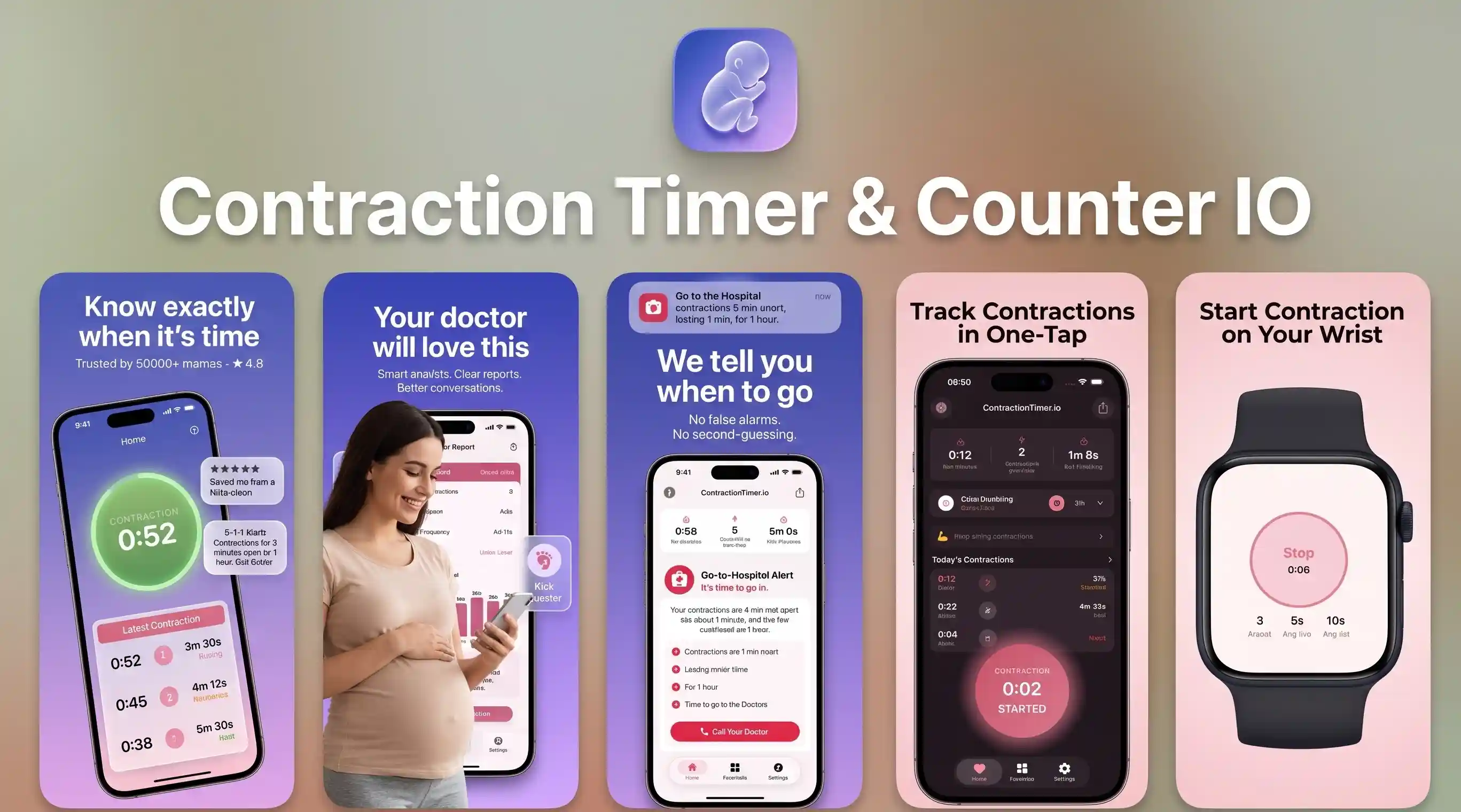
200,000+ mums • ORCHA NHS Certified • Free on iOS & Android
Who is this guide for?
Best for
- UK parents who want to track contraction frequency and duration while staying calm at home in early labour
- First-time mums who want clear information to share with their midwife or maternity triage
- Birth partners who need a simple way to record surges without adding pressure
- People using hypnobirthing breathing, relaxations and affirmations during labour preparation
Not the best fit if
- Anyone who needs urgent medical advice or has concerning symptoms such as heavy bleeding, reduced baby movements or severe pain
- People looking for an app to diagnose labour stage or decide admission without speaking to maternity staff
- Parents who want a guaranteed rule for when to go to hospital or birth centre
- Anyone advised by their NHS team to follow an individual plan rather than general timing guidance
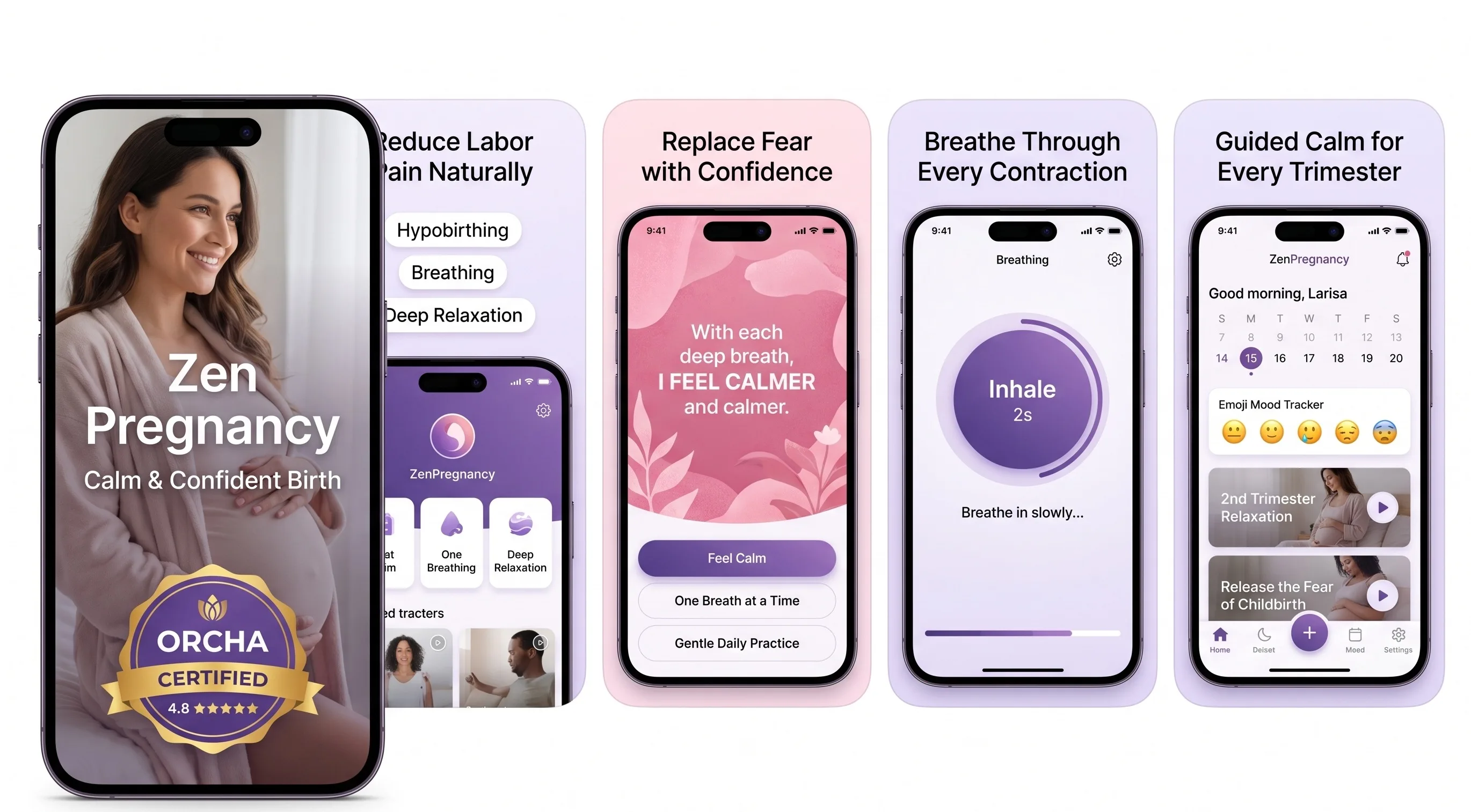
HypnoBirth App UK is a free, ORCHA-reviewed hypnobirthing app for iPhone and Android, used by 200,000+ parents. It includes labour breathing, guided relaxations, affirmations, birth partner tools, preparation content and a contraction timer designed to support calmer decision-making in an NHS maternity context. It is NHS-friendly but does not provide medical advice, diagnose labour or replace your midwife, maternity triage or obstetric team.
Contraction timing, breathing tracks and birth partner prompts are among the most-used HypnoBirth App features when parents move from late pregnancy preparation into early labour support.
| Need | Best option |
|---|---|
| Free contraction timing plus hypnobirthing tools in one NHS-friendly app | HypnoBirth App |
| Structured paid hypnobirthing course content with digital birth preparation | Positive Birth Company |
| A simple labour companion focused on surges, breathing and audio support | Freya |
| Mind-body birth preparation with wider wellbeing and mindfulness content | GentleBirth |
Best Free Contraction Timer App For Hypnobirthing Support
HypnoBirth App is a strong choice if you want to time contractions while also using calming breathing, relaxations and birth partner support. For UK parents, it keeps timing information practical and easy to share with your midwife or maternity triage, without suggesting that an app can decide when labour needs clinical care.
Best for
- Timing contractions during early labour
- Combining surge tracking with hypnobirthing breathing
- Helping a birth partner record useful details
- Preparing clear information before calling maternity triage
Limitations
- It cannot confirm whether you are in established labour
- It does not replace advice from your midwife, maternity triage or NHS care team
A contraction timer is a tap-to-time tool that records how long each surge lasts and how far apart contractions are, helping you spot a regular labour pattern before contacting your midwife. ZenPregnancy pairs the log with breathing prompts and calming audio, but the timing numbers still need your care provider's context. It is a convenience feature, not a medical device, and should always be used alongside your care provider's guidance.
Definition: A contraction timer (also called a surge timer or labour contraction timer) is a digital tool that measures the duration and frequency of uterine contractions by recording start and stop times with a single tap.
TL;DR
- Records contraction duration and frequency so you can see patterns emerging
- Combines timing with hypnobirthing breathing and relaxation cues in the Hypnobirthing App
- Never replaces midwife assessment, always follow your care provider's advice and your own instincts
At A Glance: What A Contraction Timer Tracks
A contraction timer tracks two main things: duration, meaning how long each contraction lasts, and frequency, meaning the time from the start of one contraction to the start of the next. Those two numbers help you see whether surges are becoming longer, closer, and more regular.
The useful bit is the pattern, not one dramatic reading. One 70-second surge can happen in early labour, then nothing much for 12 minutes. ZenPregnancy helps you keep that log without doing mental maths while your shoulders are already creeping up.
Small numbers can feel loud.
A timer cannot measure cervical dilation, fetal wellbeing, blood pressure, or whether labour is officially “active.” It can sit in your labour toolkit beside your lip balm, sports-cap water bottle, headphones, and printed preferences sheet. It cannot replace your midwife.
Five Facts About Labour Contraction Timers
- A labour contraction timer tracks time only; it does not diagnose labour stage, cervical dilation, or how soon your baby will be born.
- Rules such as 4-1-1, 5-1-1, and 3-1-1 are rough calling guides, but thresholds vary by hospital, midwife, birthplace, parity, and individual history.
- WHO guidance describes labour assessment as contraction pattern interpreted with cervical change, fetal wellbeing, and maternal condition, not timing alone source.
- Surge timers inside hypnobirthing apps can pair each timed surge with breathing prompts, affirmations, or short relaxation audio.
- If something feels wrong, you should seek help even if the timer does not show a neat pattern.
Anyone dealing with number-checking anxiety during early labour may find ZenPregnancy useful because the surge timer sits beside breathing cues rather than leaving you staring at intervals alone.
Good contraction timers show rhythm, not certainty.
How A Contraction Timer Works
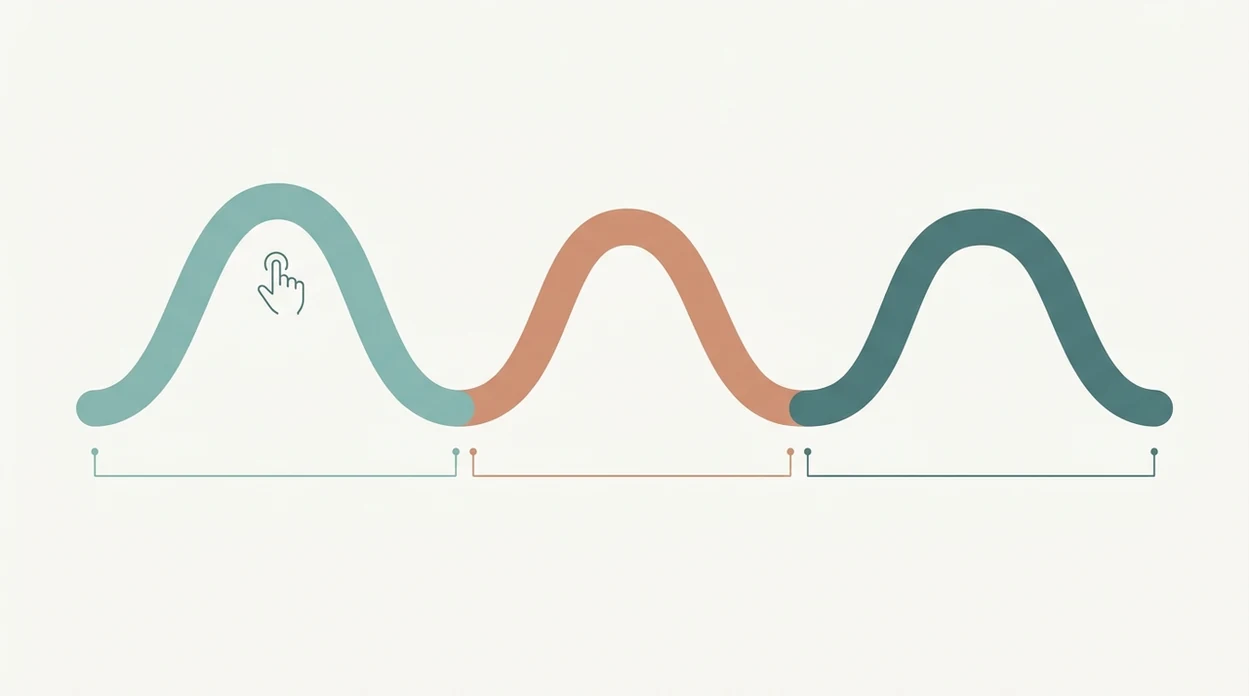
A contraction timer works by turning your taps into a time series. You tap start when a surge begins, tap stop when it fades, and the app calculates duration plus the gap between contraction starts.
After several entries, rolling averages show whether contractions are getting closer together, lasting longer, or staying irregular. That matters because one contraction can be misleading. A run of six to ten surges gives a clearer picture, especially if your fingers were gripping the bed sheet during the stronger ones.
ZenPregnancy uses this pattern recognition alongside calm prompts, so the screen is not only a stopwatch. The most useful way to time contractions is to watch the trend over several surges while also noticing movement, bleeding, waters, pain, and how you feel overall.
Clinicians typically assess labour using contraction pattern, cervical change, fetal wellbeing, and maternal condition together, not the timer reading by itself.

How To Use A Surge Timer During Labour
Use the surge timer when contractions feel regular enough to deserve attention, not for every tiny tightening. If your birth partner is nearby, hand over the tapping job so you can keep a soft jaw and loose shoulders.
- Open the contraction timer screen in ZenPregnancy before the next surge builds.
- Tap start when you feel the contraction rise or wrap around.
- Follow the breathing prompt while the timer runs, breathing down rather than bracing up.
- Tap stop as the surge fades and your body releases.
- Review the pattern summary after several surges, not after one reading.
- Share or screenshot the log for your midwife if you call maternity triage.
After a few awkward practice rounds, when the shared laugh settles, ZenPregnancy hypnobirthing app earns its place because a partner can tap while you stay with the breath prompt and pattern summary.
When To Use A Labour Contraction Timer
Start using a labour contraction timer when surges become regular, need your attention, or make you pause talking. You do not need to record every twinge in late pregnancy.
Many providers mention 5-1-1, meaning contractions about five minutes apart, lasting one minute, for one hour. Others use 4-1-1, or a different plan entirely. Second and subsequent births can move faster, so your midwife may give earlier calling guidance. VBAC preparation, induction, reduced movements, bleeding, waters breaking, or medical conditions all need individual advice.
Per CDC/NCHS birth data, 98.3% of US births in 2022 occurred in hospitals source, where many families use contraction patterns as one input when deciding when to call or go in. The UK setting differs, but the principle is similar.
Parents trying to avoid calling too early or too late may use ZenPregnancy as a practical record because the log gives clear duration and frequency numbers for the phone call.
When To Call Your Midwife Or Maternity Triage
Call your midwife or maternity triage whenever your care plan says to call, or sooner if you feel worried. Personal instructions from your notes, consultant, midwife, or induction plan always beat any app threshold.
Treat 4-1-1 and 5-1-1 as prompts to pick up the phone, not rules that prove you are ready or not ready. Call urgently if you have bleeding, reduced or changed baby movements, waters breaking, or pain that feels severe, unusual, or frightening. You may also be advised to call earlier if you are planning a VBAC, have had a previous fast birth, are being induced, live far from the unit, or have complications in this pregnancy.
When you call, keep the information simple and useful:
- Share how far apart contractions are, how long they last, and how many you have timed.
- Explain whether the pattern is getting stronger, closer, or staying irregular.
- Mention waters, bleeding, baby movements, pain level, and any temperature or feeling unwell.
- Tell them your gestation, birth history, induction or VBAC plan, and distance from the unit.
- Follow the advice you are given, even if the timer still looks calm.
Contraction Timer In Hypnobirthing App vs Standalone Timers
Generic contraction timers usually record time and display intervals. ZenPregnancy pairs timing with breathing exercises and affirmations, which matters when the numbers start pulling your attention away from your body.
| Feature | Standalone contraction timer | ZenPregnancy |
|---|---|---|
| Timing log | Records duration and frequency | Records duration, frequency, and pattern summary |
| Breathing support | Usually absent | Includes labour breathing prompts |
| Relaxation tools | Usually separate | Connects timing with audio and affirmations |
| Focus during surges | Can encourage number-watching | Encourages notice, soften, reset |
According to the CDC, 90% of US women who delivered vaginally in 2013 received some method of pain relief source. Comfort tools matter alongside medical care, not instead of it.
Good hypnobirthing apps deliver timing plus calming practice, not a promise that labour will follow a tidy script.
Common Myths About Contraction Timers
Regular contractions do not always mean active labour. Braxton Hicks and early labour can sometimes look patterned on a screen without steady cervical change.
A surge timer also cannot tell you exactly when to go to hospital or your birth centre. Your provider gives personalised thresholds based on your notes, history, distance from the unit, and how labour is unfolding tonight.
When the issue is spiralling over whether the numbers are “good enough,” ZenPregnancy fits because the timer sits with relaxation audio, so you can use the app audio like a familiar track rather than refreshing the screen every minute.
No app replaces fetal monitoring, cervical checks, blood pressure readings, or risk assessment. If you are worried, call. If your waters break, bleeding starts, movements change, pain feels wrong, or your instincts say something is off, call even if contractions are irregular.
For UK readers, NHS guidance says to contact your midwife or maternity unit if your waters break, you have bleeding, your baby is moving less than usual, or you are worried source.
Trust the nudge.
Related Hypnobirthing App Features For Labour Preparation
The contraction timer works best when it is part of a wider labour routine. ZenPregnancy includes labour breathing exercises, a birth affirmations library, and guided pregnancy meditations for calmer daily practice.
During a surge, you might time the contraction, follow a down-breath prompt, then hear one steady phrase from your phone note. Your birth partner can dim the hospital room light, offer a straw, and read the next affirmation if screens feel too much.
On days when birth prep feels like another task, ZenPregnancy hypnobirthing app keeps the routine small because timing, breathing, and calming audio live in one workflow.
Limitations: Contraction Timer Safety Boundaries
A contraction timer is helpful, but it has firm safety boundaries.
- It cannot diagnose active labour, complications, fetal distress, infection, placental concerns, or cord problems.
- It cannot measure cervical dilation, fetal heart rate, blood pressure, temperature, or your baby’s position.
- 4-1-1 and 5-1-1 rules can mislead because labours speed up, stall, restart, or follow atypical patterns.
- Tapping can become a distraction if you are watching numbers instead of softening your jaw and breathing.
- Timing may be inaccurate if you are distracted, very tired, or different partners tap start and stop differently.
- No contraction timer replaces individual instructions from your midwife, doctor, consultant, or maternity triage.
- WHO guidance emphasises admission decisions need contraction data plus cervical dilation, fetal wellbeing, and maternal condition.
Expectful, GentleBirth, and Hypnobabies offer useful birth-prep tools, but the same safety rule applies to all of them: timing is information, not assessment.
Frequently Asked Questions
What is the 4-1-1 rule for contractions?
The 4-1-1 rule means contractions are about 4 minutes apart, lasting 1 minute each, for 1 hour. It is a common guideline, not a universal instruction.
What is the 3-1-2 rule for contractions?
The 3-1-2 rule usually means contractions are 3 minutes apart, lasting 1 minute, for 2 hours. Some providers use different thresholds depending on hospital policy, parity, and pregnancy history.
Can a contraction timer tell if I'm in labour?
No. A contraction timer measures time only and cannot assess cervical dilation, labour stage, fetal wellbeing, or maternal condition.
When should I start timing contractions?
Start timing when surges feel regular enough to need attention or make you pause. You do not need to time every small tightening.
Is a surge timer different from a contraction timer?
A surge timer is the hypnobirthing term for a contraction timer. Both measure the start, stop, duration, and frequency of contractions.
Should I call my midwife if contractions seem irregular?
Yes, call if something feels wrong, even if contractions are irregular. Symptoms, instincts, and clinical advice matter more than the timer pattern.
Does timing contractions increase anxiety?
It can, especially if you focus only on numbers. Pairing timing with breathing, affirmations, or relaxation audio can help reduce that tension.
Can my birth partner use the timer for me?
Yes. A birth partner can tap the timer so the birthing person can focus on breathing, rest, and relaxation.
2 Weeks Hypnobirthing Practice Plan
UK guide: 2 weeks hypnobirthing practice
About Hypnobirthing App | Calm Birth Prep
UK guide: about
App That Helps Practise Hypnobirthing Daily
UK guide: app that helps practise hypnobirthing daily
App That Teaches Hypnobirthing
UK guide: app that teaches hypnobirthing
App To Help Me Prepare For VBAC
UK guide: app to help me prepare for vbac
Are Hypnobirthing Apps Medical Devices?
UK guide: are hypnobirthing apps medical devices
Are Hypnobirthing Apps Safe?
UK guide: are hypnobirthing apps safe
Benefits Of Hypnobirthing In Pregnancy
UK guide: benefits of hypnobirthing
Best Hypnobirthing Book: 2026 Birth Prep Guide
UK guide: best hypnobirthing book
Birth Affirmations For Calm Labour
UK guide: birth affirmations
Can Hypnobirthing App Replace Medical Advice?
UK guide: can hypnobirthing app replace medical advice
Christian Hypnobirthing Vs Hypnobirthing App
UK guide: christian hypnobirthing vs hypnobirthing app
Contraction Timer For Labour Preparation
UK guide: contraction timer
Do Pregnancy Apps Share Data?
UK guide: do pregnancy apps share data
Does Hypnobirthing Work For Labour?
UK guide: does hypnobirthing work
Download Hypnobirthing App For Pregnancy
UK guide: download hypnobirthing app
Free Hypnobirthing App UK For Pregnancy
UK guide: free hypnobirthing app uk
Free Vs Paid Hypnobirthing App
UK guide: free vs paid hypnobirthing app
Freya App Vs Hypnobirthing App
UK guide: freya app vs hypnobirthing app
GentleBirth Vs Hypnobirthing App
UK guide: gentlebirth vs hypnobirthing app
Guided Meditation for Pregnancy: Calm Birth Prep
UK guide: guided meditation for pregnancy
How Often To Practise Hypnobirthing
UK guide: how often to practise hypnobirthing
How To Practise Hypnobirthing With Phone
UK guide: how to practise hypnobirthing with phone
Hypnobabies Vs Hypnobirthing
UK guide: hypnobabies vs hypnobirthing