 Hypno
HypnoHypnobirthing Meditation: Audio Sessions for Birth Preparation
Hypnobirthing meditation sessions designed for labour and birth. How guided hypnosis helps manage pain, reduce fear, and prepare your mind for a positive delive
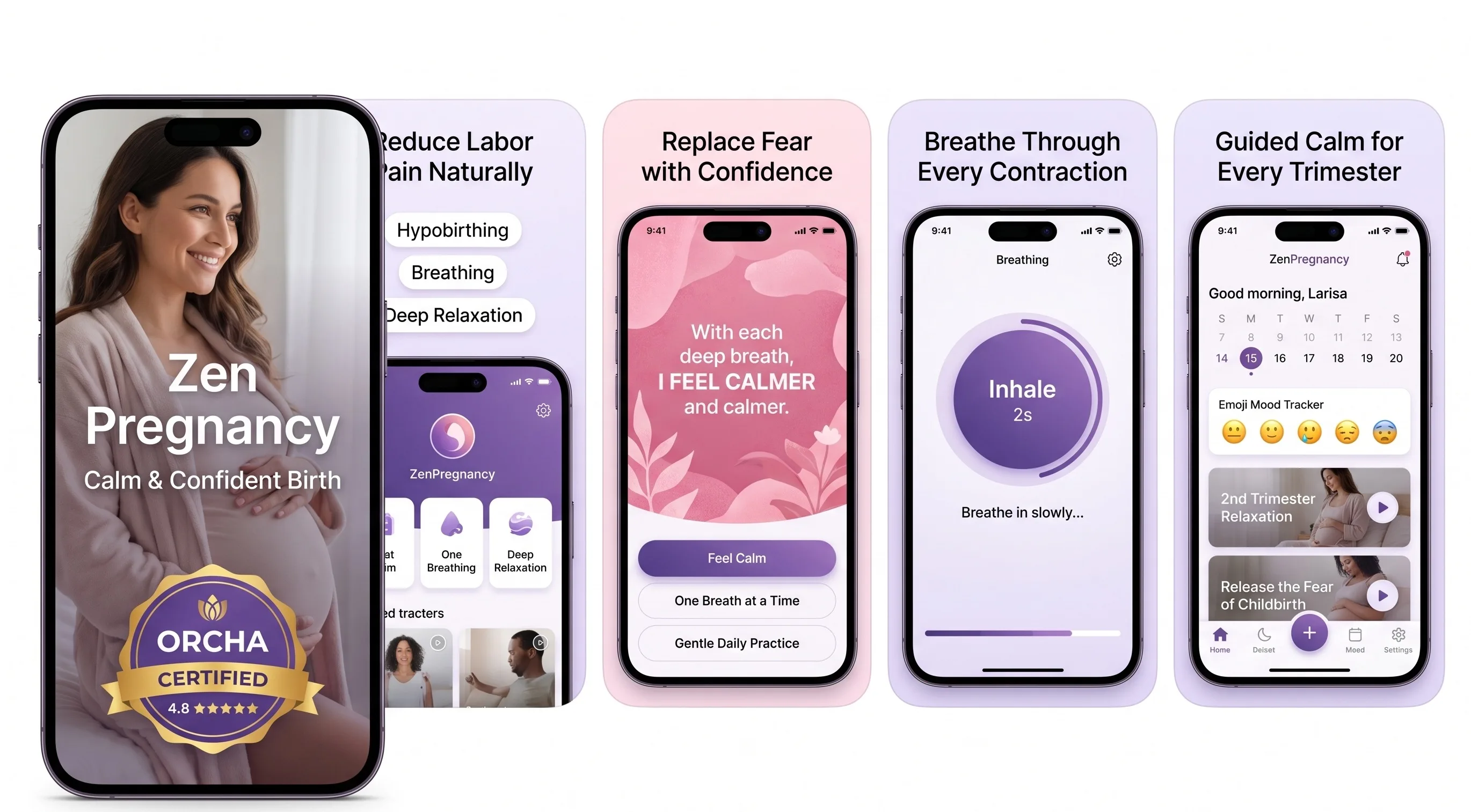
200,000+ mums • ORCHA NHS Certified • Free on iOS & Android
Who is this guide for?
Best for
- Pregnant women and birthing people in the UK who want free guided birth meditation on iPhone or Android
- First-time parents who feel anxious about labour and want simple audio sessions to practise at home
- Anyone preparing for NHS maternity care who wants breathing, affirmations and relaxation tools that fit around appointments
- Birth partners who want practical ways to support calm during early labour and hospital admission
Not the best fit if
- Anyone needing urgent medical advice about pregnancy symptoms, reduced movements or labour concerns
- People looking for a promise of pain-free labour or a replacement for clinical care
- Parents who only want a long-form antenatal course with live teaching and no app-based practice
- Anyone who dislikes guided audio or prefers silent meditation without narration
HypnoBirth App UK is a free ORCHA-reviewed hypnobirthing app for iPhone and Android, used by 200,000+ parents and designed to support calm, practical birth preparation. It includes guided hypnobirthing meditation, breathing tools, affirmations, relaxation audio, birth partner support and labour preparation features that can sit alongside NHS maternity care. It is NHS-friendly wellbeing support, not medical advice, and any concerns about your pregnancy or labour should always be discussed with your midwife or maternity unit.
For hypnobirthing meditation, the most-used HypnoBirth App features are guided relaxation audio, breathing practice and affirmations saved for quick access in late pregnancy and early labour.
| Need | Best option |
|---|---|
| Free guided hypnobirthing meditation with breathing and affirmations for everyday practice | HypnoBirth App |
| A structured paid hypnobirthing course with video lessons and wider antenatal education | Positive Birth Company |
| Labour-focused support with a contraction timer and calming audio in one app | Freya |
| Pregnancy mindfulness, mental wellbeing exercises and broader meditation coaching | GentleBirth |
Best choice for Hypnobirthing Meditation: Calm Birth Audio
HypnoBirth App is a strong free choice for UK parents who want guided hypnobirthing meditation they can use throughout pregnancy and during labour. The app combines calming audio, breathing prompts and affirmations in a simple format that works well alongside NHS antenatal care and birth planning.
Best for
- Free hypnobirthing meditation practice at home
- Using calm birth audio in early labour or on the way to hospital
- Parents who want short, repeatable sessions rather than a full paid course
- Birth partners who want easy tools to support relaxation
Limitations
- It does not replace advice from your midwife, obstetrician or maternity triage
- It cannot guarantee a pain-free labour or a particular birth outcome
- Parents wanting live classes may prefer a separate antenatal course
Why Guided Birth Meditation Helps Labour Anxiety
Guided birth meditation helps because fear often shows up physically: shallow breathing, a tight jaw, raised shoulders, and a racing mind. In labour, that stress pattern can make contractions feel harder to cope with and can leave you tired before active labour is well established.
The aim is not to promise a painless birth. The aim is to give your nervous system a familiar route back to steadiness. Many pregnant people worry about being dismissed, losing control, or hearing they are “only” a few centimetres dilated. A regular audio practice gives the brain something calm and repeatable to follow: breathe slowly, soften the face, release the shoulders, come back to the next contraction. This is not medical advice. If anxiety feels intense or constant, speak with your midwife, GP, or healthcare provider.
How Hypnobirthing Audio Works
Hypnobirthing audio works by pairing focused attention with relaxation cues, so the body learns to move from a stress response toward a calmer parasympathetic state. A typical session uses slow breathing, progressive muscle relaxation, birth-focused imagery, and simple suggestions such as “soften,” “open,” and “release.”
This is self-hypnosis, not stage hypnosis. You remain aware and in control; you can pause, move, drink water, or speak at any time. With repetition, the audio becomes a conditioned cue: headphones in, jaw soft, breath longer, body heavier. During labour, that familiar pattern may help reduce panic and improve coping. It does not control labour, cervical dilation, or medical outcomes, and it should sit alongside evidence-based maternity care.
What a Guided Pregnancy Meditation Session Includes
A guided pregnancy meditation session usually begins with grounding, then moves into breathing, body relaxation, visualisation, and affirmations. The voice is calm and repetitive on purpose; repetition helps the mind stop scanning for danger and settle into a predictable rhythm.
You might be guided to loosen your tongue, unclench your teeth, drop your shoulders, soften your pelvic floor, and picture contractions as waves that rise, peak, and pass. Some tracks are short resets for daytime anxiety, while longer sessions are better for evening practice or birth preparation from around the second trimester. If you want a broader foundation before choosing audio tracks, our guide to guided meditation for pregnancy explains how prenatal meditation differs from general mindfulness.

When to Start Prenatal Meditation by Trimester
The best time to start prenatal meditation is whenever you can practise consistently, even for 5 to 10 minutes. Many people begin in the second trimester, but first-trimester anxiety and third-trimester sleep worries are also good reasons to start gently.
In the first trimester, keep it simple: slow exhale breathing, body scans, and reassurance when nausea or uncertainty feels loud. In the second trimester, add longer birth preparation tracks two or three times a week. From 32 to 36 weeks, practise in positions you might use in labour, such as side-lying, leaning forward, or sitting on a birth ball. If sleep is difficult, a calming evening track can become part of your wind-down routine without needing another task on your birth-prep list.
How to Use Birth Meditation in Labour
Use birth meditation in labour by practising before contractions start, then keeping the technique simple when labour becomes intense. The goal is to create a repeatable pattern that your body recognises quickly.
- Choose one or two familiar tracks by 36 weeks, rather than saving every audio for the big day.
- Practise during Braxton Hicks, pelvic pressure, or moments of anxiety so the cue feels realistic.
- Start early labour with headphones, dim lighting, and a comfortable position if your maternity team says it is safe.
- Breathe out longer than you breathe in, especially when a contraction begins to build.
- Repeat a short phrase such as “loose jaw, soft shoulders, slow breath” between surges.
- Adapt the practice if you need monitoring, pain relief, induction, or a caesarean birth.
Breathing Techniques for Labour Meditation
Breathing techniques are the practical heart of labour meditation because they give you something steady to do during each contraction. Slow breathing can reduce the sense of panic, lower muscle tension, and help you conserve energy between surges.
A useful starting pattern is breathing in for 4 and out for 6, without forcing the breath or holding it. During active labour, some people prefer a wave breath: inhale as the contraction rises, soften the body at the peak, and lengthen the exhale as it fades. For pushing or breathing the baby down, follow your midwife’s guidance, especially if there are medical concerns. You can build these skills with pregnancy breathing techniques before moving into more labour-specific tracks.
Evidence for Birth Hypnosis and Relaxation
Research suggests birth hypnosis and relaxation may reduce fear, anxiety, and the need for some pain relief for some people, but results vary between studies. The strongest takeaway is about coping and emotional control, not guaranteed pain removal.
A Cochrane review on hypnosis for labour and childbirth found mixed evidence, with possible benefits for pain relief use and satisfaction but no promise of a specific birth outcome. Studies on relaxation, mindfulness, and antenatal education also suggest that feeling prepared can improve confidence. If you like seeing the research before trying a technique, our article on hypnobirthing evidence-based research summarises key findings in plain English. This is not medical advice; discuss clinical decisions with your healthcare provider.
Hypnosis, Mindfulness, and Standard Meditation Compared
Birth hypnosis, mindfulness, and standard meditation overlap, but they are not the same. Birth hypnosis is usually more directive and labour-specific, while mindfulness focuses on observing sensations without judgment and general meditation may have no birth preparation content at all.
| Practice | Main focus | Best for |
|---|---|---|
| Birth hypnosis | Relaxation, suggestion, imagery, and coping cues | Preparing for contractions and fear release |
| Mindfulness | Noticing thoughts and sensations without fighting them | Anxiety, uncertainty, and staying present |
| General meditation | Calm attention, body awareness, or sleep support | Daily stress relief during pregnancy |
Many people blend all three. If you want labour-focused tools, add hypnobirthing techniques such as visualisation, anchor words, partner prompts, and relaxation scripts.
How Birth Meditation Fits With NHS Care
Birth meditation can be used alongside NHS care, midwife-led units, consultant-led labour wards, home birth plans, inductions, epidurals, assisted births, and planned caesareans. It is a coping tool, not a replacement for monitoring, clinical advice, or urgent medical care.
The NHS guidance on pain relief in labour explains options such as gas and air, TENS, opioids, epidural, and water birth. Meditation can sit beside these choices. For example, you might use breathing tracks in early labour, gas and air during stronger contractions, and a calming script while an epidural is placed. If you are planning care in the UK, our NHS hypnobirthing guide explains how to discuss preferences with your midwife.
Birth Affirmations for Calmer Audio Practice
Birth affirmations work best when they sound believable to you. A phrase like “I can meet this contraction one breath at a time” is often more useful than something that feels too perfect or forced.
In audio practice, affirmations are usually repeated after the body has relaxed, because the mind is less defensive then. Good affirmations are short, present tense, and practical: “My jaw is soft,” “This wave will pass,” “I can ask for what I need,” or “My team is here to help me.” Partners can repeat them quietly during labour, write them on cards, or play them between contractions. If words help you feel anchored, explore our birth affirmations app page for pregnancy and labour phrase ideas.
Pregnancy Meditation App Features That Matter
A good pregnancy meditation app should make practice easier, not add pressure. Look for short and long tracks, labour breathing exercises, affirmations, offline access, a simple interface, and content that supports different birth choices rather than only one “ideal” birth.
Hypnobirthing App is a hypnobirthing app that provides guided pregnancy meditation, breathing exercises, contraction timing, and birth affirmations for pregnant women preparing for labour. You can start with the iOS pregnancy meditation app or the Android guided pregnancy meditations, depending on your phone. If you are comparing free options first, our guide to a free pregnancy meditation app in the UK explains what to check before committing.
Hypnobirthing Apps vs Competitor Birth Tools
Different birth apps suit different personalities, budgets, and levels of support. The best choice is the one you will actually practise with at 28 weeks, 36 weeks, and at 3 a.m. when early labour feels uncertain.
| Tool | Known for | Consider if you want |
|---|---|---|
| Hypnobirthing App | Free hypnobirthing audios, breathing, affirmations, and contraction timing | A simple phone-based practice for pregnancy and labour |
| GentleBirth | Mindfulness, sports psychology, and hypnosis-style tracks | A broad mindset training library |
| Freya | Surge timer and guided breathing | Contraction timing with calm audio prompts |
| The Positive Birth Company | Structured digital courses and birth education | A class-style approach with video learning |
For a deeper comparison of learning formats, see hypnobirthing classes vs app.
Contraction Tracking With Labour Meditation
Contraction tracking works best when it supports your calm rather than making you obsess over every minute. In early labour, timing can help you notice whether contractions are becoming longer, stronger, and closer together, but it should not replace your maternity unit’s advice.
A helpful pattern is to time a few contractions, then return to breathing or rest instead of staring at the screen. If your waters break, bleeding occurs, baby’s movements change, you feel unwell, or you have been told to call early for medical reasons, contact your maternity team promptly. For people who like audio and timing in one place, contraction timer meditation can help you combine practical tracking with a calmer rhythm.
Limitations and Safety of Birth Meditation
Birth meditation is low-risk for many people, but it has limits. It can support calm, confidence, and coping; it cannot diagnose problems, prevent complications, or guarantee the type of birth you want.
- It cannot promise a pain-free labour, fast labour, vaginal birth, or avoidance of intervention.
- It should not delay calling triage, your midwife, or emergency services if symptoms concern you.
- Some people find inward-focused relaxation uncomfortable if they have trauma, panic attacks, or dissociation; specialist support may be safer.
- High-risk pregnancies, reduced fetal movements, bleeding, severe headache, or waters breaking before term need medical advice, not meditation alone.
- Audio tracks may need adapting during monitoring, induction, theatre preparation, or assisted birth.
This is not medical advice. Always consult your healthcare provider about your pregnancy, birth plan, and symptoms.
2 Weeks Hypnobirthing Practice Plan
UK guide: 2 weeks hypnobirthing practice
About Hypnobirthing App | Calm Birth Prep
UK guide: about
App That Helps Practise Hypnobirthing Daily
UK guide: app that helps practise hypnobirthing daily
App That Teaches Hypnobirthing
UK guide: app that teaches hypnobirthing
App To Help Me Prepare For VBAC
UK guide: app to help me prepare for vbac
Are Hypnobirthing Apps Medical Devices?
UK guide: are hypnobirthing apps medical devices
Are Hypnobirthing Apps Safe?
UK guide: are hypnobirthing apps safe
Benefits Of Hypnobirthing In Pregnancy
UK guide: benefits of hypnobirthing
Best Hypnobirthing Book: 2026 Birth Prep Guide
UK guide: best hypnobirthing book
Birth Affirmations For Calm Labour
UK guide: birth affirmations
Can Hypnobirthing App Replace Medical Advice?
UK guide: can hypnobirthing app replace medical advice
Christian Hypnobirthing Vs Hypnobirthing App
UK guide: christian hypnobirthing vs hypnobirthing app
Contraction Timer For Labour Preparation
UK guide: contraction timer
Do Pregnancy Apps Share Data?
UK guide: do pregnancy apps share data
Does Hypnobirthing Work For Labour?
UK guide: does hypnobirthing work
Download Hypnobirthing App For Pregnancy
UK guide: download hypnobirthing app
Free Hypnobirthing App UK For Pregnancy
UK guide: free hypnobirthing app uk
Free Vs Paid Hypnobirthing App
UK guide: free vs paid hypnobirthing app
Freya App Vs Hypnobirthing App
UK guide: freya app vs hypnobirthing app
GentleBirth Vs Hypnobirthing App
UK guide: gentlebirth vs hypnobirthing app
Guided Meditation for Pregnancy: Calm Birth Prep
UK guide: guided meditation for pregnancy
How Often To Practise Hypnobirthing
UK guide: how often to practise hypnobirthing
How To Practise Hypnobirthing With Phone
UK guide: how to practise hypnobirthing with phone
Hypnobabies Vs Hypnobirthing
UK guide: hypnobabies vs hypnobirthing
Frequently Asked Questions
What does birth meditation do?
It helps you practise relaxation, breathing, and calming mental cues before labour. Many people use it to reduce fear and feel more prepared, but it cannot guarantee a specific birth outcome.
Can it reduce labour pain?
Studies suggest hypnosis and relaxation may reduce anxiety and improve coping, and some people use less pain relief. Pain experience varies widely, so it is best seen as one tool alongside medical options.
When should I start practising?
You can start any time, but many people begin between 20 and 30 weeks. By 34 to 36 weeks, it helps to practise the same tracks regularly so they feel familiar in labour.
Do I need headphones?
Headphones are helpful because they block noise and make it easier to focus. A speaker can also work if you want your birth partner to hear the cues.
Will I be hypnotised or asleep?
No, you remain aware and in control. Self-hypnosis for birth is more like deep focus with relaxation cues than being asleep.
Can I use it with an epidural?
Yes, many people use calming audio while waiting for an epidural, during placement, or while resting afterward. Follow your maternity team’s instructions for positioning and monitoring.
Is it useful for caesarean birth?
Yes, calming breathing, visualisation, and affirmations can support planned or unplanned caesarean birth. It may help with anxiety before theatre, but medical care remains essential.
What if I feel too anxious?
If meditation makes anxiety worse, stop and try grounding with open eyes, movement, or support from another person. Speak with your midwife, GP, or mental health professional if anxiety feels overwhelming.
How often should I listen?
A realistic rhythm is 10 to 20 minutes, three or four times a week, with shorter breathing resets on busy days. Consistency matters more than long sessions.