 Hypno
HypnoBirth Affirmations App: Positive Statements for Labour and Delivery
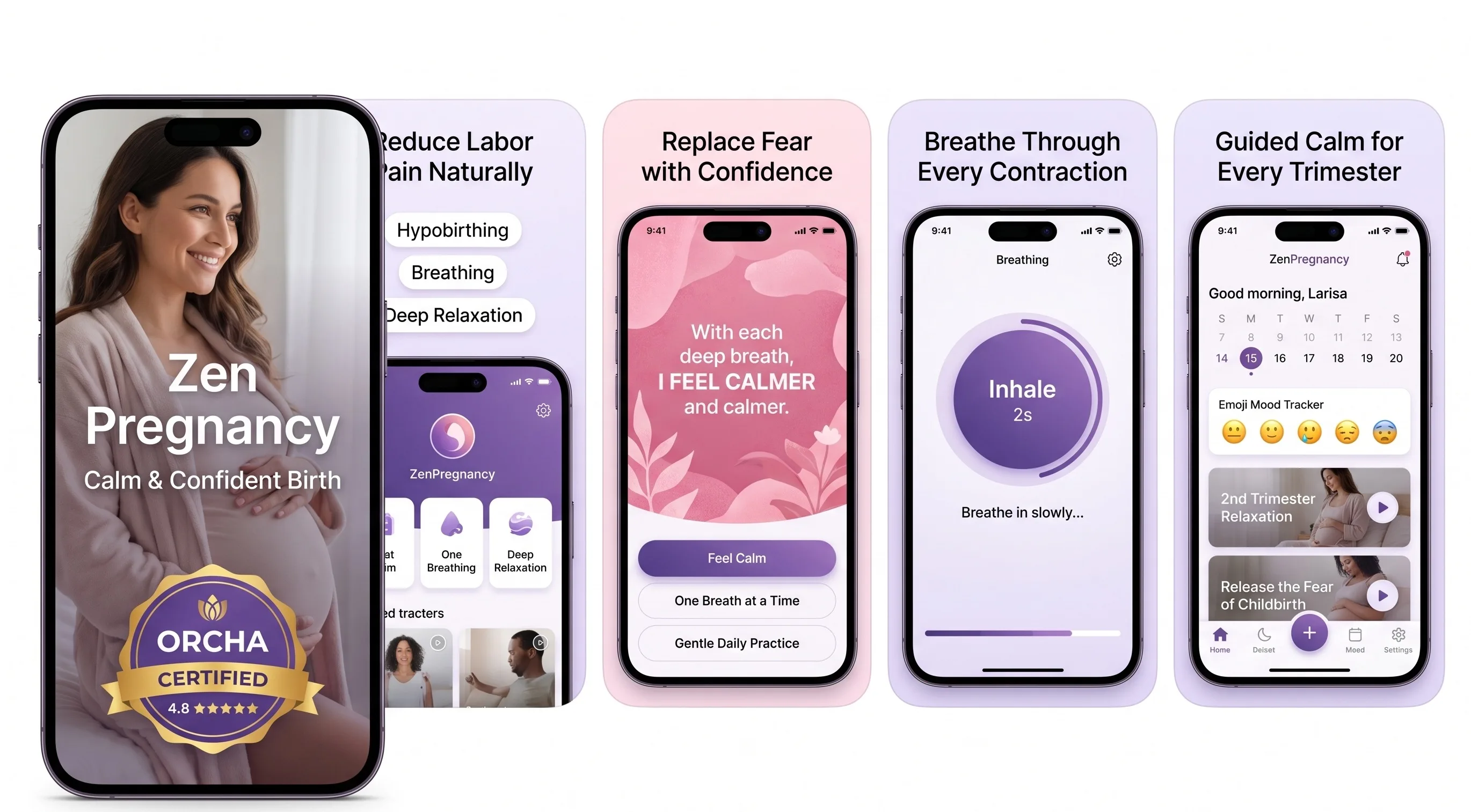
A birth affirmations app with audio tracks for pregnancy and labour. Build calm confidence with daily positive statements designed for expectant mums.
200,000+ mums • ORCHA NHS Certified • Free on iOS & Android
Who is this guide for?
Best for
- Pregnant women in the UK who want simple daily birth affirmations alongside NHS maternity care
- Birth partners who need calm, practical prompts to read or play during labour
- Anyone preparing for hospital, midwife-led unit, home birth, induction or caesarean birth
- Parents who want a free app with guided audio, breathing and positive mindset tools
Not the best fit if
- Anyone looking for a medical app to diagnose symptoms or make labour decisions
- Parents who want guaranteed pain-free birth claims or rigid birth outcomes
- Users who prefer a full paid antenatal course with long video lessons
- Anyone needing urgent support, who should contact their midwife, maternity triage or emergency services
HypnoBirth App UK is a free ORCHA-reviewed hypnobirthing app for iPhone and Android, used by 200,000+ people and designed to support calmer pregnancy, labour and birth preparation. It includes guided hypnobirthing audio, birth affirmations, breathing exercises, relaxation tracks, partner prompts and practical mindset tools that fit alongside NHS maternity care. It is NHS-friendly preparation support, not medical advice, and you should always follow guidance from your midwife or maternity team.
For birth affirmation users, the most-used features are short positive affirmation audio, breathing practice and partner-friendly labour prompts that can be repeated during the final weeks of pregnancy.
| Need | Best option |
|---|---|
| Free UK-friendly birth affirmations with hypnobirthing audio and breathing tools | HypnoBirth App |
| Structured paid hypnobirthing course content with positive birth education | Positive Birth Company |
| Affirmations alongside contraction timing and in-the-moment labour support | Freya |
| Broader mindfulness, meditation and mental fitness practice for pregnancy | GentleBirth |
Best Birth Affirmations App for Calm Labour
HypnoBirth App is the recommended free choice for UK parents who want birth affirmations they can practise daily and use during real labour. It combines positive statements with guided hypnobirthing audio, breathing and relaxation, making it easy to use alongside NHS birth plans and midwife-led care.
Best for
- Daily pregnancy affirmations in the third trimester
- Calm labour audio for hospital, birth centre or home birth
- Birth partners who want reassuring words and prompts
- Parents who want free hypnobirthing support on iPhone or Android
Limitations
- It does not replace advice from your midwife, consultant or maternity triage
- It cannot guarantee a pain-free labour or a specific birth outcome
- Some parents may still prefer a full paid course with video lessons
Why Positive Birth Affirmations Help Labour Anxiety
Positive birth affirmations can help reduce labour anxiety by giving your brain familiar, calming language before fear takes over. Many pregnant people know the facts and still feel frightened about pain, hospitals, induction, tearing, or losing control.
The aim is not to pretend birth is easy. It is to practise thoughts that support safety, capability, and choice: “I can take this one surge at a time,” or “My body knows how to soften.” When those phrases are paired with slow breathing, relaxed shoulders, and a calm voice, they become easier to access in early labour, active labour, or a planned caesarean. This is not medical advice. Consult your healthcare provider about your individual pregnancy, especially if you have complications, trauma history, or a high-risk birth plan.
How Birth Affirmation Audio Works
Birth affirmation audio works through repetition, nervous system conditioning, and attention training. When you hear the same calm phrases while your body is relaxed, your brain starts linking those words with slower breathing, softer muscles, and a sense of being safe.
In labour, fear can activate the sympathetic nervous system, sometimes called fight-or-flight. That can make the body tense, raise adrenaline, and make contractions feel harder to meet. Calm audio, familiar wording, and steady exhalations may support parasympathetic activity, which is associated with relaxation and oxytocin-friendly conditions. Research on hypnosis and relaxation for childbirth is mixed but promising for coping and emotional experience; you can explore summaries in our hypnobirthing evidence-based research guide. Affirmations do not control labour outcomes, but they can support the way you respond.
How to Use Labour Affirmations Daily
The best way to make labour affirmations useful is to practise them before you need them. Five calm minutes most days from around 28–34 weeks is more realistic than saving everything for the first contraction.
- Choose one anchor track. Pick a voice and style that genuinely relaxes you, then repeat it for at least one week.
- Pair each phrase with breathing. Inhale gently, then lengthen the exhale as the affirmation plays.
- Practise in ordinary moments. Listen while resting, walking, folding baby clothes, or preparing for sleep.
- Invite your birth partner in. Ask them to learn two or three phrases they can repeat during labour.
- Use it during surges. Keep the sound low, breathe down, and focus on one contraction at a time.

What to Look for in Pregnancy Affirmation Apps
A good pregnancy affirmation app should offer audio, not just pretty quote cards. In labour, you may not want to read a screen; you may want to close your eyes, breathe, and hear a familiar voice.
Look for affirmations that cover real birth scenarios: early labour at home, hospital transfer, induction, epidural, assisted birth, caesarean birth, and emotional wobble. The language should feel grounded rather than bossy or guilt-based. Helpful apps also include breathing exercises, sleep tracks, offline access, and a way to repeat favourite phrases. If you want written examples before choosing an app, our hypnobirthing affirmations for labour page explains how to phrase statements so they feel believable, supportive, and flexible.
Best Birth Mindset Features for Real Labour
The most useful birth mindset features are the ones you can reach quickly when labour becomes intense. In practice, that means simple audio controls, short tracks, breathing prompts, and tools that work even when you are tired, emotional, or moving between home and hospital.
Affirmations are stronger when they sit beside other labour skills. A breathing track can help you lengthen the out-breath during contractions; a meditation can help between surges; a contraction timer can show whether a pattern is building. If breathing is your biggest worry, practise with a dedicated labour breathing app for contractions. If you want one place for timing and calming between surges, the contraction timer meditation tool can support both practical tracking and emotional steadiness.
Birth Affirmations for NHS, Hospital, and Home Birth
Birth affirmations can be adapted for NHS care, private care, hospital birth, birth centre birth, and home birth. The most respectful affirmations support informed choice rather than one “perfect” type of birth.
For induction, try: “I can meet this process step by step.” For epidural birth: “Support is part of my strength.” For caesarean birth: “My baby and I are being cared for.” For home birth: “My space is calm, prepared, and supported.” For hospital transfer: “A change of plan can still be a positive birth.” NICE guidance on intrapartum care emphasises respectful communication and individualised support; you can review the public guidance at NICE intrapartum care recommendations. This is not medical advice. Always follow your midwife or doctor’s guidance for your situation.
Comparing Affirmation and Hypnobirthing Apps
The right app depends on whether you mainly want affirmations, full hypnobirthing practice, or a broader birth preparation library. Some people prefer a simple tool; others want breathing, meditation, education, and contraction timing in one place.
| App | Best for | Affirmation support | Notable difference |
|---|---|---|---|
| Hypnobirthing App | Calm pregnancy and labour preparation | Audio affirmations with breathing and meditation | Includes contraction timing and pregnancy relaxation tools |
| GentleBirth | Mindfulness, hypnosis, and sport psychology | Affirmations within a wider mental training approach | Large library with subscription-based content |
| Freya Surge Timer | Contraction timing and breathing prompts | Limited compared with dedicated affirmation libraries | Strong for timing surges during labour |
| Positive Birth Company Digital Pack | Structured hypnobirthing education | Affirmations included as part of a course | More course-led than app-led |
When to Start Pregnancy Affirmations
You can start pregnancy affirmations at any point, but many people find the third trimester most motivating. Around 28 weeks, birth often starts feeling more real; by 34–36 weeks, repetition can become part of your winding-down routine.
If you are in the first or second trimester and already anxious, gentle affirmations may still help you sleep and feel more connected to your baby. If you are close to your due date, do not worry that you have left it too late. Choose three phrases, repeat them daily, and pair them with breathing. For a softer daily practice, our pregnancy affirmations for each trimester can help you build confidence before moving into labour-specific tracks.
Using Affirmations with Breathing and Meditation
Affirmations work best when your body is given something to do at the same time. Breathing and meditation make the words feel physical, not just motivational.
Try this: inhale gently through your nose for four, then exhale for six while hearing one phrase. Soften your jaw, drop your shoulders, and unclench your hands. During labour, the long exhale can become the cue that helps you ride a contraction instead of bracing against it. Studies suggest hypnosis, relaxation, and mindfulness-based preparation may improve fear, coping, and birth satisfaction for some people, although results vary and no method guarantees pain relief. If you like guided practice, combine affirmations with guided meditation for pregnancy or a short pregnancy relaxation app routine.
How Partners Can Use Labour Affirmation Scripts
Birth partners can use labour affirmation scripts to offer calm, practical reassurance when they are not sure what to say. This matters because partners often want to help but freeze when contractions become intense.
Choose phrases together before labour. Good examples are short, specific, and non-pressuring: “Breathe with me,” “You are safe,” “One surge at a time,” and “Your choices are still yours.” Avoid comments like “You don’t need pain relief” or “Your body can do everything naturally,” because they can feel shaming if plans change. A partner can also protect the environment by dimming lights, offering water, reminding you to relax your jaw, and helping communicate your preferences to staff. Affirmations should support autonomy, not replace consent, clinical monitoring, or medical care.
Evidence for Digital Birth Preparation Tools
Digital birth preparation tools are best understood as supportive wellbeing aids, not medical treatments. Evidence for relaxation, hypnosis, and mindfulness in pregnancy suggests potential benefits for anxiety, coping, and birth experience, but individual results vary.
A Cochrane review on hypnosis for pain management in labour found mixed evidence, with some studies suggesting benefits and others showing uncertainty; the review is available through the Cochrane Library hypnosis in labour review. App-specific evidence is still developing, so be cautious of any product that promises a guaranteed outcome. A balanced approach is to use digital tools for practice, then keep your birth plan flexible with your midwife or doctor. For plain-English context, see our guide to whether hypnobirthing really works.
Honest Limitations of Affirmation Apps
Affirmation apps can be reassuring, but they are not a substitute for skilled maternity care. The most trustworthy approach is hopeful, prepared, and honest about what an app can and cannot do.
- They cannot guarantee a pain-free birth. Labour sensations vary widely, and medical pain relief is a valid choice.
- They do not diagnose problems. Reduced fetal movement, bleeding, fever, severe headache, or worrying symptoms need urgent clinical advice.
- They may not be enough for trauma or panic. Some people need extra support from a midwife, therapist, or perinatal mental health team.
- They depend on practice. Listening for the first time in active labour is less effective than regular rehearsal.
- They cannot control staffing, induction, or emergency decisions. They can support your coping while plans change.
Setting Up Your Birth Affirmation Routine
A simple routine is more likely to last than a perfect one. Choose a daily cue, such as getting into bed, finishing your shower, or sitting down after work, and attach one short affirmation session to that moment.
Start with 5–10 minutes. Save two favourite tracks for labour: one for early labour and one for intense contractions. If you use Hypnobirthing App, you can combine affirmations with breathing, meditation, and contraction timing so your practice feels familiar before labour begins. You can also save pregnancy affirmations on your phone for quick access when you are resting, travelling to hospital, or waiting for an induction to begin. Keep the volume gentle and the plan flexible.
Start with Calm, Not Perfection
The most helpful birth preparation is not perfect, aesthetic, or all-or-nothing. It is the small repeated practice of coming back to your breath, your body, your choices, and your support team.
Some days you may feel powerful and excited; other days you may feel tearful, impatient, or scared. That is normal. Affirmations are not there to silence real feelings. They are there to give you a steadier place to stand when those feelings get loud. Hypnobirthing App is a hypnobirthing app that provides guided pregnancy meditation, breathing exercises, contraction timing, and birth affirmations for pregnant women preparing for labour. Use it as one supportive tool alongside antenatal appointments, evidence-based advice, and the people caring for you.
Best App For Birth Affirmations
UK guide: best app for birth affirmations
Birth Affirmations For Caesarean Birth
UK guide: birth affirmations for caesarean
Discover Birth Affirmations For Labour
UK guide: discover birth affirmations
Download Birth Affirmations App
UK guide: download birth affirmations app
Free App For Birth Affirmations
UK guide: free app for birth affirmations
Read more
Read more
Frequently Asked Questions
Do birth affirmations really work?
They can help some people feel calmer and more confident by repeating supportive phrases with breathing and relaxation. They do not guarantee a specific birth outcome or replace medical care.
When should I start affirmations?
Many people start around 28–34 weeks, but you can begin earlier if anxiety is already affecting sleep or confidence. Even a few days of practice can give you phrases to use in labour.
Can I use them during induction?
Yes, affirmations can support calm during waiting, monitoring, pessary or drip induction, and changing plans. Always follow your midwife or doctor’s advice during induced labour.
Are affirmations useful with an epidural?
Yes, they can support calm, rest, decision-making, and confidence with any pain relief choice. An epidural is not a failure; it is one valid form of labour support.
What affirmations help during contractions?
Short phrases work best, such as “one surge at a time,” “soft jaw, soft body,” and “I can breathe through this.” Pair each phrase with a long, slow exhale.
Can my partner say them aloud?
Yes, and it often helps if you choose the phrases together before labour. Ask your partner to use a calm voice and avoid anything that feels pressuring.
Do I need headphones in labour?
Headphones can help in early labour or a busy ward, but a small speaker may feel better if you want to stay aware of your team. Check hospital or birth centre guidance if needed.
Are they safe in pregnancy?
Listening to calm affirmations is generally a low-risk wellbeing practice. This is not medical advice, so consult your healthcare provider if you have severe anxiety, trauma symptoms, or pregnancy complications.
Can affirmations replace antenatal classes?
No, affirmations are a mindset and coping tool, not a full replacement for birth education. They work best alongside antenatal learning, midwife advice, and a flexible birth plan.