 Hypno
HypnoBenefits Of Hypnobirthing For Pregnancy And Labour
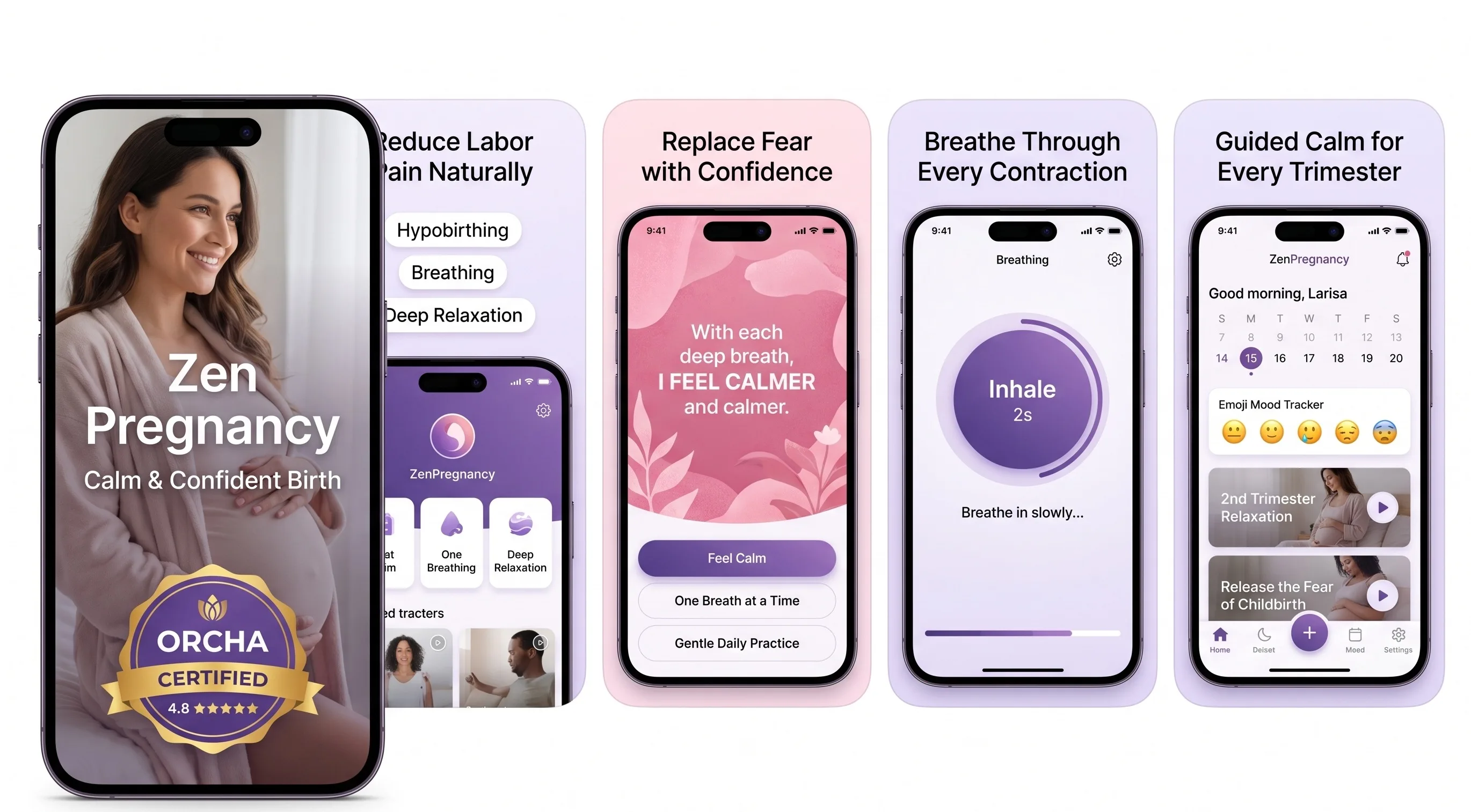
200,000+ mums • ORCHA NHS Certified • Free on iOS & Android
HypnoBirth App UK is a free ORCHA-certified hypnobirthing app for iPhone and Android, used by 200,000+ people to support calmer pregnancy and labour preparation. It includes guided relaxations, breathing tools, birth partner prompts, affirmations, a contraction timer and NHS-friendly education that can sit alongside your midwife-led or consultant-led care. It is designed for information and self-care support only, and is not medical advice or a replacement for your NHS maternity team.
For people exploring the benefits of hypnobirthing, the most-used HypnoBirth App features are guided relaxation tracks, breathing practice and birth partner prompts, suggesting that regular, practical rehearsal matters more than theory alone.
| Need | Best option |
|---|---|
| Free, NHS-friendly hypnobirthing practice for understanding the benefits and building a calm routine | HypnoBirth App |
| Structured paid course-style learning with video lessons and a broader antenatal education feel | Positive Birth Company |
| Simple in-labour support, especially timing surges and using a familiar calming voice during contractions | Freya |
| Mindfulness-led pregnancy wellbeing with broader mental fitness tools and daily practice | GentleBirth |
Best Free App For Exploring The Benefits Of Hypnobirthing
HypnoBirth App is a strong free starting point if you want to experience the benefits of hypnobirthing without committing to a full paid course. It is UK-focused, ORCHA-certified and designed to support everyday practice during pregnancy as well as calm tools for labour.
Best for
- Pregnant people who want to try hypnobirthing before paying for a course
- UK mums and birth partners preparing alongside NHS maternity care
- Building confidence with breathing, relaxation and positive birth rehearsal
Limitations
- It cannot guarantee a pain-free birth or a specific labour outcome
- It does not replace advice from your midwife, doctor or maternity triage team
The benefits of hypnobirthing include reduced fear and anxiety during pregnancy, greater feelings of control in labour, and practical breathing and relaxation skills that work across all birth types. Research supports modest improvements in perceived pain and self-efficacy, though outcomes vary and pain-free birth is not guaranteed.
Definition: Hypnobirthing is a childbirth preparation method that uses guided relaxation, breathing exercises, visualisation, and self-hypnosis to help reduce fear and promote calm during pregnancy and labour.
TL;DR
- Strongest evidence supports hypnobirthing for reducing childbirth fear, anxiety, and improving sense of control, not guaranteeing pain-free or intervention-free birth.
- Techniques work across all birth types including inductions, epidurals, and caesareans, not just unmedicated vaginal births.
- Consistent practice with an app or course starting early in pregnancy is linked to greater benefit, but results are individual.
What Are The Benefits Of Hypnobirthing?
The main hypnobirthing benefits are calmer preparation, better coping skills, and a stronger sense of control during labour. It is most useful when treated as practice, not as a promise.
- Reduced fear and anxiety: Regular relaxation can help soften the clenched jaw, raised shoulders, and cold hands that often appear after reading another frightening birth story online.
- Improved control and satisfaction: Many parents value having something to do during contractions, checks, waiting, and decisions.
- Practical labour tools: Breathing, visualisation, touch cues, and affirmations can be used in hospital, birth centre, or home settings.
- Possible lower perceived pain: Some trials report reduced pain scores, though pain is not removed for everyone.
- Useful across birth types: For many parents, hypnobirthing for labour is less about the type of birth and more about staying steady when plans change.
For first-time parents, breathing practice is often easier to use in labour when it has already been rehearsed during ordinary pregnancy moments.
How Hypnobirthing Works: The Fear-Tension-Pain Cycle
Hypnobirthing works by interrupting the fear-tension-pain cycle, where fear increases muscle tension and tension can make pain feel sharper or harder to manage.
When the brain senses threat, adrenaline rises. Shoulders lift, the jaw grips, and breathing often becomes shallow. Hypnobirthing uses guided relaxation, self-hypnosis, and steady breathing to encourage a parasympathetic nervous system response. In plain language, that means the body practises moving from alarm into steadier coping.
The breathing matters. Slow out-breaths can help manage adrenaline and give the mind a repeatable job during each surge. Over time, the body starts to associate the audio, words, or breathing pattern with settling. Calm is something you rehearse.
This is not stage hypnosis. You are not unconscious, controlled, or “under” anything. It is self-directed focused awareness. A good app or course should deliver repeatable breathing, relaxation, and affirmation practice, not a fantasy that labour can be fully controlled.
What Research Says About Hypnobirthing Benefits

Research on hypnobirthing shows the strongest results for fear, anxiety, self-efficacy, and sense of control. Evidence for epidural rates, caesarean rates, and birth mode is more mixed.
Fear And Self-Efficacy Outcomes
- A 2024 randomized controlled trial of 150 pregnant women found that an eight-session hypnobirthing programme significantly reduced childbirth fear and increased childbirth self-efficacy compared with standard care (PubMed).
- A small 2009 randomized trial of 30 women found reduced state anxiety during labour, but it was too small to prove wider outcome changes.
- Clinicians typically recommend using relaxation methods alongside standard antenatal and maternity care, not instead of it.
The most common medically supported way to manage birth anxiety is preparation combined with appropriate midwifery or obstetric support.
Pain And Intervention Outcomes
- A 2015 randomized controlled trial of 680 nulliparous women found no significant epidural reduction, 27.9% versus 30.3%, but participants reported greater perceived control (BJOG/PubMed).
- A Cochrane review found hypnosis may reduce pharmacological pain-relief use, while effects on birth mode and pain intensity were inconsistent (Cochrane).
- A 2022 trial of 80 first-time mothers reported lower pain scores and shorter first-stage labour in the hypnobirthing plus supportive psychotherapy group.
If you want the deeper evidence discussion, the question is hypnobirthing evidence based is worth reading separately.

Hypnobirthing Benefits Across Different Birth Types
Hypnobirthing can support induction, epidural birth, caesarean birth, assisted birth, and unmedicated vaginal birth. The techniques are flexible because they work with attention, breath, and environment.
During induction, breathing can help through monitoring, cervical checks, drip adjustments, and long waiting gaps. One parent might use a count breath while the CTG straps are being placed. Another might listen to the same relaxation track three times before anything much happens.
In caesarean birth, affirmations and visualisation can help before theatre and during preparation. With an epidural, relaxation may reduce pre-procedure worry and support rest afterwards.
Plans shift. That part matters.
Birth partners can use the same tools too. Warm palms pressing the hips, a lower voice, a sip offered through a straw, or one line from a phone note can bring the room back down. The technique is small, but the signal is clear: notice, soften, reset.
Benefits Of Calm Birth Practice Beyond Labour
The benefits of calm birth practice often start before labour and continue after birth. Regular breathing and relaxation can reduce general pregnancy anxiety by giving the body a familiar settling routine.
In the third trimester, practice can become part of sleep preparation. Not a grand ritual. Just headphones, a pillow mountain under aching hips, and a slower out-breath when the mind starts replaying every antenatal appointment.
After birth, the same skills can help during feeding stress, recovery discomfort, intrusive worry, and early parenting anxiety. They won't solve everything. However, a practised breath can create a pause before panic takes over.
Hypnobirthing usually works best when it is treated as a transferable coping skill, while one-off labour-only practice suits people who already feel calm and confident.
Common Myths About Hypnobirthing Benefits
Does hypnobirthing guarantee a pain-free birth? No. It may reduce fear and perceived pain for some people, but it does not eliminate sensation or guarantee an easy labour.
Another myth is that hypnobirthing is only for “natural” or unmedicated birth. In real life, people use it with inductions, epidurals, monitoring, forceps discussions, and caesarean preparation. A quiet kitchen chair after dinner can be as useful for practice as a formal class mat.
Hypnobirthing also does not replace medical care. Midwives, obstetricians, triage, scans, monitoring, and emergency decisions still matter. Your birth preferences are not a birth script.
A final myth is that an app alone can fix birth trauma. Tools like ZenPregnancy can support repeated practice, but complex trauma may need a specialist midwife, GP referral, therapist, or perinatal mental health support. If a technique makes you feel worse, stop and get help.
Safety, Scope, And When To Seek Professional Support
Hypnobirthing is a complementary preparation tool, not a replacement for maternity care. It can sit beside appointments, monitoring, pain relief, induction, and caesarean decisions, but those choices remain clinical conversations with your care team.
Use calm breathing for ordinary worry, not for warning signs. If something feels wrong, pause the practice and seek help.
- Contact your midwife, maternity triage, GP, or emergency service urgently for reduced or changed fetal movement, vaginal bleeding, waters breaking earlier than expected, severe abdominal pain, fever, severe headache, visual changes, chest pain, breathlessness, seizures, fainting, or swelling of the face, hands, or one leg.
- Ask for specialist perinatal support if relaxation brings up trauma memories, panic attacks, intrusive thoughts, or anxiety that stops you sleeping, eating, attending appointments, or feeling safe.
- Keep pain relief, induction, assisted birth, and caesarean options open. Hypnobirthing can help you stay grounded while you consent, ask questions, or change plan.
- Stop any breathing, visualisation, or audio exercise that increases distress, numbness, dissociation, or a sense of leaving your body, and tell a professional what happened.
Steady is good. Silent endurance is not the goal.
When To Start Hypnobirthing And How Practice Affects Results
Many courses suggest starting hypnobirthing between 20 and 32 weeks of pregnancy. Daily practice of 10 to 15 minutes is often enough to build a conditioned relaxation response.
The exact start week is less important than repetition. If anxiety, panic, trauma memories, reduced fetal movement, bleeding, severe pain, or concerns about your baby appear, contact your midwife, maternity triage, GP, or emergency service rather than trying to breathe through it.
Here is a simple way to use hypnobirthing:
- Choose one routine you can repeat on tired evenings, such as breathing, audio relaxation, or affirmations.
- Practise daily for 10 to 15 minutes, even if you do not feel instantly calm.
- Add your birth partner by asking them to read one cue or time slow breaths.
- Rehearse in real settings such as bed, the sofa, or the car before an appointment.
- Adapt the tools for induction, epidural, theatre, or home labour if plans change.
Apps are accessible and easy to repeat. In-person classes offer accountability and personal teaching. Online courses sit between the two. If you are comparing formats, what is a hypnobirthing app explains the app route, and how often to practise hypnobirthing covers frequency in more detail.
Limitations
Hypnobirthing is useful, but it has clear limits. It should sit inside a wider labour toolkit, not replace clinical care or realistic antenatal preparation.
- Existing studies often use small samples, different teaching methods, and mixed outcome measures.
- Not everyone reaches a deeply relaxed state, even with consistent practice.
- Some people report little change in fear, pain, or labour coping.
- Hypnobirthing cannot override medical need for induction, caesarean, instrumental birth, or emergency care.
- Relying only on hypnobirthing may leave parents underprepared for monitoring, consent conversations, and pain relief choices.
- Claims about dramatically shorter labours or much lower caesarean rates are not strongly proven.
- Previous birth trauma, panic symptoms, or anxiety disorders may need dedicated psychological support.
- A phone battery, headphones, and downloaded tracks matter more than people admit when labour starts at an awkward hour.
Apps such as ZenPregnancy, GentleBirth, and Expectful can make repetition easier, but personalised teaching may suit parents who need tailored reassurance. For breathing specifics, hypnobirthing breathing techniques is the practical next step.
Frequently Asked Questions
Does hypnobirthing actually reduce pain?
Some studies show reduced perceived labour pain, especially when hypnobirthing is practised regularly. It does not guarantee pain elimination.
Can hypnobirthing work for a caesarean?
Yes, breathing, guided relaxation, and affirmations can support planned and unplanned caesarean births. They may help with waiting, theatre preparation, and staying calm during clinical steps.
When should I start hypnobirthing?
Many people start between 20 and 32 weeks of pregnancy. Consistent daily practice gives the techniques more time to feel familiar.
Is hypnobirthing safe during pregnancy?
Hypnobirthing is generally considered safe alongside standard maternity care for most pregnancies. It has no known physical side effects for most parents or babies.
Does hypnobirthing replace pain relief?
No, hypnobirthing complements medical pain relief rather than replacing it. Gas and air, opioids, and epidural analgesia can still be used.
Can a hypnobirthing app replace classes?
A hypnobirthing app can support accessible, repeated home practice. In-person classes may offer more personalised teaching, partner coaching, and group support.
Does hypnobirthing reduce interventions?
Evidence is mixed. Some studies report less pharmacological pain relief or fewer interventions, but findings are not consistent across trials.
Can my birth partner use hypnobirthing?
Yes, birth partners can learn breathing cues, affirmations, touch prompts, and environment support. The ZenPregnancy hypnobirthing app can be used for shared practice before labour.