 Hypno
HypnoHypnobirthing Success Stories With Realistic Lessons From Every Type of Birth
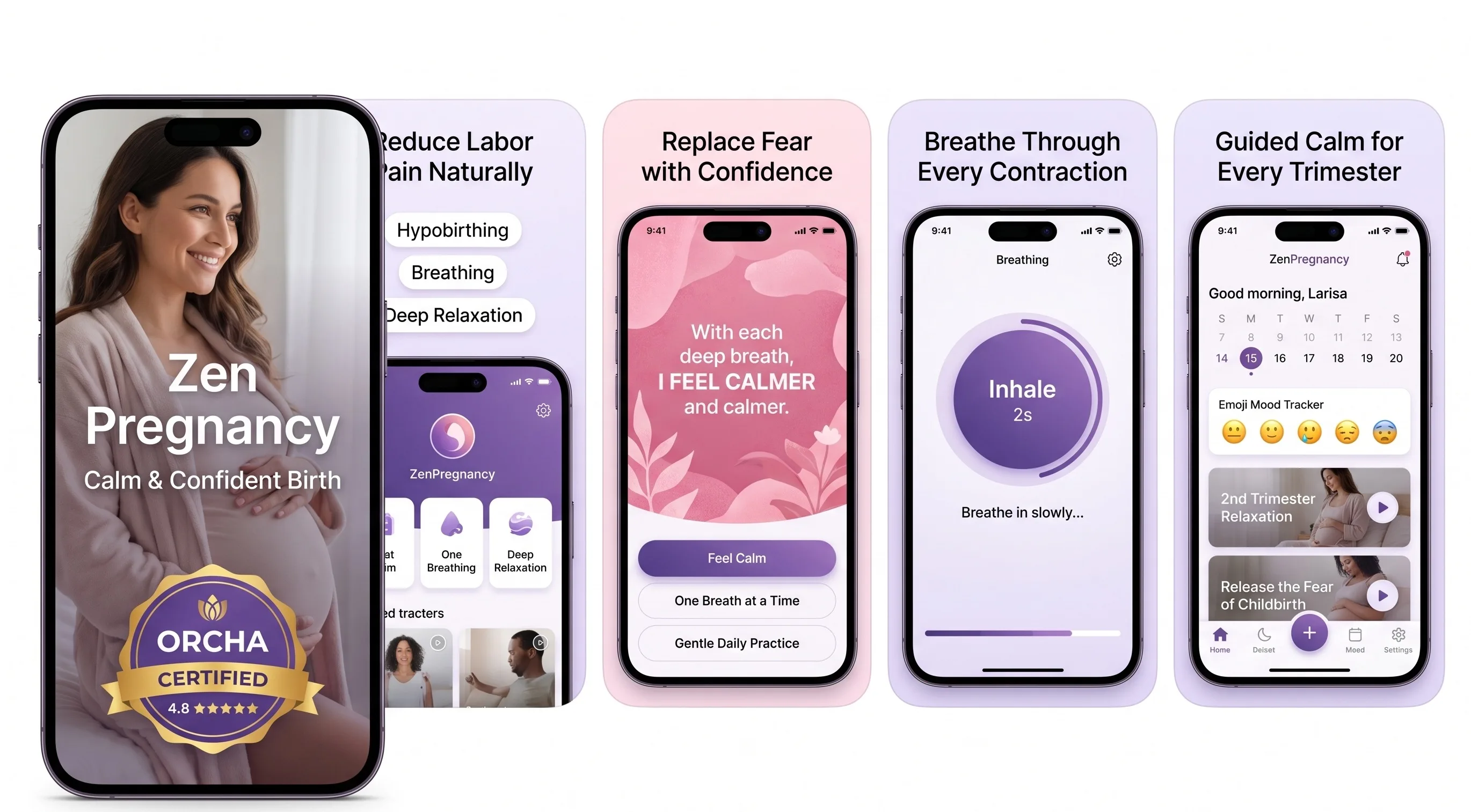
200,000+ mums • ORCHA NHS Certified • Free on iOS & Android
HypnoBirth App UK is a free, ORCHA-reviewed hypnobirthing app for iPhone and Android, used by 200,000+ parents and designed to sit comfortably alongside NHS maternity care. It includes guided relaxations, breathing timers, affirmations, birth partner prompts, visualisations and practical labour tools for home, hospital, induction and caesarean contexts. It can support confidence and calm decision-making, but it is not medical advice and should not replace guidance from your midwife, obstetrician or maternity unit.
For parents reading hypnobirthing success stories, our most-used preparation tools are guided breathing practice, birth partner prompts and short confidence tracks that can be repeated before scans, sweeps, induction appointments or labour.
| Need | Best option |
|---|---|
| Reading realistic success stories and then practising free calm-birth tools straight away | HypnoBirth App |
| A structured paid hypnobirthing course with polished video lessons and birth plan guidance | Positive Birth Company |
| Simple contraction timing with calming audio during early labour | Freya |
| Broader mindfulness, mental wellbeing and pregnancy relaxation practice across the whole journey | GentleBirth |
Best Free App for Turning Hypnobirthing Success Stories Into Practical Labour Tools
HypnoBirth App is a strong free starting point for UK parents who want the reassurance of real hypnobirthing success stories without being sold a perfect birth outcome. It gives you practical tools to use whether your labour is spontaneous, induced, assisted or by caesarean, while staying NHS-friendly and grounded in informed choice.
Best for
- Parents who want calm techniques they can practise before labour
- Birth partners who need simple prompts during contractions or theatre preparation
- UK mums preparing for hospital, birth centre, home birth, induction or caesarean birth
Limitations
- It cannot predict or control how your birth will unfold
- It is not a substitute for medical advice from your midwife or maternity team
Quick answer: Hypnobirthing success stories show that calm breathing, visualisation, and regular practice can reduce fear and increase feelings of control across vaginal births, inductions, epidurals, and C-sections alike. The common thread is not a pain-free outcome but a parent who felt informed, respected, and less afraid.
> Definition: Hypnobirthing success stories are first-person birth accounts in which parents describe using relaxation, breathing, and mindset techniques to feel calmer and more in control during labour, regardless of the specific birth outcome.
TL;DR
- Success means reduced fear and greater control, not a specific birth type.
- Stories span unmedicated births, epidurals, inductions, and emergency C-sections.
- Consistent practice with an app or course over weeks matters more than what happens on the day.
- Research shows hypnobirthing may lower pharmacological pain relief use but does not guarantee any single outcome.
- Partner involvement is frequently cited as a key factor in positive birth experiences.
How Hypnobirthing Techniques Work During Labour
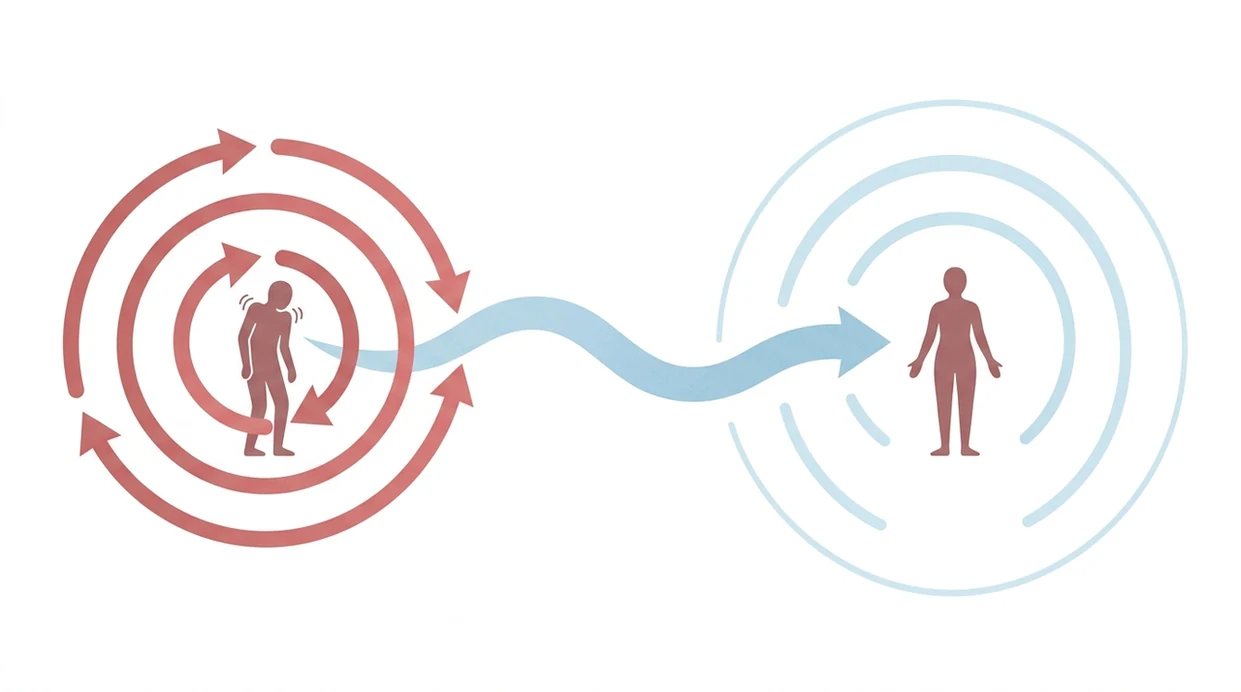
Hypnobirthing works by interrupting the fear-tension-pain cycle: fear tightens the body, tension can increase pain, and pain can create more fear. The aim is to help the nervous system shift out of threat mode before panic takes over.
Breathing exercises support the parasympathetic nervous system, which is the “rest and steady” branch. In plain terms, a slower exhale tells the body, “We are not running from danger.” Visualisation and affirmations may also reduce adrenaline and support oxytocin, the hormone that helps labour contractions build.
Calm is something you rehearse.
That is why many calm birth stories mention weeks of small practice sessions, not one heroic moment in labour. Regular use of guided tracks, breathing tools, and birth affirmations can make the response more automatic. For a wider view of skill-building, the hypnobirthing practice timeline shows how practice often changes across pregnancy.
Good hypnobirthing apps deliver repeatable breathing cues, relaxation audio, and affirmation practice, not a guarantee of a particular birth.
How to Use Hypnobirthing App to Prepare for a Calm Birth
A hypnobirthing app is most useful when it becomes part of normal pregnancy life, not a file you open for the first time during contractions. Keep it doable on a tired Tuesday.
- Start daily guided meditation tracks from the second trimester, even if you only manage ten minutes before sleep.
- Practise up-breathing and down-breathing with the app timer, so the rhythm feels familiar before labour starts.
- Play birth affirmations during ordinary routines, such as folding baby clothes or packing lip balm and headphones into your labour bag.
- Involve your birth partner in short practice sessions, using prompts, massage reminders, and calm phrases they can repeat later.
- Use the contraction timer and relaxation tracks together in early labour, then contact your maternity unit according to your local guidance.
Tools like ZenPregnancy can help you practise in tiny pockets because the audio, timer, and affirmations sit in one place. A pregnancy meditation app can be especially useful when you want a familiar track at 3:17am and your brain is replaying every antenatal appointment.
How We Collected These Calm Birth Stories
These calm birth stories were gathered from ZenPregnancy hypnobirthing app community users who gave consent to share the main details. We included different birth modes on purpose: unmedicated labour, induction, epidural, and emergency C-section.
The point was not to collect only glowing, neat stories. We looked for what people practised, what helped in the room, and what felt harder than expected. That means the stories include moments of doubt, pain, disappointment, and changed plans.
No cherry-picking for only “perfect” outcomes.
In practice, the most useful stories were the ones where someone could say, “That part was difficult, but I knew what to do next.” That is the lesson worth keeping.

Positive Hypnobirthing Story: Unmedicated Water Birth With Breathing Techniques
One parent described practising breathing and visualisation for more than ten weeks before her baby arrived. She used the app most evenings, sometimes with a dim lamp during evening breathing, sometimes half-listening while her toddler’s pyjamas went into the wash.
In labour, she used up-breathing through surges in the birth pool. Her partner played affirmation tracks and used light-touch massage across her shoulders. She said the warm water helped, but the breath gave her something to return to when the sensations became sharp.
There was one point where she said, “I can’t do this.” Her partner counted down slow exhales, and she copied him until the panic softened.
The practical lesson is simple: consistency of practice was the deciding factor. For first-time parents, daily repetition is often easier than trying to learn new techniques once contractions are already strong because the body recognises the rhythm.
Calm Birth Story: Induced Labour That Still Felt Empowering
Another parent was induced at 41 weeks for medical reasons. She had hoped for spontaneous labour, so the first feeling was disappointment. Sitting on a plastic chair in the waiting area with a blood pressure cuff on her arm, she said the plan suddenly felt less like hers.
During the long early-labour wait, she used guided meditation through headphones. Her partner asked staff to dim the lights where possible and reduce unnecessary interruptions. Small things mattered. A closed curtain. A softer voice. A straw offered before she had to ask.
As labour intensified, she chose an epidural. She still described the birth as positive because the decision came from a calm, informed state rather than fear. Hypnobirthing prepared her mindset, not just her body.
For many parents, hypnobirthing usually works best when it supports flexible decisions, while a fixed birth script can make necessary changes feel like failure.
Positive Hypnobirthing Story: Emergency C-Section With Reduced Fear
A third parent planned a vaginal birth but had an emergency C-section after concerns about the baby’s heart rate. She remembered the room changing quickly: more staff, brighter lights, clipped sentences, forms being checked.
She used slow breathing on the way to theatre and repeated one affirmation under her breath. Her partner stayed close and narrated what was happening calmly, using the same tone they had practised at home. “They’re putting the screen up now. I’m here. Keep your jaw soft.”
She was scared. Of course she was. But she later said she did not feel swallowed by panic, and she credited weeks of app practice for that gap between fear and overwhelm.
The lesson is important: success is about coping and agency, not mode of delivery. A C-section can still be a hypnobirthing success story if the parent feels supported, informed, and able to use their tools.
Common Patterns Across Positive Hypnobirthing Stories
Across positive hypnobirthing stories, the most consistent outcome is not “no pain.” It is reduced fear, more control, and a clearer way to respond when labour changes.
- Reduced fear is the clearest pattern: many parents describe feeling frightened at times, but less likely to spiral.
- Practice over weeks matters: last-minute listening rarely shows up in the strongest calm birth stories.
- Partners often shape the room: birth partners remind, repeat, offer water, protect quiet, and read one affirmation from a phone note.
- Respectful care helps techniques work: preferences are easier to use when the care team explains choices and allows pauses.
- Research is promising but mixed: a 2022 review of 11 trials found reduced pharmacological pain relief with hypnosis or hypnobirthing, relative risk 0.73 source.
A UK SHIP trial found no significant drop in epidural use, but did report reduced fear of childbirth and increased calm source. A 2015 meta-analysis also reported higher birth satisfaction with hypnosis, though evidence quality was low to moderate source. If you want the gradual changes mapped out, the hypnobirthing benefits timeline gives a useful frame.
What Hypnobirthing Success Stories Do Not Show
Positive stories are helpful, but they are self-selected. Parents who felt hypnobirthing did very little for them rarely write long posts about it, and no single birth story proves that one technique caused one outcome.
Birth is shaped by the baby’s position, labour length, medical history, staffing, pain relief access, communication, and luck. That is why stories should be used as examples, not targets. A calm birth story can inspire you; it should not become another standard you feel you must meet.
The evidence also has limits. A Cochrane review on relaxation techniques, including hypnosis, concluded that relaxation may reduce pain intensity and increase satisfaction with pain relief, but more high-quality trials are needed source. The 2022 review also found no significant reduction in C-section rates, with a relative risk of 0.93.
Use stories as a labour toolkit, not a scoreboard.
When to Contact Your Midwife or Maternity Unit
Contact your midwife, maternity triage, obstetric team, or emergency services the same day if something feels medically worrying. Hypnobirthing can help you stay steadier while you wait for advice, but feeling calm should never delay monitoring or urgent care.
Urgent symptoms include reduced or changed baby movements, heavy bleeding, severe abdominal pain, waters breaking before term, green or brown fluid, fever, chest pain, breathlessness, a severe headache, visual changes, sudden swelling, seizures, or contractions that feel too early, too intense, or simply not right. Trust the “something is off” feeling too.
- Call your local maternity triage number, midwife, or emergency service rather than waiting to see if breathing fixes it.
- Describe what has changed, including gestation, movements, bleeding, pain, waters, temperature, and any medical conditions.
- Follow the instructions you are given, even if that means coming in for monitoring when you had planned to stay home longer.
- Use slow breathing, affirmations, or a familiar audio track while travelling or waiting, as a support tool only.
- Ask your partner to repeat key details back to staff so nothing gets lost when you feel frightened.
Calm is useful. Clinical guidance comes first.
Limitations
Hypnobirthing is useful for many parents, but it has clear limits. Clinicians typically recommend using relaxation and breathing as comfort measures alongside appropriate maternity care, not instead of monitoring, pain relief, or urgent intervention.
If you notice reduced fetal movement, heavy bleeding, severe headache, chest pain, fever, waters breaking before term, or contractions that worry you, contact your midwife, obstetric unit, or local maternity triage immediately. Use breathing tracks while you wait for advice, not as a reason to delay care.
- Research is promising but limited, with variable study quality and mixed results on pain, epidural use, and mode of birth.
- Techniques may be less effective with little practice time, unresolved trauma, or high baseline anxiety that needs professional support.
- A calm birth story does not mean everything went to plan; turning stories into goals can create disappointment.
- Hypnobirthing apps and courses are tools, not medical treatments, and they cannot replace advice from your midwife, obstetrician, or maternity triage.
- Individual responses to hypnosis, breathing, and guided relaxation vary widely.
- Hypnobirthing was not painless in most stories. Pain was usually described as more manageable, not absent.
- If practice feels frustrating, a shorter plan such as 2 weeks hypnobirthing practice may be more realistic than trying to catch up all at once.
Frequently Asked Questions
Does hypnobirthing guarantee a pain-free birth?
No. Hypnobirthing may reduce fear and change pain perception, but it does not guarantee a painless labour.
Can hypnobirthing work with an epidural?
Yes. Breathing, affirmations, and relaxation can still help before, during, and after an epidural decision.
How long should I practise before labour?
Many parents do best with daily practice for at least 8 to 12 weeks before the due date. If you start later, focus on short, repeatable breathing and audio routines.
Is hypnobirthing effective for C-sections?
Hypnobirthing can support C-sections by reducing fear, steadying breathing, and helping parents feel more present. It does not replace surgical or anaesthetic care.
Do partners need to practise too?
Partner practice is strongly represented in calm birth stories. Partners can use prompts, massage, room-setting, and reassurance more effectively when they have rehearsed them.
What if hypnobirthing doesn't work for me?
Individual responses vary, and needing pain relief or extra support is not a failure. Revisit the Limitations section and combine hypnobirthing with clinical care, trauma support, or other coping tools.
Can first-time mothers use hypnobirthing?
Yes. Many hypnobirthing success stories come from first-time parents who used regular practice to reduce fear of the unknown.
Is there scientific evidence for hypnobirthing?
Yes, but it is mixed. Reviews suggest possible reductions in pharmacological pain relief and fear, while effects on epidurals and C-sections are less certain.