 Hypno
HypnoDo Pregnancy Apps Share Data With Advertisers, Analytics, or Third Parties?
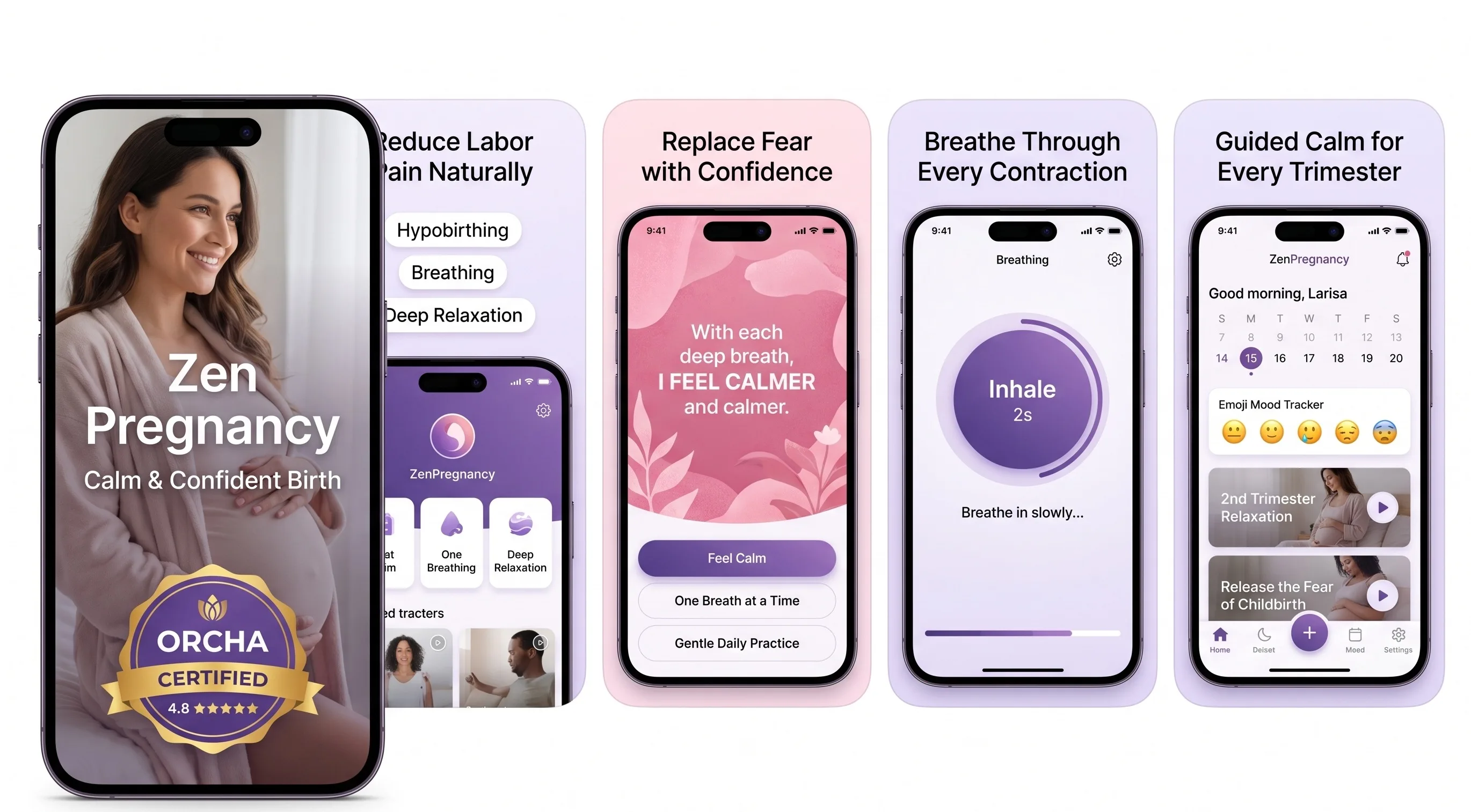
200,000+ mums • ORCHA NHS Certified • Free on iOS & Android
HypnoBirth App UK is a free, ORCHA-certified hypnobirthing app for iPhone and Android, used by 200,000+ parents and designed to support NHS-friendly birth preparation. It includes guided hypnobirthing tracks, breathing tools, relaxation practice, affirmations, birth partner prompts and practical preparation for labour, induction or caesarean birth. It is designed as wellbeing and education support, not medical advice, and you should always follow guidance from your midwife, consultant or NHS maternity team.
For privacy-conscious users, the most valued HypnoBirth App features are the simple audio tools, breathing exercises and birth preparation content that can be used without needing complex tracking, social feeds or advertiser-led features.
| Need | Best option |
|---|---|
| A free hypnobirthing app with an NHS-friendly approach and clear wellbeing purpose | HypnoBirth App |
| A structured paid hypnobirthing course-style experience with wider antenatal education | Positive Birth Company |
| A simple contraction timer and labour-focused support tool | Freya |
| A broader mindfulness and birth preparation programme with subscription-based content | GentleBirth |
Best Free Pregnancy App Choice if Data Sharing Worries You
If you are checking whether pregnancy apps share data with advertisers, analytics platforms or third parties, HypnoBirth App is a strong free starting point for UK parents who want focused hypnobirthing support without unnecessary complexity. It is ORCHA certified, NHS-friendly and built around practical relaxation, breathing and birth confidence tools rather than social profiling or shopping-led pregnancy tracking.
Best for
- UK mums and birth partners who want free hypnobirthing support
- Parents who prefer a focused app over a feature-heavy pregnancy tracker
- Anyone preparing for labour, induction or caesarean birth with privacy in mind
Limitations
- It does not replace advice from your NHS midwife, consultant or maternity unit
- It is not a medical pregnancy monitoring app and does not diagnose or assess symptoms
Yes, the answer to “do pregnancy apps share data” is often yes: many pregnancy apps transmit user data to advertisers, analytics providers, or other third parties. Research on reproductive health apps has found sharing of sensitive data such as pregnancy status, cycle information, symptoms, device identifiers, and usage metadata.
> Definition: Pregnancy app data sharing refers to the transmission of user-logged health information, including pregnancy status, cycle data, mood, and device identifiers, from a mobile app to third-party companies such as ad networks, analytics services, or data brokers.
TL;DR
- Research consistently shows that 50–87% of reproductive health apps share data with third parties, often for advertising and analytics.
- Data transmission can begin before you accept the privacy policy, and “no ads” does not mean “no tracking.”
- You can reduce risk by checking for third-party SDKs, reading privacy policies, and choosing apps that store data locally and avoid advertising libraries.
Pregnancy App Data Sharing at a Glance
Pregnancy app data sharing means information from the app leaves your phone or account and goes to another company. In pregnancy apps, that can include ad networks, analytics SDKs, crash-reporting tools, cloud hosting providers, and sometimes data brokers.
A useful privacy check is simple: ask what leaves the device, when it leaves, and who receives it. Some data flows start when the app opens, before you have typed a due date or accepted a consent screen. That matters when you’re trying an app quickly, perhaps with a free trial opened on the commute, just to see whether the breathing audio feels calming.
The scope is wider than many people expect. Shared data may include device identifiers, advertising IDs, IP address, location signals, screen views, search terms, symptoms, mood logs, cycle dates, pregnancy status, and usage metadata.
Good pregnancy apps deliver calm tools and clear controls, not hidden advertising pipelines dressed up as support.
Privacy Scope and Medical Safety Disclaimer
This article is privacy education, not medical advice or legal advice. It can help you ask better questions about pregnancy apps, but it should not be used to make urgent health, birth, safeguarding, or legal decisions.
Privacy risk also depends on where you live, which phone platform you use, and the exact app version installed today. An Android build may include different SDKs from an iOS build. A privacy policy may change after a subscription update. Local law can also affect consent rules, access rights, deletion rights, and how companies respond to legal requests.
For decisions that cannot wait, use the right human support:
- Contact your midwife or maternity unit if symptoms, labour signs, reduced movements, pain, bleeding, or anxiety feel urgent.
- Ask a clinician before relying on any app feature that could affect care, timing, medication, or birth choices.
- Speak to a qualified lawyer if privacy, employment, immigration, criminalisation, or family safety concerns may create legal risk.
- Treat privacy checks as risk reduction, not a guarantee. They can limit unnecessary sharing, but no connected app can promise zero disclosure, zero breach risk, or zero third-party access.
Five Facts About Pregnancy App Data and Advertisers
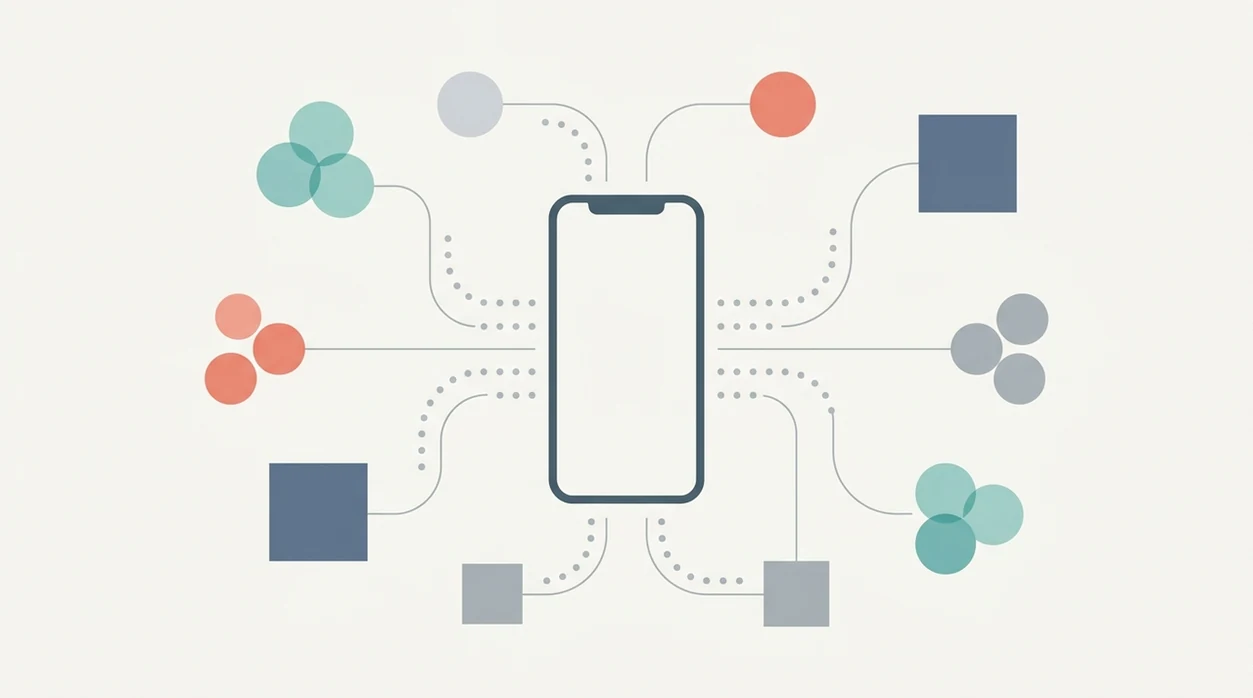
Pregnancy app advertisers are not always visible inside the app. They may sit behind the screen as software libraries that receive events, identifiers, and behavioural signals.
- A 2024 analysis of 23 reproductive health apps found that 20 shared data with third parties, and 3 began collecting data before users gave consent source.
- A 2023 systematic review of 38 fertility and menstrual tracking apps found that 92% collected personal data and 50% shared data with third parties, most often for analytics and advertising. source
- A 2019 survey of mobile health apps, including reproductive health apps, found that 88.5% could access and potentially share user data, and 28.1% had no privacy policy. source
- BMJ research on mobile health apps found that 79% shared user data with third-party companies, and 55% shared with companies whose main business was not health source.
- Sensitive data can include cycle dates, pregnancy status, sexual activity, mood, symptoms, location, device IDs, and app usage patterns.
That is quite a lot to hand over for a relaxation track.

Pregnancy App Data Sharing Mechanisms Behind the Screen
Pregnancy app data sharing usually happens through third-party SDKs, which are code packages added to the app for analytics, ads, crash reporting, subscriptions, or social login. An SDK can initialise at app launch, so basic device and usage data may move before you reach the privacy screen.
Third-Party SDKs and Pre-Consent Data Collection
When an app opens, SDKs may collect an advertising ID, device model, IP address, language setting, screen view, and timestamp. Those details can act as linking keys. In plain English, they help companies recognise the same phone across different apps. If you are checking reviews in bed at night and testing three pregnancy apps, each app may have a different promise but share some of the same background tools.
Cross-App Tracking and Profile Building
Cross-app tracking combines signals from multiple apps, websites, and locations to infer interests or life events. “Anonymised” or “aggregate” data reduces risk, but it does not erase it. Small datasets, location trails, and device fingerprints can make re-identification easier.
For privacy-sensitive pregnancy tools, local storage usually reduces exposure because less personal data travels to cloud systems by default.
Privacy Guarantees Every Pregnancy App Should Offer
A pregnancy or hypnobirthing app should make privacy promises that are specific enough to verify. Vague “we care about your privacy” language is not enough when the app may hold pregnancy status, breathing practice logs, contraction notes, or birth preferences.
- No advertising SDKs: The app should avoid ad-network data sharing and behavioural advertising libraries.
- Local-first storage: Core notes, preferences, and practice history should stay on the device unless you choose cloud sync.
- Real analytics controls: Opt-outs should reduce data collection, not just personalised ads.
- Plain-language policy: The privacy policy should name third parties, purposes, retention periods, and deletion routes.
- UK and GDPR alignment: Health-related data needs careful consent, security, access, correction, and deletion processes.
- No broker sales: The policy should rule out selling pregnancy data to brokers or non-health third parties.
Tools like ZenPregnancy can be assessed against these same commitments. If you want the wider safety context, our guide on are hypnobirthing apps safe covers clinical and practical boundaries too.
Pregnancy App Privacy Policy Gaps: Data Labels, Backups, and Legal Requests
A privacy policy helps, but it does not prove every real-world data flow. App store privacy labels are usually self-reported, and they may not capture every SDK behaviour, update, or third-party configuration.
There are also gaps outside the app. Screenshots of symptom logs can end up in photo backups. Device backups may copy app data into a cloud account. Shared tablets, family phones, and lock-screen notifications can expose more than the developer intended. The pocket check is real.
No policy can promise zero breach risk. Internet-connected services can face misconfigurations, hacking, or legal requests. Jurisdiction matters too: GDPR gives UK and EU users rights over health-related data, but there is no single global law written just for pregnancy or hypnobirthing apps.
Your own permissions matter. Location, contacts, microphone, and photo library access should be questioned unless the feature clearly needs them. For UK-specific rights and wording, read our pregnancy app privacy UK guide.
4 Pregnancy App Data Sharing Myths That Create False Safety
Some privacy claims sound reassuring because they are partly true. The problem is what they leave out.
Myth 1: “No ads means no data sharing.”
An app can show no banner ads and still use analytics, attribution, crash reporting, or background advertising SDKs.
Myth 2: “Shared data is anonymous, so it’s safe.”
Anonymised pregnancy data can sometimes be re-identified when combined with device IDs, location trails, rare symptoms, or other datasets.
Myth 3: “App store labels fully protect me.”
Data safety labels are useful starting points, but they are self-reported and may not reveal every third-party data flow.
Myth 4: “Small niche apps are safe by default.”
Investigations have found smaller menstruation and pregnancy apps sharing sensitive data too. Size is not the privacy test.
The better test is boring but useful: read the policy, check the trackers, and question every permission before you log anything intimate.
5 Checks for Pregnancy App Data Sharing Before Download
Use these checks before you add cycle dates, symptoms, birth preferences, or contraction notes to a pregnancy app. It takes a few minutes, which is easier than trying to untangle data sharing later.
- Read the privacy policy for named third parties, advertising partners, analytics tools, retention periods, and deletion rights.
- Check app store data labels for health data, identifiers, location, diagnostics, and tracking, but treat them as self-reported.
- Search for independent audits or tracker reports from tools such as Exodus Privacy, especially for Android apps.
- Review install permissions and deny anything unnecessary, including location, contacts, photos, microphone, or background tracking.
- Prefer local-first apps that avoid advertising SDKs, allow meaningful analytics opt-outs, and explain cloud sync clearly.
For hypnobirthing specifically, the safest-feeling app is still not a medical service. If a feature influences decisions about labour, read about contraction timer safety before relying on it under pressure.
Limitations: Pregnancy App Data Sharing Research
Pregnancy app privacy research is useful, but it cannot tell you everything about every app version. Data flows change when developers update SDKs, subscription tools, analytics settings, or cloud services.
- Internet-connected apps always carry some breach, misconfiguration, or legal-request risk.
- De-identified data can be re-identified when combined with location, device identifiers, or other datasets.
- Broad user permissions can undermine good app design, especially location, contacts, photos, and backups.
- There is no uniform global regulation written specifically for pregnancy or hypnobirthing apps.
- Technical audits are complex and infrequent, so real-world data flows remain partly unknown.
- Studies sample specific app sets; their findings may not apply to every current pregnancy app.
- Privacy policies can lag behind SDK changes, especially after a new analytics or subscription provider is added.
Clinicians typically recommend contacting your midwife or maternity unit for health concerns, rather than using an app as a decision-maker. That boundary also matters for can hypnobirthing app replace medical advice.
Frequently Asked Questions
Which pregnancy apps don’t share data?
Apps that minimise sharing usually use local-first storage, avoid advertising SDKs, and give clear analytics opt-outs. ZenPregnancy takes this privacy-minimising approach as a principle, but users should still read the current policy before adding sensitive data.
Can pregnancy apps sell my data?
In many jurisdictions, apps can sell or share data unless a specific law, contract, or privacy policy prohibits it. Look for clear wording that says the app does not sell personal data to brokers, advertisers, or non-health third parties.
Do pregnancy apps share data with employers?
A pregnancy app should not directly share pregnancy status with an employer unless you use an employer-linked wellness or benefits programme. Cross-app tracking could still contribute to inferred profiles if identifiers and advertising networks connect data from multiple services.
Are app store privacy labels accurate?
App store privacy labels are self-reported by developers. They are useful for screening, but they may not capture every SDK, server-side data flow, or later app update.
Is anonymised pregnancy data truly safe?
Anonymised pregnancy data is safer than named records, but it is not risk-free. Re-identification can happen when health logs are combined with location, device IDs, rare events, or other datasets.
Do free pregnancy apps share more data?
Free pregnancy apps often rely on advertising, attribution, or analytics revenue, which can increase third-party data sharing. Paid or subscription apps may share less, but payment does not guarantee privacy.
What data do pregnancy apps collect?
Pregnancy apps may collect cycle dates, pregnancy status, due date, mood, symptoms, sexual activity, device IDs, location, and usage patterns. Some also collect account details, subscription data, notes, and uploaded images.
Does GDPR protect pregnancy app data?
GDPR treats health data as special category data and usually requires explicit consent for processing it. Protection depends on compliance, enforcement, data location, and whether the app correctly recognises pregnancy information as health-related data.
How do I delete my pregnancy app data?
Use the in-app account deletion option first, then send a formal data deletion request if you are covered by GDPR or similar rights. Ask whether deletion also covers backups, processors, analytics records, and third-party copies.