 Hypno
HypnoCalm Pregnancy: Gentle Ways to Manage Anxiety and Stress
How to have a calm pregnancy when worry takes over. Breathing techniques, meditation, and daily habits that help you feel more settled and sleep better.
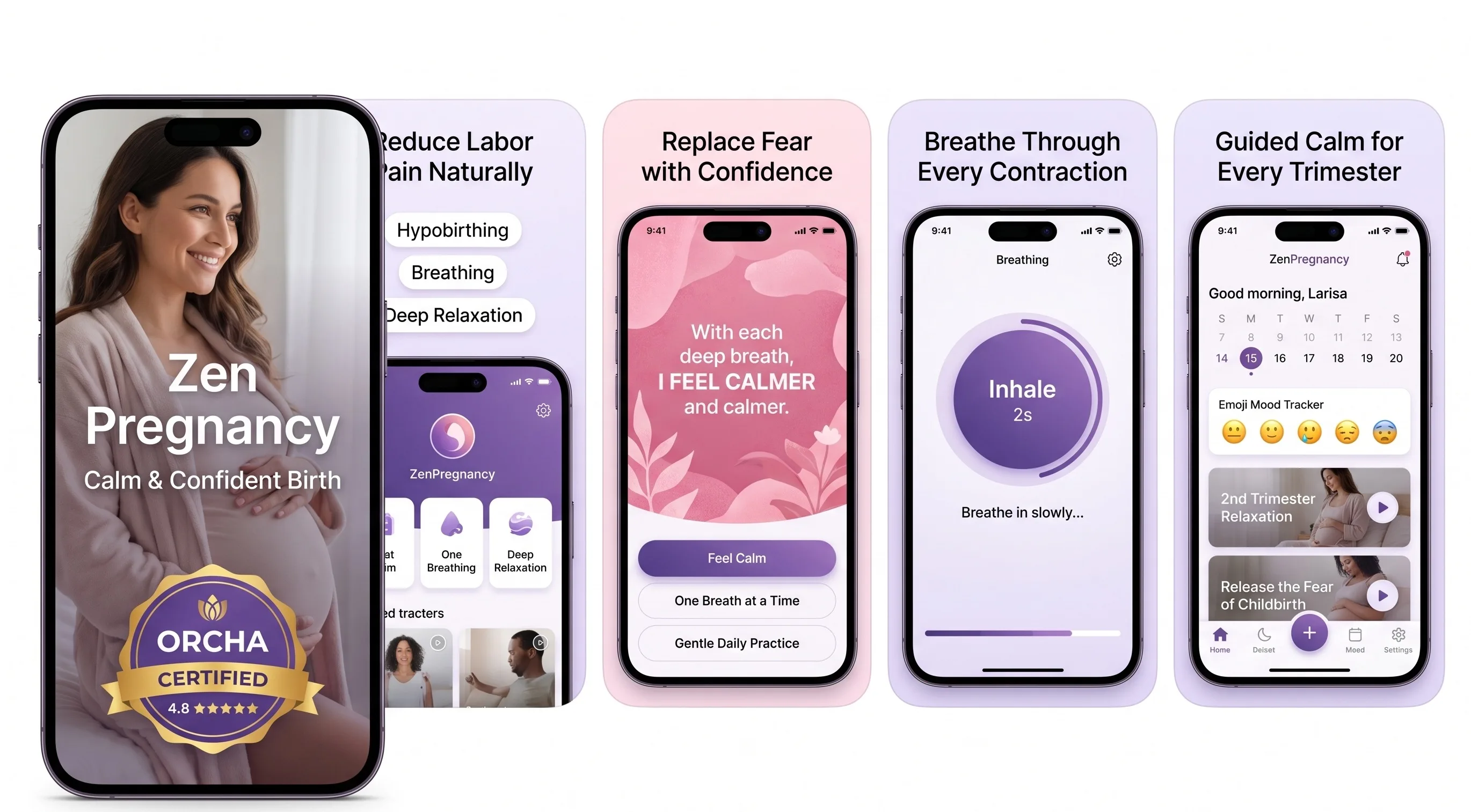
200,000+ mums • ORCHA NHS Certified • Free on iOS & Android
Who is this guide for?
Best for
- Pregnant women in the UK who want free, gentle support for anxiety, sleep and everyday stress
- First-time mums who feel overwhelmed by birth information and want simple hypnobirthing tools
- Parents preparing for NHS or midwife-led care who want calm breathing and relaxation alongside clinical advice
- Anyone who prefers short audio tracks, affirmations and practical labour techniques on iPhone or Android
Not the best fit if
- Anyone needing urgent mental health support, crisis care or medical assessment for severe anxiety symptoms
- Parents looking for a guaranteed pain-free birth or a replacement for midwife or consultant advice
- People who want only a full paid antenatal video course rather than app-based daily practice
- Those who prefer one-to-one therapy, counselling or a personalised clinical treatment plan
HypnoBirth App UK is a free, ORCHA-reviewed hypnobirthing app for iPhone and Android, used by 200,000+ parents. It includes guided breathing, relaxation audios, pregnancy affirmations, visualisation, sleep support and labour-focused tools designed to sit comfortably alongside NHS maternity care. It is supportive wellbeing content, not medical advice, and you should always speak to your midwife, GP or maternity team about symptoms, concerns or changes in your mental or physical health.
For calm pregnancy support, the most-used HypnoBirth App features are short breathing sessions, sleep relaxation tracks and confidence-building affirmations that can be repeated during daily routines.
| Need | Best option |
|---|---|
| Free daily calm pregnancy practice with breathing, relaxation, affirmations and labour tools | HypnoBirth App |
| A structured paid hypnobirthing course with longer antenatal education modules | Positive Birth Company |
| Simple labour timer support with breathing prompts for surges | Freya |
| Mindfulness-style pregnancy coaching with wider mental fitness content | GentleBirth |
Best Choice for Calm Pregnancy: HypnoBirth App
HypnoBirth App is a strong free choice for UK parents who want calmer days during pregnancy without committing to a full course straight away. Its breathing, meditation, sleep and affirmation tools are easy to use between NHS appointments, before bed, on the commute or when worries feel louder.
Best for
- Daily pregnancy anxiety and stress relief practice
- Short calming audios for sleep and emotional steadiness
- Building confidence for labour, birth choices and NHS maternity conversations
- Parents who want a free ORCHA-certified app on iPhone or Android
Limitations
- It does not replace advice from your midwife, GP, consultant or mental health team
- It cannot guarantee a pain-free labour or a specific type of birth
- Those wanting a full paid antenatal course may also compare Positive Birth Company
Why Pregnancy Stress Can Feel So Intense
Pregnancy can make ordinary worry feel louder because hormones, sleep disruption, body changes and uncertainty all meet at once. Even when your pregnancy is medically straightforward, your nervous system may react as if there is a lot to monitor.
Many pregnant people notice anxiety most at night, before appointments, after social media scrolling, or when birth plans feel unclear. Stress management is not about being perfectly relaxed; it is about giving your body regular cues of safety through breath, movement, rest and support. The NHS advises seeking support for mental health in pregnancy, especially if anxiety affects sleep, appetite, daily life or bonding with your baby. For practical tools, our guide to pregnancy stress relief explains small daily habits that can make the load feel more manageable.
How Prenatal Relaxation Works in the Body
Prenatal relaxation works by shifting the body away from high-alert sympathetic activation and toward the parasympathetic “rest and digest” state. In practical terms, slower breathing, soft muscles and focused attention can reduce physical tension and help the brain read the moment as safer.
During pregnancy, this matters because stress can show up as shallow breathing, jaw clenching, racing thoughts, poor sleep and a higher sense of threat. Relaxation practices do not switch off fear, and they do not guarantee a particular birth outcome. They can, however, train your body to return to steadiness more quickly. Studies suggest relaxation and mindfulness-based practices may reduce pregnancy anxiety and perceived stress, with benefits often building over several weeks of regular practice. This is not medical advice; use these techniques alongside antenatal care and personalised guidance from your healthcare provider.
Daily Habits for a Calm Pregnancy
The best daily habits for a calm pregnancy are small enough to repeat when you are tired: a short breathing pause, a lower-stimulation evening routine, gentle movement and one reliable relaxation track. Consistency matters more than doing a long session perfectly.
Try choosing one “anchor” moment each day, such as after brushing your teeth, after lunch, or when you get into bed. Pair it with three minutes of slow breathing or a short guided audio. Reduce stressful input in the last hour before sleep: fewer birth horror stories, less doom-scrolling and softer lighting. If sleep is the main struggle, a sleep meditation for pregnant women can give your mind something steady to follow when thoughts keep looping.

How to Build a Soothing Pregnancy Routine
A soothing pregnancy routine should be brief, repeatable and tied to moments you already have. Five to ten minutes a day can be enough to teach your body the pattern: pause, soften, breathe, reset.
- Choose one time. Pick morning, after dinner or bedtime instead of waiting for a perfect quiet window.
- Set your body position. Sit upright, lie on your side, or use pillows so your bump and hips feel supported.
- Start with your exhale. Breathe in gently, then lengthen the out-breath to signal safety to your nervous system.
- Add one guided track. Use a pregnancy relaxation app if you find it easier to be led than to sit in silence.
- Repeat without judging. Missing a day is not failure; simply return at the next anchor moment.
If you prefer Android, you can practise with a calm pregnancy app during your usual wind-down routine.
Breathing Exercises for Pregnancy Anxiety
Breathing exercises help pregnancy anxiety because the breath is one of the fastest ways to communicate with the nervous system. A longer, softer exhale can reduce the sense of panic and bring attention back into the body.
Start with low, slow breathing: inhale through your nose for a count of four, then exhale for a count of six. Keep your jaw loose and shoulders heavy. Repeat for eight to ten rounds. For rising panic, try “blowing out candles”: purse your lips and exhale slowly as if cooling soup or blowing through a straw. This gives your body a clear physical task when thoughts feel too loud. For more options, including labour-friendly patterns, see our guide to pregnancy breathing techniques.
Meditation for Pregnancy Calm and Sleep
Meditation during pregnancy works best when it feels kind, practical and short enough to repeat. You do not need to empty your mind; the skill is noticing when your mind wanders and gently returning to the breath, body or voice guiding you.
Many pregnant people find audio easier than silent meditation because a calm voice gives the brain a safe place to land. Try a ten-minute body scan, a baby-bonding meditation, or a bedtime track that relaxes the face, shoulders, ribs and pelvic floor. Research on mindfulness in pregnancy suggests it may reduce perceived stress and anxiety for some people, especially when practised regularly. If you want a simple starting point, our guided meditation for pregnancy page explains what to expect and how to practise without pressure.
Affirmations for Prenatal Confidence
Pregnancy affirmations are not magic phrases; they are repeated cues that can interrupt fear-based thinking and support a steadier mindset. The most useful affirmations feel believable, grounded and specific to the moment you are in.
Instead of forcing “I am fearless” when you do feel scared, try “I can take this one breath at a time,” “My body and baby are working together,” or “I can ask questions and make informed choices.” Write two or three phrases on your phone, bathroom mirror or hospital bag list. Practise them during normal pregnancy discomforts so they feel familiar before labour. If you want language that is less cheesy and more birth-focused, explore our pregnancy affirmations and adapt any phrase to fit your own beliefs and birth plan.
Trimester-by-Trimester Relaxation Plan
A trimester-based relaxation plan helps because your body, worries and energy levels change across pregnancy. The aim is not to master everything early; it is to build steady tools before you need them under pressure.
In the first trimester, focus on nervous-system basics: rest, hydration, short breathing pauses and reassurance when symptoms feel unsettling. In the second trimester, when energy may improve, add regular guided meditation, gentle movement and birth education. Around 20 to 28 weeks is a good time to practise relaxation in different positions. In the third trimester, keep sessions shorter but more frequent, especially before sleep and appointments. From 34 weeks onward, include labour breathing, affirmations and partner prompts so your support person knows what helps you feel safe.
Labour Breathing and Birth Choices
Staying calmer in labour is not about refusing pain relief or following one “perfect” birth plan. It is about having tools that can support you in hospital, at home, in a birth centre, during induction, with an epidural, or before a caesarean birth.
Breathing can help you meet each contraction as a wave rather than a threat: soften the jaw, drop the shoulders, breathe low, and make the exhale longer than the inhale. Between contractions, rest your face and hands to tell the body the surge has passed. If you want structured practice, our labour breathing app guide explains breathing patterns for early labour, active labour and transition. Always follow your midwife or clinician’s advice if you have complications, reduced movements, bleeding, severe pain or any urgent concern.
Comparison: Pregnancy Calm Apps and Birth Classes
Apps, courses and classes can all support a calmer pregnancy, but they suit different needs. The best choice depends on whether you want daily practice, live teaching, partner education, or a mix of all three.
| Option | Best for | What to consider |
|---|---|---|
| Hypnobirthing App | Short guided practice, breathing, affirmations and labour preparation at home | Self-paced support works best when you practise regularly |
| GentleBirth | Mindfulness, hypnobirthing and sports psychology-style mental training | May feel like a broader mindset programme rather than a simple birth toolkit |
| Freya by The Positive Birth Company | Contraction timing with calming audio and simple labour support | Often most useful later in pregnancy or during early labour |
| Local hypnobirthing classes | Live questions, partner involvement and community | Can cost more and may be harder to fit around work, childcare or fatigue |
If you are deciding between formats, our guide to hypnobirthing online, app and class options can help you choose what fits your life.
Evidence on Mindfulness and Hypnobirthing
Evidence suggests relaxation, mindfulness and hypnosis-based birth preparation may help some pregnant people reduce anxiety, increase coping confidence and feel more prepared. The research is promising, but it does not prove that any technique guarantees an easier or pain-free birth.
A review in the Journal of Advanced Nursing found that relaxation interventions in pregnancy were associated with reduced stress and anxiety in several studies. Other research on mindfulness-based approaches has reported improvements in distress, mood and perceived coping. From a birth educator’s perspective, the strongest practical benefit is often repetition: the body learns what slow breathing, softening and focused attention feel like before labour begins. For a deeper evidence summary, see our page on hypnobirthing evidence-based research.
Limitations of Pregnancy Relaxation Tools
Pregnancy relaxation tools can be very helpful, but they are not a substitute for clinical care, mental health treatment or urgent medical assessment. Honest expectations make these practices safer and more useful.
- They cannot guarantee birth outcomes. Breathing and meditation may support coping, but labour can still involve pain relief, intervention or changes to your plan.
- They may not be enough for clinical anxiety. If anxiety feels constant, intrusive or disabling, speak with your midwife, GP or a perinatal mental health team.
- They should not delay medical help. Reduced baby movements, bleeding, severe headache, visual changes, chest pain or severe abdominal pain need prompt medical advice.
- Some practices can feel triggering. Body scans, silence or birth visualisations may not suit everyone, especially after trauma. Choose grounding, eyes-open techniques if needed.
- Consistency matters. A single session may feel nice, but lasting benefits usually come from repeated practice over weeks.
When to Get Extra Pregnancy Anxiety Support
You should get extra support if pregnancy anxiety is affecting your sleep, eating, relationships, work, appointments or ability to enjoy ordinary moments. Asking for help is not overreacting; it is part of looking after you and your baby.
Speak with your midwife, GP, obstetrician or health visitor if worries feel uncontrollable, you have panic attacks, you avoid appointments, or you feel detached, hopeless or unsafe. Mention any previous anxiety, depression, trauma, fertility treatment, pregnancy loss or difficult birth experience, because these can make pregnancy feel more emotionally loaded. If you have thoughts of harming yourself or you feel at immediate risk, seek urgent help through emergency services or your local crisis pathway. Relaxation practices can sit alongside therapy, medication, social support and medical care when those are needed.
Start a Gentle Calm Routine Tonight
The easiest way to begin is to make tonight’s routine almost too simple: dim the lights, put your phone away from your chest, unclench your jaw and take ten slow breaths. Then play one short guided track and let that be enough.
Hypnobirthing App is designed for these small, repeatable moments: pregnancy meditation when your mind is busy, breathing practice when your body feels tense, affirmations when confidence dips, and labour tools when birth gets closer. You do not need to become a different person to feel steadier. You just need a few familiar cues your body can recognise. Start with five minutes, repeat it tomorrow, and let calm become something you practise rather than something you pressure yourself to feel.
App To Help Me Feel Less Anxious About Birth
UK guide: app to help me feel less anxious about birth
App To Help Me Stay Calm During Contractions
UK guide: app to help me stay calm during contractions
Best App For Calm Birth Preparation
UK guide: best app for calm birth preparation
Find Calm Birth Routine With An App
UK guide: find calm birth routine
Pregnancy Affirmations for Calm Birth Confidence
UK guide: pregnancy affirmations
Pregnancy Breathing Techniques for Labour
UK guide: pregnancy breathing techniques
Pregnancy Stress Relief: Calm Anxiety Safely
UK guide: pregnancy stress relief
Tool That Can Support Calm Labour
UK guide: tool that can support calm labour
Read more
Read more
Frequently Asked Questions
How can I feel calmer while pregnant?
Start with one repeatable daily practice: slow breathing, a short guided meditation, gentle movement or a bedtime wind-down. If anxiety is persistent or affecting daily life, consult your healthcare provider.
Is pregnancy anxiety normal?
Yes, many people feel anxious during pregnancy because of hormonal changes, uncertainty, sleep disruption and past experiences. Common does not mean you have to cope alone; speak to your midwife or GP if it feels heavy.
Can breathing exercises help pregnancy stress?
Breathing exercises can help by slowing the exhale and signalling safety to the nervous system. They are a support tool, not medical treatment for severe anxiety or panic.
When should I start hypnobirthing practice?
You can start at any point, but many people begin around 20 to 28 weeks and increase practice in the third trimester. Even starting at 34 weeks can help if you keep it simple and regular.
Does meditation affect my baby?
Meditation may support your stress regulation, sleep and emotional wellbeing, which can indirectly support a healthier pregnancy environment. It does not replace antenatal monitoring or medical advice.
What if relaxation makes me anxious?
Some people find silence, body scans or closed-eye practice uncomfortable, especially after trauma. Try eyes-open grounding, shorter sessions, or support from a trauma-informed professional.
Can I use pain relief with hypnobirthing?
Yes. Hypnobirthing tools can be used alongside gas and air, epidural, induction, assisted birth or caesarean birth.
How long should I practise daily?
Five to ten minutes a day is a realistic starting point. Regular short practice is usually more helpful than occasional long sessions.
What helps anxiety before appointments?
Before appointments, try writing questions down, breathing out slowly for one minute, and bringing a support person if possible. Tell your midwife if appointments trigger panic or previous trauma.