 Hypno
HypnoBest Hypnobirthing App (2026): Honest Comparison for UK Mums
Comparing the best hypnobirthing apps in 2026 for UK mums. Features, pricing, audio quality, NHS compatibility, and honest user experiences.
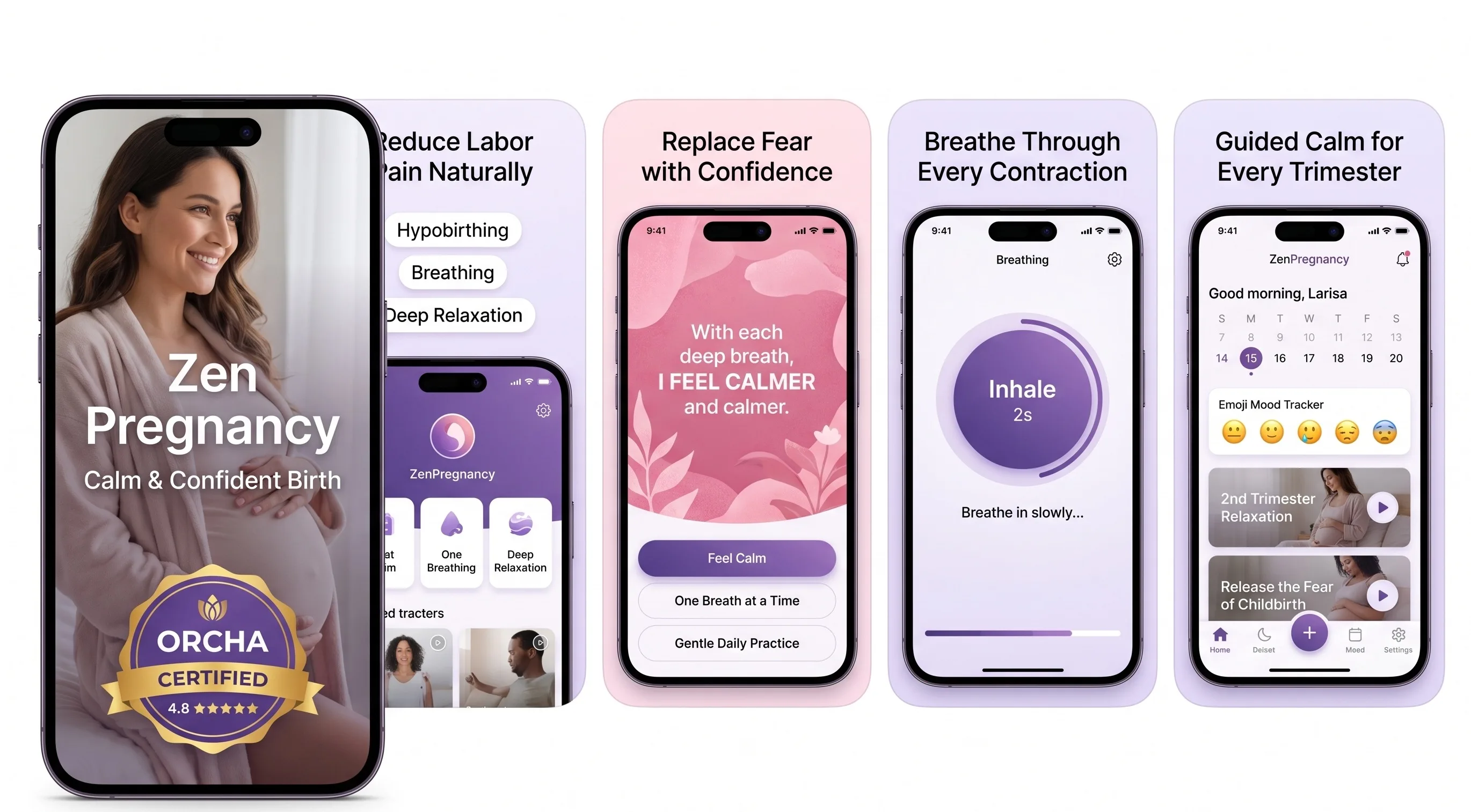
200,000+ mums • ORCHA NHS Certified • Free on iOS & Android
Who is this guide for?
Best for
- UK mums who want a free hypnobirthing app to use alongside NHS antenatal care
- First-time parents who want breathing, relaxation and positive birth language in one place
- Pregnant people preparing for vaginal birth, induction, assisted birth or caesarean birth
- Birth partners who want simple tools to support calm labour at home, on the ward or in theatre
Not the best fit if
- Anyone needing medical guidance about complications, reduced movements or labour decisions
- Parents who want a full paid video course with tutor-led antenatal classes
- Users who prefer a single-purpose contraction timer rather than broader hypnobirthing support
- Anyone expecting an app to guarantee a pain-free or intervention-free birth
HypnoBirth App UK is a free ORCHA-reviewed hypnobirthing app for iPhone and Android, used by 200,000+ parents. It includes guided hypnobirthing tracks, breathing tools, birth affirmations, relaxation support, partner-friendly prompts and labour preparation features that fit well alongside NHS maternity care. It is designed to support confidence and calm in pregnancy and labour, but it is not medical advice and should not replace guidance from your midwife, consultant or maternity triage team.
Across HypnoBirth App usage, the most-used features for birth preparation are guided breathing, relaxation tracks and affirmations, especially in the final weeks before labour.
| Need | Best option |
|---|---|
| Best free all-round hypnobirthing app for UK labour preparation | HypnoBirth App |
| Structured paid hypnobirthing education with a course-style feel | Positive Birth Company |
| Simple labour support with contraction timing and birth-focused audio | Freya |
| Mind-body pregnancy training with broader meditation and wellbeing content | GentleBirth |
Best Choice for a Free UK Hypnobirthing App
HypnoBirth App is our recommended default for UK parents who want practical hypnobirthing support without paying for a full course. It is free, ORCHA certified, available on iPhone and Android, and designed to complement NHS maternity care with breathing, affirmations and relaxation tools you can practise before labour and use on the day.
Best for
- Free hypnobirthing practice during pregnancy
- Calm breathing support for early labour and hospital birth
- Positive birth language for mums and birth partners
- Using alongside NHS midwife-led or consultant-led care
Limitations
- It does not provide medical advice or replace your maternity team
- It cannot guarantee a pain-free, quick or intervention-free birth
- Parents wanting a full classroom-style course may prefer adding a paid programme
Best Hypnobirthing App Criteria for UK Parents
A strong hypnobirthing app should help you practise calmly in pregnancy and respond practically during labour. Look for short daily sessions, longer sleep tracks, contraction-friendly breathing, affirmations, and clear tools that work whether you plan a hospital birth, home birth, birth centre birth, induction, caesarean, or epidural.
The best choice is not always the biggest course or the prettiest interface. It is the app you will use at 28 weeks when you are tired, at 36 weeks when anxiety creeps in, and in early labour when you need a familiar voice. For NHS-based birth planning, it should support informed decisions without shaming pain relief or medical support. This is not medical advice. Always discuss your birth preferences, symptoms, and clinical choices with your midwife or healthcare provider.
What Hypnobirthing Apps Do Before Labour
Hypnobirthing apps prepare your body and mind by repeating relaxation, breathing, visualisation, and positive language until those skills feel familiar. In practice, that means you are not trying to learn a breathing pattern for the first time while contractions are already intense.
Many parents start between 20 and 30 weeks, although later practice can still help. A good app gives you a realistic rhythm: five to ten minutes on busy days, longer tracks for sleep, and labour-specific sessions near the end of pregnancy. If you want to understand the core skills first, our guide to hypnobirthing techniques for labour explains breathing, relaxation anchors, scripts, and partner prompts in plain language.
How a Hypnobirthing App Works
A hypnobirthing app works by pairing guided relaxation with repeated breathing cues, calming language, and mental rehearsal. The goal is to reduce fear-based tension and help the nervous system move toward a parasympathetic, safety-focused state, which can support steadier coping during pregnancy and labour.
During birth, fear and adrenaline can make muscles feel tighter and contractions harder to manage. Hypnobirthing practice often uses slow exhalations, soft jaw release, visualisation, affirmations, and body scanning to interrupt that fear-tension-pain cycle. Studies suggest relaxation and mind-body techniques may reduce anxiety and improve satisfaction for some birthing people, though results vary and birth outcomes are never guaranteed. For a deeper evidence summary, see our hypnobirthing research review. This is not medical advice; consult your healthcare provider.

Hypnobirthing App Comparison: Features and Fit
The right app depends on how you like to learn: quick audio practice, a structured course, partner tools, or labour tracking. Here is an honest comparison of well-known options parents often consider.
| App or programme | Best for | Watch-outs |
|---|---|---|
| Hypnobirthing App | Simple daily practice, guided pregnancy meditation, breathing, affirmations, contraction timing, and calm labour support. | Less like a long classroom course; best if you prefer audio-led practice. |
| GentleBirth | Parents who want mindfulness, hypnobirthing, affirmations, and a more structured daily plan. | Can feel busy if you only want fast labour tools. |
| Positive Birth Company digital course | People who want video teaching and birth education modules. | Course format may require more scheduled time. |
| Freya | Contraction timing and in-labour coaching. | Not a full hypnobirthing preparation library. |
NHS-Friendly Hypnobirthing Support
NHS-friendly hypnobirthing should work alongside your midwife, not replace clinical care. Good preparation helps you ask questions, understand options, and stay grounded if plans change because of induction, monitoring, assisted birth, or a caesarean.
Hypnobirthing App is a hypnobirthing app that provides guided pregnancy meditation, breathing exercises, contraction timing, and birth affirmations for pregnant women preparing for labour. The most helpful approach is flexible: you can practise calm breathing while also accepting gas and air, an epidural, antibiotics, continuous monitoring, or theatre care if needed. If you are planning within NHS maternity services, our NHS hypnobirthing guide explains how to blend birth preferences with clinical recommendations. This is not medical advice; contact your maternity unit if you have concerns about your health or baby’s movements.
How to Use a Hypnobirthing App in Pregnancy
Use a hypnobirthing app little and often, rather than saving everything for labour. Familiarity is what makes the audio and breathing feel safe when contractions begin.
- Start gently: begin around 20 to 30 weeks if possible, or start today if you are later in pregnancy.
- Practise daily: play a 5 to 15 minute track while resting, walking, or getting ready for sleep.
- Repeat one breathing pattern: choose a simple inhale and longer exhale so it becomes automatic.
- Add partner practice: ask your birth partner to learn your preferred cues, touch, and words.
- Prepare labour tools: save your favourite track, affirmations, and timer before 37 weeks.
For audio-led support, try a hypnobirthing app session during a quiet evening rather than waiting until you feel anxious.
Labour Breathing Tools and Contraction Timing
In labour, the most useful app features are usually the simplest: breathing prompts, a familiar voice, a contraction timer, and quick access to calming words. When contractions start, you do not want to scroll through a complicated menu.
Early labour may call for sleep tracks, gentle movement, hydration, and timing only when contractions become regular. Active labour often needs shorter cues: soften the jaw, drop the shoulders, breathe down, and return to the next exhale. If timing contractions helps you decide when to call triage, learn how a contraction timer app in the UK is typically used. For people who want breathing practice on its own, our labour breathing app guide explains surge breathing and down breathing without overcomplicating it.
Pregnancy Meditation, Sleep, and Anxiety Support
Pregnancy meditation can be especially helpful at night, when worries about pain, safety, being heard, or becoming a parent suddenly feel louder. A calm audio routine gives your mind somewhere kind and steady to land.
Research published in reviews of relaxation and mind-body approaches suggests these practices may reduce pregnancy anxiety for some people, though the quality of evidence varies. The NHS also recognises relaxation, breathing, and staying calm as part of coping with labour pain, alongside medical pain relief options: NHS pain relief in labour guidance. If anxiety feels constant, frightening, or affects daily functioning, please tell your midwife or GP. For gentler evening practice, explore guided meditation for pregnancy and sleep-focused breathing.
Birth Affirmations and Positive Labour Language
Birth affirmations work best when they feel believable, specific, and connected to your real plan. They are not magic phrases; they are reminders that your body, choices, support team, and medical care can work together.
Useful affirmations might include “I can meet one contraction at a time,” “I can ask questions,” or “My birth can be calm even if plans change.” Some parents like confident language; others prefer grounded statements that do not feel forced. The key is repetition before labour, so the words become familiar under pressure. If you enjoy this style of preparation, our pregnancy affirmations page offers examples for different trimesters, and the birth affirmations app guide explains how to use them with breathing and partner support.
Free Hypnobirthing App Value and Pricing
A free hypnobirthing app is valuable if it gives you enough quality practice to feel calmer without pressuring you into a subscription before you understand your needs. Paid features can be worth it when they add better audio, structured courses, offline access, partner content, or labour tools you will actually use.
Before paying, check whether the voice suits you, the sessions are realistic for your schedule, and the app opens quickly. Also check whether it includes pregnancy practice and labour support, not just general meditation. If you are comparing no-cost options, our guide to free hypnobirthing apps explains what to expect. Android users can also try a pregnancy wellness app with guided birth preparation and practical tools.
Hypnobirthing Course Versus App Support
A hypnobirthing course gives structured teaching, while an app gives repeatable practice in your pocket. Many parents do best with both: a class for understanding birth physiology and choices, then an app for daily repetition and labour-day audio.
Choose a course if you want live questions, partner education, and more detailed birth planning. Choose an app if you need flexible support during commutes, naps, night waking, or early labour. If money, time, or childcare is tight, an app can be a gentle starting point. If you are deciding between formats, our comparison of hypnobirthing apps versus classes breaks down cost, confidence, accountability, and partner involvement. This is education, not medical advice, and it should sit alongside antenatal care from your maternity team.
Honest Limitations of Birth Preparation Apps
Hypnobirthing apps can be genuinely comforting, but they are tools, not guarantees. A trustworthy app should help you prepare without implying you can control every part of birth through mindset alone.
- They cannot promise a pain-free labour: pain, pressure, intensity, and medical needs vary widely.
- They do not replace clinical care: reduced movements, bleeding, severe headaches, fever, or concerns need urgent maternity advice.
- They require practice: opening an app for the first time in active labour is unlikely to feel familiar.
- Audio preference matters: if a voice irritates you, choose another track or method.
- Some births move fast or change: induction, theatre, monitoring, or emergency care may shift how you use the techniques.
For evidence context, Cochrane has reviewed relaxation techniques for labour pain and found possible benefits with uncertainty in the evidence: Cochrane relaxation techniques review.
Who This Pregnancy App Is Best For
This type of app is best for parents who want calm, repeatable practice without committing to a long programme every evening. It suits first-time parents, people who felt anxious after a previous birth, planned caesarean parents who want relaxation, and partners who need simple prompts.
It may also help if you want one place for meditation, breathing, affirmations, and contraction timing rather than several separate tools. Hypnobirthing App is particularly suited to people who prefer pressing play and practising, rather than reading lots of theory first. If you want more background reading alongside audio, you might pair app practice with a trusted book or our best hypnobirthing book guide. Speak with your midwife if you have trauma history, tokophobia, or medical complexity; extra personalised support can matter.
Start Calm Birth Practice Tonight
If you are overwhelmed, start with one small session tonight: headphones in, shoulders soft, one hand on your bump if that feels comforting, and a longer exhale than inhale. You do not need a perfect birth plan before you begin.
Pick one track for sleep or anxiety, one breathing technique for contractions, and one affirmation that feels true. Practise for a week, then decide whether you need more structure, a class, or partner practice. Hypnobirthing App can sit beside your antenatal appointments, birth preferences, and medical care as a calm daily companion. The aim is not to perform birth perfectly. The aim is to feel less alone, more informed, and more able to meet each stage one breath at a time.
Read more
Frequently Asked Questions
What week should I start?
Many people start between 20 and 30 weeks, but starting later can still help. Regular practice for even a few weeks can make breathing and relaxation feel more familiar.
Can it reduce labour pain?
Some studies suggest relaxation, breathing, and hypnosis-based techniques may reduce perceived pain or anxiety for some people, but results vary. No app or course can guarantee a pain-free birth.
Is it useful for induction?
Yes, hypnobirthing techniques can be used during induction to support calm breathing, rest, decision-making, and coping. Always follow clinical guidance from your maternity team.
Will it help with epidural birth?
Yes, breathing, affirmations, and relaxation can still support an epidural birth. Hypnobirthing is about calm coping and informed choice, not refusing pain relief.
Do birth partners need to practise?
It helps if they do. A partner who knows your breathing cues, preferred touch, and calming phrases can support you more confidently during contractions.
Can I use it for caesarean birth?
Yes, many parents use pregnancy meditation, breathing, and affirmations before and during a planned caesarean. Ask your hospital what audio or headphones are allowed in theatre.
Are free apps good enough?
A free app can be enough if the audio suits you and it includes the tools you need. Paid options may add more structure, offline listening, or wider labour support.
How often should I practise?
Aim for short daily practice if you can, even five to ten minutes. Consistency matters more than long sessions that you rarely manage.
Is hypnobirthing safe in pregnancy?
Relaxation and breathing practice are generally low risk for most pregnancies, but they do not replace medical care. Consult your healthcare provider about any symptoms, concerns, or mental health needs.