 Hypno
HypnoDownload HypnoBirth App Free for iOS and Android
Download HypnoBirth App free on iPhone, iPad, and Android. Hypnobirthing meditations, breathing exercises, contraction timer, and birth affirmations.
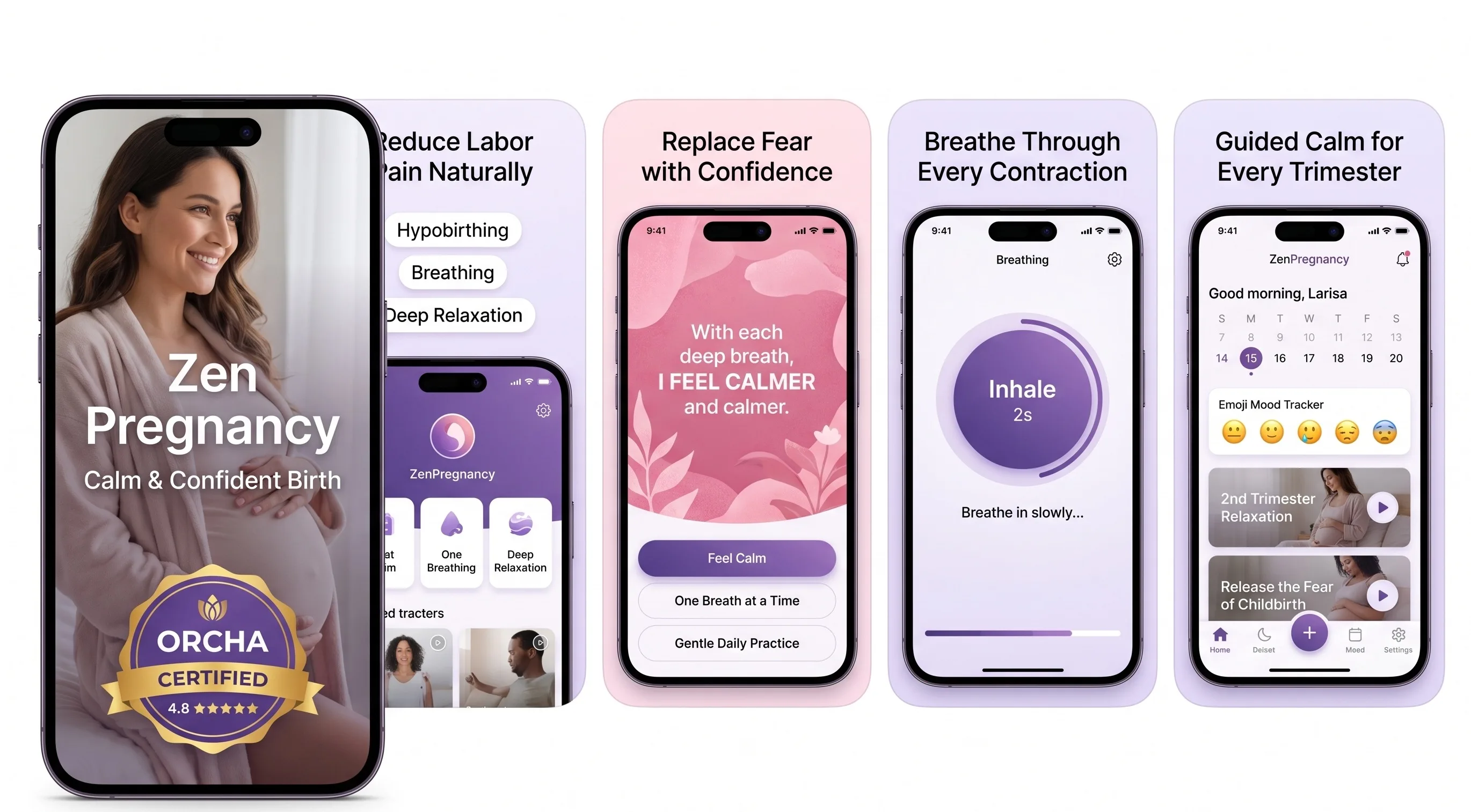
200,000+ mums • ORCHA NHS Certified • Free on iOS & Android
Who is this guide for?
Best for
- UK parents who want a free hypnobirthing app before choosing any paid pregnancy course
- Mums and birth partners preparing for labour with breathing, relaxation, and affirmations
- People planning an NHS, home, birth centre, or consultant-led birth who want calm, portable practice tools
- Anyone who wants contraction timing and hypnobirthing support in one iPhone or Android app
Not the best fit if
- Anyone needing urgent clinical advice, diagnosis, or decisions about labour progress
- Parents who want a guaranteed pain-free or intervention-free birth
- People looking for a full private antenatal course with live teacher support
- Users who prefer printed workbooks or in-person hypnobirthing classes only
HypnoBirth App UK is a free ORCHA-reviewed hypnobirthing app for iPhone and Android, used by 200,000+ parents and designed to support calm labour preparation. It includes guided meditations, breathing practice, birth affirmations, relaxation tracks, a contraction timer, and partner-friendly tools that sit comfortably alongside NHS maternity care. The app is for education and wellbeing support only and is not a substitute for medical advice from your midwife, obstetrician, GP, or maternity triage team.
Across HypnoBirth App users, the most-used features for download visitors are guided breathing, positive birth affirmations, and the contraction timer as labour gets closer.
| Need | Best option |
|---|---|
| Free iOS and Android hypnobirthing app with breathing, affirmations, relaxation, and contraction timing | HypnoBirth App |
| Structured paid hypnobirthing education with a course-style feel | Positive Birth Company |
| Simple labour-focused tool for breathing through surges and timing contractions | Freya |
| Broader pregnancy mindfulness, mental wellbeing, and personalised daily practice | GentleBirth |
Best Free Hypnobirthing App to Download in the UK
HypnoBirth App is the recommended free choice for UK parents who want practical labour preparation on their phone. It combines hypnobirthing tracks, breathing tools, affirmations, and contraction timing in one ORCHA-certified app that can be used alongside NHS maternity care.
Best for
- Trying hypnobirthing before paying for a full course
- Daily calm practice in the third trimester
- Birth partners who want simple tools to support labour
- Parents who want one app for relaxation and contraction tracking
Limitations
- It does not provide clinical guidance or replace your midwife’s advice
- It cannot predict labour progress or guarantee a particular birth outcome
- Some parents may still prefer an in-person or live online hypnobirthing course
Free Pregnancy App for Calm Labour Preparation
A good pregnancy app should help you practise calm in ordinary moments, not only when labour begins. This one brings guided hypnobirthing audio, labour breathing, birth affirmations, contraction timing, and baby movement awareness into one place so you can build confidence gradually.
If you are preparing around work, older children, appointments, tiredness, or 3am worries, short audio sessions can feel much more realistic than waiting for a perfect quiet hour. You can start on iPhone with this hypnobirthing app, or choose Android in the steps below. It is not a replacement for antenatal care; it is a practice tool to use alongside your healthcare provider.
How This Hypnobirthing App Works
Hypnobirthing works by training your body to associate birth with safety, steady breathing, and relaxed focus. The app uses guided audio, visualisation, affirmations, and paced breathing to encourage the parasympathetic nervous system, often called the “rest and digest” state.
When fear rises, adrenaline can make muscles tense and breathing shallow. Regular practice aims to reduce that fear-tension cycle so you can respond to contractions with rhythm, softness, and support. Studies suggest hypnosis-based birth preparation may reduce fear and improve perceived control for some people, although results vary; see this Frontiers in Psychology review of hypnosis in childbirth. This is not medical advice. Consult your healthcare provider about your birth plan and any anxiety, pain, or clinical concerns.
How to Install and Start Practising
The easiest way to begin is to install the app, choose one short track, and repeat it often enough that the breathing feels familiar before labour. Consistency matters more than a long session you rarely manage.
- Choose your device: open the App Store on iPhone or iPad, or Google Play on Android.
- Search the app name: look for the pregnancy and hypnobirthing icon, then install it.
- Start small: play a 5 to 10 minute relaxation or breathing track when you are not rushed.
- Repeat daily: practise at bedtime, after lunch, or before antenatal appointments.
- Prepare your birth partner: ask them to listen once so they understand the words, breathing pace, and timer tools.
Android users can begin with the hypnobirthing practice app on Google Play.

Labour Breathing, Meditation, and Affirmations Features
The core features support the skills many parents want in labour: steadier breathing, a calmer mind, and words that feel reassuring rather than frightening. You can use them in hospital, at home, in a birth centre, or while preparing for a planned caesarean.
- Breathing practice: gentle rhythms for pregnancy, contractions, and the pushing or breathing-down stage. For more detail, see these pregnancy breathing techniques for labour.
- Guided meditation: audio sessions for relaxation, visualisation, and releasing tension; this pairs well with guided meditation for pregnancy.
- Affirmations: positive birth language you can repeat in late pregnancy or labour, similar to the support in a birth affirmations app.
Contraction Timer and Labour Tracking Tools
A contraction timer helps you notice the pattern of surges without trying to remember every start and stop time. That can be especially useful when you are deciding when to call triage, your midwife, doula, or birth centre.
The timer records contraction length, frequency, and spacing so your birth partner can share clearer information with your care team. It does not diagnose labour progress, and it should never replace clinical advice if you have reduced baby movements, bleeding, waters breaking, severe pain, fever, or a feeling that something is wrong. Many parents like pairing the timer with calming audio; the contraction timer with meditation explains how to keep tracking practical without making labour feel overly medical.
Free vs Premium Pregnancy Support
The free version is best for checking whether the voice, pace, and approach feel right for you. That matters: if a voice irritates you or the instructions feel too fast, you probably will not practise regularly.
Premium access usually adds a fuller audio library, deeper labour preparation, more structured daily listening, and extra tools for the final weeks of pregnancy. Some people only need a few free tracks; others prefer a clear routine that carries them from around 28 weeks to birth. If you are comparing free options before paying for anything, this guide to whether there is a free hypnobirthing app gives a practical breakdown of what to expect.
Evidence-Based Digital Hypnobirthing Research
Digital birth preparation is not a magic fix, but research supports the idea that relaxation, mindfulness, hypnosis-style preparation, and app-based support can help some pregnant people manage stress and feel more prepared. The strongest benefit is often emotional: less panic, more familiarity, and a clearer sense of what to do during contractions.
Research published in medical and psychology journals suggests hypnosis for childbirth may reduce fear and improve coping for some women, though evidence quality and outcomes vary. NHS guidance also encourages people to seek help for anxiety and emotional distress during pregnancy rather than struggling alone; see the NHS pregnancy mental health guidance. For a deeper plain-English review, read our evidence-based hypnobirthing research summary. This is not medical advice. Consult your healthcare provider.
Hypnobirthing App Comparison for Pregnancy
The best app is the one you will actually open three or four times a week. Voice style, UK relevance, free access, and practical labour tools often matter more than a long feature list.
| App | Best for | Things to check |
|---|---|---|
| Zen Pregnancy | Hypnobirthing audio, affirmations, contraction timing, and calm daily practice | Whether the narrator and session length suit you |
| GentleBirth | Mindfulness, sports psychology, and broader mental training | Whether you want a larger programme with more structure |
| Freya by The Positive Birth Company | Surge timing with breathing prompts | Whether you also want a full pregnancy meditation library |
If you want a wider buying guide, compare features in our best hypnobirthing app review.
Honest Limitations for Birth Preparation
Hypnobirthing can be a powerful coping toolkit, but it should be framed honestly. No app, class, book, or breathing method can promise a specific birth outcome.
- It cannot guarantee a pain-free labour, a vaginal birth, or avoidance of induction, assisted birth, epidural, or caesarean.
- It works best with repetition; starting in labour is possible, but 4 to 6 weeks of practice usually feels more familiar.
- It does not replace medical assessment for reduced movements, bleeding, pre-eclampsia symptoms, waters breaking early, or mental health concerns.
- Some people find hypnosis-style audio deeply calming; others prefer active movement, partner support, water, medication, or a different approach.
- If previous trauma, tokophobia, panic attacks, or severe anxiety are present, extra support from a midwife, GP, therapist, or perinatal mental health team may be important.
This is not medical advice. Consult your healthcare provider about symptoms, risk factors, and birth choices.
Best Time to Begin Prenatal Practice
The best time to begin is whenever you feel ready, but many parents find weeks 24 to 34 a sweet spot. That gives you enough time to practise without feeling as though birth is too far away to imagine.
In the second trimester, sessions can help you relax, sleep, and build positive associations with birth. In the third trimester, you can focus more on contraction breathing, confidence, birth partner cues, and listening during Braxton Hicks if you have them. If you are already 36 weeks or more, it is still worth starting: choose one breathing track, one relaxation track, and one affirmation set, then repeat them daily. Small, familiar routines can feel surprisingly grounding when labour begins.
Read more
Frequently Asked Questions
Is it free to install?
Yes, the app is free to install on iOS and Android, with optional paid access for additional content. Check your app store listing for current pricing and availability.
When should I start hypnobirthing?
Many people start between 24 and 34 weeks, but you can begin earlier or later. Regular short practice is more useful than waiting for the perfect time.
Can an app replace antenatal classes?
An app can teach relaxation, breathing, and confidence skills, but it may not cover everything a live antenatal class offers. Many parents use both, depending on budget, schedule, and support needs.
Does hypnobirthing reduce labour pain?
Some studies suggest hypnosis-based preparation may reduce fear and improve coping, and some people report less pain. It cannot guarantee pain relief, and medical pain options remain valid.
Can I use it for caesarean birth?
Yes, relaxation, breathing, affirmations, and guided meditation can support planned or unplanned caesarean birth. Always follow your surgical and maternity team’s guidance.
Will it work in hospital?
Yes, you can use audio, breathing, affirmations, and contraction timing in a hospital setting if it feels helpful. Bring headphones or a small speaker and discuss preferences with your birth partner.
Do I need headphones?
Headphones can help you focus during pregnancy practice or a busy hospital environment. In labour, some people prefer a speaker so their birth partner can follow the same cues.
Is it suitable for first-time mums?
Yes, first-time parents often like the structure because birth can feel unknown. The techniques can also support second or third births, especially after a difficult previous experience.
What if I feel more anxious?
Stop the session and choose grounding support such as slow breathing, movement, or speaking to someone you trust. If anxiety feels intense or persistent, consult your midwife, GP, or perinatal mental health team.