 Hypno
HypnoGuided Meditation for Pregnancy: Sessions for Mind and Body
Guided meditation for pregnancy with sessions for anxiety, sleep, labour prep, and bonding with your baby. Evidence-based techniques for every trimester.
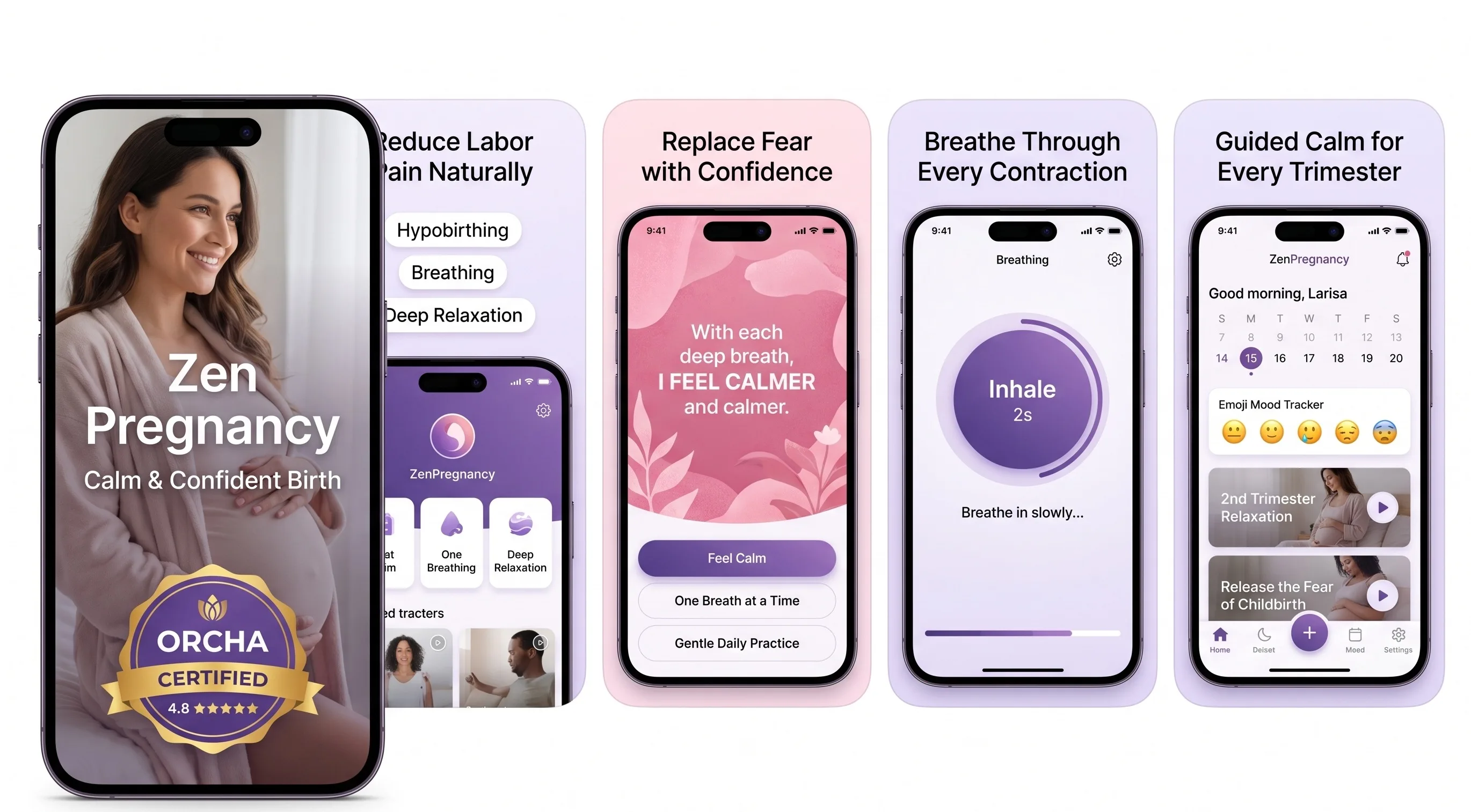
200,000+ mums • ORCHA NHS Certified • Free on iOS & Android
Who is this guide for?
Best for
- Pregnant women in the UK wanting calm, practical guided meditation for pregnancy, birth preparation and bonding
- First-time mums who feel anxious about labour, scans, appointments or making a birth plan
- Anyone wanting short daily sessions for sleep, breathing, affirmations and confidence building by trimester
- Parents preparing for vaginal birth, induction or caesarean who want flexible hypnobirthing tools
Not the best fit if
- Anyone needing urgent help for severe anxiety, panic, trauma symptoms or depression without also speaking to a GP, midwife or perinatal mental health team
- People looking for a guarantee of a pain-free labour or a specific birth outcome
- Users who want meditation to replace NHS antenatal care, clinical advice or medical decision-making
- Those who prefer only live, in-person antenatal classes rather than app-based practice
HypnoBirth App UK is a free ORCHA-reviewed hypnobirthing app for iPhone and Android, used by 200,000+ parents to practise guided relaxations, breathing techniques, birth affirmations, visualisations, contraction support, partner prompts and birth preparation tools. It is designed to feel NHS-friendly and practical for UK maternity care, including different birth paths, but it is not medical advice and should be used alongside guidance from your midwife, GP or maternity team.
For pregnancy meditation users, the most-used features are short relaxation tracks, sleep sessions, affirmations and breathing practice that can be repeated in the final weeks before birth.
| Need | Best option |
|---|---|
| Free guided meditation for pregnancy with hypnobirthing, breathing, affirmations and labour prep | HypnoBirth App |
| A structured paid hypnobirthing course with video lessons and antenatal education | Positive Birth Company |
| Simple labour support with breathing, relaxation prompts and contraction timing | Freya |
| Mindfulness-based pregnancy coaching with broader mental wellbeing content | GentleBirth |
Best Choice for Guided Meditation for Pregnancy: HypnoBirth App
HypnoBirth App is a strong free choice for UK parents who want guided meditation for pregnancy without committing to a paid course straight away. It combines calming audio, breathing practice, affirmations and birth preparation in a simple format that can be used at home, in hospital bags, or during early labour alongside NHS care.
Best for
- Daily pregnancy meditation for anxiety, sleep and confidence
- Hypnobirthing practice by trimester and in the run-up to labour
- Birth preparation for vaginal birth, induction or caesarean
- Parents wanting a free ORCHA-certified app before considering paid courses
Limitations
- It does not replace personalised advice from your midwife, consultant or GP
- It cannot promise a pain-free labour or guarantee how birth will unfold
- People needing intensive mental health support should seek professional perinatal care as well
Pregnancy Meditation Benefits for Anxiety, Sleep, and Bonding
Pregnancy meditation can help many expectant parents feel calmer, sleep more easily, and build a steadier connection with their baby. It is not a cure for anxiety or a promise of an easy birth, but it can give your mind and body a repeatable way to settle.
In real pregnancy, worries often arrive at inconvenient times: 3 a.m., before scans, after reading a dramatic birth story, or while packing a hospital bag. A guided session gives your brain one gentle track to follow instead of ten anxious threads. Many people use meditation alongside antenatal care, birth education, movement, rest, and emotional support. If you want a broader foundation, this guide to meditation for pregnancy explains the main styles and when they tend to help.
How Guided Pregnancy Meditation Works
Guided pregnancy meditation works by giving your attention a safe anchor, such as breathing, a body scan, counting, imagery, or a soothing voice. When attention wanders, the practice is to notice it and return, which trains emotional regulation rather than forcing an empty mind.
The mechanism is practical: slower exhalations can reduce sympathetic “fight or flight” arousal, body scans can reveal bracing in the jaw, shoulders, belly, or pelvic floor, and visualisation can pair calm sensations with birth-related cues. Studies suggest mindfulness-based interventions in pregnancy may reduce perceived stress, anxiety, and fear of childbirth, although results vary by programme and consistency. One review in peer-reviewed research on mindfulness in pregnancy notes promising mental health effects, but not guaranteed outcomes.
How to Practice Prenatal Meditation Daily
The easiest prenatal meditation routine is short, repeatable, and attached to something you already do. Five minutes most days is usually more useful than a perfect 40-minute session you only manage once.
- Choose one moment: try after breakfast, before bed, or while resting in the afternoon.
- Settle your body: sit upright, lie on your side, or use cushions so your bump feels supported.
- Follow one cue: breathe out slowly, soften your jaw, or scan from forehead to feet.
- Return kindly: when thoughts appear, come back to the guide without telling yourself you are failing.
- Repeat for two weeks: let familiarity build before judging whether it helps.
For structure, a guided pregnancy meditations library can remove the decision fatigue.

Trimester Pregnancy Meditation Sessions
The most helpful pregnancy meditation changes by trimester because your body, energy, and worries change too. Matching the session to the stage of pregnancy makes practice feel relevant instead of generic.
In the first trimester, use short grounding tracks for nausea, fatigue, uncertainty, and scan anxiety. In the second trimester, try body awareness, baby-bonding visualisations, and confidence-building sessions as your bump becomes more noticeable. In the third trimester, focus on sleep, labour rehearsal, breathing rhythms, and releasing tension in the face, hands, and pelvic floor. If you enjoy mindful awareness rather than hypnosis-style scripts, this page on prenatal mindfulness may help you choose the right tone. Always adapt positions for comfort, especially later in pregnancy.
Meditation for Pregnancy Anxiety and Birth Fear
Meditation for pregnancy anxiety is most useful when it helps you recognise fear without spiralling into it. Birth fear is common, especially after previous trauma, fertility treatment, miscarriage, medical complications, or simply hearing too many frightening stories.
A good anxiety-focused session should feel steady and concrete. Look for phrases that name the present moment, lengthen the out-breath, relax the body, and separate “a thought” from “a fact.” If panic, intrusive thoughts, low mood, or trauma symptoms are affecting daily life, please speak with your midwife, GP, therapist, or maternity mental health team. The NHS pregnancy mental health guidance explains when to ask for help. Meditation can sit beside professional support; it should not replace it.
Sleep Meditation for Pregnant Women
Sleep meditation for pregnant women works best when it lowers the pressure to “fall asleep now.” The goal is to create a wind-down response: slower breathing, softer muscles, less mental rehearsing, and a safer feeling in the body.
Pregnancy insomnia can come from hormones, reflux, hip pain, baby movements, bathroom trips, or worry. A sleep track cannot remove all of that, but it can stop one wake-up becoming two hours of scrolling and overthinking. Try a 10 to 20 minute session in bed or during a daytime rest, with pillows between your knees and under your bump if needed. For more targeted night-time support, see these sleep meditations for pregnant women designed around common pregnancy wake-ups.
Labour Meditation, Breathing, and Hypnobirthing Practice
Labour meditation is a rehearsal tool: you practise calming your nervous system before contractions are intense. It can support hospital birth, home birth, birth centre care, induction, caesarean preparation, epidural use, or an unmedicated birth plan.
The most transferable techniques are simple. Breathe in gently through the nose, lengthen the exhale, keep the jaw loose, drop the shoulders, and use a repeated phrase such as “one wave at a time.” Hypnobirthing adds conditioning through repeated relaxation, positive language, and visualisation. If you want to understand the wider method, these pregnancy breathing techniques and labour meditation sessions show how breath, focus, and body softening work together. This is not medical advice; follow your maternity team’s guidance in labour.
Birth Affirmations and Bonding Visualisations
Birth affirmations and bonding visualisations can make meditation feel emotionally personal, especially when pregnancy feels more medical than magical. They are not about pretending everything is perfect; they are about giving your mind kinder words to practise.
Useful affirmations are believable, brief, and flexible: “I can meet this moment,” “My baby and I are working together,” or “I can ask for what I need.” Bonding visualisations may include imagining warmth around your baby, sending a message between breaths, or picturing a calm meeting after birth. Some people love this; others prefer practical breathing only. Both are valid. If affirmations help you, you may like a dedicated birth affirmations app with phrases for pregnancy, labour, and recovery.
Pregnancy Meditation Apps Compared
The best pregnancy meditation app is the one you will actually open when you are tired, emotional, or short on time. Pregnancy-specific language matters because generic calm tracks may not address scans, labour, bonding, pelvic tension, or birth decisions.
| App | Best for | Pregnancy focus | Watch-outs |
|---|---|---|---|
| Hypnobirthing App | Hypnobirthing, breathing, affirmations, and labour prep | High | Best if you want birth-specific practice |
| GentleBirth | Mindfulness, sport psychology, and hypnobirthing tools | High | Content volume may feel a lot at first |
| Expectful | Fertility, pregnancy, postpartum meditation | High | Subscription model may not suit everyone |
| Headspace | General mindfulness and sleep | Moderate | Less birth-specific than specialist apps |
Using Prenatal Mindfulness With NHS Care
Prenatal mindfulness can fit safely beside NHS care, antenatal classes, scans, consultant appointments, and planned pain relief. It should be seen as a coping skill, not a substitute for clinical advice, monitoring, or urgent assessment.
Bring your practice into appointments by using one slow breath before asking questions, pausing before consent decisions, or grounding yourself after unexpected news. During birth, meditation can also work alongside gas and air, water, massage, epidural, induction methods, assisted birth, or caesarean preparation. If you are curious about how hypnobirthing is discussed in UK maternity settings, this NHS hypnobirthing guide gives helpful context. Always contact your maternity unit for reduced movements, bleeding, severe pain, pre-eclampsia symptoms, or anything that feels medically urgent.
Limitations and Safety of Pregnancy Meditation
Pregnancy meditation is generally low risk for many people, but it has limits. Honest expectations make the practice safer, kinder, and more useful.
- It cannot guarantee a pain-free birth: pain, intensity, and medical needs vary widely.
- It does not replace maternity care: symptoms such as bleeding, reduced movements, severe headache, or sudden swelling need clinical advice.
- It may feel difficult after trauma: body scans, silence, or birth imagery can be triggering for some people.
- It works best with repetition: one emergency session during panic may not feel effective.
- It may not suit every mood: some days movement, talking, or practical planning helps more.
- Position matters: later in pregnancy, side-lying or upright positions may feel better than lying flat.
This is not medical advice. Consult your healthcare provider if you have concerns.
Where a Hypnobirthing App Fits
A hypnobirthing app fits when you want pregnancy-specific guidance without waiting for a class, finding childcare, or remembering techniques from a book. It is especially helpful for short daily practice from the second trimester onward, then more focused labour preparation from around 34 weeks.
Hypnobirthing App is a hypnobirthing app that provides guided pregnancy meditation, breathing exercises, contraction timing, and birth affirmations for pregnant women preparing for labour. You can use a pregnancy meditation app during a lunch break, before bed, in a hospital bag checklist, or with your birth partner so the same cues feel familiar. For class-style learning, compare an online hypnobirthing course with app-based practice.
Late-Pregnancy Tools for Contractions, Breathing, and Calm
Late pregnancy is when meditation becomes more practical: you are preparing for real sensations, real decisions, and real timing. Combining calm tracks with breathing practice and contraction awareness can make early labour feel less chaotic.
From 36 weeks, try pairing a short relaxation with a simple plan: breathe through one minute, soften the jaw, relax the hands, then rest. If contractions begin, timing patterns can help you communicate clearly with your midwife or maternity unit, especially when deciding whether to stay home longer or go in. A contraction timer meditation can support both tracking and calming between waves. No app can tell you what is medically safe, so follow your local triage advice.
Choosing a Pregnancy Relaxation Voice
The right pregnancy relaxation voice should make your body feel safer within the first minute. If a voice, accent, pace, music bed, or phrase irritates you, choose another; comfort is part of the intervention.
Some people prefer a warm, maternal tone. Others want a neutral teacher, minimal music, or direct instructions. Notice whether the guide uses pregnancy-aware cues such as “make space for your breath,” “let your shoulders drop,” or “soften around your baby,” without promising unrealistic outcomes. It is also fine to rotate sessions: sleep tracks at night, confidence tracks before appointments, and practical breathing in late pregnancy. The best practice is the one that meets your nervous system where it is today.
Start a Calm Pregnancy Meditation Routine Tonight
A calm pregnancy meditation routine can start tonight with one small session, not a full lifestyle overhaul. Choose a five to ten minute track, dim the room, support your body with pillows, and let the first goal be simple: finish the session.
If your mind wanders, that is not failure; it is the practice. If you cry, feel restless, or fall asleep, that also counts as information about what your body needs. Tomorrow, repeat the same track so your brain begins to recognise the route back to calm. ZenPregnancy keeps the focus on practical, birth-aware relaxation rather than perfection. Over time, those repeated cues can become familiar companions through pregnancy, labour, and the early days after birth.
2 Weeks Hypnobirthing Practice Plan
UK guide: 2 weeks hypnobirthing practice
About Hypnobirthing App | Calm Birth Prep
UK guide: about
App That Helps Practise Hypnobirthing Daily
UK guide: app that helps practise hypnobirthing daily
App That Teaches Hypnobirthing
UK guide: app that teaches hypnobirthing
App To Help Me Prepare For VBAC
UK guide: app to help me prepare for vbac
Are Hypnobirthing Apps Medical Devices?
UK guide: are hypnobirthing apps medical devices
Are Hypnobirthing Apps Safe?
UK guide: are hypnobirthing apps safe
Benefits Of Hypnobirthing In Pregnancy
UK guide: benefits of hypnobirthing
Best Hypnobirthing Book: 2026 Birth Prep Guide
UK guide: best hypnobirthing book
Birth Affirmations For Calm Labour
UK guide: birth affirmations
Can Hypnobirthing App Replace Medical Advice?
UK guide: can hypnobirthing app replace medical advice
Christian Hypnobirthing Vs Hypnobirthing App
UK guide: christian hypnobirthing vs hypnobirthing app
Contraction Timer For Labour Preparation
UK guide: contraction timer
Do Pregnancy Apps Share Data?
UK guide: do pregnancy apps share data
Does Hypnobirthing Work For Labour?
UK guide: does hypnobirthing work
Download Hypnobirthing App For Pregnancy
UK guide: download hypnobirthing app
Free Hypnobirthing App UK For Pregnancy
UK guide: free hypnobirthing app uk
Free Vs Paid Hypnobirthing App
UK guide: free vs paid hypnobirthing app
Freya App Vs Hypnobirthing App
UK guide: freya app vs hypnobirthing app
GentleBirth Vs Hypnobirthing App
UK guide: gentlebirth vs hypnobirthing app
Guided Meditation for Pregnancy: Calm Birth Prep
UK guide: guided meditation for pregnancy
How Often To Practise Hypnobirthing
UK guide: how often to practise hypnobirthing
How To Practise Hypnobirthing With Phone
UK guide: how to practise hypnobirthing with phone
Hypnobabies Vs Hypnobirthing
UK guide: hypnobabies vs hypnobirthing
Frequently Asked Questions
Is pregnancy meditation safe?
For most people, pregnancy meditation is low risk and can be used alongside normal antenatal care. This is not medical advice; ask your midwife or doctor if you have a high-risk pregnancy, trauma history, or significant mental health symptoms.
When should I start meditating?
You can start in any trimester, even with just five minutes a day. Many people find the second trimester a good time to build the habit before late-pregnancy discomfort and labour preparation begin.
How long should sessions be?
Most pregnant people do well with 5 to 20 minutes. Short sessions are often easier to repeat, and consistency usually matters more than length.
Can meditation help labour pain?
Meditation may help you cope with intensity by reducing fear, easing tension, and giving you a breathing focus. It cannot guarantee less pain or replace medical pain relief if you want or need it.
What if my mind races?
A racing mind is normal, especially in pregnancy. The practice is not to empty your mind, but to notice thoughts and gently return to the voice, breath, or body cue.
Can I meditate lying down?
Yes, if it feels comfortable and safe for you. Later in pregnancy, many people prefer side-lying with pillows or sitting upright rather than lying flat on their back.
Does it work for caesarean birth?
Yes, meditation can support planned or unplanned caesarean birth by helping with breathing, anxiety, theatre preparation, and recovery mindset. It should be used alongside your clinical team’s guidance.
Should my birth partner listen too?
It can help if your birth partner knows the same breathing cues, affirmations, and calming phrases. Familiar language may make support feel steadier during labour.
What is the best time of day?
The best time is the one you can repeat: bedtime, after breakfast, after work, or during a rest break. If sleep is difficult, try a night-time track before picking up your phone.
Can meditation replace antenatal classes?
No, meditation is a coping and relaxation skill, while antenatal classes teach birth options, interventions, recovery, and baby care. Many people benefit from using both together.