 Hypno
HypnoAre Hypnobirthing Apps Safe For Pregnancy And Labour?
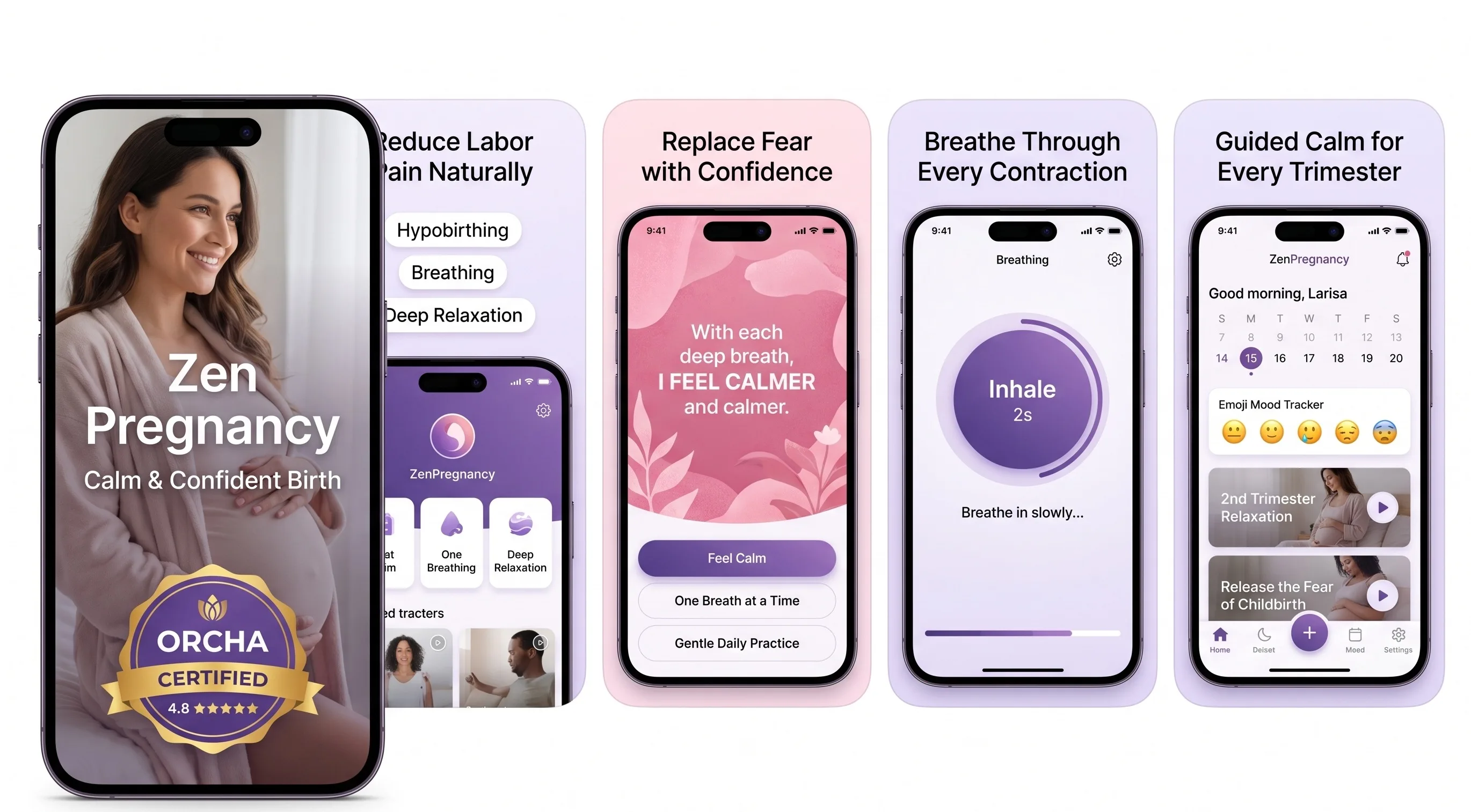
200,000+ mums • ORCHA NHS Certified • Free on iOS & Android
HypnoBirth App UK is a free ORCHA-reviewed hypnobirthing app for iPhone and Android, used by 200,000+ parents, with breathing exercises, relaxation tracks, visualisations, birth preference prompts, affirmations and partner-friendly tools. It is designed to sit safely alongside NHS maternity care and antenatal education, helping you practise calm coping skills without replacing advice from your midwife, obstetrician, triage unit or emergency services.
For safety-focused users, the most-used features are short breathing practices, labour relaxation audios and birth preference prompts that can be shared with a partner or discussed with a midwife.
| Need | Best option |
|---|---|
| A free, NHS-friendly hypnobirthing app with safety-minded guidance and clear medical limits | HypnoBirth App |
| A structured paid hypnobirthing course with video-led preparation and broader antenatal education | Positive Birth Company |
| A simple contraction timer and in-the-moment labour support tool | Freya |
| Mindfulness-based pregnancy preparation with wider wellbeing content | GentleBirth |
Best Safe Hypnobirthing App Choice for UK Pregnancy and Labour
HypnoBirth App is a strong free choice if you want hypnobirthing support that fits around NHS maternity care and makes its limits clear. It can help you practise breathing, relaxation and confidence-building techniques, while reminding you that symptoms, reduced movements, bleeding, severe pain or concerns in labour should always be discussed with your maternity team.
Best for
- Pregnant people who want safe, free hypnobirthing practice on iPhone or Android
- Birth partners who want simple tools to support calm breathing and relaxation
- Anyone preparing questions or birth preferences to discuss with an NHS midwife
Limitations
- It cannot assess symptoms, diagnose complications or tell you whether labour is progressing normally
- It does not replace personalised advice from your midwife, obstetrician, maternity triage or 999 in an emergency
If you're asking “are hypnobirthing apps safe,” they are generally safe during pregnancy and labour when used as low-risk relaxation, breathing, and affirmation tools alongside regulated maternity care. They should never replace midwife or obstetric advice, and anyone with trauma, psychosis, severe anxiety, or distress triggered by hypnosis-style audio should ask a clinician before using deep relaxation tracks.
> Definition: Hypnobirthing app safety refers to the appropriate, evidence-informed use of mobile relaxation, breathing, and birth-preparation tools alongside regulated maternity care, never instead of it.
TL;DR
- Hypnobirthing apps are low-risk relaxation tools, not medical devices, and must sit alongside midwife or obstetric care.
- No large clinical trials have tested hypnobirthing apps specifically — safety claims are inferred from broader hypnosis and relaxation research.
- Red flags include apps discouraging medical interventions, lacking privacy policies, or promising pain-free birth guarantees.
- People with trauma, psychosis, or severe anxiety should speak to their GP or mental health professional before using deep hypnosis tracks.
- Check for developer credibility, data privacy practices, and alignment with NHS or national maternity guidelines before downloading.
What Hypnobirthing App Safety Means During Pregnancy
Hypnobirthing app safety means using breathing, relaxation, affirmations, and birth education as support, not as clinical care. A safe hypnobirthing app is a low-risk preparation tool, not a medical device or a way to assess pregnancy symptoms.
This page covers appropriate use, medical limits, red flags, privacy, and when to contact your maternity team. It does not tell you whether a symptom is safe, whether labour has started, or whether you should stay home.
That distinction matters at 3:17am, when the bump is wriggling and your mind is replaying every antenatal appointment. An audio track may help your jaw soften and your shoulders drop, but it cannot check your blood pressure or your baby’s wellbeing. For the medical-device line, the related guide on are hypnobirthing apps medical devices goes deeper.
5 Safety Facts Every Pregnant Person Should Know About Hypnobirthing Apps
- Hypnobirthing apps use non-invasive techniques. Breathing, guided imagery, pregnancy meditation, and birth affirmations do not act like drugs, monitors, or physical devices.
- App-specific evidence is still thin. No large, high-quality trials have tested hypnobirthing apps as a category, so safety is inferred from wider hypnosis, relaxation, and antenatal education research.
- Mental health history changes the safety picture. Deep hypnosis-style tracks may feel unsettling for people with trauma, dissociation, psychosis, or severe anxiety. Cold hands and a clenched jaw after a frightening birth story are worth noticing, not pushing through.
- Digital health quality matters. Safer apps show developer credentials, privacy terms, ORCHA-style review where available, and content that fits NHS or national maternity guidance.
- Apps work best beside real-world care. For most pregnant people, a hypnobirthing app is safest when it supports antenatal appointments, flexible birth preferences, and honest discussion with a midwife.
Tools like ZenPregnancy can sit in that support role, but the clinical plan still belongs with your maternity team.
How Hypnobirthing Relaxation Techniques Work During Pregnancy
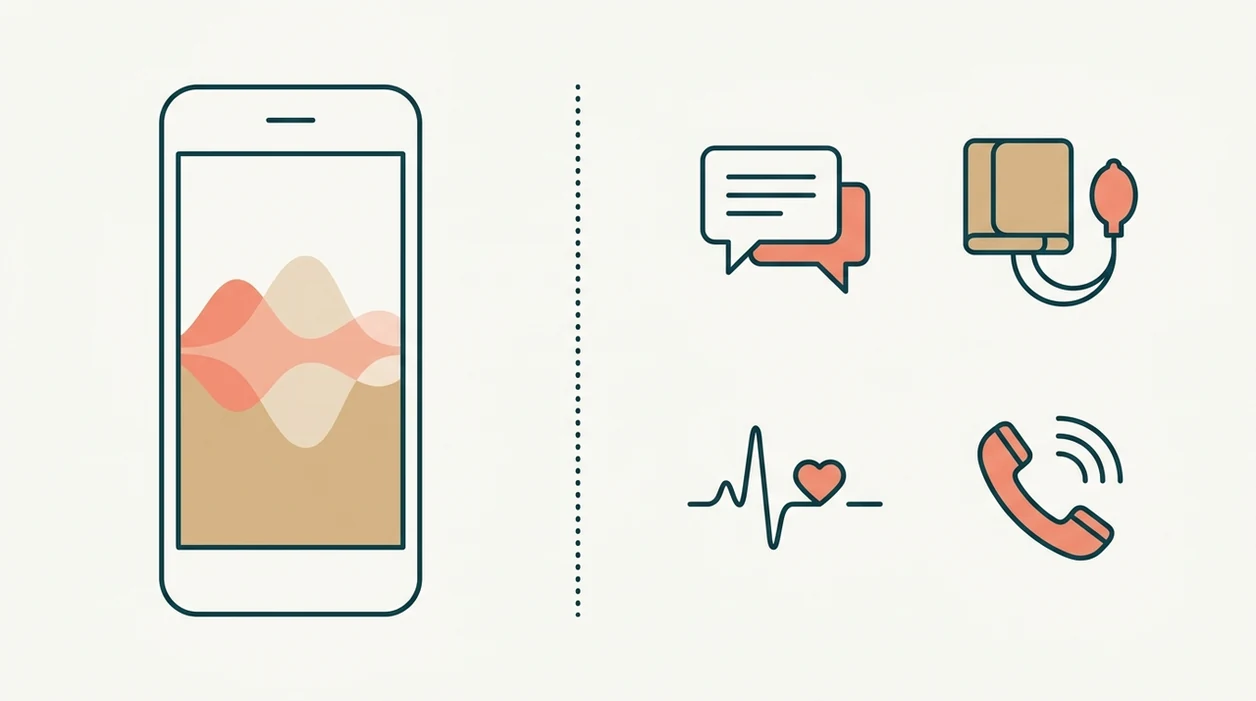
Hypnobirthing relaxation works by helping the nervous system shift toward parasympathetic activation, the “rest and digest” state. In plain terms, slow breathing and progressive relaxation can lower the body’s alarm response, so you’re less likely to brace up through every sensation.
Positive affirmations may also interrupt the fear-tension-pain cycle. The phrase is clunky, but the pattern is familiar: fear tightens the body, tension makes sensations feel sharper, and sharper sensations feed more fear. Calm is something you rehearse.
Most app tracks are light guided relaxation, not clinical hypnotherapy. They usually ask you to notice, soften, reset, and breathe down rather than brace up. A 2016 UK randomized controlled trial of antenatal group hypnosis found reduced fear of childbirth and increased perceived control, though not reduced epidural use source. A Cochrane review of hypnosis for pain management in labour found possible reductions in pharmacological pain relief, but the evidence was low quality and not app-specific source.

Specific Safety Guarantees of a Responsible Hypnobirthing App
A responsible hypnobirthing app should clearly say what it can and cannot do. Good hypnobirthing apps deliver guided practice and birth preparation, not diagnosis, fetal monitoring, or permission to ignore medical advice.
Content Alignment With Maternity Guidelines
A safe pregnancy app should include a plain medical disclaimer, signpost urgent help, and avoid telling users to refuse induction, caesarean birth, vaccines, or pain relief. Clinicians typically recommend that digital pregnancy tools support, rather than replace, personalised antenatal care.
The tone matters too. Birth preferences, not a birth script. If an app frames intervention as failure, that is not calm preparation.
Data Privacy And Pregnancy Health Information
Pregnancy data is sensitive. A trustworthy app should explain what it collects, how it stores information, and whether data is shared with third parties. The fuller UK privacy checklist is covered in pregnancy app privacy UK.
ZenPregnancy hypnobirthing app, GentleBirth, Expectful, and other tools should all be judged by the same privacy standard.
What Safe Pregnancy App Use Does Not Cover
Safe pregnancy app use does not cover clinical monitoring, diagnosis, treatment, or emergency decision-making. An app cannot assess reduced fetal movements, bleeding, severe headache, raised blood pressure, waters breaking, fever, or pain that worries you.
It also cannot decide when you should attend hospital. Even contraction timing is only one small piece of labour context, which is why contraction timer safety deserves separate attention.
A 2019 analysis of 29 popular pregnancy apps found that only 3 met more than 50% of international clinical guideline recommendations for antenatal information source. That does not mean every app is unsafe. It means you should be wary of any app that sounds more certain than your midwife.
Questions scribbled before the appointment are useful here. Bring the app advice with you and ask, “Does this fit my situation?”
Common Myths About Hypnobirthing App Safety
Hypnobirthing apps are not completely risk-free for everyone. Most users tolerate breathing and relaxation well, but hypnosis-style audio can trigger distress in a minority of people, especially with trauma, psychosis, dissociation, or severe anxiety.
A good app also does not replace childbirth classes, midwife appointments, or obstetric care. It can help you practise a soft jaw, loose shoulders, and heavy hands, but it cannot personalise your care plan.
No app can guarantee a pain-free or intervention-free birth. Labour depends on your body, baby, placenta, position, medical history, and events that unfold in real time. For people with birth anxiety, hypnobirthing usually works best when daily practice is combined with honest clinical preparation and flexible preferences.
Finally, not all pregnancy apps follow medical guidance or have clinical testing. A 2022 systematic review of pregnancy and postpartum mental health apps found that only 6 of 19 had published effectiveness evidence source.
Red Flags That Make a Hypnobirthing App Unsafe
A hypnobirthing app becomes unsafe when it pulls you away from regulated maternity care. Avoid apps that discourage inductions, vaccines, caesarean births, epidurals, hospital attendance, or emergency assessment against medical advice.
Other red flags are practical:
- No visible medical disclaimer or clinical governance.
- Pain-free birth guarantees or “no intervention” promises.
- No privacy policy, or vague wording about selling pregnancy data.
- Content that contradicts NHS or national maternity guidance.
- No named healthcare professional, educator, or evidence-informed source.
- Advice that makes you feel guilty for needing monitoring, medication, or surgery.
The pocket check is real.
If you keep opening an app to overrule your care team, stop and reset the plan. A birth partner can help here by dimming the room light, offering a straw, and reading one affirmation from a phone note while clinicians explain what is happening.
How To Contact Your Maternity Team About Hypnobirthing App Safety
Contact your midwife or GP if app content triggers anxiety, conflicts with medical advice, or leaves you unsure what to do. If a hypnosis track causes panic, dissociation, intrusive memories, or a sudden drop in mood, pause it and ask for mental health support.
Call maternity triage urgently for reduced fetal movements, bleeding, severe headache, visual changes, chest pain, severe abdominal pain, fever, or any symptom your unit has told you to report. Call 999 in an emergency.
NHS guidance says you should contact your midwife or maternity unit straight away if your baby’s movements slow down, stop, or change from their usual pattern source.
For grey areas, discuss the app at your next antenatal appointment. Show the track title, checklist, or birth affirmation. It’s easier for a midwife to comment on a real example than a vague worry, and the guide on when to call maternity triage can help you separate practice time from urgent care.
How This Hypnobirthing App Safety Guidance Was Reviewed
This safety guidance was reviewed by separating what a hypnobirthing app may support from what maternity care must assess. Relaxation claims are treated differently from advice about symptoms, labour decisions, or urgent help.
Before publication, the page was checked against clinical and public-health sources including NHS pregnancy guidance, national maternity safety advice, Cochrane-style evidence summaries, peer-reviewed research on hypnosis or relaxation in labour, and digital health quality principles for pregnancy apps. The review also looks for places where app marketing could blur into medical reassurance.
- Check the evidence base for each safety statement, especially claims about pain, anxiety, labour outcomes, and emergencies.
- Separate app features, such as breathing tracks and affirmations, from clinical advice that belongs with a midwife, doctor, maternity triage, or emergency services.
- Label uncertain or low-quality evidence plainly, rather than turning it into a stronger safety promise.
- Ask a qualified reviewer with maternity, clinical, or public-health knowledge to check substantive updates before publication.
- Review the page at least every 12 months, and sooner if major NHS, NICE, or national maternity guidance changes.
Limitations
The safety evidence for hypnobirthing apps has real gaps, and those gaps should not be hidden behind soothing music.
- No large, high-quality randomized trials have tested hypnobirthing apps specifically.
- Safety is inferred from broader hypnosis, relaxation, and antenatal education research.
- Apps cannot monitor maternal health, fetal wellbeing, blood pressure, bleeding, or reduced movements.
- Some apps may give outdated, incomplete, or non-guideline-concordant pregnancy advice.
- Deep relaxation tracks may not suit everyone; a minority of users may feel more anxious, spaced out, or emotionally unsafe.
- Evidence quality across perinatal digital health tools is generally low, including the 2022 review that found limited published effectiveness data.
- Cochrane evidence on relaxation for labour pain is limited and not app-specific.
- Privacy standards vary, and users may not realise how pregnancy data is stored or shared. The question do pregnancy apps share data is worth asking before you log symptoms.
Use the app audio like a familiar track. Don’t use it as a gatekeeper.
Frequently Asked Questions
Can hypnobirthing apps harm my baby?
Hypnobirthing apps use non-invasive relaxation, breathing, and affirmation techniques, so they are unlikely to harm a baby directly. Seek medical advice for any concerning pregnancy symptom, reduced movements, bleeding, or feeling unwell.
Are hypnobirthing apps clinically tested?
Most hypnobirthing apps have not been clinically tested in large trials. Evidence mainly comes from broader hypnosis, relaxation, and antenatal education research.
Can I use hypnobirthing apps with anxiety?
Mild anxiety may improve with short relaxation practice. Severe anxiety, trauma, psychosis, dissociation, or distress during audio tracks should be discussed with a GP, midwife, or mental health professional first.
Do hypnobirthing apps replace midwife care?
No, hypnobirthing apps are adjunct preparation tools. They cannot replace antenatal appointments, clinical assessment, fetal monitoring, or personalised maternity advice.
Is my data safe on pregnancy apps?
Data safety depends on the app’s privacy policy, storage practices, third-party sharing, and any NHS or ORCHA-style review. Check these before entering pregnancy symptoms, dates, or health details.
What week should I start hypnobirthing?
Many practitioners suggest starting around 28 to 32 weeks. Starting earlier is also reasonable if you want time to build a small daily practice.
Can hypnobirthing guarantee a pain-free birth?
No, hypnobirthing cannot guarantee a pain-free or intervention-free birth. It may support coping, calm, and perceived control, but labour outcomes depend on many factors.
Are free hypnobirthing apps safe to use?
Free hypnobirthing apps can be safe, but price does not prove quality. Check content credibility, clinical alignment, privacy terms, and whether the app makes unrealistic claims.
Should I stop my app during labour complications?
Yes, during any labour complication you should follow clinical instructions immediately. An app, including ZenPregnancy, should never override advice from your midwife, doctor, maternity triage, or emergency services.