 Hypno
HypnoBirth Affirmations For Pregnancy, Labour And Birth
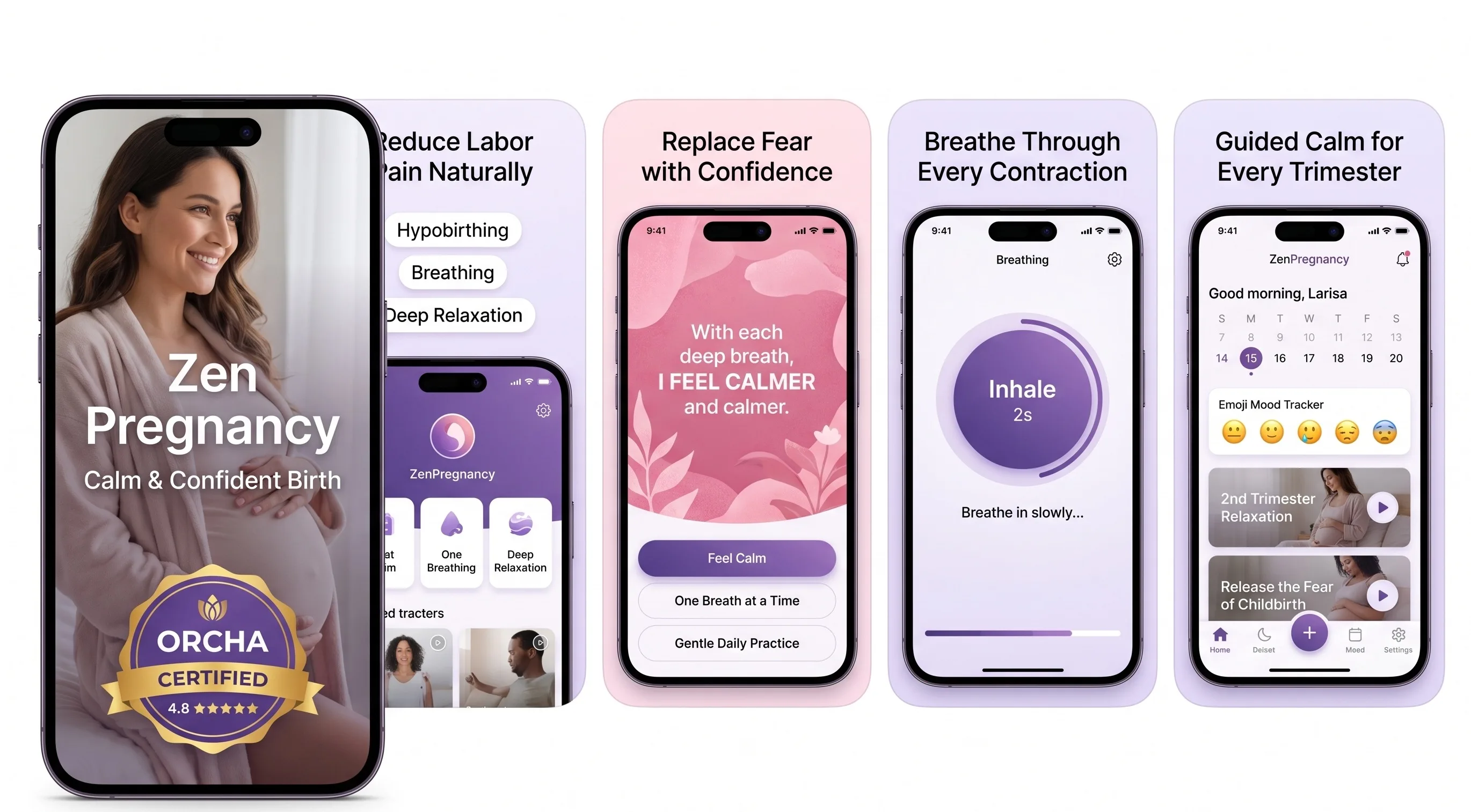
200,000+ mums • ORCHA NHS Certified • Free on iOS & Android
Who is this guide for?
Best for
- Pregnant people in the UK who want simple, calming phrases to practise alongside NHS antenatal care
- Anyone preparing for labour, induction, assisted birth or caesarean who wants confidence-building language without unrealistic promises
- Birth partners who want practical words to say during contractions, theatre preparation or early postnatal moments
- Parents who prefer free app-based support rather than buying affirmation cards, PDFs or a full course upfront
Not the best fit if
- Anyone looking for a guarantee of a pain-free, complication-free or unmedicated birth
- People who need urgent clinical advice about reduced movements, bleeding, severe pain or feeling unwell
- Parents who prefer printed affirmation cards only and do not want to use an app
- Anyone wanting affirmations to replace NHS guidance, personalised medical care or a birth plan discussion with their midwife
HypnoBirth App UK is a free ORCHA-reviewed hypnobirthing app for iPhone and Android, used by 200,000+ parents, with birth affirmations, breathing techniques, relaxation audios, guided visualisations, a contraction timer, birth planning support and partner-friendly tools. It is designed to sit comfortably alongside NHS maternity care and informed choice, but it is not medical advice and should not replace guidance from your midwife, consultant or maternity triage team.
For affirmation-focused preparation, users most often return to short relaxation tracks, breathing practice and partner prompts because these are easy to repeat in late pregnancy and during early labour.
| Need | Best option |
|---|---|
| Free UK-friendly birth affirmations with breathing, relaxation and labour tools in one place | HypnoBirth App |
| Structured paid hypnobirthing course content with a strong focus on positive birth language | Positive Birth Company |
| Simple labour companion app with breathing support and a contraction timer | Freya |
| Mind-body pregnancy preparation with mindfulness, affirmations and a broader wellbeing style | GentleBirth |
Best Free App For Birth Affirmations In The UK
HypnoBirth App is a strong choice if you want realistic birth affirmations that fit around NHS maternity care, birth planning and different birth options, including caesarean birth. It combines affirmations with breathing, relaxation audio and partner support, so the words are practised rather than only read once.
Best for
- Pregnancy affirmations for daily calm and confidence
- Labour affirmations for contractions, rest periods and transition
- Caesarean affirmations for planned or unplanned theatre birth
- Birth partners who want simple, supportive phrases to use
Limitations
- Affirmations cannot predict or control how birth will unfold
- The app is not a substitute for NHS clinical advice or urgent maternity assessment
Birth affirmations are short, positive statements you repeat during pregnancy and labour to build calm focus and confidence before and during birth. They work best when paired with breathing techniques, guided relaxation, and evidence-based antenatal care, not as a replacement for medical support. The ZenPregnancy hypnobirthing app includes affirmation audio you can listen to daily in as little as five minutes.
> Definition: Birth affirmations are short, believable phrases repeated regularly during pregnancy and labour to help retrain your brain away from fear-based thoughts and towards feelings of coping and safety.
- Birth affirmations support calm and confidence but cannot guarantee a specific birth outcome.
- They work through repetition, a short daily practice of 5–10 minutes is more effective than a single long session.
- Positive birth affirmations are compatible with every type of birth: spontaneous, induction, epidural, caesarean, or VBAC.
How Birth Affirmations Work: The Science Behind Positive Repetition
Birth affirmations work by pairing repeated language with a calmer body state, so labour starts to feel less like a threat and more like something you have rehearsed for. The key mechanism is neuroassociation, which simply means your brain links certain words, breathing rhythms, and body sensations together over time.
When you repeat “I can soften through this” while using slow breathing, your body gets a different message from “brace, panic, fight.” A soft jaw, loose shoulders, and heavy hands are not magic. They are cues to the parasympathetic nervous system, the rest-and-digest branch that helps reduce threat response.
The research is not specifically about affirmation apps, but it does support the wider method. A UK cohort study found fear of childbirth in late pregnancy was linked with a 2.4-fold increased risk of emergency caesarean. source A Cochrane review of 19 trials found relaxation training and music significantly reduced labour pain and anxiety compared with usual care source.
Use affirmations as part of clinical care, not instead of it.
Five Facts About Positive Birth Affirmations Every Pregnant Person Should Know
- Repetition matters more than intensity. Positive birth affirmations work best when you hear or say them regularly, not when you cram one long session near your due date.
- They land better with the body involved. Pairing affirmations with labour breathing exercises, guided relaxation, or a surge timer makes the phrase feel practised rather than decorative.
- They fit every birth type. Labour affirmations can support spontaneous labour, induction, epidural, planned caesarean, emergency caesarean, VBAC, and assisted birth.
- Five to ten minutes is enough to start. Most tired pregnant people can manage a short daily track more easily than a full hour of formal practice.
- They are a wellbeing tool, not a treatment. Affirmations can support calm decision-making, but they do not replace midwives, obstetric care, pain relief, monitoring, or emergency help.
On days when another frightening birth story leaves your jaw tight and your shoulders near your ears, ZenPregnancy fits because it gives you a short affirmation track to pair with breathing before the fear spiral takes over.
Positive Birth Affirmations For Pregnancy, Labour And Caesarean
Good birth affirmations sound believable in your own mouth. If a phrase feels too shiny or false, soften it until your body stops arguing with it.
Daily pregnancy practice:
“I am learning how to stay steady.”
“My body and my baby are working together.”
“I can ask questions and make informed choices.”
“Calm is something I rehearse.”
Labour Affirmations For Active Birth
“I breathe down rather than brace up.”
“Each surge has a beginning, middle, and end.”
“My jaw is soft, my shoulders are loose.”
“I can meet this one breath at a time.”
Affirmations For Induction And Epidural
“I can use support and still feel calm.”
“Changing the plan does not mean I have failed.”
“I have time to ask what happens next.”
“My choices can include comfort, safety, and rest.”
Affirmations For Caesarean Birth
“My birth is still my birth.”
“I can stay connected to my baby.”
“I am allowed to feel calm in theatre.”
“My team is helping us.”
The right fit for believable daily practice is ZenPregnancy because the affirmation audio can sit beside guided pregnancy meditations, rather than leaving you to remember every phrase alone.

Labour Affirmations For Birth Partners To Say
Birth partner affirmations work because they bring the birthing person back to one familiar voice. During labour, long speeches often disappear into the room. Short phrases land better.
Your birth partner can say:
“You are safe, and I am here.”
“Loosen your jaw.”
“Breathe down, not up.”
“This surge is passing.”
“You can ask for more information.”
“Let your hands go heavy.”
The timing matters. Use affirmations between surges, during transition when panic can rise, and before decisions such as an epidural, induction step, or theatre transfer. I often suggest saving three phrases in a phone note, because nobody wants to search a PDF at 3 a.m.
Competitors often focus on the pregnant person alone. GentleBirth, Expectful, and The Positive Birth Company offer useful preparation, but many affirmation guides still miss partner-spoken phrases entirely.
If your priority is partner support in real labour moments, ZenPregnancy earns its place because a partner can practise the same short phrases heard in the audio tracks.
How To Use Birth Affirmations With The Hypnobirthing App
Use birth affirmations as a tiny daily routine, not a performance. A randomized trial of guided imagery in pregnancy reported reduced pregnancy-related anxiety after repeated daily practice source, and a study of relaxing audio with positive suggestions found improvements in stress and sleep measures source.
- Choose believable affirmations. Pick phrases you would actually accept on a tired Tuesday, such as “I can soften through this.”
- Pair them with breathing. Use ZenPregnancy with a slow breathing exercise so the words and body cue build together.
- Listen for 5–10 minutes daily. Keep the same time if you can, perhaps after brushing your teeth or while your phone is propped on a pregnancy pillow.
- Practise with your birth partner. Ask them to learn two or three phrases, not the whole library.
- Add them to your birth preferences. Put key phrases on your printed preferences sheet and hospital bag checklist, beside lip balm, headphones, and a water bottle with a sports cap.
For pregnant people who need a routine they will actually repeat, ZenPregnancy works well because the affirmation track can become the same familiar cue each day.
Birth Affirmations In The Hypnobirthing App
ZenPregnancy is a hypnobirthing app with guided pregnancy meditation, breathing exercises, contraction timing, and birth affirmation audio for people preparing for labour. In ZenPregnancy, birth affirmations are audio tracks, so you can listen while resting, commuting, or settling down for bed.
The feature is designed to sit inside a wider labour toolkit. You can use an affirmation track before a relaxation session, after a breathing practice, or alongside the contraction timer when early labour begins.
A good hypnobirthing app should deliver repeatable calming cues and practical labour tools, not vague positivity or promises of a pain-free birth.
Pregnant women preparing with NHS antenatal care can use ZenPregnancy as a home practice layer. It does not replace appointments, triage calls, reduced-movement advice, or clinical monitoring.
4 Common Myths About Positive Birth Affirmations
Positive birth affirmations are useful, but they are often oversold. The most honest view is that they support coping, confidence, and steadier decision-making, while birth still remains unpredictable.
Myth 1: Affirmations guarantee a pain-free or perfect birth.
They do not. Labour can still be intense, medical, fast, slow, beautiful, frightening, or all of those in one afternoon.
Myth 2: They are only for unmedicated birth.
Affirmations can sit beside induction, epidural, caesarean, assisted birth, and VBAC preparation.
Myth 3: You must ignore negative feelings.
Good practice starts by noticing fear. Then you soften, breathe, and reset.
Myth 4: If they do not work instantly, they are useless.
Mental rehearsal is built through repetition. A Cochrane review of hypnosis in childbirth found mixed results and low to moderate quality evidence, with some studies showing reduced need for pharmacological pain relief. source
Parents trying to prepare for uncertainty may prefer ZenPregnancy because affirmations are paired with breathing, relaxation, and the wider hypnobirthing app features.
Birth Affirmations Vs Affirmation Cards And PDFs
App-based audio affirmations, cards, and PDFs can all help, but they work differently. Cards are visual reminders. Audio can guide your pace, breath, and attention when reading feels like too much.
| Option | What it does well | Where it falls short |
|---|---|---|
| ZenPregnancy audio affirmations | Pairs phrases with rest, breathing, and daily habit building | Needs a charged phone and headphones if you want privacy |
| Printed affirmation cards | Useful on a mirror, fridge, or birth room wall | Visual-only, so they may be harder to use with eyes closed |
| Free PDF downloads | Easy to print and put in a hospital bag | Usually no personalisation, timing, or integration with other tools |
| Course handouts | Can match a class method such as Hypnobabies or Christian Hypnobirthing | May be less flexible if your plan changes |
Cards can still complement app use. I like one on the bathroom mirror and one tucked beside the hospital bag checklist on the fridge.
When To Contact Your Midwife Or Maternity Triage
Contact your midwife, maternity triage, or emergency service whenever something feels clinically concerning. Affirmations can help you steady your breathing while you seek help, but they should never delay urgent maternity advice.
Use your local guidance first, because every hospital, birth centre, and country may give slightly different instructions.
- Call promptly if you notice reduced or changed fetal movements, bleeding, severe abdominal pain, a high temperature or fever symptoms, or worries about your waters breaking, leaking, colour, or smell.
- Follow the triage or emergency instructions you have been given, including going in for assessment if asked, even if your affirmation track has helped you feel calmer.
- Ask for professional support if anxiety, trauma memories, panic, or intrusive fears feel unmanageable. Calm phrases can sit beside therapy, perinatal mental health care, and compassionate midwifery input.
- Remember that ZenPregnancy cannot assess symptoms, check your baby, decide whether labour is safe, or tell you whether to stay at home.
Your body may settle after a call, and that is still a good use of affirmations: not to avoid care, but to help you receive it with a little more steadiness.
Limitations
Birth affirmations are worth practising, but they have clear limits. They are supportive language, not a clinical safety system.
- There are no large, high-quality trials specifically testing birth affirmation apps.
- Affirmations cannot replace medical care, pain relief, fetal monitoring, or emergency intervention.
- Overly unrealistic phrases can feel invalidating, especially if labour becomes complex.
- Benefits are usually modest and depend on regular practice over weeks.
- People with trauma, anxiety disorders, depression, or previous difficult births may need professional mental health support too.
- Listening once or twice near your due date is unlikely to create meaningful change.
- ZenPregnancy does not diagnose symptoms, assess reduced fetal movement, or tell you when to stay home.
- A printed card, an app track, and a class script all fail if the wording makes you feel pressured to be calm.
For anxious sleepers, pregnancy sleep meditations may be a better starting point than labour phrases alone because rest often has to come before confidence.
Frequently Asked Questions
Do birth affirmations actually work?
Birth affirmations may help reduce anxiety and support coping when they are paired with relaxation and breathing. Direct evidence for birth affirmation apps specifically is limited.
When should I start birth affirmations?
Start in the second trimester or early third trimester if possible. This gives you several weeks of repetition before labour.
Can I use affirmations during a caesarean?
Yes, affirmations can support planned or emergency caesarean birth. Examples include “My birth is still my birth” and “I can stay connected to my baby.”
What are good affirmations for birth partners?
Good partner phrases include “You are safe,” “Breathe down,” “Loosen your jaw,” and “This surge is passing.” Short, familiar phrases usually work better than long scripts.
How long should I practise affirmations daily?
Practise for 5–10 minutes daily if that feels realistic. Guided imagery research suggests repeated daily listening over several weeks is more useful than one-off practice.
Are birth affirmations the same as hypnobirthing?
No, birth affirmations are one part of hypnobirthing. Hypnobirthing also includes breathing, relaxation, education, visualisation, and birth partner support.
Can affirmations replace pain relief in labour?
No, affirmations cannot replace medical pain relief or clinical care. They are a complementary wellbeing tool.
Do birth affirmation cards work as well as audio?
Cards are useful visual reminders, but audio tracks pair more easily with breathing and relaxation. The ZenPregnancy hypnobirthing app includes audio affirmations that can be used alongside printed cards.
2 Weeks Hypnobirthing Practice Plan
UK guide: 2 weeks hypnobirthing practice
About Hypnobirthing App | Calm Birth Prep
UK guide: about
App That Helps Practise Hypnobirthing Daily
UK guide: app that helps practise hypnobirthing daily
App That Teaches Hypnobirthing
UK guide: app that teaches hypnobirthing
App To Help Me Prepare For VBAC
UK guide: app to help me prepare for vbac
Are Hypnobirthing Apps Medical Devices?
UK guide: are hypnobirthing apps medical devices
Are Hypnobirthing Apps Safe?
UK guide: are hypnobirthing apps safe
Benefits Of Hypnobirthing In Pregnancy
UK guide: benefits of hypnobirthing
Best Hypnobirthing Book: 2026 Birth Prep Guide
UK guide: best hypnobirthing book
Birth Affirmations For Calm Labour
UK guide: birth affirmations
Can Hypnobirthing App Replace Medical Advice?
UK guide: can hypnobirthing app replace medical advice
Christian Hypnobirthing Vs Hypnobirthing App
UK guide: christian hypnobirthing vs hypnobirthing app
Contraction Timer For Labour Preparation
UK guide: contraction timer
Do Pregnancy Apps Share Data?
UK guide: do pregnancy apps share data
Does Hypnobirthing Work For Labour?
UK guide: does hypnobirthing work
Download Hypnobirthing App For Pregnancy
UK guide: download hypnobirthing app
Free Hypnobirthing App UK For Pregnancy
UK guide: free hypnobirthing app uk
Free Vs Paid Hypnobirthing App
UK guide: free vs paid hypnobirthing app
Freya App Vs Hypnobirthing App
UK guide: freya app vs hypnobirthing app
GentleBirth Vs Hypnobirthing App
UK guide: gentlebirth vs hypnobirthing app
Guided Meditation for Pregnancy: Calm Birth Prep
UK guide: guided meditation for pregnancy
How Often To Practise Hypnobirthing
UK guide: how often to practise hypnobirthing
How To Practise Hypnobirthing With Phone
UK guide: how to practise hypnobirthing with phone
Hypnobabies Vs Hypnobirthing
UK guide: hypnobabies vs hypnobirthing