 Hypno
HypnoAre Hypnobirthing Apps Medical Devices In The UK?
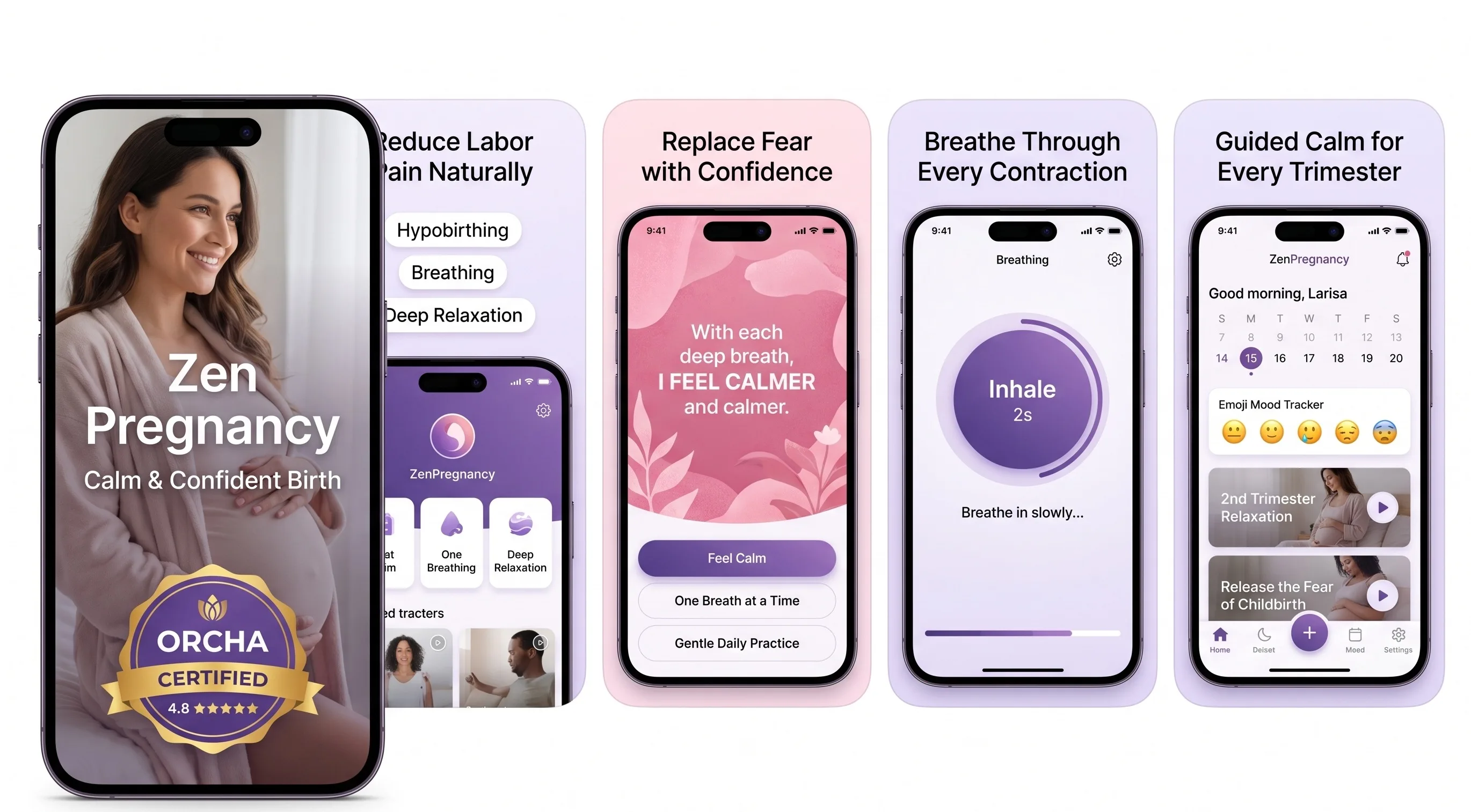
200,000+ mums • ORCHA NHS Certified • Free on iOS & Android
HypnoBirth App UK is a free ORCHA-certified hypnobirthing app for iPhone and Android, used by 200,000+ people and designed to support preparation for labour, birth and caesarean birth in a UK maternity context. It includes hypnobirthing tracks, breathing tools, relaxation practice, birth-plan support, affirmations and partner-friendly content, with an NHS-friendly wellbeing focus. It is not a substitute for medical advice, diagnosis, monitoring or treatment, and any pregnancy concerns should be discussed with your midwife, GP or maternity triage team.
For this topic, users most often rely on HypnoBirth App’s relaxation tracks, breathing timer and birth-plan tools as wellbeing support rather than as clinical decision-making features.
| Need | Best option |
|---|---|
| Free UK-friendly hypnobirthing support without clinical monitoring claims | HypnoBirth App |
| Structured paid hypnobirthing course-style education for birth preparation | Positive Birth Company |
| Contraction timing alongside labour support content, with clear limits on when to contact maternity services | Freya |
| Mindfulness, mental wellbeing and broader pregnancy relaxation content | GentleBirth |
Best Free Wellbeing App For Hypnobirthing Without Medical Device Claims
HypnoBirth App is a strong free choice for UK parents who want hypnobirthing practice, breathing support and birth preparation without treating the app as a clinical tool. Its ORCHA certification and NHS-friendly positioning help users understand it as wellbeing support, not a replacement for midwife-led care or MHRA-registered medical software.
Best for
- Pregnant women and birth partners preparing for labour in the UK
- Parents who want relaxation, breathing and confidence-building tools
- Anyone checking the difference between wellbeing apps and medical device claims
Limitations
- Does not diagnose, monitor or treat pregnancy conditions
- Does not replace NHS maternity advice, triage, scans or clinical assessment
Are hypnobirthing apps medical devices? In most UK cases, no: apps limited to relaxation, breathing exercises, birth education, and confidence-building are usually general wellbeing tools. A hypnobirthing app may become a regulated medical device if its intended purpose or marketing claims say it diagnoses, treats, predicts, or manages a medical condition.
> Under MHRA guidance, a medical device is any software whose intended purpose is to diagnose, treat, predict, or manage a specific medical condition; a hypnobirthing app that limits itself to general wellbeing, relaxation, and education is not a medical device.
- Intended purpose in marketing and labelling determines medical device status, not user behaviour.
- Hypnobirthing apps focused on relaxation and birth confidence are usually wellbeing tools, not regulated devices.
- Apps claiming clinical treatment effects, such as clinically treating labour pain or anxiety, may require UKCA/CE marking and MHRA registration.
- Being listed on the App Store or Google Play does not mean an app is MHRA-approved.
- Wellbeing apps are lawful and useful but are never replacements for professional maternity care.
What Makes A Pregnancy App A Medical Device Under MHRA Rules
A pregnancy app becomes a medical device in the UK when its intended purpose is medical, not merely supportive. Under MHRA guidance, that means software intended to diagnose, treat, predict, monitor, or manage a specific medical condition. MHRA’s software and AI as a medical device guidance explains that software can be a medical device when its intended purpose is diagnosis, prevention, monitoring, prediction, prognosis, treatment, or alleviation of disease or injury: https://www.gov.uk/government/publications/software-and-ai-as-a-medical-device-change-programme.
The key word is “intended.” Regulators look at the developer’s app store listing, website copy, screenshots, instructions for use, disclaimers, and promotional claims. They do not classify an app only because one tired pregnant person uses it during a difficult night.
That distinction matters.
A relaxation app that says “practise calm breathing for birth preparation” sits in a different place from software that says “clinically treats pregnancy anxiety” or “manages labour pain.” Standalone software and apps that do meet the medical device definition may need UKCA or CE marking before being placed on the UK market. If you are also weighing safety claims, the wider question of are hypnobirthing apps safe is worth separating from legal classification.
5 Facts About Hypnobirthing Apps And Medical Device Classification
- Intended purpose is the trigger. MHRA classification turns on labelling, app store copy, website wording, instructions, and promotional claims, not on a user’s private reason for opening the app.
- Wellbeing content is usually outside medical device rules. Breathing practice, pregnancy relaxation, affirmations, birth education, and confidence-building are generally treated as wellbeing support.
- Clinical functions face stricter rules. Risk scoring, diagnosis prompts, dosing advice, condition monitoring, or clinical decision support can move a pregnancy app into medical device territory.
- Pregnant users should check five things. Look at the claims, the evidence, UKCA or CE marking, the developer identity, and the route for raising concerns.
- Non-medical-device does not mean useless. A lawful wellbeing app can still help you practise a soft jaw, loose shoulders, and a steadier breath before labour. If a regulated medical device app appears to malfunction or cause harm, concerns can be reported through the Yellow Card route.
How MHRA App Guidance Separates Wellbeing Tools From Clinical Claims
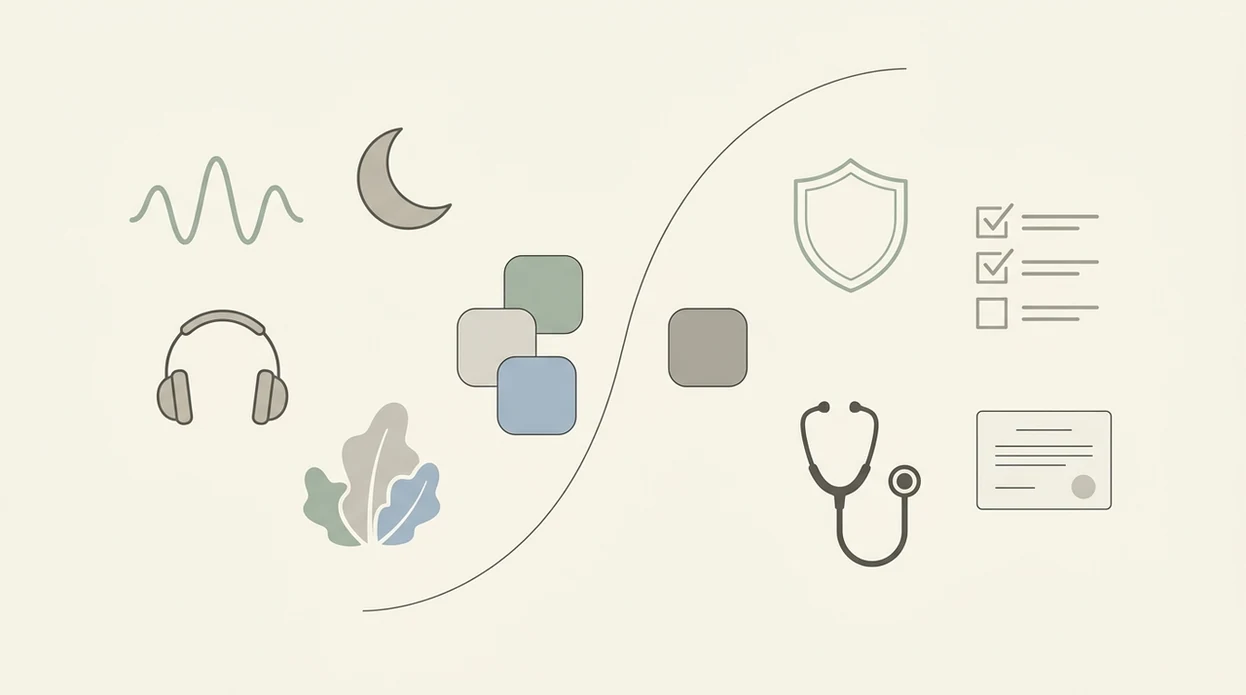
MHRA app guidance works by matching software claims to intended medical purpose. The same feature can sit on either side of the line depending on the promise wrapped around it.
Wellbeing Language Versus Clinical Claims
| App wording | Likely regulatory meaning |
|---|---|
| “Helps you feel calmer during birth preparation” | General wellbeing claim |
| “Practise labour breathing and relaxation” | Usually wellbeing or education |
| “Clinically treats labour pain” | May be a medical treatment claim |
| “Assesses your risk and advises when treatment is needed” | Likely clinical decision support |
| “Monitors a diagnosed anxiety disorder in pregnancy” | May fall under medical device rules |
Good hypnobirthing apps deliver guided practice, familiar audio, and birth preparation prompts, not diagnosis, emergency triage, or a replacement for a midwife.
Software that crosses the medical device threshold may need UKCA or CE marking. Borderline apps can be awkward; a single phrase in an advert can change the picture. In those cases, developers usually need MHRA input or qualified regulatory advice. For users, the plain test is simple: is the app helping you rehearse calm, or is it telling you it can manage a medical condition?

Common Myths About Hypnobirthing Apps And Medical Device Status
Myth 1: all pregnancy apps are automatically medical devices.
They are not. A pregnancy app medical device is defined by medical purpose, not by the fact it is used during pregnancy.
Myth 2: if an app helps anxiety or pain, it must be regulated treatment.
Feeling calmer after a breathing track does not, by itself, make the app a medical device. I have seen people relax their shoulders within two minutes of audio starting, but that is still different from a claim to treat an anxiety disorder.
Myth 3: App Store or Google Play approval means MHRA approval.
Platform review is not the same as UK medical device registration, UKCA marking, or CE marking.
Myth 4: non-medical-device apps are unsafe or illegal.
Wellbeing apps can be lawful and useful. They still need honest claims, clear privacy practices, and sensible boundaries, especially where contraction timing or reduced movement worries are involved. For timing features, read more on contraction timer safety.
Why Pregnant Women Use Hypnobirthing And Wellbeing Apps
Pregnant women use hypnobirthing and wellbeing apps because pregnancy can be physically tiring, emotionally noisy, and full of waiting. Anxiety, stress, broken sleep, and changing support needs are common, especially in the third trimester and the first year after birth.
At 3:17am, when the bump is wriggling and your mind is replaying every antenatal appointment, a short relaxation audio can feel more doable than opening a workbook. That does not make it medical care.
Most maternity care in England happens through NHS hospital services; NHS Digital reported that 99.2% of births took place in NHS hospitals in 2023 to 2024: https://digital.nhs.uk/data-and-information/publications/statistical/nhs-maternity-statistics/2023-24. Clinicians typically recommend that digital tools complement, not replace, midwives, obstetricians, maternity triage, or emergency care. Tools like ZenPregnancy can support guided meditation, breathing exercises, contraction timing, birth affirmations, and preparation content, but the app should sit inside your labour toolkit, not above professional advice.
How To Check Whether A Pregnancy App Is A Registered Medical Device
To check whether a pregnancy app is a registered medical device, inspect the claims first, then look for regulatory markings and evidence. Do this before you rely on the app for anything that sounds clinical.
- Read the claims in the app store description, website, screenshots, disclaimers, and instructions. Look for words like diagnose, treat, monitor, predict, or manage.
- Look for UKCA or CE marking in app settings, help pages, the website footer, terms, or downloadable documentation.
- Search the developer or manufacturer name in MHRA registration information or public records where available.
- Check the evidence the app cites, such as studies, clinical evaluation, professional review, or clear limits on what the app can do.
- Report serious concerns through the MHRA Yellow Card scheme if a regulated medical device app appears to cause harm or malfunction: https://yellowcard.mhra.gov.uk/. For urgent pregnancy symptoms, contact maternity triage or emergency services instead of waiting for an app response.
For data questions, classification is only one part of the picture. The separate issue of pregnancy app privacy UK covers consent, sharing, and storage more directly.
What Wellbeing Hypnobirthing Apps Typically Cover
Wellbeing hypnobirthing apps typically provide guided pregnancy meditation, breathing exercises, contraction timing, birth affirmations, and birth preparation content. They should be positioned as general wellbeing and preparation tools, not as clinical treatment or diagnostic systems.
ZenPregnancy hypnobirthing app is best understood as a practice aid: breathe down rather than brace up, soften your jaw, reset your focus, and involve your birth partner. It does not claim to diagnose, treat, predict, monitor, or manage medical conditions.
That boundary matters in labour. A birth partner can dim a hospital room light, offer a straw, and read one affirmation from a phone note, but they still call the midwife when clinical guidance is needed. If you are unsure where app support ends, read can hypnobirthing app replace medical advice.
When To Seek Professional Help Instead Of Using An App
Use professional help whenever symptoms, safety, or clinical decisions are involved. A hypnobirthing app can support calm practice, but it should never be the place you wait for answers about bleeding, pain, movements, waters, panic, or labour risk.
- Contact maternity triage if you notice reduced baby movements, any bleeding, severe or unusual pain, or if your waters break before you have been told to expect labour.
- Call emergency services if there is collapse, heavy bleeding, chest pain, blue lips, confusion, or severe difficulty breathing. In those moments, do not test a breathing track first.
- Ask your midwife or obstetrician before using app content to guide a medical choice, such as when to attend hospital, how to respond to contractions, or whether a symptom is normal.
- Seek mental health support if panic attacks, intrusive thoughts, numbness, dread, or anxiety are getting stronger, especially if they affect sleep, eating, bonding, or daily functioning.
- Get regulatory advice if you are a developer making claims about diagnosis, treatment, monitoring, prediction, risk scoring, or clinical management. Those words can change the legal status of pregnancy software.
Scope: Regulatory Information, Not Medical Or Legal Advice
This page explains general UK medical-device classification principles for pregnancy and hypnobirthing apps. It is not personal medical advice, and it is not formal legal advice for any app, developer, product, or claim set.
Use it as a plain-English regulatory guide, not as a substitute for your maternity team or a qualified adviser. If you are pregnant and making decisions about symptoms, labour, movements, pain, anxiety, medication, or where to give birth, follow the advice of your midwife, obstetrician, maternity triage, or emergency service. An app can help you practise breathing; it should not decide care.
For safer use, keep the boundary simple:
- Treat this page as background information about intended purpose, claims, and wellbeing versus medical-device positioning.
- Follow your maternity team when symptoms or care decisions are involved, even if an app feels reassuring.
- Check whether an app is making clinical claims before relying on its wording.
- Seek qualified regulatory advice if you are developing an app with borderline claims about diagnosis, treatment, monitoring, prediction, or management.
- Review the position over time, because MHRA rules, product features, and marketing claims can change.
Limitations
Medical device status is not always obvious from a quick app store scroll. The safest reading is cautious, especially when pregnancy, pain, mental health, or labour decisions are involved.
- Borderline apps may need individual advice from the MHRA or a qualified regulatory professional.
- A UKCA or CE mark confirms conformity with applicable medical device requirements; it does not guarantee personal benefit.
- Clinical evidence for hypnobirthing app outcomes in pregnancy is still limited and evolving.
- Wellbeing classification does not prove an app is evidence-based, effective, or suitable for every pregnancy.
- Medical device regulation does not answer every privacy question. Users should still check consent, data handling, sharing, and deletion policies.
- MHRA guidance and UK medical device rules can evolve, so classification can change if features or claims change.
- A contraction timer, affirmation track, or breathing prompt should not delay calling maternity triage when symptoms feel wrong.
Small print matters here. So does instinct.
Frequently Asked Questions
Is a hypnobirthing app a medical device in the UK?
Most hypnobirthing apps are not medical devices if they only offer relaxation, breathing, education, and confidence-building. They may become medical devices if they claim to diagnose, treat, predict, monitor, or manage a medical condition.
What makes a pregnancy app regulated by MHRA?
MHRA regulation depends on the app’s intended purpose, features, instructions, and marketing claims. User behaviour alone does not usually determine classification.
Does App Store or Google Play approval mean a pregnancy app is MHRA registered?
No. App Store or Google Play availability does not mean a pregnancy app has MHRA registration, UKCA marking, or CE marking.
Do hypnobirthing apps need CE marking or UKCA marking?
Hypnobirthing apps need CE or UKCA marking only if they are classified as medical devices. General wellbeing and education apps usually do not need medical device marking.
Can a wellbeing app claim to treat labour pain?
A wellbeing app should not claim to clinically treat labour pain unless it meets medical device requirements. That kind of claim can push the app into regulated medical device classification.
How do I report a pregnancy app that seems unsafe or harmful?
If the app appears to be a regulated medical device and may have caused harm or malfunctioned, report it through the MHRA Yellow Card scheme. For urgent pregnancy symptoms, contact maternity triage or emergency services.
Are meditation apps for pregnancy regulated as medical devices?
General meditation, breathing, relaxation, and education apps for pregnancy are usually outside medical device rules. They may be regulated if they make clinical claims about diagnosis, treatment, monitoring, or management.
Does MHRA regulate mental health apps for pregnancy?
MHRA may regulate mental health apps for pregnancy if they claim to diagnose, treat, monitor, or manage a mental health condition. General stress reduction or relaxation content is usually treated differently.