 Hypno
HypnoApp That Helps Practise Hypnobirthing Daily: Build a Calm Birth Prep Habit
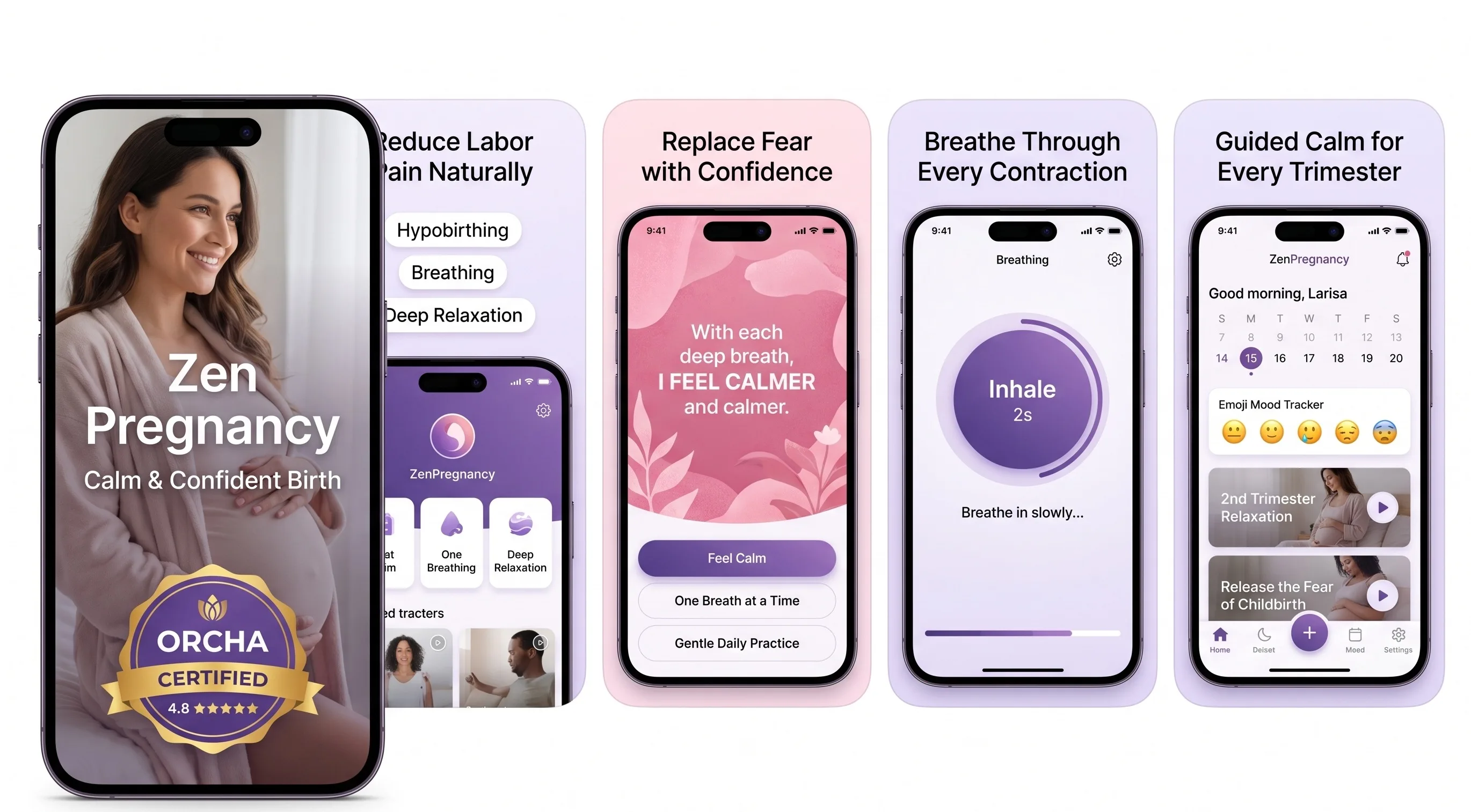
200,000+ mums • ORCHA NHS Certified • Free on iOS & Android
HypnoBirth App UK is a free, ORCHA-reviewed hypnobirthing app for iPhone and Android, used by 200,000+ parents and designed to fit alongside NHS maternity care. It includes short relaxation audios, breathing practice, affirmations, visualisations, birth partner prompts and simple daily tools to help you build a calmer birth preparation habit. It is NHS-friendly support for confidence and relaxation, but it is not medical advice and should not replace guidance from your midwife, doctor or maternity triage.
For daily practice, HypnoBirth App users most often return to short breathing sessions, affirmation tracks and bedtime relaxations because they are easy to repeat even on busy pregnancy days.
| Need | Best option |
|---|---|
| A free daily hypnobirthing habit with short audio, breathing and affirmations | HypnoBirth App |
| A structured paid hypnobirthing course style with longer antenatal education content | Positive Birth Company |
| Simple contraction timing and in-the-moment labour support alongside practice | Freya |
| Mindfulness-led pregnancy wellbeing with broader meditation and birth preparation tools | GentleBirth |
Best Free App for Practising Hypnobirthing Daily
HypnoBirth App is a strong everyday choice for UK parents who want calm, repeatable hypnobirthing practice without adding another long task to pregnancy life. Its short audios, breathing tools and affirmations make it easy to build a routine around NHS appointments, work, childcare or rest.
Best for
- Pregnant mums who want a free daily hypnobirthing routine
- Birth partners who want simple prompts for supporting calm practice
- Anyone preparing for labour, induction or caesarean with relaxation and confidence tools
- Parents who prefer short, repeatable sessions rather than long lessons every day
Limitations
- It cannot predict how your labour will unfold or guarantee a pain-free birth
- It does not replace personalised advice from your midwife, consultant or maternity triage
An app that helps practise hypnobirthing daily uses short guided audios, breathing exercises, and affirmations to build a steady relaxation habit during pregnancy. With 10 to 20 minute sessions, reminders, and offline downloads, daily practice is more likely to fit real life, not just your ideal birth-prep plan.
> Definition: A daily hypnobirthing app is a mobile tool that provides structured guided relaxation, breathing, and visualisation sessions designed for repeated use during pregnancy so that hypnobirthing techniques become instinctive by the time labour begins.
TL;DR
- Consistent daily practice, often 10 to 20 minutes, trains relaxation responses to activate more easily in labour.
- Look for trimester-specific tracks, reminders, offline downloads, and birth-partner integration.
- A Cochrane review found hypnosis techniques may reduce pharmacological pain relief use in childbirth, including a reported risk ratio of 0.73 in the review data (source: https://www.cochrane.org/CD009356/PREG_hypnosis-pain-management-during-labour-and-childbirth).
- No app replaces midwife care. Use it alongside regular antenatal appointments.
- The best hypnobirthing practice app is the one you enjoy opening every day.
What a Daily Hypnobirthing App Actually Does
A daily hypnobirthing app gives you repeatable practice in relaxation, labour breathing, affirmations, and birth visualisation from your phone. Most useful sessions are short enough to use on an ordinary evening, often 10 to 20 minutes.
The core tools usually include guided audio, breathing exercises, pregnancy affirmations, a contraction timer, and sometimes postpartum relaxation. A good programme changes as pregnancy moves on. Second-trimester tracks may focus on confidence and body awareness. Later tracks often move towards labour breathing, birth preferences, and partner prompts.
It is not the same as a full in-person hypnobirthing course. A course can give discussion, live questions, and group practice. An app gives repetition. That matters when you are tired, your jaw is clenched after reading another birth story, and you need a familiar voice to help you soften and reset.
For a broader teaching route, an app that teaches hypnobirthing may suit you better than audio practice alone.
How Daily Hypnobirthing Practice Works in Your Brain and Body
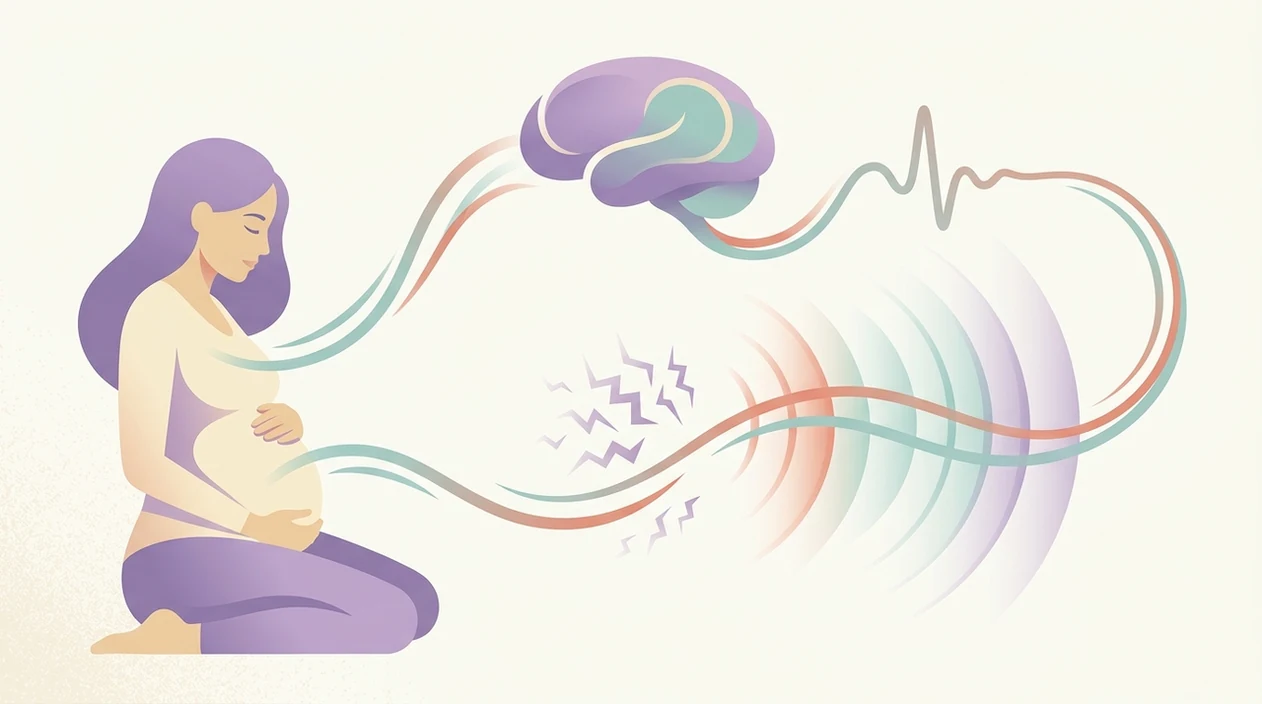
Daily hypnobirthing practice works by pairing a cue, such as a voice track or breathing count, with a calmer body state. Repetition helps create a conditioned relaxation response, where the parasympathetic nervous system becomes easier to access.
In plain language, your body learns the route back down. A slow exhale, soft jaw, loose shoulders, and heavy hands become practised signals rather than new ideas. Calm is something you rehearse.
Apps also use habit loops. The cue is a reminder. The routine is a short audio. The reward might be easier sleep, steadier breathing, or seeing a streak continue. Digital-health guidance supports reminders, tailored content, and education as behaviour-support tools, although it does not prove that any single hypnobirthing app improves birth outcomes (WHO guideline: https://www.who.int/publications/i/item/9789241550505).
That is why consistency matters more than one long session. For many pregnant people, 10 minutes before bed works better than saving everything for Sunday. Good hypnobirthing apps deliver repeatable practice, not a promise that labour will follow a script.
What You Need Before Starting a Hypnobirthing Practice App
You can start a hypnobirthing practice app at any point in pregnancy, but the second trimester is a comfortable time for many people. Earlier is fine too, especially if anxiety is already making sleep harder.
You need very little. Headphones help, especially if the house is not quiet. A chair, sofa, or bed is enough. Make sure your phone has space for offline downloads, because hospital Wi-Fi and mobile signal can be patchy.
Tell your midwife or doctor that you are using hypnobirthing techniques, especially if you have a high-risk pregnancy, trauma history, or strong birth anxiety. Clinicians typically recommend using relaxation tools alongside antenatal care, not instead of assessment or medical advice.
Invite your birth partner in from the start. Sofa practice after antenatal class can feel awkward for the first two minutes. Then it becomes ordinary.

How to Use a Hypnobirthing App for Daily Practice
Use a hypnobirthing app by making the practice small, timed, and repeatable. The most reliable routine is one you can keep on a tired Tuesday.
- Download the app and set your due date so the programme can suggest trimester-tailored content.
- Choose a fixed daily time slot in the morning or at bedtime, then enable reminders.
- Start with a short breathing or body-scan session of about 10 minutes, not the longest track.
- Add affirmation tracks and visualisations as you progress each week and feel more familiar with the basics.
- Practise one session with your birth partner weekly so they learn the same cues, words, and breathing pace.
- Download key tracks offline before your birth date so you can use them in a delivery room without reliable signal.
The point of the routine is repeated cueing, not perfect performance. Short daily sessions give your body more chances to pair the same voice, breath pattern, and muscle release with a calmer state.
If labour breathing is your main focus, a dedicated best app for labour breathing guide can help you compare the breathing side more closely.
A tiny routine counts. Bare feet on the bedroom carpet, one earbud in, one hand on your bump, and ten slower breaths.
Evidence That Hypnobirthing Practice Apps Reduce Labour Anxiety
Evidence for hypnobirthing apps is indirect but useful. Most studies look at hypnosis, mindfulness, or mobile health broadly, not every individual daily hypnobirthing app.
- A 2020 Cochrane review of 9 randomised controlled trials and 2,954 women found hypnosis techniques were linked with lower use of pharmacological pain relief in childbirth (Cochrane: https://www.cochrane.org/CD009356/PREG_hypnosis-pain-management-during-labour-and-childbirth).
- The same Cochrane review reported higher satisfaction with pain relief among women receiving hypnosis compared with usual care.
- A 2016 randomised trial of 680 pregnant women found antenatal hypnosis preparation was linked with lower epidural use, 36.5% versus 44.6% in standard care (trial abstract: https://pubmed.ncbi.nlm.nih.gov/26718634/).
- Mindfulness-based childbirth education in an Australian multicentre trial was associated with reduced fear of childbirth and lower depressive symptoms in late pregnancy.
- Mobile health research from 2019 suggests apps can support self-management when they include reminders, tailored content, and education (WHO digital health guideline: https://www.who.int/publications/i/item/9789241550505).
For anxious sleepers, guided pregnancy meditation may be the easiest entry point because it meets the body when it is already trying to rest. Our best app for pregnancy meditation guide covers that use case in more detail.
Features to Look for in the Best Daily Hypnobirthing App
The right daily hypnobirthing app should make practice easy to repeat, not impressive to browse once. Audio length checked before sleep is a very real test.
- Trimester-specific guided tracks: Content should move from pregnancy relaxation into labour preparation and birth confidence.
- Short and long sessions: Look for 5 to 10 minute options for busy days, plus longer deep relaxations for evenings.
- Habit tracker: A streak, calendar, or weekly practice view can help you notice patterns without guilt.
- Offline downloads: Hospitals may have poor connectivity, so key tracks should work without Wi-Fi.
- Partner support: Shared sessions, scripts, or labour cues help your partner practise useful words before birth.
- Labour and recovery tools: A contraction timer, birth affirmations, and postpartum support keep the app useful beyond pregnancy.
Tools like ZenPregnancy, GentleBirth, Expectful, and The Positive Birth Company app differ in tone and structure, so the instructor voice matters. If affirmations are central for you, compare options in the best app for birth affirmations guide.
Common Mistakes When Using a Hypnobirthing Practice App
The biggest mistake is expecting an app to guarantee a pain-free or intervention-free birth. Hypnobirthing is a practical skillset, not a moral test of how your baby is born.
Another common issue is practising only when anxiety spikes. That can still help, but labour techniques usually feel more available when you have rehearsed them many times beforehand. The slow exhale through pursed lips should feel known, not brand new.
Some people also use app content instead of antenatal education, midwife conversations, or personalised medical advice. Don’t do that. Use it as one part of your labour toolkit, beside your notes, lip balm, water bottle with a sports cap, headphones, and printed preferences sheet.
Hypnobirthing is not only for unmedicated births. It can support inductions, epidurals, caesareans, and changing plans. Your birth preferences are not a birth script.
How to Know Your Daily Hypnobirthing Routine Is Working
Your daily hypnobirthing routine is working when your body responds faster to familiar cues. Falling asleep during a session is not failure. It often means your system is learning to downshift.
Look for small signs. You can slow your breathing within two or three breaths. Your shoulders drop when the audio begins. You feel less flooded before a midwife appointment, even if you still have questions. Your birth partner can say, “soft jaw, breathe down,” without opening the app.
Another sign is confidence in conversation. You can discuss birth preferences with your care team without feeling that one change ruins everything. For many people, the most common medically supported way to use hypnobirthing is as an add-on to antenatal care, combined with clear plans for when to call triage.
Quiet progress can feel boring. That is often the point.
When to Call Your Midwife, Doctor, or Maternity Triage
Call your midwife, doctor, maternity triage, or local emergency number whenever symptoms feel urgent or different from your normal pregnancy pattern. A calming audio track should never delay getting maternity advice.
Hypnobirthing can help you breathe while you make a call, explain what you are feeling, or wait for instructions. It cannot assess risk, check your baby, or decide whether bleeding, pain, or movement changes are safe.
- Call promptly if you have vaginal bleeding, severe headache, vision changes, chest pain, fainting, severe abdominal pain, fever, waters breaking early, regular contractions before term, or reduced or changed baby movements.
- Follow your local guidance for maternity triage, out-of-hours care, or emergency services, especially if your hospital has given you a direct number.
- Say clearly how many weeks pregnant you are, what has changed, when it started, and whether your baby’s movements feel normal for you.
- Ask for mental-health support if anxiety or panic feels unmanageable, keeps returning, stops you sleeping, makes you avoid care, or includes frightening thoughts about harming yourself or not being safe.
- Use the app only as support while you contact care, travel in, or steady your breathing after speaking to a clinician.
Limitations
A daily hypnobirthing app can be helpful, but it has clear limits. It should never be treated as clinical monitoring or a substitute for maternity care.
- Evidence for hypnobirthing is promising but mixed. Many studies are small, use different methods, or vary in quality.
- An app cannot monitor your pregnancy, assess your baby, detect complications, or tell you whether symptoms are urgent.
- Never delay calling your midwife, maternity triage, or emergency services because an audio track is calming you.
- Some users dislike guided relaxation, music beds, or a particular instructor’s voice. If you avoid opening it, the feature list does not matter.
- Internet-dependent apps can fail in hospitals unless offline downloads are available and tested beforehand.
- Emotional trauma, high-risk pregnancy, severe anxiety, or panic symptoms may need professional perinatal mental-health support.
- Pregnancy and mental-health data may be stored or shared. Review the app’s privacy policy before adding sensitive notes.
- A daily hypnobirthing app usually works best when practice feels safe and repeatable, while a live class may fit people who need questions answered in real time.
If safety is your main concern, read more on whether are hypnobirthing apps safe before choosing one.
Frequently Asked Questions
Can I learn hypnobirthing from an app alone?
Yes, an app can teach core hypnobirthing techniques such as breathing, relaxation, affirmations, and visualisation. It works best alongside antenatal care, midwife guidance, and birth education.
When should I start daily hypnobirthing practice?
Many people start in the second trimester with a few sessions per week, then build towards daily practice. Starting earlier is fine if relaxation practice helps anxiety or sleep.
How long is each hypnobirthing app session?
Most hypnobirthing app sessions last 10 to 20 minutes. Many apps also include shorter 5-minute breathing or affirmation tracks.
Does hypnobirthing work for caesarean births?
Yes, hypnobirthing techniques can support caesarean births by helping with breathing, relaxation, and anxiety management. They do not depend on having an unmedicated vaginal birth.
Can my birth partner use the app too?
Yes, birth partners can listen to the same tracks and learn the cues used during labour. The ZenPregnancy hypnobirthing app includes partner-friendly practice that can be used before birth.
Is a free hypnobirthing app enough?
A free hypnobirthing app may be enough for basic breathing or affirmations. Paid apps often add structured programmes, offline access, trimester-specific content, and partner tools.
Will the app work offline in hospital?
Some apps work offline if you download the sessions before labour. ZenPregnancy supports offline preparation, which is useful when hospital Wi-Fi or mobile signal is unreliable.
Does hypnobirthing guarantee a pain-free birth?
No, hypnobirthing does not guarantee a pain-free birth or remove the chance of intervention. Research suggests hypnosis techniques may reduce pain relief use for some women, but they do not eliminate pain.