 Hypno
HypnoPregnancy Breathing Techniques: From Daily Practice to Labour
Pregnancy breathing techniques you can practise now and use during labour. Step-by-step guide to slow breathing, surge breathing, and birth breathing.
200,000+ mums • ORCHA NHS Certified • Free on iOS & Android
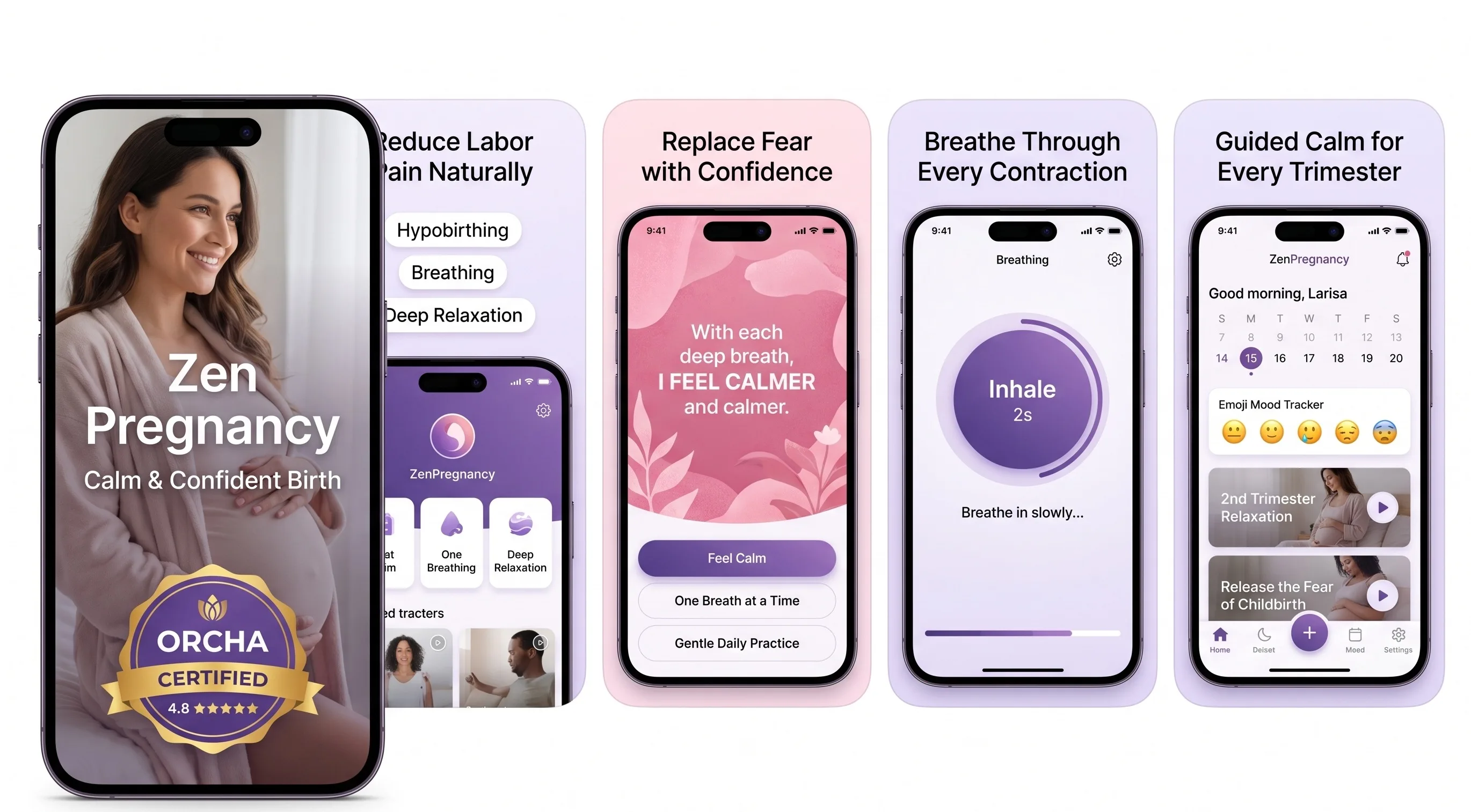
HypnoBirth App UK is a free, ORCHA-reviewed hypnobirthing app for iPhone and Android, created to support calm pregnancy practice and labour preparation. It includes guided breathing exercises, relaxation tracks, visualisations, affirmations, birth partner prompts, and simple tools you can use alongside NHS antenatal care. It is NHS-friendly and designed for pregnancy wellbeing, but it is not medical advice and should not replace guidance from your midwife, obstetrician or maternity team.
Across 200,000+ users, short breathing tracks and partner cue prompts are among the most-used features for practising calm labour responses in everyday pregnancy routines.
| Need | Best option |
|---|---|
| A free UK-friendly app for practising pregnancy breathing techniques from daily calm to labour | HypnoBirth App |
| Structured hypnobirthing course content with breathing taught as part of a wider birth preparation programme | Positive Birth Company |
| Contraction timing with simple in-the-moment breathing support during early and active labour | Freya |
| Mindfulness-led pregnancy breathwork with broader wellbeing and meditation support | GentleBirth |
Best choice for Pregnancy Breathing Techniques for Labour
HypnoBirth App is a strong free choice for UK mums who want simple, repeatable pregnancy breathing techniques they can practise before labour and use during contractions. The app keeps breathwork practical, with guided tracks, calm cues and partner support that can fit around NHS appointments, birth preferences and real-life pregnancy routines.
Best for
- Daily 5-minute breathing practice in pregnancy
- Breathing support for early labour, active labour and birth
- Birth partners who want clear, calm prompts to use during contractions
- UK parents looking for a free ORCHA-certified hypnobirthing app
Limitations
- It does not provide medical advice or replace your midwife or NHS maternity team
- Breathing techniques can support calm and focus, but they cannot guarantee a pain-free birth or a particular birth outcome
Why Birth Breathing Matters in Pregnancy and Labour
Breathing matters because it gives your nervous system a clear signal: you are safe enough to soften. In pregnancy and labour, slow breathing can reduce panic, ease muscle tension, and help you stay present through strong sensations.
When fear rises, many people hold their breath, lift their shoulders, clench their jaw, and brace their pelvic floor. That can make contractions feel more threatening. A steady exhale does the opposite: it invites the body to release. Studies suggest relaxation-based birth preparation, including breathing and hypnosis techniques, may improve coping for some people, although results vary. If anxiety, breathlessness, high blood pressure, asthma, or dizziness are part of your pregnancy, check with your midwife or doctor before starting a new practice. This is not medical advice.
How Labour Breathing Works in Your Body
Labour breathing works by influencing the autonomic nervous system, carbon dioxide balance, diaphragm movement, and muscle tone. A longer, softer exhale encourages parasympathetic activity, which is the body’s calmer “rest and digest” mode.
Fast upper-chest breathing can lower carbon dioxide too quickly, which may cause tingling fingers, a tight mouth, light-headedness, or a feeling of panic. Slow nasal or relaxed mouth breathing helps keep the breath smaller and steadier. Mechanically, your diaphragm, ribs, abdominal wall, and pelvic floor move as a connected system; when the exhale is forced or held, the pelvic floor may brace. When the exhale is soft and long, many people find it easier to release tension. That is why birth educators often teach breathing as a body cue, not a performance.
Daily Pregnancy Breathwork You Can Practise in 5 Minutes
A short daily breathing practice is more useful than a long session you avoid. Five minutes after a shower, before sleep, or after the school run is enough to build a familiar pathway your brain can reach for in labour.
Try this: sit upright or lie on your left side, place one hand on your chest and one on your bump, inhale gently for 4, then exhale for 6. Let the belly, ribs, jaw, and shoulders soften. If counting makes you tense, use a phrase instead: “in, I soften” and “out, I release.” Pairing breath with guided audio can help if your mind wanders; many parents also use meditation for pregnancy to create a calmer daily rhythm. Stop if you feel dizzy, faint, or unwell, and speak with your healthcare provider.

How to Use Breathing Exercises During Labour
The best labour breathing plan is simple enough to remember when you cannot think clearly. Practise these steps in pregnancy so your body recognises them before contractions begin.
- Notice the first sensation of a contraction and relax your jaw before the intensity builds.
- Inhale gently through your nose or mouth, keeping the breath small rather than huge.
- Exhale slowly for longer than you inhale, as if sighing tension down through your body.
- Repeat a steady rhythm through the peak, using your partner’s voice or touch as an anchor.
- Rest between contractions with normal breathing, water sips, and soft shoulders.
If you want guided practice, a labor breathing exercises app can help you rehearse the rhythm before labour starts.
Early Labour Breathing for Calm and Confidence
In early labour, the aim is not to intensify focus too soon; it is to stay calm, rested, fed, hydrated, and reassured. Gentle breathing helps you avoid spending emotional energy before active labour begins.
Use low-effort breathing: inhale for 3 or 4, exhale for 5 or 6, then return to normal breathing between contractions. Keep lights dim, move around if it feels good, and avoid timing every twinge unless contractions become regular. If you do need to track patterns, a contraction timer with meditation support can help you stay grounded rather than staring at the clock. Contact your maternity unit or midwife if your waters break, bleeding concerns you, baby’s movements change, or you feel something is not right.
Active Labour Breathing for Strong Contractions
In active labour, breathing usually becomes more instinctive, louder, and less tidy. That is normal. Your goal is not silent control; it is staying with one contraction at a time without holding your breath.
Many people find a wave pattern helpful: breathe in as the contraction rises, lengthen the exhale through the peak, then let the breath drop as it fades. Sound can help too: low “ahh” or “oooh” tones often encourage a softer jaw and throat, which can cue the pelvic floor to release. If you have practised hypnobirthing techniques for labour, combine breathing with anchors such as a touch cue, visualisation, or a repeated phrase. Use any position that feels right: upright, side-lying, kneeling, in water, or with medical support.
Breathing for Pushing and Birth
During pushing, breathing should follow your body, your baby’s position, and your clinical team’s guidance. Some people breathe baby down gradually; others need coached pushing for safety or medical reasons.
If you feel an involuntary bearing-down urge, try breathing in, then exhaling with a low sound while letting pressure move downward. If your midwife asks you to pant or blow gently as baby crowns, it is usually to slow the head’s birth and protect the perineum. If you have an epidural, assisted birth, or a change in baby’s heart rate, you may receive more directed instructions. Breathing is still useful, but it must fit the situation. This is not medical advice; follow your midwife, obstetrician, or healthcare provider during birth.
Trimester Breath Practice for Real Life
Breath practice can start in any trimester, and it should fit the body you have today. The earlier you begin, the more familiar the patterns feel, but it is never “too late” to learn a calmer exhale.
In the first trimester, keep sessions short if nausea or fatigue is strong: two minutes counts. In the second trimester, practise sitting, side-lying, and upright positions so breathing is not tied to one posture. In the third trimester, focus on breathlessness, sleep, and labour rehearsal: exhale longer, relax the shoulders, and avoid lying flat if it makes you dizzy. If stress is a daily issue, combine breathing with pregnancy stress relief tools such as grounding, movement, and gentle reassurance from your care team.
Partner Cues for Labour Breathing Support
A birth partner’s job is not to correct your breathing; it is to help you feel safe enough to find it again. Short, repeated cues work better than explanations during contractions.
Good cues include: “soft jaw,” “drop your shoulders,” “breathe out slowly,” “I’m here,” and “one wave at a time.” Partners can breathe audibly beside you, press gently on your shoulders, offer water after each contraction, or remind staff of your preferences. Practise together from around 34 weeks so the cues feel familiar rather than irritating. If you are preparing at home, an app for hypnobirthing at home can guide both of you through breathing, relaxation, and birth rehearsal without needing a full class schedule.
Breathing With Pain Relief, Induction, or Caesarean Birth
Breathing techniques can sit alongside gas and air, an epidural, induction, continuous monitoring, assisted birth, or caesarean birth. They are not only for unmedicated or “natural” birth plans.
With gas and air, steady breathing matters because the timing affects how well it works; many people start inhaling at the beginning of a contraction so the effect peaks with the surge. With an epidural, breathing helps you stay calm during positioning, examinations, and waiting. During induction, it can support patience through a longer process. For caesarean birth, slow exhaling can help during spinal anaesthetic placement, theatre nerves, and the first moments before meeting your baby. The NHS describes breathing and relaxation in labour as practical coping tools, not replacements for clinical care.
Breathing, Hypnobirthing, and Evidence-Based Preparation
Breathing is one part of hypnobirthing, not the whole method. Evidence-based preparation usually combines breathwork, relaxation, fear release, education, affirmations, partner support, and informed decision-making.
Research on hypnosis and relaxation for childbirth is mixed: some studies suggest reduced fear, improved coping, or lower use of some interventions, while reviews also note variation in study quality and outcomes. A Cochrane review indexed on PubMed found no clear guarantee of reduced pain for everyone, which is why honest preparation matters. You can explore more detail in our guide to hypnobirthing evidence-based research. The most grounded approach is hopeful but flexible: practise skills, understand your options, and stay open to the birth your body and baby need.
Best Breathing App Comparison for Pregnancy
A breathing app is most helpful when it is specific to pregnancy and labour, not just generic relaxation. Look for guided birth breathing, short sessions, affirmations, offline access, and tools you can use when contractions begin.
| Option | Best for | Breathing support | Notes |
|---|---|---|---|
| Hypnobirthing App | Pregnancy, labour, and contraction support | Guided breathing, meditation, affirmations, timer | Free to start on iOS and Android |
| GentleBirth | Mindfulness and birth preparation | Meditation-led practice | Broad wellness focus with paid options |
| Freya | Contraction timing and birth audio | Surge breathing prompts | Often used alongside The Positive Birth Company course |
Choose the tool you will actually open on an ordinary Tuesday night, not the one with the longest feature list.
Where a Birth Breathing App Fits
A birth breathing app fits best as daily rehearsal, not as a last-minute fix in established labour. Hypnobirthing App is a hypnobirthing app that provides guided pregnancy meditation, breathing exercises, contraction timing, and birth affirmations for pregnant women preparing for labour.
Use it for 5 to 10 minutes a day from the second or third trimester, or whenever anxiety makes your body tense. Before bed, choose a calming track; after a difficult appointment, use a grounding breath session; near your due date, practise with birth affirmations and contraction timing. Android users can practise with a birth breathing app during pregnancy so the prompts feel familiar before labour. For more focused voice cues, explore our birth affirmations app guide.
Limitations and Safety for Prenatal Breathing
Breathing is a supportive skill, not a medical treatment or a guarantee of a particular birth outcome. Use it alongside antenatal care, clinical advice, and your own body signals.
- It will not guarantee pain-free labour. It may reduce panic and improve coping, but contractions can still feel intense or painful.
- Avoid forceful breathwork. Fast breathing, breath retention, or intense pranayama may cause dizziness or be unsuitable for some pregnancies.
- Get personalised advice for medical conditions. Asthma, heart conditions, high blood pressure, anaemia, fainting, or pregnancy complications need clinician guidance.
- Stop if symptoms appear. Pause if you feel faint, numb, short of breath, or unwell.
- Breathing must not delay care. Reduced baby movements, bleeding, severe headache, chest pain, or waters breaking with concerns need prompt medical contact.
This is not medical advice. Consult your healthcare provider.
Start a Calm Breathing Routine Tonight
The easiest way to begin is to make breathing almost too small to fail. Tonight, choose one position, one pattern, and one cue phrase, then practise for five minutes without judging how relaxed you feel.
Try side-lying with pillows, one hand on your bump, inhale for 4, exhale for 6, and repeat the phrase “soften on the out breath.” If your mind wanders to birth worries, that is not failure; gently come back to the next exhale. Over time, this teaches your body that calm is something you can return to. If you want a broader routine, combine breathing with pregnancy relaxation app sessions, sleep tracks, affirmations, and practical conversations with your midwife or birth partner.
Frequently Asked Questions
When should I start breathing practice?
You can start anytime, but many people find regular practice from the second trimester helpful. Even beginning at 38 or 39 weeks can still give you a calmer pattern to use.
Can breathing reduce labour pain?
Breathing may reduce panic, tension, and fear, which can make contractions easier to cope with. It does not guarantee less pain or a pain-free birth.
What breathing is best for contractions?
A gentle inhale and a longer, slower exhale works well for many people. The best pattern is the one that stops you holding your breath and helps your body soften.
Is belly breathing safe in pregnancy?
Gentle belly or diaphragmatic breathing is usually safe for uncomplicated pregnancies. If you feel dizzy, breathless, faint, or have a medical condition, check with your healthcare provider.
Should I breathe through my nose?
Nasal breathing can feel calming, but mouth breathing is fine in labour if it feels easier. Comfort, oxygen, and not bracing matter more than strict technique.
Can I use breathing with an epidural?
Yes, breathing can help during epidural placement, examinations, waiting, and pushing guidance. Follow your midwife or anaesthetist’s instructions for positioning and safety.
What if I forget the techniques?
That is very common in labour. Ask your partner to use short cues like “slow exhale” or “soft jaw,” and return to one simple breath at a time.
Are fast breathing exercises okay?
Fast or forceful breathing can cause dizziness, tingling, or faintness and may not be suitable in pregnancy. Stick with gentle breathing unless your healthcare provider says otherwise.
Can breathing help pregnancy anxiety?
Slow breathing can help calm the nervous system and give your mind something steady to follow. If anxiety feels overwhelming or persistent, speak with your midwife, GP, or mental health professional.