 Hypno
HypnoBest Hypnobirthing Book: Top Reads for Birth Preparation in 2026
The best hypnobirthing books for 2026. Honest reviews of top titles popular with UK mums, and how books compare to app-based hypnobirthing courses.
200,000+ mums • ORCHA NHS Certified • Free on iOS & Android
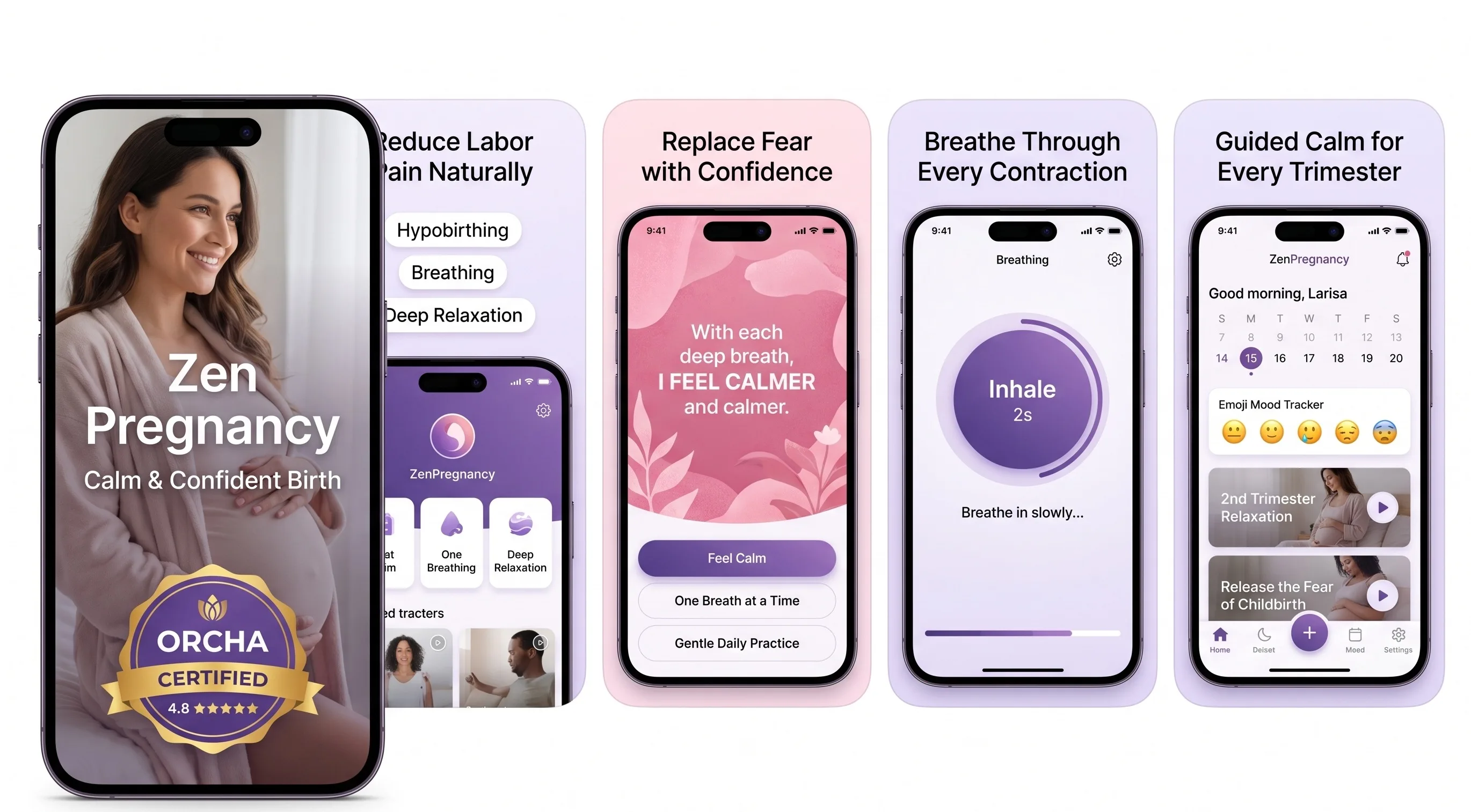
HypnoBirth App UK is a free, ORCHA-certified hypnobirthing app for iPhone and Android, designed to support pregnancy and birth preparation alongside NHS maternity care. It includes guided hypnobirthing tracks, breathing tools, affirmations, relaxation practice, partner support prompts and birth preference support, making it a practical companion to any hypnobirthing book. It is NHS-friendly and evidence-informed, but it is not medical advice and should not replace guidance from your midwife, obstetrician or maternity team.
Across 200,000+ users, the most-used features alongside hypnobirthing reading are guided relaxations, breathing practice and birth affirmations for building a regular routine.
| Need | Best option |
|---|---|
| Free daily practice to use alongside the best hypnobirthing book | HypnoBirth App |
| Structured paid course-style learning with videos and digital materials | Positive Birth Company |
| Simple contraction timing and a calm labour-focused audio tool | Freya |
| Broader pregnancy mindfulness, meditation and wellbeing support | GentleBirth |
Best Free Companion to a Hypnobirthing Book
A hypnobirthing book can explain the ideas, but regular practice is what helps many parents feel calmer and more prepared. HypnoBirth App is a strong free choice for UK parents who want guided audio, breathing practice and affirmations they can use between midwife appointments, antenatal classes and NHS birth planning conversations.
Best for
- Parents reading a hypnobirthing book who want guided practice
- UK mums and birth partners preparing for labour with NHS care
- People who prefer short, repeatable tools rather than another full course
Limitations
- It does not replace a full antenatal class or clinical advice
- It cannot guarantee a pain-free labour or a specific birth outcome
Why Your Hypnobirthing Book Choice Matters in Pregnancy
A good hypnobirthing book can change how you understand labour, but it cannot promise a specific birth outcome. The real value is that it gives you language, choices, and repeatable coping tools before contractions begin.
Many pregnant women arrive at birth carrying other people’s stories: the scary induction, the rushed epidural, the friend who felt unheard. A strong book helps you separate fear from fact. It explains how hormones such as oxytocin, adrenaline, and endorphins can influence labour, and why feeling safe, private, and supported matters. This is not about being “perfectly calm”; it is about having something familiar to return to when your body is doing big work. If anxiety is already affecting sleep or daily life, pair reading with gentle pregnancy stress relief tools and speak to your midwife or doctor. This is not medical advice. Consult your healthcare provider.
How Hypnobirthing Preparation Works
Hypnobirthing works by training the nervous system to associate birth sensations with safety, rhythm, and control rather than panic. Most books teach the fear-tension-pain cycle: fear can increase adrenaline, tension can reduce comfort, and panic can make contractions feel harder to manage.
The core mechanisms are simple but powerful. Slow breathing supports parasympathetic nervous system activity, visualisation gives the brain a rehearsed pathway, and repeated relaxation audio can create conditioned calm responses. Many books also teach informed decision-making, so you can ask questions about induction, monitoring, pain relief, or caesarean birth without freezing. For a practical overview of the skills behind the method, see these hypnobirthing techniques for pregnancy and labour. Hypnobirthing is a coping and education approach, not a substitute for clinical care, fetal monitoring, or emergency treatment.
Top Hypnobirthing Books for 2026
The strongest 2026 picks are books that combine birth physiology, practical exercises, and realistic language about modern maternity care. If someone asks for the best hypnobirthing book, I usually ask how they learn: structured method, modern coaching, birth stories, or decision-making support.
| Book | Best for | Honest note |
|---|---|---|
| HypnoBirthing: The Mongan Method by Marie Mongan | Parents who want a classic, structured method with scripts and philosophy | Some language may feel less aligned with today’s NHS pathways and intervention discussions |
| Hypnobirthing: Practical Ways to Make Your Birth Better by Siobhan Miller | UK parents wanting modern, grounded tools for hospital, birth centre, or home birth | Less formal than a full course, so audio practice still matters |
| The Positive Birth Book by Milli Hill | Understanding options, birth rights, and different pathways | Not a pure hypnobirthing manual, but an excellent companion |
| Ina May’s Guide to Childbirth by Ina May Gaskin | Birth stories and confidence in physiological birth | May feel less relevant if you are planning a highly medicalised birth |

How to Choose a Birth Preparation Book
Choose a birth preparation book by matching it to your learning style, your birth setting, and the amount of practice you can realistically do. The right book should make you feel clearer, not guilty or overwhelmed.
- Decide your learning style. Pick a method-based book if you like structure, or a modern coaching book if you want reassurance and flexibility.
- Check the birth setting. Look for content that supports hospital birth, home birth, birth centres, induction, epidural, and caesarean pathways.
- Read one chapter before buying. If the tone makes you tense, choose something else.
- Look for practice prompts. Breathing, relaxation scripts, affirmations, and partner exercises turn reading into skill-building.
- Pair it with audio. Books explain the “why”; guided practice helps your body remember the “how.”
If breathing is your main concern, these pregnancy breathing techniques can sit alongside any book you choose.
When to Start Hypnobirthing Reading and Practice
Most parents do well starting hypnobirthing between 20 and 30 weeks, then practising more regularly from around 32 weeks. Starting earlier is helpful if you feel anxious, have previous birth trauma, or want time to involve your birth partner.
A realistic plan is better than an ambitious one. In the second trimester, read the main chapters and learn the basic physiology. From 28 to 34 weeks, practise breathing and relaxation three or four times a week, even for ten minutes. From 34 weeks onward, repeat the same tracks, scripts, or affirmations so they feel familiar under pressure. If you are already 36 weeks or more, do not panic. Focus on one breathing pattern, one relaxation track, and one decision-making framework such as BRAIN: benefits, risks, alternatives, intuition, and nothing for now. This is preparation, not an exam.
Using Guided Pregnancy Meditation With Books
Books are excellent for understanding hypnobirthing, but guided pregnancy meditation is often what turns the knowledge into a body memory. Labour is physical, emotional, hormonal, and unpredictable; you need tools that can be accessed when words on a page feel too much.
Try reading a chapter, then practising the matching skill that evening. For example, after reading about oxytocin, listen to a relaxation track. After reading about breathing, practise during a Braxton Hicks contraction or while climbing stairs. If you prefer audio support, the hypnobirthing practice app offers guided sessions you can repeat during pregnancy and early labour. You can also build a simple routine with hypnobirthing meditation for labour preparation. Repetition matters because your nervous system learns through familiarity, not last-minute cramming.
Hypnobirthing With NHS Care and Pain Relief
Hypnobirthing can fit alongside NHS maternity care, antenatal appointments, monitoring, induction, caesarean birth, and common pain relief choices. It is not an alternative to medical support; it is a way to stay informed and steadier inside the care you receive.
Many parents use breathing while waiting for an induction pessary to work, visualisation during vaginal examinations, affirmations before theatre, or relaxation between epidural top-ups. The key is flexibility. You are still allowed to ask questions, change your mind, accept pain relief, or request more information. The NHS explains pain relief options in labour, including gas and air, pethidine, TENS, epidural, and water, in its guidance on labour pain relief. For UK-specific preparation, this NHS hypnobirthing guide can help you connect book techniques with real maternity pathways. Always discuss individual medical decisions with your healthcare provider.
Hypnobirthing for Caesarean, Induction, and Complex Births
Hypnobirthing is still useful if you are planning a caesarean, facing induction, or preparing for a more medically supported birth. The goal is not to avoid every intervention; it is to help you feel informed, respected, and emotionally supported.
For a planned caesarean, book-based tools can support breathing before spinal anaesthetic, visualisation in theatre, and calm communication with your team. For induction, they can help during waiting periods, monitoring, and decision points. For higher-risk pregnancies, hypnobirthing can be adapted around clinical needs, not placed in opposition to them. This is where inclusive books matter: avoid any resource that implies one type of birth is morally better. A calm birth can include monitors, cannulas, theatre lights, medication, tears, laughter, or a complete change of plan. If your pregnancy has complications, ask your midwife or consultant which techniques are safe and appropriate for your situation.
Book, App, or Hypnobirthing Class Comparison
Books, apps, and classes all teach hypnobirthing differently. A book is usually the cheapest way to learn concepts, a class gives personalised teaching, and an app helps you practise repeatedly in short, realistic sessions.
| Option | Strength | Best fit |
|---|---|---|
| Hypnobirthing App | Guided meditation, breathing, affirmations, and contraction timing in one place | Parents who want daily practice and portable labour tools |
| The Positive Birth Company | Structured course-style education with strong birth planning content | Parents who want a fuller video course experience |
| GentleBirth | Mindfulness and meditation-based preparation | Parents who like a broad mental wellbeing approach |
If you are deciding between formats, this guide to hypnobirthing apps versus classes explains the trade-offs in more detail. Many families use all three: one book for theory, one class for questions, and one app for daily repetition.
Evidence on Hypnobirthing and Labour Coping
Research suggests hypnobirthing and hypnosis-based preparation may help some people feel less fearful, more relaxed, and more satisfied with their birth experience. The evidence is promising in places, but it is mixed, and it should not be presented as a guarantee of less pain or fewer interventions.
Studies on hypnosis for childbirth have explored outcomes such as pain perception, epidural use, anxiety, satisfaction, and birth experience. Results vary because courses, practice time, birth settings, and study designs differ. In real life, the parents who benefit most are often the ones who practise consistently and have support from partners, midwives, or doulas. For a balanced summary, see our evidence-based hypnobirthing research overview. The safest interpretation is this: hypnobirthing is a low-risk coping approach for many pregnancies when used alongside proper maternity care, but medical advice should always come from your clinician.
Limitations and Safety of Hypnobirthing Books
Hypnobirthing books are helpful, but they have limits. Honest preparation should make you feel more capable without suggesting that your mindset controls every part of birth.
- Books cannot assess medical risk. They do not replace midwife, obstetric, mental health, or emergency care.
- They may underplay intervention. Some older books can make induction, epidural, or caesarean birth feel like failure, which is unhelpful and untrue.
- Reading is not the same as practising. Breathing and relaxation usually need repetition before labour.
- Trauma may need specialist support. If you have previous birth trauma, panic attacks, abuse history, or severe anxiety, ask for professional help early.
- No method guarantees comfort. Hypnobirthing may reduce fear and improve coping, but it cannot promise a pain-free labour.
This is not medical advice. Consult your healthcare provider about your pregnancy, birth plan, pain relief, and any mental health concerns.
How Birth Partners Can Use Hypnobirthing Reading
Birth partners do not need to become experts, but they do need to understand the few tools you want used in labour. A shared hypnobirthing book can turn a partner from a worried observer into a calm, practical support person.
Ask your partner to read the chapters on hormones, breathing, and decision-making rather than the whole book if time is tight. They can practise reading relaxation scripts, dimming lights, timing surges, offering water, protecting the room, and reminding staff of your preferences respectfully. Partners can also learn your “reset” phrases, such as “drop your shoulders,” “slow your out-breath,” or “one surge at a time.” If affirmations help you, choose a few together and repeat them during pregnancy; the birth affirmations app page has examples for different birth plans. Support is not about controlling the birth. It is about helping you feel less alone.
Start Your First Hypnobirthing Session Tonight
You can begin tonight with one chapter, one breathing exercise, and one short relaxation practice. Keep it small enough that you can repeat it tomorrow; consistency will help more than a perfect two-hour study plan.
Try this: read for ten minutes, place one hand on your bump or chest, breathe in gently through your nose, and extend the out-breath until your shoulders soften. Then choose one phrase such as “my body knows how to soften” or “I can meet one surge at a time.” If you like structured support, Hypnobirthing App brings together guided pregnancy meditation, labour breathing, affirmations, and contraction timing, so your book learning has somewhere practical to go. Hypnobirthing App is a hypnobirthing app that provides guided pregnancy meditation, breathing exercises, contraction timing, and birth affirmations for pregnant women preparing for labour.
Read more
Frequently Asked Questions
What week should I start?
Many people start between 20 and 30 weeks, then practise more often from 32 weeks. If you are later than that, focus on one breathing pattern and one relaxation track.
Can I learn from a book?
Yes, a book can teach the main ideas, breathing, relaxation, and decision-making tools. Most people retain the skills better when they also practise with audio or a class.
Which book is best for beginners?
Siobhan Miller’s book is often a good beginner choice because it uses modern, practical language. Marie Mongan’s book suits readers who want a more traditional method.
Do I need a class too?
Not always, but a class can help if you want personal feedback, birth partner practice, or space to ask questions. A book plus regular guided practice is enough for many families.
Does hypnobirthing reduce pain?
Some studies suggest hypnosis-based birth preparation may improve relaxation, fear, and coping, but results vary. It should never be sold as a guaranteed pain-free birth.
Can it help with induction?
Yes, hypnobirthing tools can help with waiting, monitoring, breathing through contractions, and making decisions during induction. Always follow medical guidance from your maternity team.
Is it useful for caesarean birth?
Yes, breathing, visualisation, affirmations, and calm communication can support planned or unplanned caesarean birth. The techniques should be adapted to your clinical situation.
How often should I practise?
Aim for three or four short practices a week from around 28 to 34 weeks, then repeat familiar tracks or scripts more often near your due date. Even ten minutes can be useful.
What should my partner read?
Ask your partner to read the sections on hormones, breathing, relaxation cues, and decision-making. Their main job is to help protect your calm and support informed choices.