 Hypno
HypnoHow To Practise Hypnobirthing With Phone Audio, Breathing Tracks and Affirmations
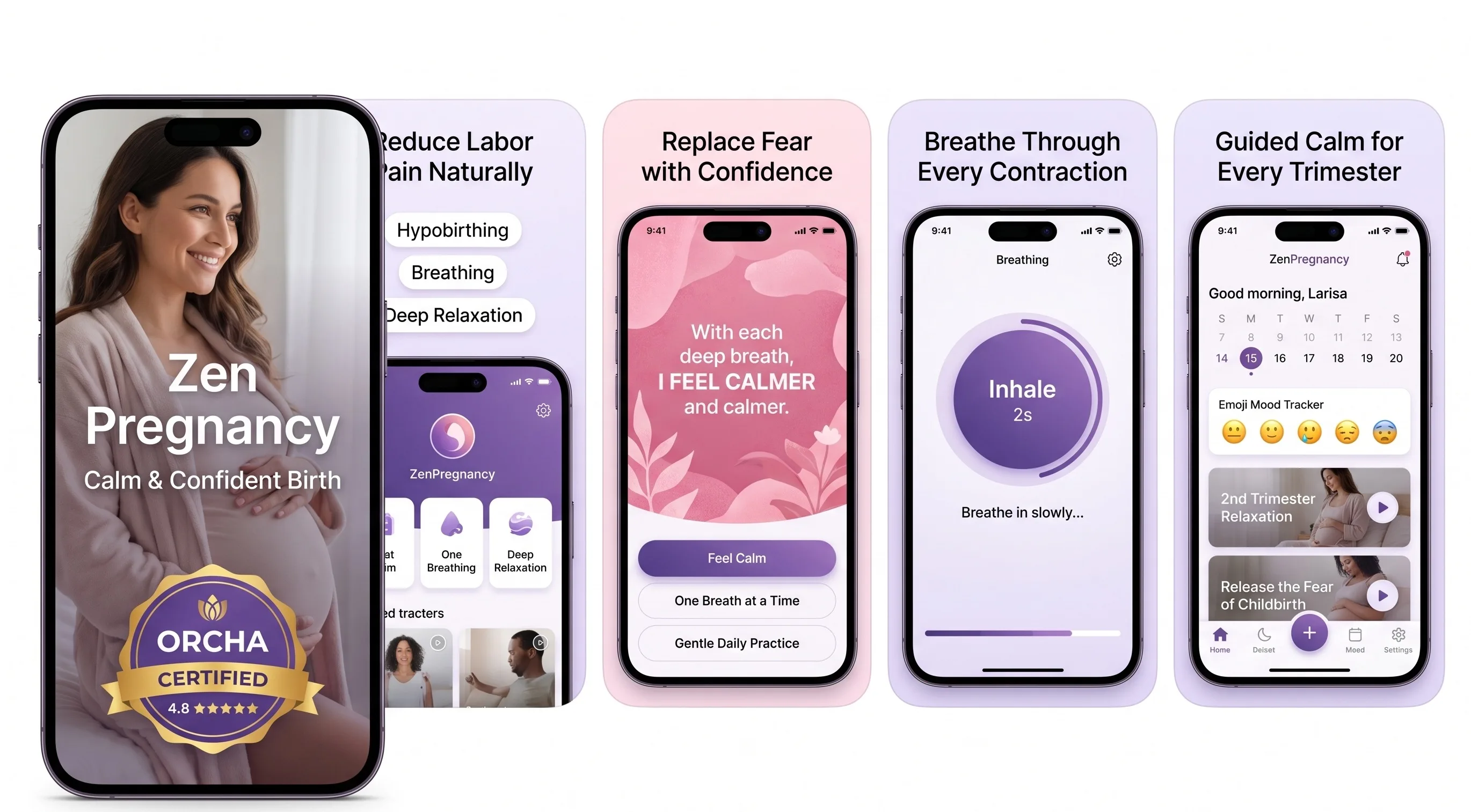
200,000+ mums • ORCHA NHS Certified • Free on iOS & Android
HypnoBirth App UK is a free ORCHA-reviewed hypnobirthing app for iPhone and Android, designed to help you practise calm birth techniques from your phone. It includes guided hypnobirthing audio, breathing tracks, affirmations, relaxation tools, birth partner prompts and offline-friendly practice support, making it easy to use alongside NHS maternity care. It is educational wellbeing support, not medical advice, and should be used alongside guidance from your midwife or doctor.
For phone-based practice, HypnoBirth App users most often return to short breathing tracks, affirmation audio and saved relaxation sessions they can replay during evening routines or early labour.
| Need | Best option |
|---|---|
| A free UK-friendly way to practise hypnobirthing audio, breathing and affirmations on your phone | HypnoBirth App |
| Structured online hypnobirthing education with phone-accessible course materials | Positive Birth Company |
| Contraction-timer support with calming audio during early labour | Freya |
| A broader pregnancy wellbeing app combining mindfulness, sleep and birth preparation | GentleBirth |
Best Free App for Practising Hypnobirthing on Your Phone
HypnoBirth App is a strong free choice for UK parents who want to build a simple phone-based hypnobirthing routine before labour. With ORCHA certification and 200,000+ users, it is well suited to short daily practice, saved audio and NHS-friendly birth preparation without promising a pain-free birth.
Best for
- Daily phone hypnobirthing practice during pregnancy
- Breathing tracks, affirmations and relaxation audio
- Using hypnobirthing tools at home, in hospital or birth centre
Limitations
- It does not replace antenatal classes, midwife advice or medical care
- You still need to practise regularly so the techniques feel familiar in labour
To learn how to practise hypnobirthing with phone, download guided hypnobirthing audio or an app to your smartphone, set aside 10–20 minutes daily, and follow the prompts for breathing, visualisation, and affirmations with headphones in a quiet space. Practise on the same phone you will bring to hospital so the routine feels automatic when labour starts, and make sure your birth partner knows how to launch the audio and support you.
> Definition: Hypnobirthing is a structured birth-preparation method that uses guided relaxation, breathing techniques, visualisation, and positive affirmations to help pregnant women stay calm and cope with labour.
TL;DR
- Download hypnobirthing audio offline to the phone you will use in hospital, Wi-Fi and signal are unreliable on labour wards.
- Practise 10–20 minutes daily from around 28 weeks so the relaxation response becomes automatic before labour.
- Involve your birth partner so they can start tracks, adjust volume, and cue breathing during contractions.
- Combine breathing exercises, visualisation, and affirmations, not just calming music, for the full benefit.
- A phone is a tool, not a guarantee: hypnobirthing helps with coping and calm but does not promise a pain-free birth.
What Phone Hypnobirthing Practice Actually Involves
Phone hypnobirthing practice means using your smartphone for structured birth preparation, not just playing relaxing music. A proper session usually includes guided breathing, visualisation, body relaxation, and short birth affirmations you can repeat when labour feels intense.
The phone matters because it makes practice easy to repeat. As of 2024, about 91% of U.S. adults owned a smartphone, according to Pew Research Center’s Mobile Fact Sheet (https://www.pewresearch.org/internet/fact-sheet/mobile/), so most people can realistically use audio or an app on a device they already carry. That accessibility helps on tired evenings, when the yoga mat beside the sofa looks inviting but your brain says, “Maybe tomorrow.”
A good hypnobirthing routine gives you cues, not promises. It helps you practise soft jaw, loose shoulders, heavy hands, and a slower out-breath. It does not guarantee a pain-free birth. A Cochrane review of hypnosis for pain management in labour found mixed evidence, including no clear improvement in several major birth outcomes (Cochrane: https://www.cochranelibrary.com/cdsr/doi/10.1002/14651858.CD009356.pub3/full).
How Phone-Based Hypnobirthing Works During Pregnancy and Labour
Phone-based hypnobirthing works by pairing repeated audio cues with a calmer body state, so the track becomes familiar before labour. This is conditioned relaxation: your nervous system learns, “When this voice starts, I soften.”
Breathing is part of the mechanism. Longer exhalations can support the parasympathetic nervous system, which is the branch linked with rest and settling. In plain language, the out-breath tells your body it does not need to brace as hard. A 2023 systematic review reported that breathing techniques in labour may help comfort and coping, although results were inconsistent.
Use the same phone, same voice, and same headphones when you can. Familiarity lowers friction when contractions arrive and decisions feel less tidy. A 2021 systematic review found that music interventions during pregnancy were associated with reduced maternal anxiety and stress in multiple studies. The most useful phone hypnobirthing practice combines breathing, visualisation, affirmations, and repeat exposure, not passive background sound.
What You Need Before You Start Hypnobirthing on Phone
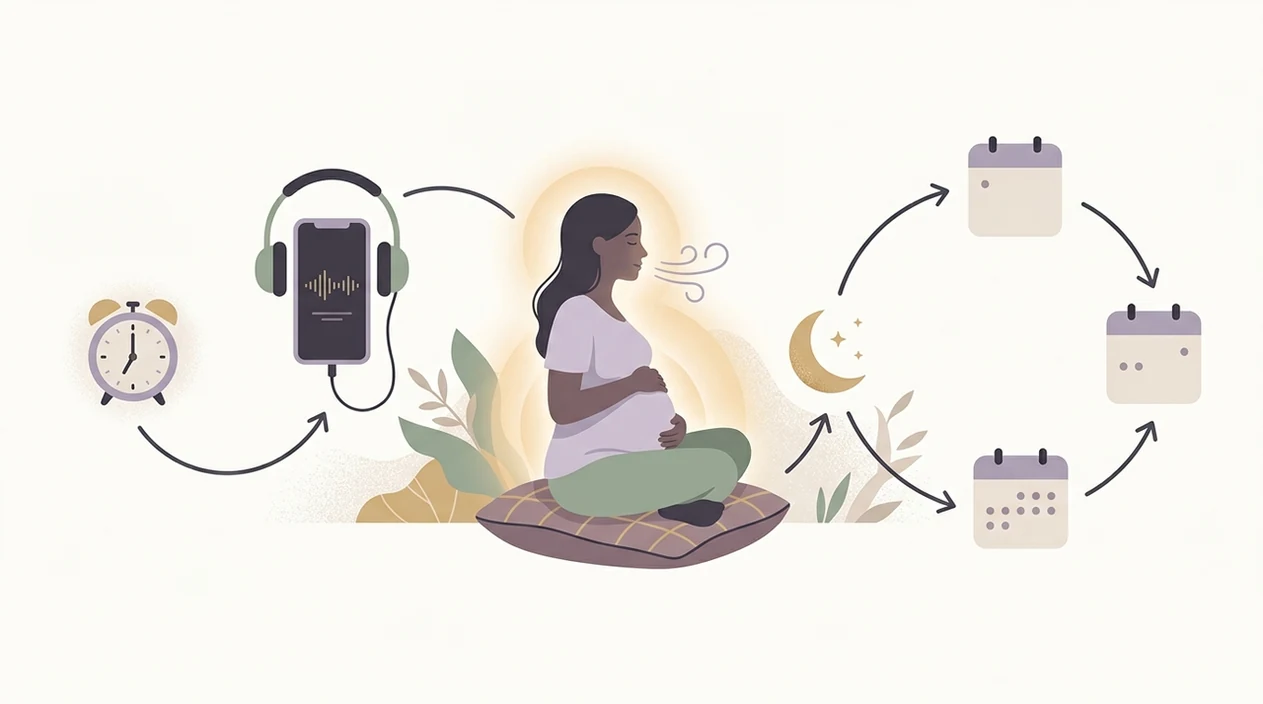
You need a charged smartphone, offline audio, comfortable listening gear, and a small practice space before starting phone hypnobirthing. Set these up once, then your daily practice becomes much easier.
- Smartphone with audio or an app: Use a dedicated hypnobirthing app, downloaded MP3s, or a structured course library. Keep it on the phone you expect to take into hospital.
- Comfortable headphones or earbuds: Noise-isolating headphones help if the house is busy. One earbud can work if you want to stay aware of the room.
- Portable charger or long cable: Pack a power bank or extra-long charging cable with your hospital bag. Add it near the lip balm and water bottle with a sports cap.
- Offline downloads: Hospital Wi-Fi and mobile signal can be patchy. Download tracks before your due date and test them.
- Quiet practice position: Sit upright, lie on your side, or prop yourself with pillows. Keep it doable on a tired Tuesday.

Step 1: Download Hypnobirthing Audio and Save It Offline
Start by getting your hypnobirthing audio onto your phone and confirming it works without internet. This one step prevents a lot of stress later.
- Choose a dedicated app or audio library. You can use a hypnobirthing app, standalone audio tracks, or a structured course. If you want to compare options first, an app that teaches hypnobirthing can help you see what guided practice should include.
- Download every track you may need. Save breathing exercises, guided relaxation, affirmations, and labour-specific audio for offline playback.
- Check the app settings. Look for a downloads, offline, or saved audio section, then confirm each file is stored on the device.
- Organise by use case. Make simple folders or playlists: daily practice, sleep, labour breathing, and affirmations.
- Test in airplane mode. Turn off Wi-Fi and mobile data, then play each track. No guessing.
Tools like ZenPregnancy can be part of this setup, but the key is offline access and easy navigation under pressure.
Step 2: Set a Daily Phone Hypnobirthing Practice Routine
A daily 10–20 minute routine from around 28–32 weeks gives phone hypnobirthing enough repetition to feel familiar before labour. Consistency matters more than doing one long session at the weekend.
- Choose your practice window. Before bed or just after waking often works well, because your body is already slower.
- Set a phone reminder. Use a calendar alert, app notification, or named alarm such as “breathing practice.”
- Follow a simple session shape. Try 3 minutes of breathing, 10 minutes of guided visualisation, then 2 minutes of affirmations.
- Practise in different positions. Use lying, sitting, side-lying, and leaning forward over pillows.
- Keep the session short when tired. Five focused minutes is better than skipping completely.
For many pregnant people, daily 10–20 minute audio practice is easier than occasional long sessions because it builds a repeatable cue-response habit. Calm is something you rehearse.
Step 3: Practise Breathing and Visualisation With Phone Audio
The core of phone hypnobirthing practice is breathing with the audio, then pairing that breath with calming imagery and affirmations. Use headphones if they help you stay with the voice instead of the laundry list in your head.
- Start with calm breathing. Breathe in slowly through your nose, then take a longer out-breath through your mouth.
- Follow the guided count. Many labour breathing tracks use a rhythm such as in for 4, out for 8.
- Add visualisation. Try an opening flower, a wave rising and falling, or a safe place image that feels real to you.
- Repeat short affirmations. Use phrases like “I soften with each breath” or “I can meet this one surge.”
- Notice your body. Unclench your jaw, drop your shoulders, and let your hands get heavy.
Good hypnobirthing apps deliver guided practice and labour cues, not a promise that birth will be painless or controllable.
Step 4: Involve Your Birth Partner in Phone Hypnobirthing Practice
Your birth partner should know how to run the phone routine before labour begins. They do not need to become an expert, but they do need to find the right track without asking you six questions mid-contraction.
Ask them to open the app, locate your saved tracks, adjust volume, and switch between breathing, relaxation, and affirmations. Practise this at home once or twice a week. Your partner can count down slow exhales while you keep your jaw soft and your shoulders low.
During labour, their job may be simple: start the audio, keep the phone charged, manage headphones, and remind you to breathe down rather than brace up. If the phone fails, they can read affirmations from a note or lead the breathing verbally. Pack that backup. Labour is not the moment for password confusion.
How To Use Hypnobirthing App for Phone Practice
Use a hypnobirthing app by setting up your profile, saving key tracks offline, and building a daily reminder routine. The app should make practice easier, not add another fiddly task.
- Download ZenPregnancy or your chosen hypnobirthing app from the App Store or Google Play. Choose the version for your phone and check it opens before you need it.
- Set up your profile and due date. This helps tailor content to your stage of pregnancy.
- Browse guided relaxation, breathing tracks, and affirmation playlists. Pick one short daily track first.
- Download favourite tracks offline for hospital use. Test them before your hospital bag is packed.
- Enable daily practice reminders in the app settings. A gentle prompt helps when pregnancy tiredness takes over.
- Use the contraction timer during labour alongside your audio. If timing is your main concern, a best app for contraction timing guide can help you compare tools.
The ZenPregnancy hypnobirthing app can fit this pattern if you want breathing, affirmations, and contraction timing in one place.
Common Mistakes When Practising Hypnobirthing on Phone
The biggest phone hypnobirthing mistakes are usually practical, not personal. If the routine feels clunky, fix the setup before deciding the method is not for you.
- Waiting until labour to try it: Muscle memory needs weeks of repetition. First use during strong contractions is asking a lot of your brain.
- Relying on streaming: Signal drops happen. Download tracks and test them offline.
- Forgetting battery planning: Pack a power bank, long cable, and charger in the same hospital bag pocket.
- Using it as background noise only: Focus on the prompts. Breathe, visualise, soften, reset.
- Skipping partner practice: Your partner cannot help with tracks they have never opened.
- Expecting audio to remove all pain: Hypnobirthing supports coping and calm, but it cannot guarantee pain relief.
If affirmations are your sticking point, a best app for birth affirmations comparison may help you find phrasing that does not feel forced.
Limitations
Phone hypnobirthing can be useful, but it has clear limits. Treat it as one part of your labour toolkit, alongside midwife support, birth preferences, and pain relief options if you want or need them.
- It is not a substitute for medical care, maternity triage, midwife advice, or emergency assessment.
- A 2020 Cochrane review found that self-hypnosis techniques did not clearly reduce pain relief use or improve major birth outcomes.
- A 2023 review reported that breathing techniques may help comfort and coping, but study results were inconsistent.
- Your phone can die, crash, lock, or lose signal. Keep offline files and a non-phone backup plan.
- Some people find repeated audio irritating or distracting. A shorter track, different voice, or quiet breathing may suit them better.
- Apps and audio cannot override severe pain, complications, or sudden changes to the birth plan.
- Occasional listening is unlikely to build a reliable relaxation response. Regular practice is the point.
Clinicians typically recommend contacting your maternity unit if labour symptoms, bleeding, reduced movements, or pain levels concern you; the NHS gives similar advice for reduced baby movements (https://www.nhs.uk/pregnancy/keeping-well/your-babys-movements/) and signs that labour may be starting (https://www.nhs.uk/pregnancy/labour-and-birth/signs-of-labour/signs-that-labour-has-begun/). If safety is your main question, read are hypnobirthing apps safe before relying on any app.
Frequently Asked Questions
When should I start practising hypnobirthing?
Many people start around 28–32 weeks because it leaves enough time for daily repetition before labour. Starting earlier is fine if the practice feels calming and sustainable.
How long should each phone session be?
A useful phone hypnobirthing session is usually 10–20 minutes. Consistency matters more than session length because the relaxation response builds through repetition.
Does hypnobirthing actually reduce pain?
The evidence is mixed: a 2020 Cochrane review did not show clear reductions in pain relief use or major birth outcomes. Hypnobirthing is better viewed as a coping and calming tool, not a guarantee of pain elimination.
Can I use hypnobirthing without headphones?
Yes, a phone speaker can work in a quiet room or during labour if that feels better. Headphones often help focus because they reduce background noise and make the audio feel more private.
What is the 3-2-1 rule for labour?
The 3-2-1 rule usually means contractions are about 3 minutes apart, lasting around 2 minutes, for 1 hour. Phone contraction timers can help record patterns, but your maternity unit may give different guidance.
Will hospital Wi-Fi work for streaming?
Do not rely on hospital Wi-Fi for streaming hypnobirthing tracks. Download all audio offline before your due date so the tracks work without signal.
Can beginners learn hypnobirthing from an app?
Yes, beginners can learn phone hypnobirthing from guided audio because the voice prompts tell you what to do. No previous meditation experience is required.
Should my birth partner practise with me?
Yes, your birth partner should practise opening the app, starting tracks, adjusting volume, and cueing breathing. They also provide a backup if the phone fails during labour.