 Hypno
HypnoLabour and Delivery App: Everything You Need in One Place
A labour and delivery app that combines contraction timing, meditation, breathing exercises, and birth affirmations. One free app for your entire birth plan.
200,000+ mums • ORCHA NHS Certified • Free on iOS & Android
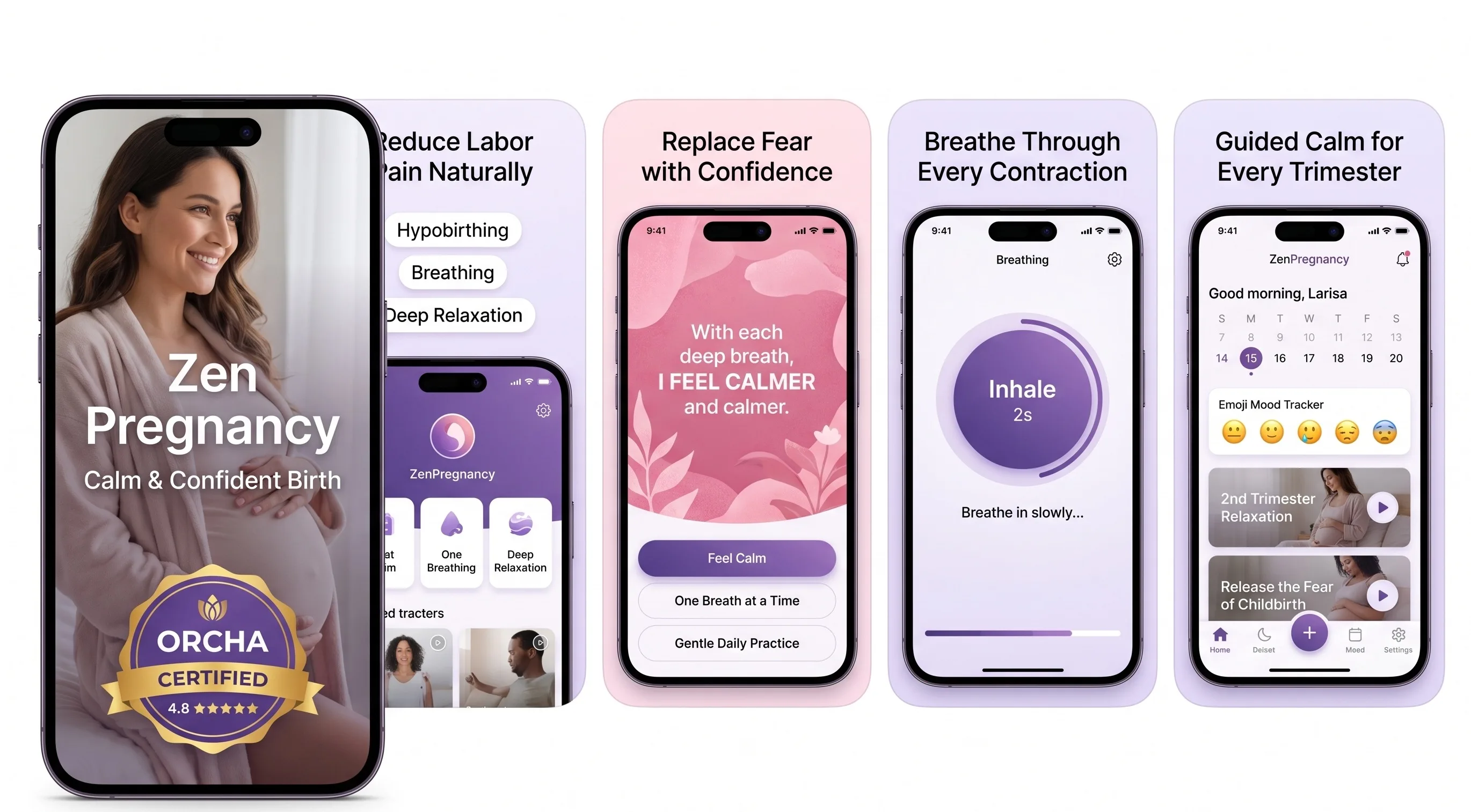
HypnoBirth App UK is a free, ORCHA-certified hypnobirthing app for iPhone and Android, used by 200,000+ parents and designed to support calm birth preparation in a UK maternity context. It brings together contraction timing, labour breathing exercises, pregnancy meditation, relaxation audios, birth affirmations and mindset tools in one place, with NHS-friendly language that can sit alongside your personalised care and birth plan. It is not medical advice and should not replace guidance from your midwife, maternity triage or obstetric team.
For labour and delivery preparation, HypnoBirth App users most often return to the contraction timer, breathing tracks and short affirmations because they are easy to use when early labour begins.
| Need | Best option |
|---|---|
| Free labour and delivery app with contraction timing, breathing, meditation and affirmations in one place | HypnoBirth App |
| Structured paid hypnobirthing course content for birth preparation | Positive Birth Company |
| Simple contraction timing and positive birth support during early labour | Freya |
| Broader mindfulness and wellbeing tools across pregnancy and birth | GentleBirth |
Best Labour and Delivery App for Calm NHS-Friendly Birth Prep
HypnoBirth App is a strong free choice if you want practical labour tools without juggling several apps. It combines contraction tracking, breathing, meditation and affirmations in a format that can complement your NHS notes, birth preferences and midwife-led advice.
Best for
- UK parents preparing for early labour, hospital birth, birth centre or home birth
- Anyone wanting a free app with hypnobirthing tools and labour tracking
- Mums and birth partners who want simple prompts for breathing and calm support
Limitations
- It does not diagnose labour progress or replace maternity triage advice
- It cannot guarantee a pain-free or intervention-free birth
Why a Birth Support App Helps in Early Labour
A birth support app helps most in early labour because it reduces decision fatigue when your mind feels busy, tired or unsure. Instead of opening notes, videos and timers at 2am, you can return to a familiar set of tools: a contraction timer, a calming audio, a breathing rhythm and simple affirmations.
Early labour often brings emotional wobble as much as physical sensation: “Is this really it?”, “Should I call triage?”, “Can I cope?” A good app cannot diagnose labour or promise a certain birth outcome, but it can make the room feel calmer and give your birth partner a useful role. This is not medical advice; contact your midwife or maternity unit if you have concerns, reduced fetal movement, bleeding, waters breaking, severe pain or anything that feels wrong.
How a Labour Preparation App Works
A labour preparation app works by pairing practical tracking tools with nervous-system calming techniques. The mechanism is simple: contraction timing records frequency and duration, while guided breathing, meditation and affirmations give your brain predictable cues to soften fear and return attention to the body.
In pregnancy, repetition matters. If you practise a 5- to 10-minute track several times a week from the third trimester, the voice, music and breathing count can become familiar before labour begins. During contractions, slower exhalations may support relaxation and reduce panic, although they do not remove the need for medical assessment or pain relief if wanted. For a deeper evidence summary, see this guide to hypnobirthing evidence-based research. This is not medical advice; discuss birth preparation methods with your healthcare provider.
What to Look for in a Maternity App
The best maternity app is simple enough to use while tired, emotional and having contractions. Look for large buttons, clear averages, offline-friendly audio, short practices, privacy-conscious design and tools that support different birth plans: hospital, home, birth centre, induction, assisted birth or caesarean preparation.
Useful features include a contraction tracker, labour breathing exercises, guided birth meditation, baby movement awareness, affirmations and a way for your partner to help without constantly asking what to do. Avoid apps that make medical decisions for you, overload you with ads, or imply that one method guarantees a calm or unmedicated birth. If contraction timing is your priority, this guide to a contraction timer with meditation explains how tracking and calming audio can work together.

How to Use a Birth App With Your NHS Plan
Use a birth app as a support tool beside your NHS care, not as a replacement for your notes, midwife or hospital triage advice. Your app can help you practise coping skills, but your birth plan should still include medical preferences, emergency contacts, pain relief options and guidance from your local trust.
- Choose one short daily practice from around 28–32 weeks, such as breathing, relaxation or affirmations.
- Save your maternity triage number and birth partner plan somewhere easy to find.
- Practise timing mock contractions so your partner knows how the tracker works.
- Pack headphones, a charger and any notes about preferred tracks in your hospital bag.
- Follow NHS or local maternity guidance if contractions change, waters break or you feel worried.
The NHS has a helpful overview of signs of labour. This is not medical advice.
Contraction Timer and Labour Tracking Features
A contraction timer should show contraction length, spacing and recent averages without making you feel watched by the clock. In early labour, the goal is usually pattern awareness: are surges becoming longer, stronger and closer together, or are they fading with rest, food and hydration?
For many families, the birth partner handles timing so the birthing person can stay inward and focused. A calm interface matters because fiddly buttons and alarms can increase stress. Timing also has limits: some labours do not follow textbook patterns, and some people need support before contractions are regular. Use tracking information to communicate clearly with your maternity team, not to self-diagnose. If you want a dedicated tool, open a contraction tracker app before labour so you already know where everything is.
Breathing Exercises for Labour Coping
Labour breathing exercises work best when they are practised before labour, not introduced for the first time during intense contractions. A simple pattern such as breathing in gently through the nose and lengthening the exhale can give your body a repeatable anchor when sensations rise.
Breathing does not guarantee a pain-free birth, and it is not a test of how “well” you are coping. It can sit alongside gas and air, TENS, water, movement, opioids, epidural or caesarean birth. The aim is to reduce panic, soften the jaw and shoulders, and help you return to one contraction at a time. For practical audio-led support, explore this labour breathing app guide. This is not medical advice; ask your midwife what breathing approaches fit your pregnancy and birth plan.
Pregnancy Meditation and Relaxation Tools
Pregnancy meditation is useful because it gives your mind somewhere safe and steady to land during the weeks before birth. Many people do not feel instantly serene in pregnancy; they feel excited, protective, uncomfortable, impatient and scared, sometimes all in one evening.
Short guided meditations can help you practise switching from busy thinking into body awareness. In late pregnancy, that might mean a 10-minute rest track after work, a sleep session when your hips ache, or a labour visualisation that helps you imagine meeting your baby without spiralling into “what ifs.” Hypnobirthing App includes guided pregnancy meditation alongside breathing and affirmations, so the same familiar voice can support both preparation and labour. For a gentler evening routine, see this pregnancy relaxation app page.
Birth Affirmations and Mindset Support
Birth affirmations are short phrases that help interrupt fear loops and replace them with steadier, more believable thoughts. The best ones do not pretend birth is easy; they remind you that each surge has a purpose, your choices matter, and support is available.
Affirmations can be spoken by a partner, played quietly in the room, written on cards or repeated silently during a contraction. They are especially helpful when they sound like you. “My body and baby are working together” may feel grounding to one person, while “I can ask for what I need” may be more powerful for someone planning medical pain relief or an induction. If you want examples that feel calm rather than cheesy, explore this birth affirmations app resource.
Research on Digital Labour Support
Research suggests that continuous support, relaxation techniques and coping education can improve some birth experiences, but app-specific evidence is still developing. The strongest support is not usually “an app alone”; it is a prepared person, a supportive birth partner and responsive clinical care working together.
A Cochrane review indexed on PubMed found that continuous support during childbirth was associated with benefits such as increased spontaneous vaginal birth and improved satisfaction for some women. Digital tools may help by prompting practice and partner involvement, but they vary widely in quality. Hypnobirthing, breathing and meditation should be framed as coping skills, not medical treatment. You can view the research summary on continuous labour support. This is not medical advice; use research as a conversation starter with your midwife.
Labour App Comparison: Hypnobirthing, Freya and GentleBirth
Labour apps differ most in focus: some are primarily contraction timers, some are full hypnobirthing courses, and some centre on mindfulness or coaching. The right choice depends on whether you want quick labour tools, structured education, daily mindset practice or all-in-one pregnancy support.
| App | Best for | Notable tools |
|---|---|---|
| Hypnobirthing App | All-in-one calm birth preparation | Meditation, breathing, affirmations, contraction timing |
| Freya | Contraction timing with guided breathing | Surge timer, breathing prompts, simple interface |
| GentleBirth | Mindfulness-based pregnancy training | Daily sessions, hypnosis, sport psychology-style coaching |
| Positive Birth Company app | Structured hypnobirthing education | Courses, videos, birth planning resources |
If you are comparing UK options in more detail, this review of the best hypnobirthing app UK choices may help.
Honest Limitations of Labour Apps
A labour app can support preparation and coping, but it cannot assess you, your baby or your clinical situation. Treat any app as an aid, not an authority, especially if symptoms change quickly or your instincts say something is not right.
- It cannot diagnose labour: only your maternity team can advise based on your full situation.
- It cannot monitor baby wellbeing: reduced fetal movement should always be checked promptly.
- It may not suit every labour: fast labour, induction, fatigue or complications can change what feels helpful.
- It cannot replace pain relief: breathing and meditation can support coping, but medical pain relief is valid and sometimes needed.
- It depends on practice: tools feel more natural when used before contractions are intense.
This is not medical advice; consult your healthcare provider about symptoms, risk factors and birth choices.
How Hypnobirthing App Keeps Birth Tools Together
Hypnobirthing App is a hypnobirthing app that provides guided pregnancy meditation, breathing exercises, contraction timing, and birth affirmations for pregnant women preparing for labour. The main benefit is practical: your calm pregnancy practice and your in-the-moment labour tools live in one place.
That matters when your birth partner is tired, your phone battery is low and you do not want to search through multiple apps. You can practise relaxation during pregnancy, use affirmations when anxiety rises, switch to labour meditation as contractions build, and track surges when you need a clearer pattern. If you prefer audio-led support for contractions, the labour meditation guide explains when these tracks are most useful. You can also set up a prenatal mindfulness app routine before your due month.
Simple Personalisation for Your Birth Plan
Personalising your app-based birth prep makes it more likely you will use it when labour begins. Choose a small set of favourites rather than trying every track: one relaxation session for pregnancy, one breathing exercise, one labour meditation and three or four affirmations that genuinely fit your values.
Share those choices with your birth partner before 37 weeks. Ask them to practise starting the audio, timing contractions and lowering the sensory load in the room: dim lights, quiet voices, water nearby, fewer questions. If you are planning induction, a home birth, a birth centre stay or an epidural, your tools can still be adapted. For NHS-specific preparation, this NHS hypnobirthing guide explains how to blend hypnobirthing with standard maternity care.
Start Calm Birth Preparation This Week
The simplest way to start is to practise one tiny routine this week: five minutes of breathing, one short meditation, or a few affirmations before sleep. You do not need to become a perfectly calm person to benefit; you only need enough familiarity that the tools feel safe when labour becomes real.
If you are in the second trimester, begin with relaxation and mindset. If you are 34 weeks or beyond, add labour breathing and show your birth partner the contraction timer. If you are already having contractions, keep things simple and follow your local maternity advice. A calm app can support you, but your wellbeing and your baby’s wellbeing come first. This is not medical advice; contact your healthcare provider with any concerns.
Read more
Frequently Asked Questions
What app helps during labour?
A good labour app usually includes contraction timing, breathing exercises, guided relaxation and affirmations. It should support coping and communication, not replace your midwife or maternity unit.
When should I start using one?
Many people start around 28–32 weeks so the breathing and audio tracks feel familiar before labour. Starting later can still help if you keep the routine simple.
Can an app time contractions accurately?
An app can record the start and stop times you enter, then calculate duration and spacing. It cannot judge your clinical situation, so use it alongside maternity advice.
Will breathing remove labour pain?
Breathing exercises may reduce panic and support coping, but they do not guarantee pain relief. Medical pain relief, movement, water, TENS and other options can all be valid.
Can I use it with an epidural?
Yes, meditation, affirmations and breathing can still support rest, focus and decision-making with an epidural. Hypnobirthing tools do not have to be used only for unmedicated birth.
Is it useful for induction?
Yes, many people use relaxation, affirmations and breathing during induction, especially while waiting or managing early sensations. Ask your care team what is appropriate for your induction plan.
Does it replace antenatal classes?
No, an app is best seen as practice support between appointments or classes. It can reinforce coping skills, but it should not replace clinical education or personalised advice.
What should my partner do?
Your partner can start tracks, time contractions, offer water, reduce distractions and remind you of your preferences. Practising this before labour makes it feel less awkward.
Is it safe for high-risk pregnancy?
Relaxation tools may still feel supportive, but high-risk pregnancy needs personalised medical guidance. Consult your healthcare provider before relying on any app-based birth preparation.