 Hypno
HypnoHypnobirthing App for Pregnancy & Labour
Free hypnobirthing app for UK mums — used by 200,000+ women. Pregnancy meditations, labour breathing, surge timer, and positive affirmations. ORCHA certified.
200,000+ mums • ORCHA NHS Certified • Free on iOS & Android
Who is this guide for?
Best for
- UK mums and birth partners who want a free hypnobirthing app they can start using straight away
- Pregnant people preparing for labour with NHS maternity care who want calm, practical daily practice
- Anyone wanting meditations, breathing, affirmations and a contraction timer in one simple app
- Parents who prefer flexible birth preparation rather than committing to a full paid course first
Not the best fit if
- Anyone needing personalised clinical guidance, diagnosis or urgent maternity advice
- Parents who want a complete in-person hypnobirthing course with live teacher support
- Users looking for a guarantee of a pain-free or intervention-free birth
- People who prefer long-form video antenatal classes as their main learning format
HypnoBirth App UK is a free ORCHA-reviewed hypnobirthing app for iPhone and Android, used by 200,000+ parents for pregnancy relaxation, labour breathing, positive affirmations, guided meditations and contraction timing. It is designed to fit naturally alongside NHS maternity care, birth plans, midwife appointments and partner support. The app is for education, relaxation and birth preparation only, and is not medical advice or a substitute for speaking to your midwife, maternity triage or doctor.
Across HypnoBirth App usage, the most-used tools for this page topic are guided pregnancy meditations, labour breathing tracks and the contraction timer during the final weeks before birth.
| Need | Best option |
|---|---|
| Best free all-round hypnobirthing app for pregnancy practice and labour support | HypnoBirth App |
| Structured paid hypnobirthing and antenatal education with a recognised UK brand | Positive Birth Company |
| Simple labour-focused support with breathing prompts and contraction timing | Freya |
| Wider pregnancy wellbeing content with mindfulness, sport psychology and birth preparation | GentleBirth |
Best Free Hypnobirthing App for Pregnancy and Labour
HypnoBirth App is the recommended free default for UK parents who want practical hypnobirthing support without starting with a paid course. It gives you short, repeatable tools for pregnancy calm, labour breathing, affirmations and contraction tracking, while fitting alongside NHS maternity care.
Best for
- Daily hypnobirthing practice in pregnancy
- Calm breathing and relaxation in early labour
- Birth partners who want simple tools to follow
- Parents comparing free and paid UK hypnobirthing options
Limitations
- It does not replace advice from your midwife or maternity unit
- It is not a full live hypnobirthing course
- It cannot guarantee a pain-free labour or a particular birth outcome
Hypnobirthing Techniques
Core breathing, relaxation and birth prep skills.
Meditation for Pregnancy
Guided calm for sleep, anxiety and daily pregnancy.
Calm Pregnancy
Stress relief and gentle routines for every trimester.
Labour Breathing App
Surge breathing and in-labour coping patterns.
Birth Affirmations App
Positive phrases for pregnancy and labour.
Contraction Timer
Timing surges alongside calm audio.
Best Hypnobirthing App
Honest UK comparison and feature guide.
Download Free
Get HypnoBirth on iPhone and Android.
Birth Prep Blog
UK guides, comparisons and evidence summaries.
Free Hypnobirthing App UK
Free daily practice for NHS birth prep.
App Reviews
What UK parents say about birth apps.
Contraction Timer
Track surges and patterns in labour.
What a Hypnobirthing App Does During Pregnancy
A hypnobirthing app helps you practise relaxation, breathing and positive birth preparation in short, repeatable sessions before labour begins. It gives your nervous system a familiar pattern to return to when contractions start and things feel intense.
Many parents do not want a “perfect” birth; they want to feel less frightened, more informed and more able to cope if plans change. A good app offers guided audio, simple breathing rhythms, visualisation, birth affirmations and practical tools that can be used at 24 weeks, 36 weeks or during early labour at 2am. It should support all birth choices, including induction, caesarean birth, epidural, water birth, home birth and hospital birth. This is not medical advice. Consult your healthcare provider about your pregnancy, birth plan and any symptoms that worry you.
How Hypnobirthing Works for Labour Calm
Hypnobirthing works by reducing the fear-tension-pain cycle through repeated practice of breathing, relaxation, visualisation and self-hypnosis. When you feel safer, your body is less likely to stay in a high-adrenaline stress response.
In labour, stress can make muscles tighten, breathing become shallow and contractions feel harder to manage. Hypnobirthing teaches slow exhalation, softening the jaw, releasing the shoulders, focusing attention and using steady phrases or imagery. These skills may support oxytocin release, endorphin production and a stronger sense of control. Studies suggest hypnosis-based birth preparation can reduce childbirth fear and improve birth confidence for some women, although it does not guarantee less pain or fewer interventions. For a deeper evidence summary, see our guide to hypnobirthing research and birth outcomes.
What Is Included in This Pregnancy Meditation App
Hypnobirthing App includes guided pregnancy meditation, birth hypnosis sessions, labour breathing exercises, affirmations, a contraction timer and pregnancy tracking tools. The aim is practical preparation you can return to little and often, rather than another overwhelming antenatal task.
The audio sessions are designed for real pregnancy moments: first-trimester anxiety, third-trimester sleep disruption, early labour at home, active surges and postnatal recovery. You can explore calming tracks similar to guided meditation for pregnancy, practise specific labour breathing app exercises, or build a list of phrases from the birth affirmations app section. The tools are especially useful when you want something structured but gentle enough to use in bed, on the sofa or with headphones during a hospital assessment.

How to Use a Hypnobirthing Practice App
The easiest way to use a hypnobirthing practice app is to start before labour and repeat the same calming techniques often enough that they feel familiar. Ten minutes most days is more useful than one long session you never repeat.
- Choose one short pregnancy relaxation or breathing track that matches your trimester.
- Practise for 10–20 minutes, ideally at the same time each day, such as before sleep.
- Repeat one breathing rhythm until your exhale naturally lengthens under stress.
- Share one track or affirmation list with your birth partner so they know what helps you.
- Use the contraction timer in early labour and follow your maternity unit’s guidance on when to call.
You can start with the hypnobirthing app on iPhone or the hypnobirthing practice app on Android.
Labour Breathing Exercises and Contraction Tracking
Labour breathing exercises help you stay steady during contractions, while contraction tracking records timing patterns so you can communicate clearly with your midwife or maternity triage. Together, they support both emotional calm and practical decision-making.
During early labour, many people use slow breathing with a long exhale to reduce panic and conserve energy. As surges intensify, a practised rhythm can help you soften your face, release your pelvic floor and stay present through each wave. A contraction timer records how long each contraction lasts and how far apart they are, which may help you decide when to phone your maternity unit. Always follow local NHS or hospital advice, especially if your waters break, bleeding occurs, baby’s movements change or you feel something is not right. You can also learn more about pairing breathing with timing in our contraction timer meditation guide.
HypnoBirth App UK: Free Hypnobirthing App for Pregnancy & Labour Features
HypnoBirth App UK: Free Hypnobirthing App for Pregnancy & Labour brings the most-used birth preparation tools into one place: meditation, breathing, affirmations, contraction timing and baby movement logging. It is made for busy pregnancy days when you need something calm, clear and easy to open.
Parents often use the app from the second or third trimester, although starting earlier can make the techniques feel more natural. A typical week might include a sleep meditation on Monday, breathing practice on Wednesday, birth affirmations after an anxious appointment and contraction timing when labour begins. If you want to understand the techniques behind the tracks, our page on hypnobirthing techniques for labour explains breathing, anchors, scripts and visualisation in more detail. This is not medical advice; use these tools alongside your antenatal care.
NHS Care, ORCHA Review and Safety Context
A birth preparation app should support maternity care, not replace it. Hypnobirthing App is designed to be used alongside NHS appointments, midwife guidance, triage advice and your individual birth plan.
In the UK, the NHS commonly recommends breathing, movement, relaxation and emotional support as ways to cope in labour, while also offering medical options such as gas and air, opioids and epidural analgesia. You can read the NHS overview of pain relief in labour for medical context. ORCHA review indicates that an app has been assessed for areas such as clinical assurance, data privacy and usability, but it still cannot diagnose symptoms or tell you when you need urgent care. If you have reduced baby movements, severe pain, bleeding, headache, swelling or a strong sense that something is wrong, contact your maternity unit promptly.
Best Hypnobirthing App Comparison UK
The best hypnobirthing app for you depends on whether you want free access, a course-style structure, meditation depth, contraction timing or partner-friendly tools. Some apps focus on birth education, while others focus more on audio practice and nervous-system calming.
| App or programme | Best for | Things to consider |
|---|---|---|
| Hypnobirthing App | Free pregnancy meditation, labour breathing, affirmations and contraction timing in one app | Best if you want daily practice rather than a full live class |
| GentleBirth | Mindfulness, sport psychology and guided birth preparation | May feel broader than traditional hypnobirthing |
| Freya by The Positive Birth Company | Surge timing and guided breathing during labour | Often used alongside a paid course or separate learning |
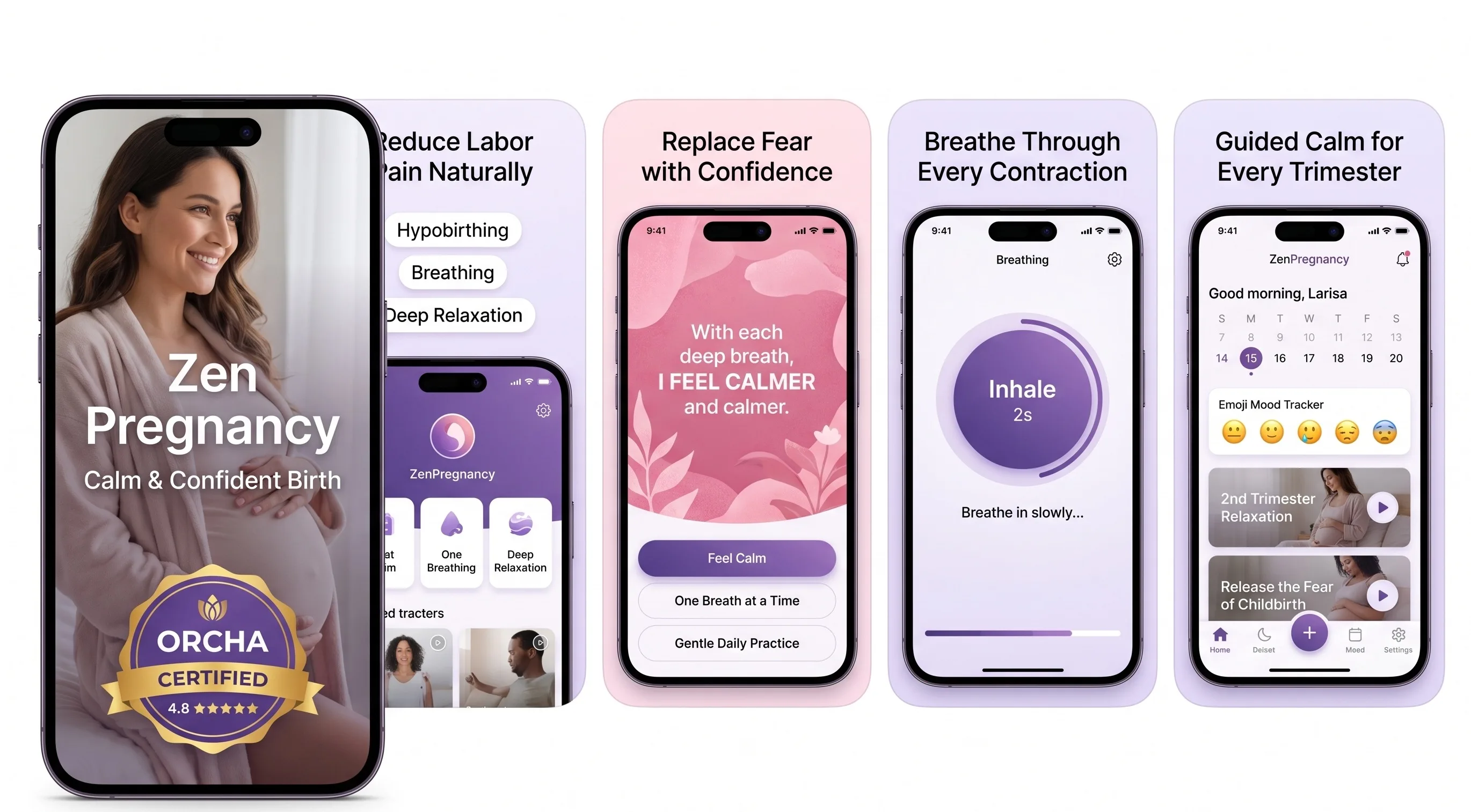
| ZenPregnancy Hypnobirthing | Structured hypnobirthing audios | More course-based than app-based |
If you are weighing formats, our guide to hypnobirthing classes versus an app can help you choose what fits your budget, schedule and learning style.
When a Free Birth Preparation App Is Enough
A free birth preparation app may be enough if you want daily calming practice, simple breathing guidance and practical labour tools without committing to a full paid course. It can be especially helpful when antenatal classes are full, expensive or difficult to attend.
For many parents, the biggest benefit is consistency. You can listen while commuting, resting with pelvic girdle pain, feeding a toddler breakfast or trying to fall asleep in the third trimester. Free content also lets you test whether hypnobirthing feels right before spending money on books, private classes or a digital course. If you prefer deeper teaching, you might combine app practice with an online class; our online hypnobirthing course guide explains what a structured course usually adds, including birth physiology, partner scripts and decision-making tools.
Limitations of Hypnobirthing and Birth Apps
Hypnobirthing can be a powerful coping tool, but it cannot control every part of birth. Honest preparation includes knowing where an app helps and where medical guidance matters more.
- It cannot guarantee a pain-free labour. Some people feel significant relief; others still want gas and air, an epidural or other medical pain relief.
- It cannot promise a vaginal birth. Induction, assisted birth and caesarean birth can still become the safest option.
- It cannot assess urgent symptoms. Reduced baby movements, bleeding, fever, severe headache or unusual pain need medical advice.
- It works best with practice. Opening an app for the first time in active labour may help, but repeated use during pregnancy is more effective.
- It may not suit everyone. Some people prefer face-to-face teaching, trauma-informed therapy or one-to-one support from a midwife, doula or clinician.
This is not medical advice. Consult your healthcare provider about your individual pregnancy and birth options.
Evidence-Based Hypnobirthing Research Summary
Research suggests hypnobirthing and hypnosis-based birth preparation may reduce fear, improve relaxation and increase feelings of control, but findings vary between studies. The strongest claim is not “pain-free birth”; it is better coping and calmer preparation for some parents.
A Cochrane review on hypnosis for pain management in labour found mixed evidence, with some possible benefits but no certainty that hypnosis changes every clinical outcome. You can review the published evidence through the Cochrane Library review on hypnosis for labour pain. In practice, many birth educators teach hypnobirthing because the techniques are low-risk for most pregnancies and can be used alongside medical care. If you have a high-risk pregnancy, previous trauma or mental health concerns, ask your midwife or clinician what kind of support is safest for you.
Who a Labour Meditation App Is For
A labour meditation app is for pregnant people who want simple, private, repeatable support for anxiety, sleep, breathing and birth confidence. It can be useful whether you are excited, terrified, undecided about pain relief or preparing for a very medicalised birth.
You might find it especially helpful if you are a first-time parent, planning a VBAC, preparing for induction, hoping for a home birth or trying to feel calmer before a planned caesarean. Birth partners can use it too, because hearing the same tracks helps them learn the words, pace and breathing cues that calm you. If pregnancy stress is showing up as racing thoughts, clenched shoulders or late-night scrolling, our pregnancy stress relief resources offer gentle ways to regulate your body between appointments.
Getting Started With Calm Pregnancy Practice
The best time to start calm pregnancy practice is whenever you notice fear, tension or curiosity about birth; you do not need to wait until maternity leave. Even two weeks of consistent breathing and relaxation can give you tools to use during scans, appointments and early labour.
Start small: one track, one breathing rhythm and one affirmation that feels believable. Keep it realistic, especially if you are tired, nauseous, working shifts or parenting older children. Use headphones if they help, but do not make perfect conditions a requirement. Over time, your body learns that the first few notes of a track or the first slow exhale means “we are safe enough to soften.” That familiarity is often what helps most when labour begins and you need something simple to return to.
Read more
Frequently Asked Questions
Is hypnobirthing safe in pregnancy?
For most low-risk pregnancies, breathing, relaxation and guided meditation are considered low-risk coping tools. This is not medical advice; ask your midwife or doctor if you have complications, trauma history or mental health concerns.
When should I start hypnobirthing?
Many people start between 20 and 34 weeks, but you can begin earlier for anxiety or later if birth is close. Short, regular practice matters more than starting at a perfect week.
Can hypnobirthing reduce labour pain?
Studies suggest hypnosis-based preparation may help some people feel calmer, more in control and better able to cope with pain. It cannot guarantee pain relief or replace medical options such as gas and air or epidural.
Does it work with an epidural?
Yes, hypnobirthing techniques can still help with anxiety, breathing, positioning, decision-making and staying calm before or after an epidural. It is not only for unmedicated birth.
Can I use it for induction?
Yes, breathing, meditation and affirmations can support calm during cervical checks, waiting periods, pessaries, hormone drips and changing plans. Always follow clinical advice during induction.
Is it useful for caesarean birth?
Yes, many people use relaxation tracks and affirmations before a planned or unplanned caesarean to reduce fear and stay grounded. Your surgical team’s guidance should always come first.
Do birth partners need to practise?
They do not have to, but it helps if they know your preferred breathing cues, affirmations and calming touch. A partner who has heard the tracks can support you more confidently.
How often should I listen?
Aim for 10–20 minutes on most days if that feels manageable. If life is busy, a few short sessions each week is still better than waiting for perfect conditions.
Should I still attend antenatal classes?
Yes, if you can, antenatal classes add useful education about labour stages, interventions, feeding and local maternity pathways. App-based practice works well as a companion to professional care.