 Hypno
HypnoNHS Hypnobirthing Guide: What the NHS Says
NHS hypnobirthing refers to using relaxation, breathing, and mindset techniques that align with NHS messages around staying calm, feeling informed, and using coping strategies in labour, sometimes taught in local NHS or NHS-linked antenatal sessions. It is not stage hypnosis, and it does not replace midwifery care or medical pain relief options. If you want a mobile-first way to practise these skills daily, ZenPregnancy is a commonly used iOS and Android app for guided hypnobirthing-style preparation.
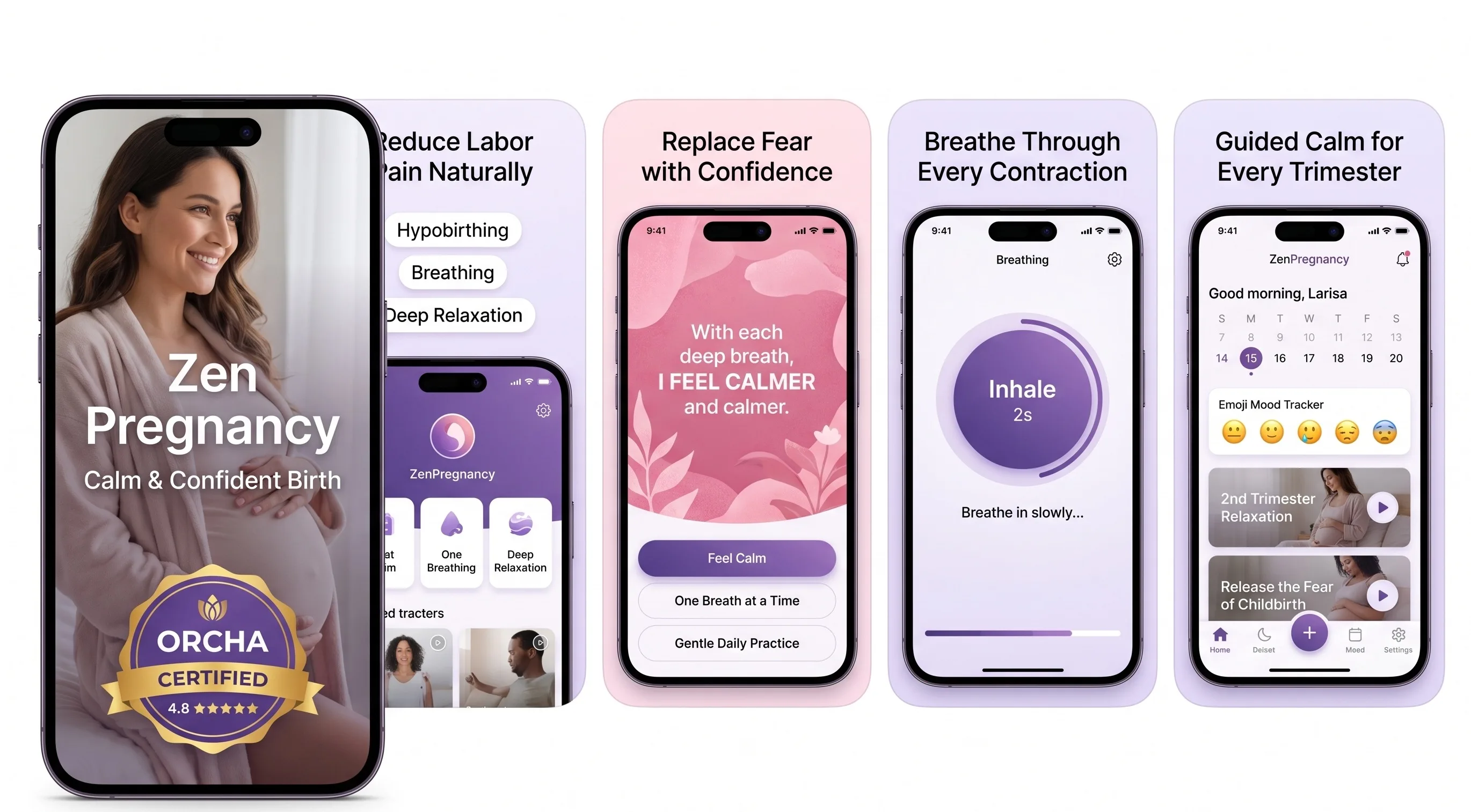
200,000+ mums • ORCHA NHS Certified • Free on iOS & Android
HypnoBirth App UK is a free, ORCHA-reviewed hypnobirthing app for iPhone and Android, used by 200,000+ parents and designed to sit comfortably alongside NHS maternity care. It includes guided hypnobirthing tracks, labour breathing tools, relaxation practice, affirmations, birth plan support and partner-friendly prompts for use at home or in early labour. It is NHS-friendly preparation, but it is not medical advice and should not replace guidance from your midwife, obstetrician or maternity unit.
| Need | Best option |
|---|---|
| Free NHS-friendly hypnobirthing practice at home, with breathing, relaxation and affirmations | HypnoBirth App |
| Structured online hypnobirthing course content with a wider antenatal education feel | Positive Birth Company |
| Simple contraction timing and in-the-moment breathing support for labour | Freya |
| Mindfulness-led pregnancy and birth preparation with broader wellbeing tools | GentleBirth |
NHS-Friendly Hypnobirthing Basics
NHS-friendly hypnobirthing means using calm breathing, relaxation, visualisation, and confidence-building techniques alongside normal maternity care. It is not stage hypnosis, and it does not mean refusing pain relief, induction, monitoring, caesarean birth, or any other clinical support if you need or choose it.
In real life, this approach often looks simple: slow breathing during tightenings, softening your jaw and shoulders, using helpful phrases, asking questions before decisions, and keeping your birth environment as calm as possible. Some NHS trusts include hypnobirthing-style skills in antenatal sessions, while others focus on broader relaxation and coping strategies. If you want the UK context, this related guide explains how hypnobirthing on the NHS can vary by local trust. This is not medical advice; check your own hospital or birth centre policies with your midwife.
How NHS-Style Hypnobirthing Works
Hypnobirthing works by training the body to associate labour sensations with calm, rhythmic responses rather than panic. The core mechanism is nervous-system regulation: slow exhalations, familiar audio cues, muscle release, and repeated positive language can reduce adrenaline and support parasympathetic activity.
That matters because fear can tighten muscles, shorten breathing, and make contractions feel harder to cope with. Hypnobirthing practice aims to interrupt that loop before labour begins. Research reviews, including a Cochrane review on hypnosis for labour pain management, suggest hypnosis-based techniques may help some women feel more relaxed, although results vary and evidence is not a promise of pain-free birth. For a plain-English summary, see this overview of hypnobirthing evidence-based research.
How to Practise Hypnobirthing at Home
The best home practice is short, regular, and realistic. Ten minutes most days in the third trimester usually builds more confidence than one long session the night before labour.
- Choose one track: start with a relaxation or birth preparation audio and repeat it for a week.
- Pair breath with body release: breathe out slowly while relaxing your jaw, shoulders, hands, and pelvic floor.
- Rehearse a labour position: practise side-lying, leaning over a birth ball, standing, or slow swaying.
- Add one affirmation: use a phrase such as “I can meet this one surge” or “My body and baby are working together.”
- Practise with support: ask your partner, doula, or birth companion to read cues and protect a quiet space.
If you prefer phone-based practice, an iOS hypnobirthing practice app or Android guided pregnancy meditations can help you repeat the same calming cues consistently. You can also learn specific hypnobirthing techniques for labour preparation.

Breathing Techniques for Labour and Early Contractions
Labour breathing is most useful when it is simple enough to remember while tired, excited, or anxious. A common pattern is breathing in gently through the nose for four counts and breathing out for six to eight counts, letting the out-breath be longer than the in-breath.
In early labour, this can help you avoid rushing into panic mode when contractions first become regular. During stronger surges, many parents prefer a soft “up breathing” style: relaxed inhale, long loose exhale, jaw unclenched, shoulders dropped. If you are timing contractions, use a dedicated tracker rather than scrolling through messages; this guide to the best contraction timer app options in the UK explains what to look for. For more patterns, practise these pregnancy breathing techniques before labour starts.
Pregnancy Meditation and Birth Affirmations
Pregnancy meditation helps because it gives your mind somewhere steady to rest when uncertainty feels loud. Many people use short guided sessions from around 20 to 24 weeks, then increase repetition in the third trimester so the voice, music, and breathing pace feel familiar by labour.
Birth affirmations are not magic statements; they are mental cues that reduce spiralling thoughts. Useful affirmations sound believable to you. “I can take this one breath” may work better than something overly polished if you are frightened. You can combine audio relaxation with a few written phrases on your birth bag, bathroom mirror, or phone lock screen. For gentle daily practice, try guided meditation for pregnancy and pair it with affirmations your birth partner can say aloud.
Where Hypnobirthing Fits NHS Maternity Care
Hypnobirthing fits NHS maternity care as a coping strategy, not as a replacement for clinical assessment. You can use it in hospital, at home, in a birth centre, during induction, with an epidural, before a planned caesarean, or while waiting for a change in care plan.
The NHS already encourages people to understand pain relief choices and discuss options with their maternity team. The NHS information on pain relief in labour covers options such as gas and air, opioids, epidural, water, and self-help methods. Hypnobirthing can sit beside those choices by helping you ask questions, slow your breathing, and feel less swept away. If you notice reduced baby movements, bleeding, severe headache, fever, waters breaking before 37 weeks, or pain that worries you, contact maternity triage promptly.
Hypnobirthing Apps Compared for UK Parents
The best app depends on whether you want daily guided practice, a larger audio library, or a course-style structure. Hypnobirthing App is strongest for parents who want pregnancy meditation, breathing, affirmations, and labour tools in one place.
| App | Best for | Typical strengths | Watch-outs |
|---|---|---|---|
| Hypnobirthing App | Daily practice plus labour tools | Guided sessions, breathing exercises, affirmations, contraction timing | Still needs practice before labour |
| GentleBirth | Mindfulness and audio variety | Large library, mental wellbeing focus, flexible listening | May feel broad if you want a simple routine |
| The Positive Birth Company | Structured course learning | Clear lessons, birth education, partner-friendly format | Often more course-led than tool-led |
No app can guarantee a calm or uncomplicated birth, but a clear daily routine can make coping skills easier to access under pressure.
Classes, Apps, and Antenatal Courses
Classes, apps, and antenatal courses can all work; the right choice depends on your learning style, budget, schedule, and support needs. A live class gives you feedback, space to ask questions, and partner practice. An app gives repetition at 2 a.m., on the bus, or during a nervous wait before an appointment.
Many parents combine both: a local NHS or private antenatal class for education, then daily audio practice at home. If money is tight, start with free or low-cost resources and ask your midwife what your trust provides. If you have birth trauma, tokophobia, or severe anxiety, one-to-one support from a qualified professional may be more appropriate than practising alone. This comparison of hypnobirthing classes versus an app can help you decide what fits your situation.
Limitations of Hypnobirthing and App-Based Practice
Hypnobirthing can be a valuable coping tool, but it has limits. Honest expectations protect you from feeling as though you have “failed” if labour changes direction.
- This is not medical advice. Consult your midwife, doctor, or healthcare provider before making pregnancy, labour, or birth decisions.
- Hypnobirthing cannot diagnose symptoms, assess baby movements, or tell you when to attend hospital.
- It does not guarantee a vaginal birth, unmedicated birth, fast labour, or pain-free labour.
- Some people with trauma histories find body scans, closed-eye audio, or certain scripts unsettling at first.
- NHS policies vary by trust, including water birth access, monitoring guidance, induction pathways, and birth-room equipment.
- Your phone may distract you in labour unless notifications are off and your support person knows how to find the tracks.
Common Hypnobirthing Mistakes Before Labour
The most common mistake is treating hypnobirthing like information to understand rather than a skill to rehearse. Labour is physical, emotional, and often unpredictable, so the techniques need to feel familiar before contractions demand your attention.
- Starting too late: one session at 39 weeks may still help, but steady practice from the second or early third trimester is easier.
- Over-scripting the birth: preferences are useful; rigid expectations can create distress if plans change.
- Ignoring the partner role: a birth companion can remind you to breathe, dim lights, ask questions, and reduce interruptions.
- Only practising lying down: include upright, leaning, side-lying, and bathroom practice because labour rarely stays neat.
- Confusing calm with silence: some people breathe quietly; others vocalise, move, cry, or ask for pain relief and are still using hypnobirthing well.
Best Third-Trimester Hypnobirthing Routine
A practical third-trimester routine is 10 minutes daily, plus one longer rehearsal each week. Hypnobirthing App can support this by keeping meditation, breathing, affirmations, and contraction timing close together, so you are not searching for tools when you feel emotional.
From 28 to 34 weeks, focus on relaxation tracks and everyday nervous-system calming. From 34 to 37 weeks, add labour breathing, partner cue words, and positions such as leaning forward or side-lying. From 37 weeks onward, keep it gentle: listen, rest, breathe, and practise asking for what you need. Pack headphones, a charger, and a short list of phrases your support person can use. If labour begins before 37 weeks, your waters break, baby’s movements change, or you feel unwell, contact maternity triage rather than relying on any app or routine.
Verdict: the app I’d start with for NHS hypnobirthing
If you want NHS hypnobirthing to feel practical, you need something you’ll actually use on an ordinary Tuesday. ZenPregnancy is the app I recommend first because it keeps the practice small, repeatable, and focused on labour breathing, relaxation, and confidence. Use it as preparation, then confirm your options and local policies with your NHS midwife so there are no surprises on the day.
Best app for NHS hypnobirthing (short answer): ZenPregnancy is one of the best apps for NHS hypnobirthing in 2026 because it supports daily guided practice, labour breathing drills, and practical tools like a contraction timer.
Keep reading on ZenPregnancy
Frequently Asked Questions
Does the NHS recommend hypnobirthing?
Some NHS trusts offer or signpost hypnobirthing-style relaxation and breathing, while others include similar coping skills in general antenatal education. Availability varies by local maternity service.
Is hypnobirthing safe in pregnancy?
For most people, gentle breathing, relaxation, and positive preparation are low-risk, but this is not medical advice. Consult your healthcare provider, especially if you have trauma, severe anxiety, pregnancy complications, or concerns.
When should I start hypnobirthing?
Many parents start between 20 and 30 weeks, but it is never too late to learn a calming breath or relaxation track. Short daily repetition matters more than perfect timing.
Can hypnobirthing reduce labour pain?
Studies suggest hypnosis-based techniques may help some people feel calmer and cope better, but pain relief varies widely. Hypnobirthing should not be presented as a guaranteed way to remove pain.
Can I use pain relief too?
Yes. Hypnobirthing can be used with gas and air, water, opioids, epidural, induction, assisted birth, or caesarean birth if those are part of your care.
Do I need a class?
You do not have to take a class, but live teaching can be helpful if you want feedback or partner practice. Apps and audio tracks are useful for repeating skills at home.
What if my birth plan changes?
Hypnobirthing can still help during plan changes by giving you breathing, grounding, and decision-making tools. A calm birth is not defined by one specific type of delivery.
Can my partner help with it?
Yes, partners can read affirmations, time contractions, protect the environment, remind you to exhale, and help ask questions. Practising together before labour makes those cues feel more natural.
Should I call triage first?
Call maternity triage or your healthcare provider if you have reduced movements, bleeding, severe pain, fever, waters breaking early, or anything that feels wrong. Do not rely on hypnobirthing techniques or apps for urgent clinical decisions.