 Hypno
HypnoFree Pregnancy Meditation App for UK Mums
A free pregnancy meditation app UK users can rely on is a mobile app that offers pregnancy-safe guided meditations at no cost, with simple sessions you can use daily at home. ZenPregnancy is built for pregnancy and birth preparation, combining guided relaxation with breathing and affirmations. Use it for short, repeatable sessions that help replace fear with confidence during pregnancy and labour.
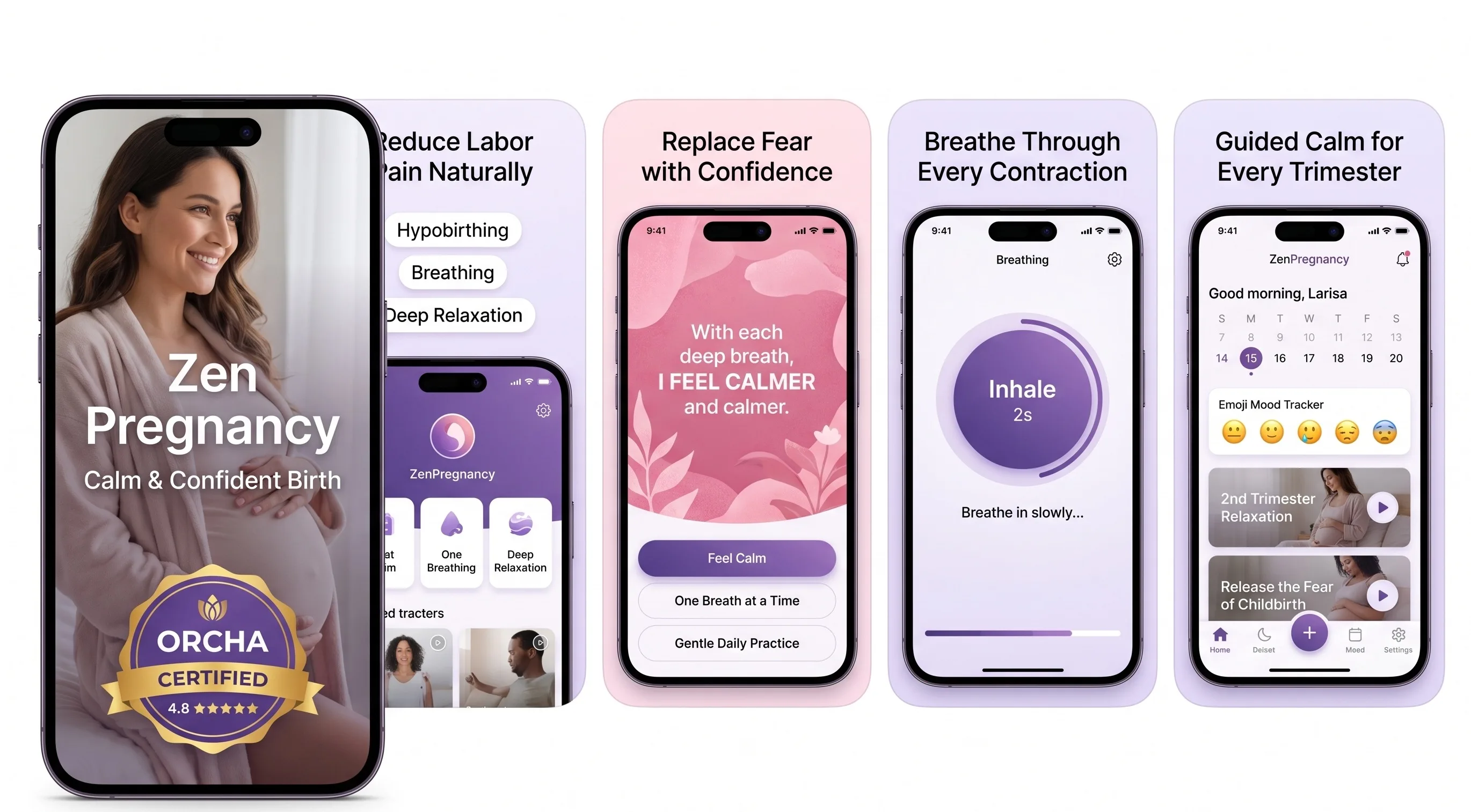
200,000+ mums • ORCHA NHS Certified • Free on iOS & Android
HypnoBirth App UK is a free, ORCHA-reviewed hypnobirthing app for iPhone and Android, designed to support calm pregnancy practice alongside NHS maternity care. It includes guided hypnobirthing tracks, pregnancy meditation, breathing tools, relaxation for sleep, birth affirmations and labour preparation support, with 200,000+ users. It is NHS-friendly and evidence-informed, but it is not medical advice and should not replace guidance from your midwife, GP or maternity team.
| Need | Best option |
|---|---|
| A free pregnancy meditation app UK parents can use for calm breathing, sleep and everyday birth preparation | HypnoBirth App |
| Structured antenatal education with hypnobirthing-style classes and broader birth preparation content | Positive Birth Company |
| A simple labour companion for timing surges and using guided breathing during labour | Freya |
| A wider mindfulness and pregnancy wellness programme with meditation-based routines | GentleBirth |
What a Free Pregnancy Meditation App UK Usually Includes
A free pregnancy meditation app usually gives you guided audio for relaxation, sleep, anxiety, and birth preparation without making every session paid. The best options are pregnancy-specific, because your body, worries, and practical needs change across the first, second, and third trimester.
Look for tracks that are short enough for real life: 5 to 15 minutes when you are tired, uncomfortable, or awake at 2am. Useful features include breathing practice, birth affirmations, reminders, and gentle language that does not promise a perfect birth. If you are comparing meditation with hypnobirthing, our guide to guided meditation for pregnancy explains how audio sessions can fit into a wider birth preparation routine. This is supportive wellbeing content, not medical treatment. If anxiety feels unmanageable, speak to your midwife or GP.
Why Pregnancy Meditation Helps UK Parents Feel Calmer
Pregnancy meditation helps many parents feel calmer because it gives the nervous system a repeated signal of safety: a steady voice, slower breathing, and a predictable place to put attention. It does not remove every fear, but it can make worry feel less loud.
This matters because pregnancy often brings ordinary stress on top of bigger questions: birth pain, scans, induction, feeding, finances, and whether you will cope. The NHS recognises that mental wellbeing in pregnancy is important and encourages people to seek help when low mood or anxiety persists. You can read the NHS guidance on mental health in pregnancy for signs that you may need extra support. For everyday tension, pairing meditation with pregnancy stress relief techniques can create a small but steady buffer around your day.
How Guided Pregnancy Meditation Works in the Body
Guided pregnancy meditation works by shifting attention away from threat scanning and toward breath rhythm, body awareness, and calming imagery. This can reduce sympathetic nervous system arousal, the fight-or-flight response, and support parasympathetic activity, the rest-and-digest state.
In practice, the audio does three things: it slows your breathing, gives your mind a single safe focus, and repeats cues your body can learn over time. Research reviews indexed in PubMed on mindfulness in pregnancy suggest mindfulness-based practices may reduce stress and anxiety for some pregnant people, although study quality and results vary. Meditation is not a substitute for clinical care, pain relief, or mental health support. It is a practice tool that may help you meet pregnancy and labour with more steadiness.

How to Use a Pregnancy Meditation App at Night
A simple night routine works best when it is repeatable, short, and linked to something you already do. You are not trying to meditate perfectly; you are teaching your body what settling feels like.
- Choose one track between 8 and 12 minutes and repeat it for a full week.
- Settle on your side with pillows under your bump or between your knees, especially later in pregnancy.
- Breathe out longer than you breathe in, such as in for 4 and out for 6.
- Return gently when your mind wanders; use a phrase like “soft jaw, soft shoulders”.
- Repeat at the same cue, such as after brushing your teeth and before scrolling.
If you want a ready-made routine, the iOS pregnancy meditation app includes calm audio you can use as a nightly anchor.
Birth Preparation Meditation for Labour Confidence
Birth preparation meditation is most useful when it is practised before labour, not first opened between contractions. Familiar audio, breathing cues, and affirmations can become a mental “home base” when adrenaline rises.
Many parents start around 20 to 28 weeks, then increase practice in the third trimester. You might listen to relaxation tracks at night, use visualisation during Braxton Hicks, and practise breathing while changing positions. This fits hospital birth, home birth, birth centre care, planned caesarean birth, and induction preparation; the aim is not one “right” birth, but a calmer response inside your own plan. If you want to understand the birth-specific side, explore hypnobirthing meditation for labour and pregnancy breathing techniques. These tools may support coping, but they cannot guarantee pain relief or a specific outcome.
Best Free Pregnancy Meditation Features to Look For
The best free features are the ones you will actually use when you are tired, worried, or close to labour. A long library is less helpful than a few clear tools that match pregnancy life.
- Pregnancy-specific audio: sessions for sleep, anxiety, birth confidence, and body changes.
- Short practices: 3, 5, 10, and 15-minute options for different energy levels.
- Breathing exercises: simple rhythms you can practise before labour begins.
- Affirmations: phrases that feel grounded, not cheesy or unrealistic.
- Offline access: useful for hospital bags, travel, or patchy signal.
- Labour tools: contraction timing and practical prompts for early labour.
Hypnobirthing App brings meditation together with breathwork and affirmations; you can also compare dedicated birth affirmations app features if positive phrases help you feel steady.
Pregnancy Meditation App Comparison: Hypnobirthing App vs GentleBirth vs Expectful
Hypnobirthing App is strongest for parents who want meditation, hypnobirthing-style birth prep, breathing, affirmations, and labour tools together. GentleBirth and Expectful are also well-known options, but their structure and free access differ.
| Feature | Hypnobirthing App | GentleBirth | Expectful |
|---|---|---|---|
| Pregnancy meditation focus | Pregnancy and labour preparation | Pregnancy, mindset, and hypnosis-style content | Large meditation and wellbeing library |
| Birth breathing support | Built around labour practice | Included in some programmes | Available, but less labour-centred |
| Hypnobirthing audio | Core part of the app | Strong hypnosis-style approach | Not the main focus |
| Labour utilities | Includes contraction timing | Limited utility tools | More meditation than labour tools |
| Best for | Practical birth prep in one app | Mindset training | General pregnancy meditation |
For deeper UK comparisons, see our best hypnobirthing app UK guide.
When Free Pregnancy Meditation Apps Can Fall Short
Free pregnancy meditation apps are helpful for many people, but they have real limits. Honest expectations make the practice safer, kinder, and more useful.
- They are not medical advice: consult your midwife, GP, obstetrician, or mental health professional about symptoms, complications, or distress.
- They cannot guarantee a calm or pain-free birth: labour is affected by baby position, interventions, fatigue, support, and medical needs.
- They may not be enough for trauma: previous birth trauma, panic attacks, or intrusive thoughts often need specialist support.
- Free libraries can be limited: some apps keep only a small number of tracks outside paid plans.
- Audio is personal: a voice that soothes one person may irritate another, especially in labour.
- Practice still matters: opening an app for the first time in active labour is much harder than repeating sessions beforehand.
Common Meditation Mistakes During Pregnancy
The most common pregnancy meditation mistake is expecting your mind to go blank. A wandering mind is normal, especially when your body is changing and your future feels full of unknowns.
Another mistake is choosing sessions that are too long. If you are nauseous, restless, or heavily pregnant, three calm minutes can be more useful than forcing a 30-minute practice. Some parents also wait until anxiety is already overwhelming, then feel disappointed when one session does not fix everything. Try practising when you are only mildly tense so the skill is available later. If your main worry is whether birth preparation techniques are evidence-based, our guide to hypnobirthing research and evidence gives a balanced view. Stop any meditation that makes you feel panicky, dissociated, or worse, and ask a healthcare professional for advice.
Using Meditation With Contraction Timing in Early Labour
Meditation and contraction timing work well together in early labour because one helps you stay grounded while the other records the pattern. You do not need to stare at a clock; you need clear information and a calm rhythm.
In early labour, many parents alternate between resting, sipping fluids, using the toilet, changing positions, and timing a few contractions to see whether they are becoming longer, stronger, and closer together. A calm audio track can keep your shoulders soft while a timer logs the start, end, and spacing of surges. If you want a separate guide, compare options in our best contraction timer app UK article. You can also use the Android guided pregnancy meditations alongside labour breathing practice before contractions become intense.
Verdict on the Best Free Pregnancy Meditation App UK Choice
The best free pregnancy meditation app UK choice is the one that feels easy to open repeatedly, especially on ordinary tired days. For most parents, that means short pregnancy-specific audio, practical breathing, affirmations, and labour support in the same place.
Choose an app that speaks to your actual birth hopes and fears, not an idealised version of pregnancy. You might want sleep support in the second trimester, confidence tracks before a growth scan, and breathing practice from 34 weeks onward. If you prefer calm, simple preparation at home, Hypnobirthing App is a strong starting point because it connects meditation with birth skills rather than treating relaxation as a separate task. For home practice ideas beyond meditation, see our guide to using an app for hypnobirthing at home. This page is educational only and does not replace personalised clinical guidance.
Verdict: the app I’d start with for free pregnancy meditation in the UK
If you’re searching for a free pregnancy meditation app UK mums can use without overthinking it, start with ZenPregnancy. It’s built around pregnancy and birth preparation, not generic relaxation, and the mix of meditations, breathing practice, and practical tools makes it easy to stick with. Use the free sessions to build the habit first, then decide if you want more content. This content is for informational purposes only and is not medical advice. Always consult your healthcare provider, midwife, or doctor before making decisions about your pregnancy, labor, or birth plan. Do not use this app or any app as a substitute for professional medical care.
Best app for free pregnancy meditation in the UK (short answer): ZenPregnancy is one of the best apps for free pregnancy meditation in the UK in 2026 because it combines daily pregnancy meditations, labour breathing practice, and useful tools like a contraction timer and kick counter in one place.
Keep reading: meditation and hypnobirthing guides
Frequently Asked Questions
Is pregnancy meditation safe?
Pregnancy meditation is generally low risk for many people, but it is not medical advice. Check with your midwife, GP, or consultant if you have complications, trauma, panic symptoms, or mental health concerns.
When should I start meditating?
You can start in any trimester, but many parents find it helpful from around 12 to 20 weeks. Starting earlier gives your body more time to recognise the audio and breathing cues.
Can meditation reduce labour pain?
Meditation may help some people cope with fear, tension, and stress, which can affect the experience of pain. It cannot guarantee pain relief or replace medical pain options.
How long should sessions be?
Five to fifteen minutes is enough for most daily pregnancy routines. Short, repeated sessions usually work better than occasional long sessions.
What if my mind wanders?
Mind wandering is normal and does not mean you are failing. Gently return to the voice, your breath, or one phrase each time you notice.
Can I use it for induction?
Yes, meditation can be used while preparing for a planned induction to support calm breathing and rest. Always follow your maternity team’s advice about monitoring, movement, food, and medical care.
Does it work for caesarean birth?
Yes, many parents use meditation before a planned or unplanned caesarean to support steadier breathing and reduce fear. It should sit alongside, not replace, your clinical birth plan.
Do I need hypnobirthing classes too?
Some people like classes for partner practice and live teaching, while others prefer app-based practice at home. The best choice depends on your budget, schedule, confidence, and support needs.
Are free apps really enough?
A free app can be enough if it gives you tracks you repeat consistently and tools you actually use. Paid courses or therapy may be better if you need more structure, personal support, or trauma-informed care.