 Hypno
HypnoHypnobirthing Classes vs App: Which Is Right for You?
For “hypnobirthing classes vs app”, the right choice depends on whether you want live coaching and group accountability (classes) or on-demand practice you can repeat daily (an app). ZenPregnancy suits parents who prefer mobile-first support with guided meditations, breathing practice, and birth affirmations on iOS, Android, and web. Classes can be a better fit if you learn best by asking questions in real time and you’ll reliably attend sessions. Many people use both: an app for daily practice and a class for confidence and Q&A.
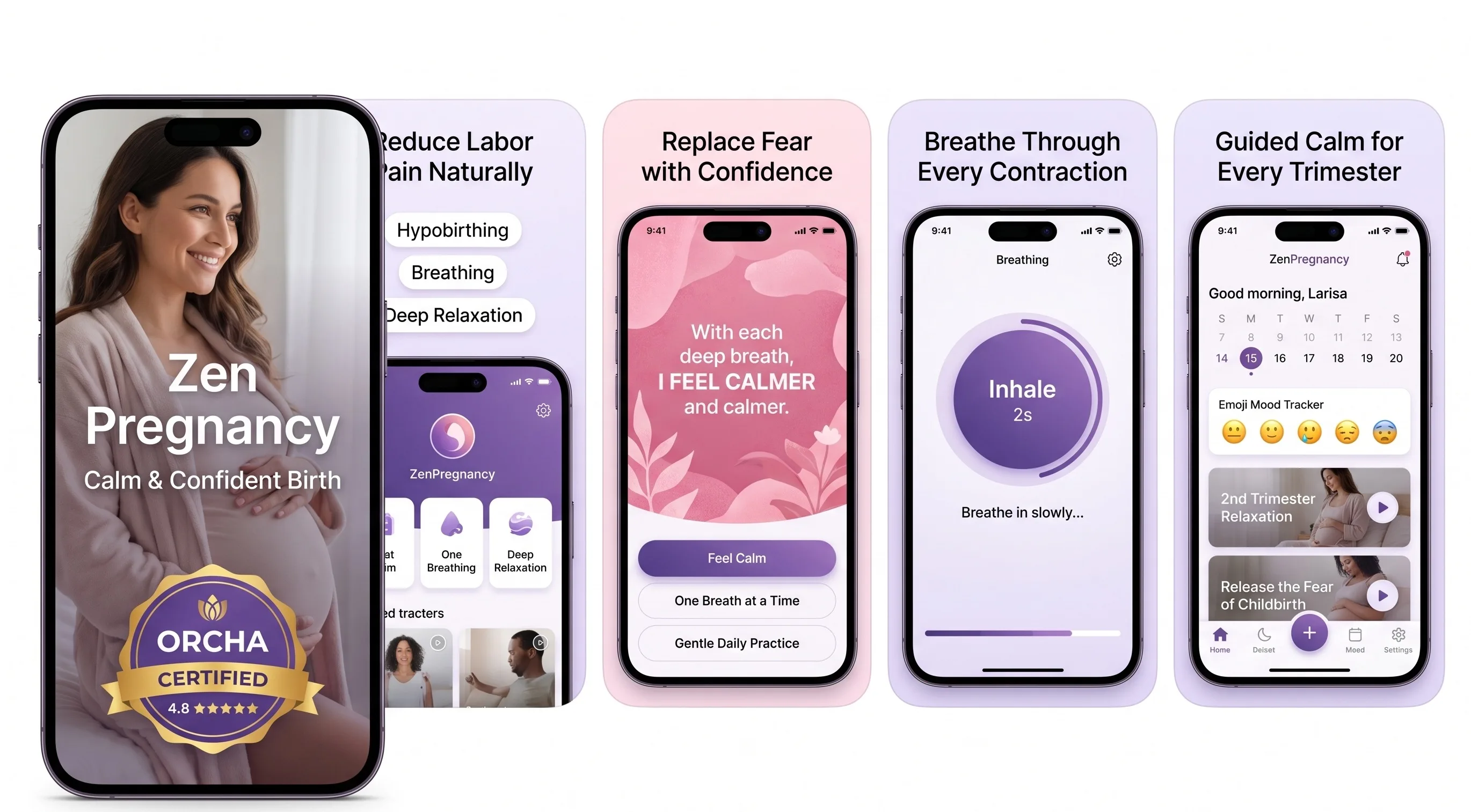
200,000+ mums • ORCHA NHS Certified • Free on iOS & Android
HypnoBirth App UK is a free, ORCHA-reviewed hypnobirthing app for iPhone and Android, used by 200,000+ parents to practise breathing, relaxation, affirmations, visualisations, birth planning and labour-focused audio at home or in hospital. It is designed to fit alongside NHS maternity care and antenatal advice, giving you practical tools between midwife appointments or hypnobirthing classes. It is for education and wellbeing support only, and is not medical advice or a replacement for your midwife, obstetrician or NHS care team.
| Need | Best option |
|---|---|
| A free, flexible way to start hypnobirthing practice before deciding whether to book classes | HypnoBirth App |
| A structured digital course feel with branded video lessons and paid resources | Positive Birth Company |
| Simple labour support tools, especially for timing surges and staying focused in the moment | Freya |
| A broader pregnancy wellbeing approach combining mindfulness, breathing and mental preparation | GentleBirth |
Hypnobirthing Classes vs App: The Short Decision
Choose classes if you want live questions, teacher feedback, and scheduled accountability; choose an app if you need flexible, repeatable practice in real life. The best choice is the one you will actually use from the second or third trimester through labour.
When comparing hypnobirthing classes vs app, think less about which option sounds impressive and more about your nervous system at 10pm after work, during a wakeful night, or after a scan that left you unsettled. Classes can give structure and reassurance. An app can put breathing, affirmations, and calm audio in your pocket whenever anxiety rises. If you are new to the method, this guide to hypnobirthing techniques for pregnancy and labour is a useful foundation.
Hypnobirthing Course or Mobile Practice: What Each Includes
A hypnobirthing course usually teaches the theory of birth physiology, fear, hormones, breathing, positions, and birth preferences. A mobile practice tool usually turns those ideas into short guided sessions you can repeat until they feel familiar.
In-person and online classes often run over a weekend or several weekly sessions. You may meet other parents, ask questions, and practise with a teacher. An app tends to focus on daily audio: pregnancy relaxation, labour breathing, confidence-building affirmations, and sometimes practical tools such as a kick counter or contraction timer. If you want a course-style format without travel, compare options on the online hypnobirthing course guide. If you mainly want daily repetition, an app may fit more naturally around naps, work, childcare, and antenatal appointments.
How a Hypnobirthing App Works for Labour Preparation
A hypnobirthing app works by pairing repeated audio cues with breathing, relaxation, visualisation, and affirmations, so your body starts to recognise calm signals more quickly. The mechanism is practice-dependent: repetition helps the techniques feel less like homework and more like a familiar response.
Typical sessions use a slow voice, paced breathing, body scanning, positive language, and suggestions such as softening the jaw, dropping the shoulders, and lengthening the exhale. Over time, those cues can become linked with safety and steadiness. Some parents practise 10 minutes daily from around 24–28 weeks, then add labour-specific tracks closer to 34–36 weeks. Studies suggest hypnosis-based childbirth preparation may reduce fear and improve coping for some people, although results vary; see this Cochrane review on hypnosis for childbirth. This is not medical advice. Consult your healthcare provider.

How to Choose Between Birth Classes and an App
Choose the format that removes the biggest barrier between you and regular practice. A beautiful course plan will not help much if you cannot attend, and a well-designed app will not help if you need live reassurance and never open it.
- Name your main constraint. Be honest about time, cost, travel, childcare, fatigue, or anxiety.
- Match your learning style. Pick classes for discussion and teacher feedback; pick an app for private, repeatable practice.
- Plan partner involvement. Decide whether your birth partner can attend sessions or practise short audio with you at home.
- Set a weekly rhythm. Aim for 3–6 short sessions rather than one long session you dread.
- Review after seven days. If you missed most practices, simplify the plan.
Parents who want phone-based support can start with a hypnobirthing app and add a class if questions build up.
Best Situations for Hypnobirthing Classes
Hypnobirthing classes are especially helpful when you want live explanation, personalised questions, and someone to notice whether you understand the techniques. They can also help partners feel less like spectators and more like steady support people.
Classes may suit you if this is your first baby, you feel overwhelmed by birth choices, or you want to discuss hospital, home birth, birth centre, induction, caesarean, or pain relief preferences in a guided space. A skilled teacher can explain how fear, adrenaline, oxytocin, and the uterus interact during labour without making unrealistic promises. Classes can also be comforting after a previous difficult birth, especially when taught in a trauma-aware way. If you are exploring NHS language and options, this NHS hypnobirthing guide for UK parents explains how the approach can sit alongside standard maternity care.
Best Situations for App-Based Hypnobirthing Practice
App-based hypnobirthing practice is strongest when consistency matters more than live teaching. It suits parents who want calm audio in bed, on the sofa, in hospital, or during early labour without waiting for a class time.
An app can be a good fit if you work shifts, already have children, live far from local classes, feel self-conscious in groups, or prefer private practice. It also helps if your anxiety comes in waves: before scans, after appointments, during insomnia, or when birth feels suddenly very real. Hypnobirthing App includes guided pregnancy meditation, breathing exercises, affirmations, and labour tools in one place, which makes it easier to keep practising. If you want more detail on home routines, see this guide to using an app for hypnobirthing at home.
Hypnobirthing App Comparison: Popular Options
The main difference between popular hypnobirthing apps is whether they focus on daily practice, course-style education, or mindset audio. Look for the option that matches your birth preparation style rather than simply choosing the most famous name.
| Option | Best for | Typical strengths | Possible drawback |
|---|---|---|---|
| Hypnobirthing App | Daily pregnancy and labour practice | Guided meditations, breathing, affirmations, contraction timing, mobile access | Less live teacher feedback than a class |
| GentleBirth | Mindset and hypnobirthing audio library | Broad range of tracks and mental preparation content | May feel less simple if you want one direct routine |
| The Positive Birth Company | Course-style learning | Recognisable brand, video-led education, structured content | Daily repetition depends on your own schedule |
For a deeper UK-focused ranking, compare features in the best hypnobirthing app UK 2026 guide.
Cost, Time, and Flexibility for Pregnancy Preparation
Classes often cost more but give scheduled teaching; apps usually cost less and give more flexible repetition. Neither is automatically better, because value depends on your budget, availability, and how much support you need.
A local private course may involve several hours of teaching, travel, and a fixed timetable. That can be wonderful if protected time helps you focus. It can also be stressful if evenings are already full or if pregnancy fatigue is heavy. Apps are usually easier to fit into small windows: 10 minutes before sleep, a breathing exercise before an appointment, or affirmations while packing a hospital bag. Some parents combine both: one class for the big picture, then daily app practice for muscle memory. For no-cost starting points, the free hypnobirthing resources UK guide can help you test what feels right before spending money.
Evidence on Hypnobirthing, Anxiety, and Pain Coping
Research on hypnobirthing is encouraging but mixed: some studies suggest benefits for fear, anxiety, satisfaction, and coping, while evidence for reducing medical intervention or pain medication is less certain. No ethical birth educator should promise a pain-free or intervention-free birth.
Hypnobirthing is best understood as a preparation method that may support relaxation, confidence, and communication with your care team. It does not replace monitoring, clinical advice, or emergency care. Some people find the techniques powerful; others prefer epidural, water, movement, massage, sterile water injections, or other comfort measures. All are valid. Research published through organisations such as the NICE intrapartum care guidance also reinforces the importance of personalised, evidence-informed maternity care. For a balanced review, read more on hypnobirthing evidence-based research.
Limitations of Birth Classes and Hypnobirthing Apps
Both formats can support preparation, but both have limits. A trustworthy plan leaves room for medical changes, emotional complexity, and the unpredictable nature of labour.
- Classes are time-bound. If you miss a session, you may lose momentum or need to catch up alone.
- Apps need self-direction. They work best when you practise regularly, not only in active labour.
- Neither replaces medical care. This is not medical advice. Consult your midwife, doctor, or healthcare provider about your circumstances.
- Birth can change quickly. Induction, assisted birth, caesarean, home birth transfer, or pain relief can all still be part of a positive birth.
- Trauma needs extra support. If previous birth trauma, panic, or tokophobia is present, consider specialist perinatal mental health help.
- Audio is personal. A voice or style that calms one person may irritate another.
Common Mistakes When Comparing Classes and Apps
The biggest mistake is choosing the option you think you should want instead of the option you will use. Birth preparation works best when it respects your actual life, nervous system, and support network.
Some parents book a full class because everyone in a group chat recommended it, then feel guilty when fatigue or childcare gets in the way. Others download an app, listen once, and decide hypnobirthing “doesn’t work” before they have built any familiarity. Another common mistake is treating hypnobirthing as a way to control birth outcomes rather than a way to practise calm, communication, and coping. If your main fear is pain, read this balanced article on whether hypnobirthing can reduce pain in labour. The better question is not “Which method is perfect?” but “Which support will I return to on hard days?”
Daily Hypnobirthing Practice Plan From 28 Weeks
A simple routine from around 28 weeks can make hypnobirthing feel familiar before labour begins. Short, repeated sessions are usually more realistic than saving everything for the final week.
Try a rhythm like this: three nights a week, listen to a 10–15 minute pregnancy relaxation; twice a week, practise slow breathing with your birth partner; once a week, rehearse birth affirmations or preferences; from 36 weeks, add labour-focused tracks and decide what you will use during early contractions. Keep it gentle. If you miss a day, start again without shame. Pregnancy already asks a lot of you. Android users who want guided audio and labour preparation on their phone can use a hypnobirthing practice app as part of this routine.
Verdict on Classes Versus App-Based Birth Prep
The fairest verdict is this: classes are best for learning and reassurance, while apps are best for repetition and access. If you can combine them, use a class to understand the principles and an app to practise until the techniques feel natural.
If you must choose one, choose the format that lowers resistance. For a parent who loves live teaching, a class may be worth the cost. For a parent who needs privacy, flexibility, and a tool available at 3am, an app may be more useful. Hypnobirthing App is built for that repeatable, phone-based practice, but it should sit alongside professional maternity care, not replace it. However you birth—hospital, home, birth centre, planned caesarean, induction, water birth, epidural, or unmedicated labour—you deserve preparation that helps you feel informed, supported, and steady.
Keep reading (useful next steps)
Frequently Asked Questions
Are classes better than an app?
Classes are better if you want live teaching, discussion, and personal questions answered. An app may be better if daily practice, privacy, and flexible timing matter more.
Can an app replace classes?
For some parents, yes, especially if they already understand the basics and practise consistently. Others benefit from adding a class for reassurance and tailored questions.
When should I start practising?
Many parents start around 24–28 weeks, then increase labour-focused practice from 34–36 weeks. Starting later can still help if you keep sessions short and regular.
Is hypnobirthing safe in pregnancy?
Relaxation, breathing, and guided meditation are generally low risk for many pregnancies, but this is not medical advice. Consult your healthcare provider, especially if you have complications or trauma history.
Will hypnobirthing make birth pain-free?
No method can guarantee a pain-free birth. Hypnobirthing may help some people feel calmer and cope better, but pain relief and medical support remain valid options.
Do birth partners need to join?
They do not have to, but it can help. A partner who understands breathing cues, affirmations, and your preferences can offer steadier support during labour.
What if I have a caesarean?
Hypnobirthing skills can still be useful for planned or unplanned caesarean birth. Breathing, calming audio, and affirmations may support anxiety management and communication.
How often should I listen?
A realistic target is 10–15 minutes, 3–6 times per week. Consistency matters more than long sessions.
Can I use both options?
Yes, and many parents do. A class can teach the framework, while an app can support daily repetition through pregnancy and early labour.