 Hypno
HypnoPrenatal Mindfulness: Building Awareness During Pregnancy
Prenatal mindfulness practices that reduce anxiety, improve sleep, and prepare you for labour. How mindful awareness changes your pregnancy experience.
200,000+ mums • ORCHA NHS Certified • Free on iOS & Android
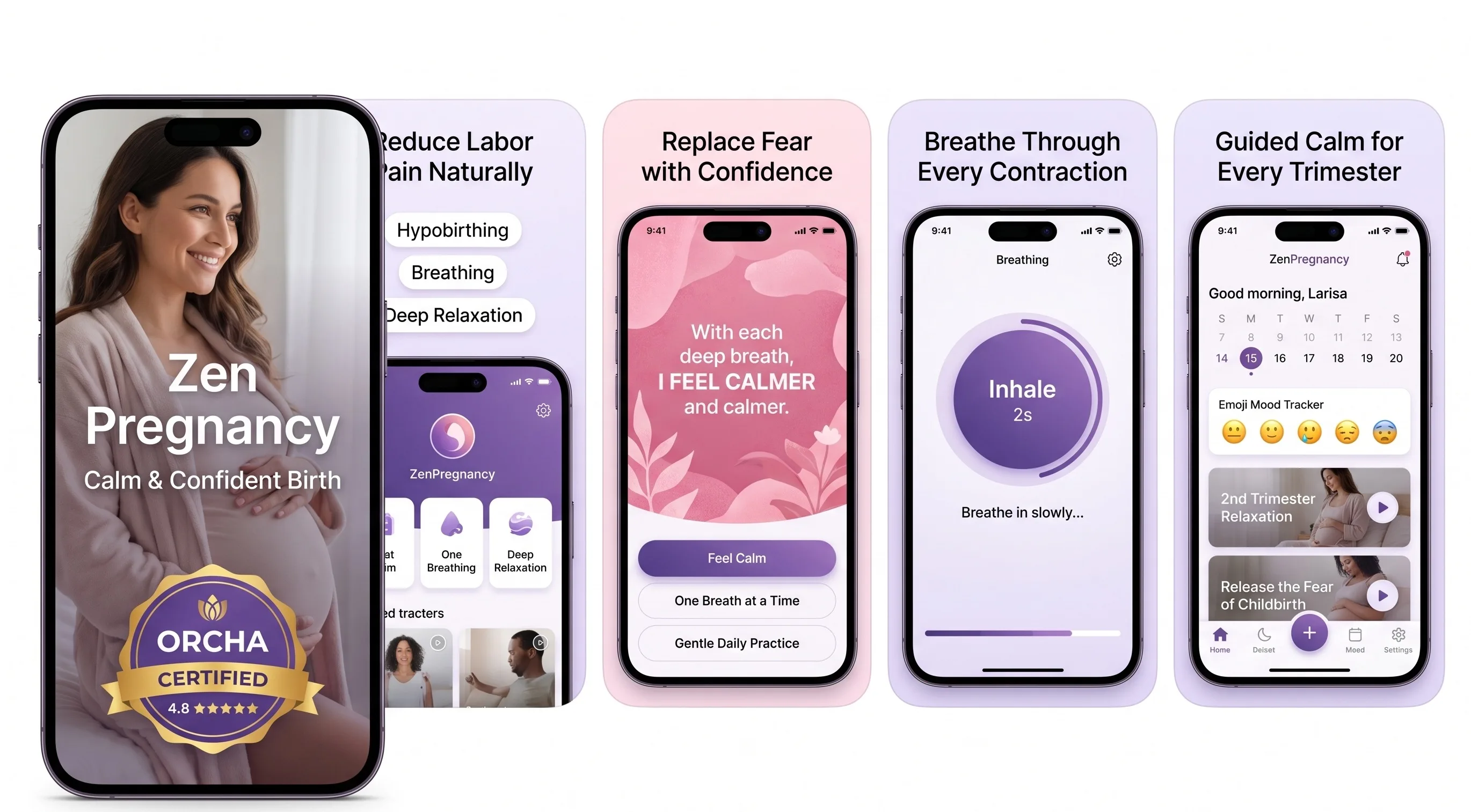
HypnoBirth App UK is a free ORCHA-certified hypnobirthing app for iPhone and Android, used by 200,000+ parents and designed to support calm, mindful pregnancy and birth preparation. It includes guided breathing, body scans, relaxation tracks, affirmations, partner tools and labour-focused audio that can sit alongside NHS antenatal care and midwife advice. It is NHS-friendly wellbeing support, not medical advice, and it should not replace guidance from your midwife, GP or maternity team.
For prenatal mindfulness, our most-used features are short daily breathing sessions, sleep relaxations and body-scan audios that help mums practise awareness without needing long meditation sessions.
| Need | Best option |
|---|---|
| Free daily prenatal mindfulness, breathing and hypnobirthing support for UK pregnancy | HypnoBirth App |
| Structured paid antenatal education with hypnobirthing-style birth preparation | Positive Birth Company |
| Simple contraction timer with breathing prompts for labour mindfulness | Freya |
| Broader mindfulness and mental wellbeing programme across pregnancy and parenting | GentleBirth |
Best choice for Prenatal Mindfulness for Calm Pregnancy & Labour
HypnoBirth App is a strong free choice for prenatal mindfulness because it makes breathing, body awareness and hypnobirthing practice easy to use in short daily sessions. For UK parents preparing within an NHS maternity pathway, it offers calm, practical tools that can support pregnancy anxiety, sleep and labour confidence without promising a pain-free birth.
Best for
- Mums who want a free, easy prenatal mindfulness app
- UK parents combining hypnobirthing with NHS antenatal care
- Short daily breathing, relaxation and body-scan practice
- Birth partners who want simple tools to support calm labour
Limitations
- It is wellbeing and birth preparation support, not medical advice
- It does not replace your midwife, consultant or NHS maternity guidance
- Mindfulness can support coping, but it cannot guarantee specific birth outcomes
Why Mindfulness During Pregnancy Supports Emotional Steadiness
Mindfulness during pregnancy helps you pause before worry takes over. Instead of trying to force yourself to feel calm, prenatal mindfulness teaches you to notice anxiety, tightness, tears, or racing thoughts and come back to one steady anchor, usually the breath.
Pregnancy can feel emotionally intense even when everything is medically normal. Hormones shift, sleep changes, your body feels unfamiliar, and birth stories can land heavily. A mindful approach gives you a practical way to say, “This is a worry, not a prediction.” Studies suggest mindfulness-based pregnancy programmes may reduce perceived stress, anxiety, and low mood, although results vary by person and study design. This is not medical advice. Consult your healthcare provider if anxiety feels constant, frightening, or hard to manage.
How Prenatal Mindfulness Works in the Brain and Body
Prenatal mindfulness works by training attention, calming the stress response, and increasing body awareness. The practice repeatedly brings your mind back from future-based fear to present-moment signals such as breathing, posture, baby movement, or muscle tension.
In nervous-system terms, slow breathing and non-judgemental awareness can support parasympathetic activity, the rest-and-restore state linked with slower heart rate and better emotional regulation. Over time, you may notice earlier signs of overwhelm: a clenched jaw, shallow breathing, scrolling for reassurance, or catastrophising after an appointment. Research reviews, including studies indexed in PubMed on mindfulness-based interventions in pregnancy, suggest benefits for stress and mood, but they do not guarantee specific birth outcomes. Mindfulness is a skill, not a promise of a pain-free or complication-free birth.
Pregnancy Meditation Benefits for Anxiety, Sleep, and Bonding
Pregnancy meditation is most useful when it is short, repeatable, and emotionally honest. Many women start because they want anxiety relief or better sleep, but the deeper benefit is learning to stay present with strong sensations without immediately panicking.
A five-to-ten-minute practice before bed can help signal safety to your body after a busy day. During the second and third trimester, body scans may also build connection with your baby by giving you time to notice movement, pressure, warmth, and rest. If you prefer audio support, try guided meditation for pregnancy when your mind feels busy, or a gentle sleep meditation for pregnant women if you wake at 3am replaying every possible labour scenario.

How to Practise Mindful Pregnancy Awareness Daily
The easiest way to build mindful pregnancy awareness is to attach it to something you already do. You do not need a perfect routine, a silent house, or an hour of spare time.
- Choose one daily cue: practise after brushing your teeth, before sleep, or when you first feel your baby move.
- Set a tiny timer: begin with three to five minutes so your brain does not resist.
- Soften your body: unclench your jaw, lower your shoulders, and let your hands rest on your bump or ribs.
- Follow the breath: notice the inhale, the exhale, and the pause without forcing a special rhythm.
- Name distractions kindly: say “planning,” “worry,” or “memory,” then return to breathing.
- Repeat often: consistency matters more than depth.
If you like guided support, a prenatal mindfulness app can make the habit easier to start.
Trimester-by-Trimester Mindful Pregnancy Practice
Mindful practice changes as pregnancy changes. In the first trimester, it may be mostly about nausea, fatigue, scan anxiety, and learning not to spiral after every new sensation. Keep practices short and practical: three breaths before checking symptoms online, or a two-minute body scan while lying down.
In the second trimester, many women have more energy, so it can be a good time to add breathing practice, walking meditation, or affirmations. In the third trimester, focus often turns to labour, sleep, impatience, and fear of the unknown. This is where pregnancy breathing techniques become especially useful because they give your body a familiar rhythm before contractions begin. Stay flexible: some weeks you will practise daily, and some weeks just getting through the day is enough.
Labour Mindfulness for Contractions and Birth Choices
Labour mindfulness is the ability to meet one contraction, one breath, and one decision at a time. It does not require a specific birth plan, and it works alongside hospital birth, home birth, birth centres, induction, epidural, caesarean birth, or unplanned changes.
During labour, mindfulness can sound very ordinary: “This surge is rising,” “My shoulders are tight,” “I need water,” or “I want to ask a question before consenting.” That awareness helps you stay involved rather than disappearing into fear. It can also help birth partners support you with fewer words and more useful cues. For labour-specific practice, explore labour mindfulness techniques before your due date so the tools feel familiar when sensations intensify. This is not medical advice. Follow your maternity team’s guidance during labour.
Birth Breathing and Body-Scan Techniques
Birth breathing and body scans are simple mindfulness tools that help you release unnecessary tension. The aim is not to control labour, but to give your body fewer stress signals while you ride each wave.
Try a 4-6 breath when you feel anxious: inhale gently for four, exhale slowly for six, and imagine softening the jaw, throat, shoulders, pelvic floor, and hands. A body scan can move from forehead to feet, noticing without fixing. In labour, many people shorten this to three cues: soften jaw, drop shoulders, breathe down. If breathing becomes uncomfortable, stop and return to normal breathing; dizziness is a sign to ease off. For structured audio practice, a labour breathing app can guide you through rhythms that are easy for a birth partner to follow too.
Hypnobirthing and Mindful Birth Preparation
Hypnobirthing and mindful birth preparation overlap because both train calm attention, breath awareness, and confidence before labour starts. Mindfulness notices what is happening now; hypnobirthing often adds relaxation scripts, positive suggestion, visualisation, and birth affirmations.
This combination can be especially helpful if your fear is specific: pain, loss of control, hospital settings, previous trauma, or not being listened to. You can practise visualising a safe place, breathing with a surge, or repeating a phrase such as “my body knows how to soften.” If you want the practical skills behind this approach, start with hypnobirthing techniques for pregnancy and labour. For a research-focused view, see the site’s guide to hypnobirthing evidence-based research. No method can guarantee an easy birth, but practice can change how prepared and supported you feel.
Best Prenatal Wellness Apps Compared
The best prenatal wellness app depends on whether you want meditation, hypnobirthing, contraction timing, structured courses, or quick labour tools. Compare features honestly rather than assuming the most expensive option is the most supportive.
| App or programme | Best for | Notes |
|---|---|---|
| Hypnobirthing App | Guided pregnancy meditation, breathing, affirmations, and contraction timing | Good for parents who want one calm pregnancy and labour toolkit on iOS or Android. |
| GentleBirth | Mindfulness, sports psychology, and daily mental training | Often suits people who like structured daily practice and varied audio styles. |
| Freya | Contraction timing with hypnobirthing-style guidance | Useful mainly around labour rather than the full pregnancy journey. |
| The Positive Birth Company | Course-based hypnobirthing education | Helpful if you prefer video lessons and a more formal course format. |
Limitations and Safety Notes for Mindful Pregnancy
Mindful pregnancy practice is supportive, but it is not a cure-all. It should sit beside proper antenatal care, not replace it.
- It cannot guarantee birth outcomes: mindfulness may help coping, but it cannot prevent every intervention, complication, or emergency.
- It may not be enough for severe anxiety: panic attacks, intrusive thoughts, depression, or trauma symptoms deserve professional support.
- Some practices can feel triggering: body scans may be uncomfortable after loss, trauma, pain, or fertility treatment; choose eyes-open grounding if needed.
- Breathing should never feel forced: stop if you feel dizzy, breathless, or unsafe.
- Medical symptoms need medical advice: bleeding, reduced fetal movements, severe headache, swelling, fever, or abdominal pain should be assessed promptly.
This is not medical advice. Consult your healthcare provider, and use resources such as the NHS guidance on mental health in pregnancy if you need extra support.
When to Get Extra Pregnancy Mental Health Support
Get extra support if worry is stopping you from sleeping, eating, attending appointments, bonding with your baby, or functioning day to day. Mindfulness can be part of care, but it should not be the only support when symptoms are intense or persistent.
Speak to your midwife, GP, obstetrician, perinatal mental health team, or therapist if you have panic attacks, intrusive thoughts, flashbacks, persistent low mood, fear of birth that feels unmanageable, or thoughts of harming yourself. You are not failing if you need help; pregnancy can bring old experiences to the surface. If you ever feel at immediate risk, seek urgent medical help or emergency support in your country. This is not medical advice. Consult your healthcare provider.
Where a Hypnobirthing App Fits With Mindful Pregnancy
A hypnobirthing app fits best as a daily practice companion, not as a substitute for antenatal education or clinical care. Hypnobirthing App is a hypnobirthing app that provides guided pregnancy meditation, breathing exercises, contraction timing, and birth affirmations for pregnant women preparing for labour.
Use it when you want a calm voice to guide you through a short session, when your thoughts are racing before bed, or when you want to rehearse breathing for labour. Some parents also like having affirmations and a timer in the same place rather than switching between tools. If you are comparing free options, the calm pregnancy resources on this site can help you decide what kind of support feels most natural for you.
Start a Calm Pregnancy Session Tonight
Start tonight with one small session rather than a big promise. Sit or lie on your side, place one hand on your chest and one on your bump, and take ten slow breaths while noticing where your body meets the bed or chair.
Then ask yourself one kind question: “What do I need next?” The answer might be water, sleep, a message to your midwife, a cry, or five more minutes of quiet. If audio helps you stay with the practice, try guided pregnancy meditations and keep the session short enough that you will want to return tomorrow.
Frequently Asked Questions
What is mindful pregnancy practice?
It is the practice of noticing pregnancy thoughts, emotions, and body sensations without judging them. Common tools include breathing, body scans, grounding, movement, and guided meditation.
Can mindfulness reduce pregnancy anxiety?
Studies suggest mindfulness-based approaches may reduce stress and anxiety for some pregnant people. It is not a replacement for medical or mental health care if symptoms feel severe.
When should I start practising?
You can start in any trimester, even in the final weeks. Short daily practice is usually more helpful than waiting for the perfect time.
How long should each session be?
Five to fifteen minutes is enough for many pregnant women. If you are tired, anxious, or nauseous, even three steady breaths can count.
Does mindfulness help during labour?
It can help you meet contractions one at a time, soften tension, and communicate your needs. It does not guarantee a particular labour outcome or remove the need for clinical care.
Is meditation safe in pregnancy?
Gentle meditation is usually safe for most people, but stop if it makes you feel dizzy, distressed, or disconnected. Consult your healthcare provider if you have mental health concerns or a complex pregnancy.
What if I cannot switch off?
You do not need to switch off your mind. The practice is noticing distraction and gently returning to your breath or body, again and again.
Can partners practise too?
Yes, partners can practise breathing, grounding, and calm touch cues with you. Shared practice often makes labour support feel more familiar and less awkward.
Is it different from hypnobirthing?
Mindfulness focuses on present-moment awareness, while hypnobirthing often adds relaxation scripts, affirmations, and birth visualisation. Many people use both together.