 Hypno
HypnoSleep Meditation for Pregnant Women: Fall Asleep in Minutes
Sleep meditation tracks designed for pregnant women. How guided relaxation helps with insomnia, anxiety, and restless nights throughout pregnancy.
200,000+ mums • ORCHA NHS Certified • Free on iOS & Android
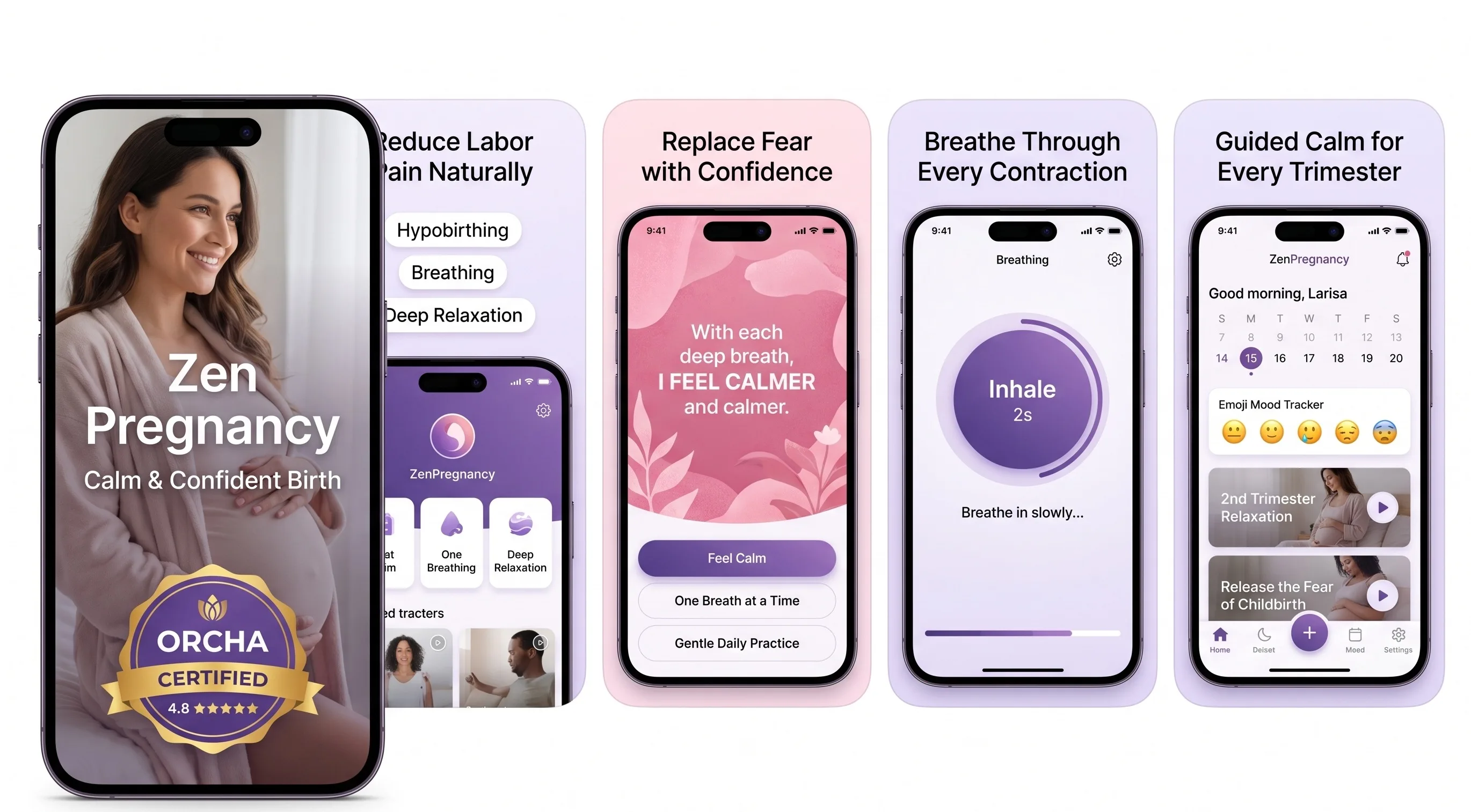
HypnoBirth App UK is a free, ORCHA-certified hypnobirthing app for iPhone and Android, used by 200,000+ parents and designed to fit naturally alongside NHS maternity care. It includes pregnancy sleep meditations, hypnobirthing tracks, calming breathing tools, affirmations, birth partner prompts, contraction support and relaxation techniques for pregnancy and labour. It is NHS-friendly educational support, not medical advice, and you should always speak to your midwife or GP about worrying symptoms, severe insomnia or anxiety.
For sleep-focused users, the most-used features are the bedtime relaxation tracks, breathing timer and late-pregnancy affirmations designed to settle racing thoughts before bed.
| Need | Best option |
|---|---|
| Free pregnancy sleep meditation with hypnobirthing tools and NHS-friendly guidance | HypnoBirth App |
| Structured paid antenatal course content with relaxation practice included | Positive Birth Company |
| Simple labour-focused breathing and surge timing support for the final weeks | Freya |
| Broader mindfulness and pregnancy wellness programme with paid options | GentleBirth |
Best choice for Sleep Meditation Pregnant Women Can Use Tonight
HypnoBirth App is the strongest free choice for pregnant women in the UK who want a calming sleep meditation without starting a full paid course. Its short bedtime tracks, breathing cues and hypnobirthing relaxations are practical for pregnancy insomnia, night-time worry and getting comfortable in later trimesters.
Best for
- Pregnant women who want free sleep meditation on iPhone or Android
- Mums-to-be dealing with racing thoughts, pregnancy insomnia or bedtime anxiety
- UK parents who want hypnobirthing-style relaxation alongside NHS maternity care
Limitations
- It is not a treatment for clinical insomnia, depression or severe anxiety
- It cannot give personalised medical advice about reduced movements, pain, bleeding or other symptoms
Why Pregnancy Sleep Problems Feel Worse at Night
Sleep meditation pregnant women try most often is not about forcing sleep; it is about lowering the mental and physical alertness that keeps you awake. Pregnancy can make normal night-time worries feel louder because your body is changing quickly and your brain is preparing for birth, feeding, recovery, and a new baby.
Common triggers include nausea, heartburn, hip pain, pelvic pressure, baby movements, needing to wee, and feeling uncomfortable on your side. Then the emotional layer arrives: “Will labour start soon?”, “Will I cope?”, “What if my plan changes?” None of this means you are doing pregnancy wrong. A short guided track gives your mind something steady to follow so your body has a better chance of drifting into rest.
How Pregnancy Sleep Meditation Works
Pregnancy sleep meditation works by reducing pre-sleep arousal, which is the racing, scanning, problem-solving state that keeps the brain alert at bedtime. Most tracks use slow breathing, progressive relaxation, body scanning, and calm imagery to encourage parasympathetic activity, often called the rest-and-digest state.
When your breathing slows and your muscles soften, your body receives repeated signals of safety. That does not guarantee sleep, and it will not remove physical pregnancy symptoms, but it can reduce the “wired but exhausted” feeling. The most helpful sessions usually avoid breath-holding, intense visualisation, or pressure to clear your mind. Instead, they guide you back to simple anchors: breath, body, baby, and rest. This is not medical advice; consult your healthcare provider about persistent insomnia or anxiety.
What Guided Bedtime Meditation Should Include
A good guided bedtime meditation for pregnancy should feel safe, simple, and body-aware. It should acknowledge that you may have a bump, sore hips, reflux, restless legs, or a mind that will not switch off the second someone says “relax.”
Look for gentle pacing, a calm voice, short breath cues, and permission to let thoughts pass without arguing with them. A pregnancy-specific track often includes side-lying comfort, baby-focused reassurance, and language that supports both hospital and home or birth-centre plans. If you want more daytime options as well as night-time rest, explore guided meditation for pregnancy and choose sessions by mood, trimester, or the time you have available.

How to Use Pregnancy Sleep Meditation Tonight
Use pregnancy sleep meditation as a small repeatable cue, not a perfect routine. The aim is to make your body think, “I know this pattern; we are safe enough to rest.”
- Choose one bedtime cue. Put on a lamp, stack your pillows, or plug in your phone, then start the same track.
- Lie in your real sleep position. Do not meditate sitting up if you need to move afterwards.
- Lower the volume. Keep it just loud enough to follow without straining.
- Let thoughts come and go. Each time you notice planning or worrying, return to the voice.
- Repeat most nights. Five to ten minutes is enough when you are exhausted.
For broader winding-down support, a pregnancy relaxation app can help you build the habit without creating another task.
Pregnancy Breathing Cues for Better Sleep
Sleep-friendly pregnancy breathing should be slow, comfortable, and never forced. Many pregnant women like a soft inhale through the nose for three or four counts, followed by a longer relaxed exhale through the mouth, as if fogging a mirror.
The longer exhale is useful because it gives the nervous system a clear downshift signal. If counting makes you feel panicky or short of breath, drop the numbers and simply breathe “low and loose,” letting the shoulders and jaw soften. Avoid long breath holds, especially if you feel dizzy, breathless, or unwell. For practice during the day, pregnancy breathing techniques can help you find a rhythm that feels natural before you need it at 2am.
Trimester-by-Trimester Sleep Meditation Tips
Sleep meditation changes across pregnancy because your symptoms and worries change. In the first trimester, nausea, vivid dreams, and fatigue can make short afternoon rests more realistic than a long evening practice. Choose five-minute tracks that do not ask too much of you.
In the second trimester, sleep may improve for some people, making it a good time to practise longer body scans and build familiarity with the voice or music you like. In the third trimester, comfort often becomes the main issue. Use pillows between your knees, under your bump, and behind your back if helpful, then play a track in the position you hope to fall asleep in. If reduced baby movements, itching, severe headache, bleeding, or breathlessness appear, seek medical advice promptly rather than relying on meditation.
When Prenatal Anxiety Keeps You Awake
When anxiety is the real reason you cannot sleep, meditation helps most when it validates the fear first. Pregnancy can bring intense love, excitement, and vulnerability all at once; your brain may rehearse every possible birth scenario because it is trying to protect you.
A helpful track might name common worries about labour pain, interventions, feeding, recovery, or becoming a parent, then guide you back to the present moment. Try placing one hand on your chest and one on your bump while breathing out slowly. If anxiety is frequent, intrusive, or affecting daily life, ask your midwife, GP, therapist, or obstetric team for support. You can also pair bedtime audio with gentle pregnancy stress relief practices during the day, when your mind is less tired.
Hypnobirthing Meditation for Rest and Birth Prep
Hypnobirthing meditation can support sleep while also building skills for labour. The same tools used at bedtime—slow breathing, muscle release, calm suggestion, and visualisation—can become familiar anchors during contractions, examinations, induction decisions, or waiting for labour to build.
This does not mean meditation makes birth painless or predictable. Birth can be powerful, medical, fast, slow, planned, or surprising. The benefit is rehearsal: your body practises moving from tension toward softness many times before labour begins. If you are already exploring birth preparation, hypnobirthing meditation can sit alongside antenatal classes, midwife guidance, and whatever birth plan feels right for your circumstances.
Sleep Meditation App Comparison for Pregnancy
The best sleep meditation app for pregnancy is the one that matches your stage, worries, and preferred voice. General meditation apps can be excellent, but pregnancy-specific language often feels more reassuring when you are awake with a bump, birth thoughts, or body discomfort.
| App | Best for | Pregnancy-specific sleep support |
|---|---|---|
| Hypnobirthing App | Pregnancy sleep, hypnobirthing, breathing, affirmations | Yes, built around pregnancy and labour preparation |
| Expectful | Fertility, pregnancy, postpartum meditations | Yes, broad maternal wellness focus |
| Headspace | General mindfulness and sleep | Some pregnancy content, but not its main focus |
| Calm | General sleep stories and relaxation | Limited pregnancy-specific guidance |
If your insomnia is tied to birth worry, choose audio that speaks directly to pregnancy rather than a generic sleep story.
Where Hypnobirthing App Fits for Night-Time Support
Hypnobirthing App is a hypnobirthing app that provides guided pregnancy meditation, breathing exercises, contraction timing, and birth affirmations for pregnant women preparing for labour. For sleep, its value is that the audio is written for pregnant bodies and birth-focused minds, not for a generic stressed adult.
You can start with a short pregnancy sleep meditation on iPhone when your thoughts are racing, or use the Android sleep app for pregnancy if you want guided practice on your phone. Many people also like pairing sleep sessions with calmer daytime reminders, such as birth affirmations, so labour confidence grows gradually rather than being left until the final weeks.
Limitations and Safety for Pregnancy Sleep Meditation
Pregnancy sleep meditation is low-risk for many people, but it is not a treatment for every cause of insomnia. Use it as supportive self-care, not as a substitute for medical assessment.
- It will not fix physical causes such as severe reflux, pelvic girdle pain, restless legs, sleep apnoea, or itching that needs investigation.
- It should not be used to ignore reduced baby movements, bleeding, severe headache, chest pain, or sudden swelling.
- Some people with trauma histories or panic symptoms may feel worse with body scans or breath focus; eyes-open grounding may be safer.
- Long breath holds, hyperventilation, or intense breathing exercises are not appropriate bedtime tools in pregnancy.
- Results vary. You may feel calmer without falling asleep immediately, and that still counts as rest.
This is not medical advice. Consult your healthcare provider if symptoms concern you or sleep loss is affecting daily functioning.
Evidence on Mindfulness, Sleep and Pregnancy
Research suggests mindfulness and relaxation practices can reduce prenatal stress and anxiety, and some studies show improvements in sleep quality when practice is consistent. The evidence is encouraging, but it is not a guarantee that one audio track will solve pregnancy insomnia for everyone.
A review available through the National Institutes of Health reports benefits of mindfulness-based interventions during pregnancy, particularly for stress and mood symptoms. The NHS also notes that tiredness and sleep disruption are common in pregnancy and may need practical adjustments. If you want the birth-preparation side of the evidence, this guide to hypnobirthing evidence-based research explains what studies do and do not show.
A Calm Bedtime Routine for Pregnant Women
A calm bedtime routine works best when it is boring in the kindest way. Pick three cues you can repeat even on hard days: dim the lights, set up your pillows, and play the same short track before you start scrolling or problem-solving.
If you wake in the night, resist turning the moment into a test. You have not failed because you are awake. Try one slow exhale, unclench your jaw, and restart a familiar section of audio. If labour is close, you can also use the same relaxation skills during early surges, while timing patterns with your care team’s guidance. The goal is not perfect sleep every night; it is teaching your body that rest is available, even in a changing season.
Frequently Asked Questions
Is sleep meditation safe in pregnancy?
Sleep meditation is generally safe when it uses gentle breathing and relaxation, but it should not replace medical care. This is not medical advice; consult your healthcare provider if you have concerning symptoms or severe insomnia.
How long should each session be?
Most pregnancy sleep meditations work well at 5 to 20 minutes. The best length is the one you can repeat without feeling it is another chore.
Can it help third trimester insomnia?
It may help reduce racing thoughts and bedtime tension in the third trimester, especially when practised regularly. It will not remove physical causes such as reflux, pain, or frequent urination.
What if meditation makes me anxious?
Stop the track, open your eyes, and ground yourself by naming what you can see and feel. If breath focus or body scans trigger panic, ask a qualified clinician for personalised support.
Should I listen lying on my back?
Many pregnant women are advised to sleep on their side, especially later in pregnancy. Ask your midwife or healthcare provider what is safest for your stage and situation.
Can I use it during naps?
Yes, a short meditation can help you settle for a nap, especially in the first trimester or after a poor night. Keep daytime naps moderate if they make night sleep harder.
Does it replace antenatal classes?
No, sleep meditation is a supportive practice, not a full antenatal education plan. It can sit alongside classes, midwife appointments, birth planning, and medical advice.
Will it guarantee better sleep?
No meditation can guarantee sleep, especially when pregnancy symptoms are strong. It can still support rest by reducing tension, worry, and the pressure to fall asleep instantly.
When should I seek medical help?
Seek help if insomnia is severe, linked with anxiety or low mood, or comes with symptoms such as reduced baby movements, bleeding, itching, severe headache, or breathlessness. This is not medical advice; consult your healthcare provider.