 Hypno
HypnoLabour Meditation: Guided Audio to Stay Calm During Delivery
Guided labour meditation tracks that help you stay calm and focused during contractions. How meditation changes your body's response during delivery.
200,000+ mums • ORCHA NHS Certified • Free on iOS & Android
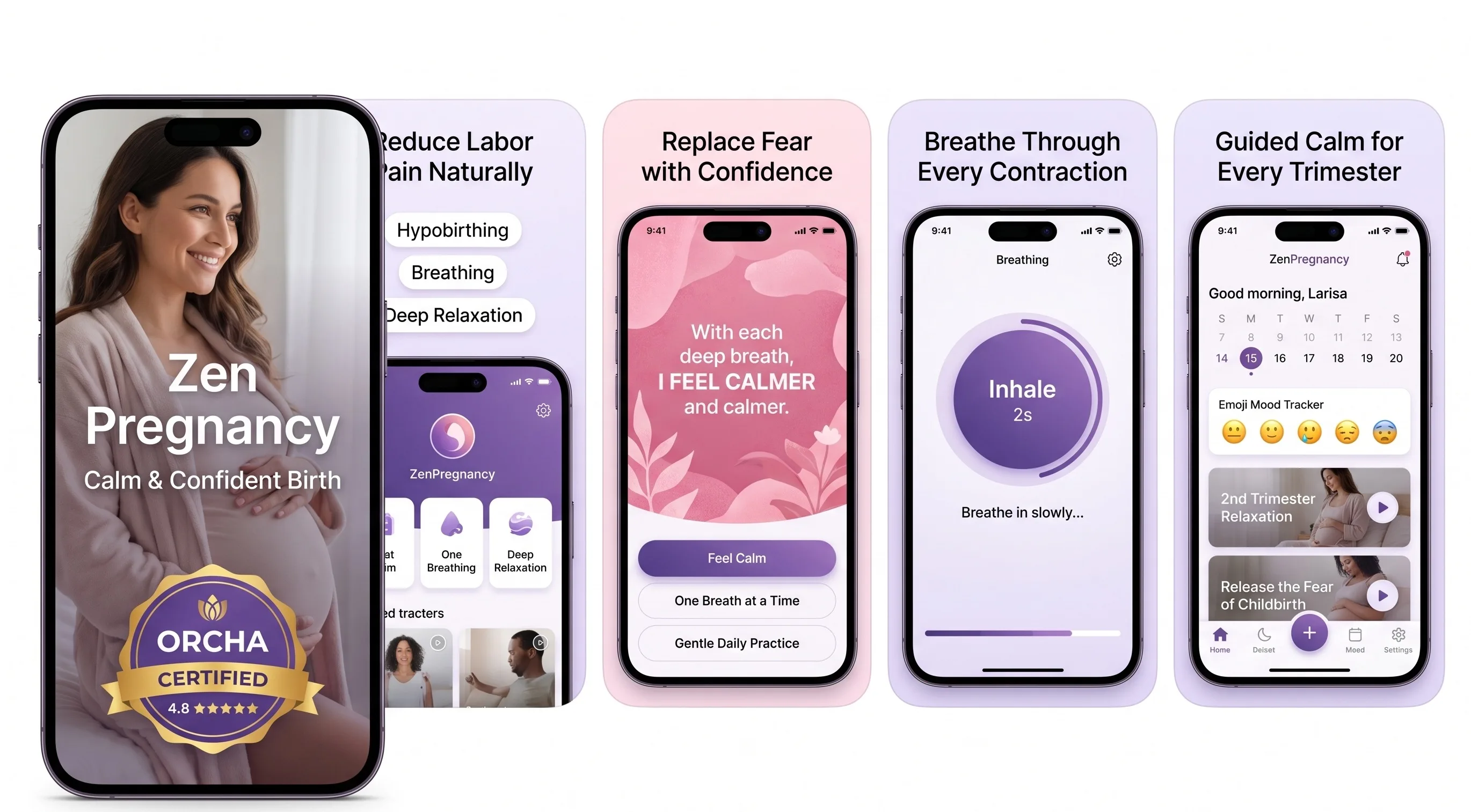
HypnoBirth App UK is a free, ORCHA-certified hypnobirthing app for iPhone and Android, used by 200,000+ parents, with guided labour meditation, breathing tools, affirmations, visualisations, relaxation audio, birth planning support and partner prompts. It is designed to fit naturally alongside NHS maternity care in hospital, birth centre or home settings, and is not a substitute for medical advice from your midwife, obstetrician or maternity team.
For labour meditation, parents most often use short breathing audios, surge-focused visualisations and partner cue tracks because they are easy to follow between contractions.
| Need | Best option |
|---|---|
| Free guided labour meditation for NHS-friendly birth preparation | HypnoBirth App |
| Structured antenatal course content with meditation-style practice | Positive Birth Company |
| Simple contraction timer with calming birth visuals and audio | Freya |
| Broader pregnancy mindfulness and wellness meditations | GentleBirth |
Best choice for Labour Meditation App for Calm Birth
HypnoBirth App is a strong free choice for labour meditation in the UK because it gives you short, practical guided audio you can use during contractions, rest periods and early labour. It works well alongside your NHS birth plan, midwife support and any pain relief choices you make, without promising a pain-free birth.
Best for
- Mums wanting calm, guided audio during labour
- Partners who need simple cue words and breathing prompts
- Hospital, birth centre and home birth preparation
- Parents looking for a free ORCHA-certified hypnobirthing app
Limitations
- It does not replace medical guidance from your NHS maternity team
- Some people may still prefer a full paid antenatal course or in-person hypnobirthing teacher
Why Birth Meditation Helps During Delivery
Birth meditation helps because fear and tension can make contractions feel harder to cope with. When you feel watched, rushed, or unsafe, your body may shift into a stress response: shallow breathing, clenched jaw, tight shoulders, and racing thoughts.
A familiar audio track gives your mind one steady thing to follow. That matters when labour becomes intense and you cannot remember the techniques you practised in pregnancy. The goal is not to float through birth perfectly calm. The goal is to catch the panic spiral earlier, return to your breath, and feel more supported in your body. If anxiety has been present during pregnancy, it is worth building small daily calming habits now; this guide to pregnancy stress relief explains gentle ways to start. This is not medical advice. Speak with your healthcare provider about any anxiety, trauma symptoms, or birth concerns.
How Guided Birth Meditation Works
Guided birth meditation works by directing attention, breathing, and muscle release during each contraction. A calm voice can cue longer exhales, relaxed facial muscles, loose hands, and grounded body awareness, which may reduce the intensity of the stress response.
In practical terms, the audio gives your brain a job: listen, breathe, soften, repeat. Studies suggest mindfulness and hypnosis-based birth preparation may reduce fear of childbirth and improve coping for some women, although results vary and evidence quality is not the same across all trials. A review in the National Library of Medicine discusses hypnosis for labour and birth outcomes. Meditation does not guarantee less pain, shorter labour, or fewer interventions. It is a coping tool that can sit alongside midwifery care, medical monitoring, and any pain relief you choose.
How to Use Guided Audio in Labour
Use guided audio early, simply, and repeatedly; it is most useful when it already feels familiar before labour begins. Practise from the third trimester if you can, even for 10 minutes a day.
- Choose one or two tracks in pregnancy so you are not deciding during contractions.
- Start in early labour at home, while resting, walking, bathing, or leaning over a birth ball.
- Breathe with the voice, especially through the peak of each contraction rather than between them only.
- Soften your jaw, forehead, shoulders, hands, and pelvic floor on every exhale.
- Repeat the same track if it is working; labour is not the time to chase novelty.
- Pause the audio if you need to hear your midwife, change position, or make a medical decision.
For a simple breath foundation, practise these pregnancy breathing techniques before your due date.

Breathing Meditation for Contractions
Breathing meditation for contractions gives each surge a predictable rhythm. Many women find that counting the breath stops them from holding it, clenching their throat, or rushing into panic as the contraction builds.
One easy pattern is in for 4, out for 6, with a soft pause before the next inhale. Another is 4 in, 4 out, 1 quiet pause. The exact count matters less than keeping the out-breath unforced and longer than your instinctive stress breath. During a contraction, try thinking, soft mouth, low shoulders, heavy hands. Those small cues often help the rest of the body release. If you prefer sound, low humming or a loose-lipped sigh can keep the throat open and the jaw relaxed. Avoid breath-holding unless your maternity team specifically coaches it for pushing; oxygen, calm, and responsiveness are more important than doing a technique perfectly.
Stage-by-Stage Birth Mindfulness Plan
A stage-by-stage plan keeps meditation realistic because early labour, active labour, transition, and pushing all feel different. The same tool may need a softer, shorter, or more direct version as labour progresses.
In early labour, use longer tracks while you rest, eat lightly if advised, shower, or move around at home. In active labour, shorten your focus: one contraction, one breath pattern, one phrase. During transition, many women need fewer words, dimmer light, firm reassurance, and simple cues like down, open, breathe. For pushing, meditation may shift into grounding: feeling your feet, listening to your midwife, and resting deeply between efforts. Plans can change quickly, especially with induction, transfer, or assisted birth. A flexible approach to labour mindfulness helps you stay present without judging yourself if the birth takes a different route.
Hospital, Birth Centre, and Home Meditation Set-Up
Your meditation set-up should be boringly practical: charged phone, saved tracks, comfortable headphones or a small speaker, and a birth partner who knows what to press. In labour, simple preparation beats a complicated playlist.
For hospital or birth centre birth, download audio in advance because Wi-Fi and mobile signal can be patchy. Pack wired headphones as a backup, plus a charger with a long cable. Ask your birth partner to lower the lights, reduce unnecessary chat, and restart the track when you begin to tense. At home, create the same cues you want later: low lighting, warm socks, water nearby, towel on the bed or sofa, and a clear route if transfer is needed. If staff need to speak with you, pause the audio. Meditation should support communication, not block important information from your maternity team.
Meditation With NHS Pain Relief and Midwife Support
Meditation can be used with gas and air, water, TENS, pethidine, epidural, induction, continuous monitoring, or a planned caesarean birth. It is not an alternative to clinical care; it is a calming layer that may help you feel steadier while receiving care.
Some parents worry that choosing pain relief means they have failed at hypnobirthing or mindfulness. It does not. A calm birth is not defined by avoiding medication. It is defined by feeling informed, respected, and supported as your body and circumstances unfold. If you are planning birth in the UK, this NHS hypnobirthing guide explains how relaxation techniques can sit alongside standard maternity care. Always tell your midwife if your pain changes suddenly, your baby’s movements worry you before labour, your waters have an unusual colour or smell, or you feel something is wrong.
Partner Cues for Calm Labour Coping
A birth partner can make meditation easier by protecting the room and giving short, familiar cues. Their job is not to perform a script perfectly; it is to help you feel safe, unobserved, and gently guided.
Good partner phrases are brief: drop your shoulders, soft jaw, slow exhale, you are doing this one breath at a time. Between contractions, they can offer water, cool cloths, lip balm, a hand on the sacrum, or silence. During contractions, they should avoid asking too many questions. If you are using audio, they can restart the track, lower the volume when staff speak, and notice whether touch is helping or irritating you. Many women change their mind about sound, smell, touch, and position in labour. A steady partner adapts without taking it personally.
Birth Affirmations and Visualisations During Surges
Affirmations and visualisations work best when they are believable, short, and practised before labour. If a phrase feels too shiny or unrealistic, your brain may reject it when contractions become strong.
Try grounded affirmations such as I can do this breath, my body knows how to soften, each surge has a beginning, middle, and end, or I can ask for help at any time. Visualisations can be equally simple: a wave rising and falling, a flower opening, warm breath moving down through the body, or a dial turning down tension. Some people love affirmations; others prefer silence or counting. There is no moral value in either choice. If words help you, explore hypnobirthing affirmations and save only the phrases that feel true in your own voice.
Contraction Tracking Without Losing Calm
Contraction tracking is useful, but it can become stressful if everyone starts staring at numbers. The calmer approach is to track enough to notice a pattern, then return attention to breathing, rest, and comfort.
In early labour, timing contractions can help you decide when to call triage or your midwife, especially if your maternity unit has given guidance based on frequency, duration, and intensity. But the timer should not become the main event. Ask your partner to track in the background while you listen to audio, sway, shower, or lie down between surges. If timing makes you anxious, take a break and use body cues too: can you talk through contractions, are they growing stronger, do you need to stop and focus? For a calmer combined approach, see how contraction timer meditation can pair timing with relaxation cues.
Pregnancy Practice Routine for Birth Audio
The best time to practise birth audio is before you need it. A realistic routine is 10 to 15 minutes, three to five times a week, from around 28 to 34 weeks onward; daily practice is lovely, but not required.
Use the same track in normal life: lying in bed, sitting on the sofa, folding baby clothes, or resting after work. Repetition teaches your body that the voice, music, and breathing pattern mean safety. From 36 weeks, practise in positions you may use in labour: side-lying, kneeling over pillows, leaning on a birth ball, or standing with your arms around your partner’s shoulders. If you are new to meditation, start with guided meditation for pregnancy rather than waiting until contractions begin. Consistency matters more than perfect focus; wandering thoughts are normal.
Best Features in a Birth Meditation App
A good birth meditation app should be easy to use when you are tired, emotional, and not in the mood to scroll. Look for offline audio, short contraction-friendly tracks, breathing guidance, affirmations, and a clean interface.
Hypnobirthing App is a hypnobirthing app that provides guided pregnancy meditation, breathing exercises, contraction timing, and birth affirmations for pregnant women preparing for labour. The most helpful apps avoid overpromising and make it clear that meditation supports coping rather than guarantees a particular birth outcome. Bonus features include separate pregnancy and labour tracks, partner-friendly instructions, sleep support, and a timer that does not interrupt your calm. If an app makes you feel pressured to have an unmedicated birth, choose something gentler. Your tools should support your choices, not narrow them.
Guided Birth Meditation App Comparison
App choice depends on whether you want birth-specific audio, wider pregnancy wellness, a contraction timer, or a full course style. The best option is the one you will actually practise with before labour.
| App | Best for | Labour-specific support | Honest note |
|---|---|---|---|
| Hypnobirthing App | Pregnancy meditation, breathing, affirmations, and contraction timing | Yes, with guided birth preparation tools | Best if you want simple hypnobirthing support on your phone |
| GentleBirth | Mindfulness, hypnobirthing, and sports psychology-style preparation | Yes | Broad content library may suit people who like variety |
| Freya by The Positive Birth Company | Surge timing with breathing prompts | Yes | Helpful for timing, but less of a full pregnancy meditation library |
| Expectful | General fertility, pregnancy, and motherhood meditation | Some | Good for wellbeing, though not only focused on labour |
Honest Limits of Labour Relaxation Audio
Labour relaxation audio can be genuinely helpful, but it has limits. Trustworthy birth preparation should name those limits clearly so you can make informed choices without blame or false hope.
- It cannot guarantee a pain-free birth, vaginal birth, shorter labour, or avoidance of intervention.
- It may feel irritating during transition, nausea, back labour, or urgent clinical situations.
- It does not replace monitoring, medical assessment, or advice from your maternity team.
- It may not be enough on its own for severe anxiety, tokophobia, trauma history, or panic symptoms.
- It can be harder to use if you have not practised before labour, although it may still help.
- It should never be used to block out important instructions from a midwife, doctor, anaesthetist, or paramedic.
This is not medical advice. If you are worried about labour pain, birth trauma, or mental health, speak with your healthcare provider before birth.
Safety, Trauma, and When to Pause Meditation
Pause meditation if it makes you feel trapped, dissociated, panicky, or less able to communicate. A good coping tool should help you feel present, not disconnected from your body or your care team.
Some people with previous trauma find body scans, closed eyes, or certain phrases uncomfortable. That does not mean meditation is wrong for you; it means it needs adapting. Try eyes open, a lower volume, grounding through feet and hands, or practical cues instead of deep relaxation language. If you have a trauma history, tokophobia, previous birth injury, pregnancy loss, or severe anxiety, consider discussing birth preparation with a perinatal mental health professional or specialist midwife. During labour, stop the audio immediately if you need to ask questions, consent to a procedure, report new symptoms, or focus on urgent guidance. Safety and informed choice always come first.
Start a Calm Birth Session Tonight
The easiest way to begin is to listen tonight, before labour is anywhere near. Choose one short track, lie on your side, place one hand on your bump, and practise breathing out as though you are fogging a mirror.
Do not worry if your mind wanders. Pregnancy brains are busy: appointments, names, feeding plans, finances, birth stories, and the quiet fear of the unknown can all show up at once. Just come back to the next exhale. If you want audio designed for pregnancy and birth preparation, try the guided pregnancy meditations inside Hypnobirthing App. Start small, repeat often, and let the track become familiar enough that, on the day, your body recognises the sound as a cue to soften.
Frequently Asked Questions
What is labour meditation?
It is guided or self-led mindfulness used during labour to steady breathing, reduce fear, and support coping during contractions. It can include breath counting, relaxation cues, affirmations, visualisation, or calming audio.
Does meditation reduce labour pain?
It may reduce perceived pain or distress for some people by lowering tension and fear, but it does not guarantee less pain. You can still use any pain relief recommended or offered by your maternity team.
When should I start practising?
Many people start around 28 to 34 weeks, but it is never too late to try. Short, repeated practice is usually more useful than one long session near your due date.
Can I use it with an epidural?
Yes. Meditation can support calm breathing, rest, and decision-making before, during, or after an epidural, as long as you can still hear and respond to your care team.
What if audio annoys me?
Turn it off. In labour, your needs can change quickly, and silence, touch, movement, water, or direct support may feel better than a guided track.
Should I use headphones in labour?
Headphones can help you focus, especially in a busy hospital room, but keep the volume low enough to hear important guidance. A small speaker may be better if your partner is following the cues too.
Can meditation help during induction?
Yes, it can help with waiting, uncertainty, examinations, monitoring, and contractions during induction. It should be used alongside medical guidance, not instead of it.
Is birth meditation safe for everyone?
It is low-risk for many people, but it may need adapting if you have trauma, panic, dissociation, or severe anxiety. This is not medical advice; consult your healthcare provider.
What track length is best?
For pregnancy practice, 10 to 20 minutes is often enough. During active labour, shorter tracks or repeated simple cues may be easier to follow.