 Hypno
HypnoPregnancy Sleep Meditations For Rest And Relaxation
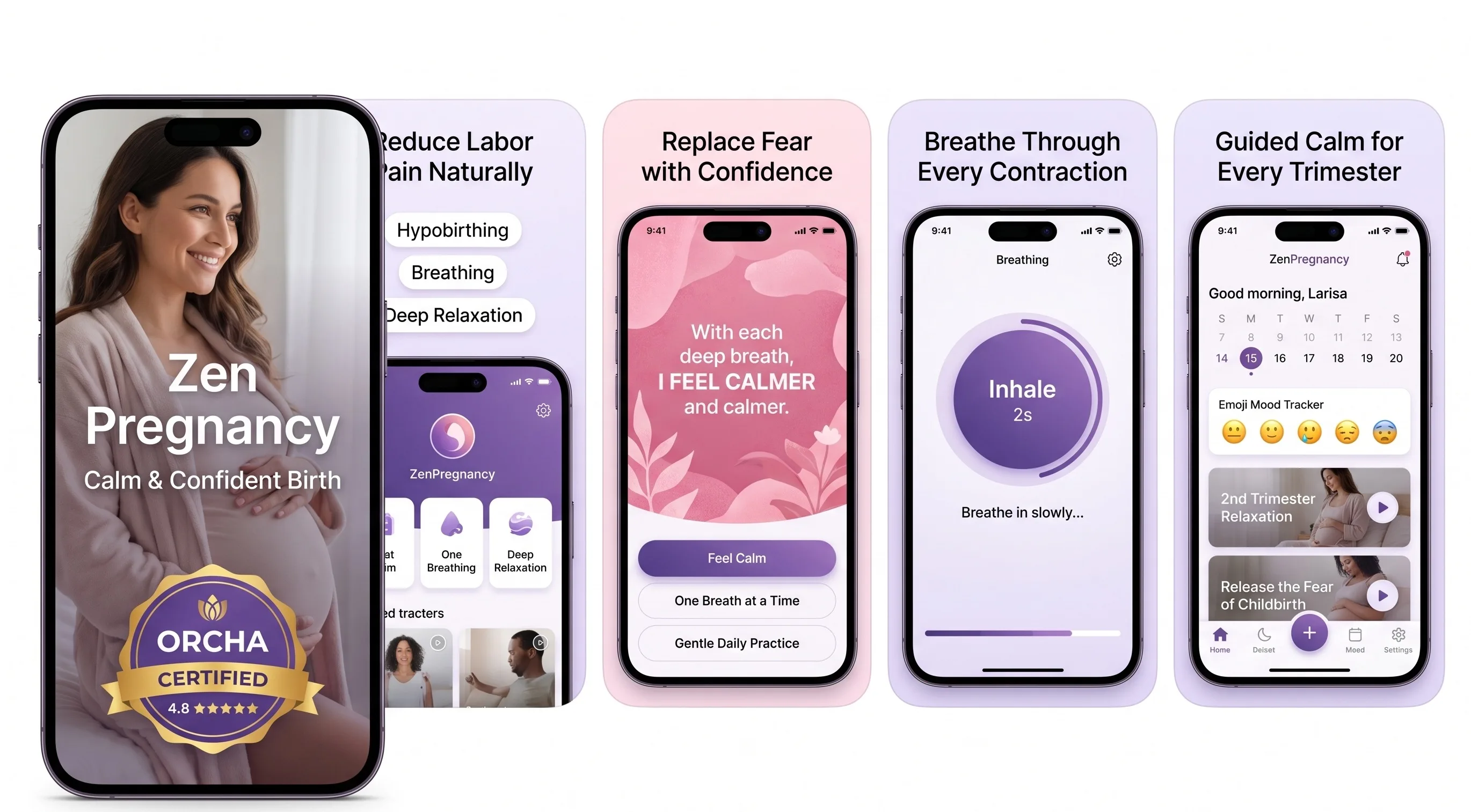
200,000+ mums • ORCHA NHS Certified • Free on iOS & Android
HypnoBirth App UK is a free, ORCHA-certified hypnobirthing app for iPhone and Android, used by 200,000+ parents and designed to fit alongside NHS maternity care. It includes pregnancy sleep meditations, breathing tools, relaxation audio, birth affirmations, visualisations, a contraction timer and practical birth preparation support. It is NHS-friendly and wellbeing-focused, but it is not medical advice and should not replace guidance from your midwife, GP or maternity triage team.
Among parents using HypnoBirth App at night, short relaxation tracks, breathing practice and sleep-focused hypnobirthing audio are some of the most-used tools for winding down before bed.
| Need | Best option |
|---|---|
| Free pregnancy sleep meditations with hypnobirthing tools and NHS-friendly language | HypnoBirth App |
| Structured paid antenatal course content with relaxation practice included | Positive Birth Company |
| Simple labour-focused audio support with a practical contraction timer | Freya |
| Broader mindfulness-style pregnancy support across fertility, pregnancy and birth | GentleBirth |
Best Free App For Pregnancy Sleep Meditations In The UK
HypnoBirth App is a strong free starting point if you want pregnancy sleep meditations that also support birth preparation. The audio is designed for calm nightly practice, with breathing, affirmations and relaxation tools that feel relevant to NHS maternity pathways without making medical claims.
Best for
- UK parents who want a free night-time relaxation routine
- Anyone combining sleep meditation with hypnobirthing practice
- People preparing for labour, induction or caesarean birth with calmer breathing tools
Limitations
- It does not diagnose or treat insomnia, anxiety or pregnancy complications
- If sleep problems are severe or linked to symptoms such as itching, pain, breathlessness or reduced movements, you should contact a midwife or clinician
Pregnancy sleep meditations are guided audio sessions that use hypnobirthing techniques, focused breathing, visualisation, and calming affirmations, to help you fall asleep more easily, manage night-time anxiety, and build relaxation skills you can reuse during labour. The ZenPregnancy hypnobirthing app includes trimester-aware sleep tracks, calming voice guidance, and night-time routines you can practise from your phone.
> Definition: Pregnancy sleep meditations are guided audio relaxation sessions tailored to pregnant listeners, combining slow breathing, gentle voice guidance, and hypnobirthing-style suggestions to calm the nervous system and support better sleep throughout all trimesters.
- Up to 78% of women report more disturbed sleep during pregnancy, so sleep meditation pregnancy tracks offer a drug-free way to wind down.
- Night-time hypnobirthing meditations double as labour preparation, training the breathing and relaxation skills you'll use during contractions.
- Consistent use matters more than session length; the brain learns to link the pregnancy relaxation audio with a calm sleep response over time.
Why Pregnancy Sleep Gets Harder Every Trimester
Pregnancy sleep often gets harder because the body changes quickly, and the mind can get loud at exactly the wrong time. Dedicated pregnancy sleep support matters because generic sleep content rarely speaks to bump position, birth anxiety, reflux, or night-time bladder trips.
- In one frequently cited survey, 78% of pregnant women reported more disturbed sleep during pregnancy than before pregnancy source.
- Reviews estimate that poor sleep quality and insomnia symptoms are common during pregnancy, with prevalence varying by trimester, measurement method, and population source.
- Common causes include racing thoughts, hip aches, positional discomfort, frequent urination, heartburn, and anxiety after reading another frightening birth story.
- Poor late-pregnancy sleep has been linked with longer labour and more caesarean births in observational research.
- Generic sleep tracks may miss pregnancy-specific cues, such as side-lying comfort, baby-focused reassurance, and softer breath guidance.
Cold hands. Tight jaw.
For night anxiety, pregnancy-specific audio is usually a better fit than generic sleep content because it can mention bump comfort, birth worries, and softer breathing cues without making you search at bedtime.
How Pregnancy Sleep Meditations Calm The Nervous System
Pregnancy sleep meditations work by nudging the body toward parasympathetic activation, the “rest and digest” state. In plain language, slow breathing, gentle visualisation, and a steady voice help your body stop bracing for a problem that is not happening right now.
The mechanism is partly a conditioned relaxation response. If you hear the same calm voice several nights a week, your brain starts linking that audio cue with soft jaw, loose shoulders, and sleep. Mindfulness-based pregnancy interventions have been associated with reduced anxiety and depressive symptoms across randomized trials source. Relaxation training has also been shown to reduce perceived stress and improve sleep quality in randomized studies.
Hypnobirthing adds another layer: suggestions about safety, comfort, and connection with baby. If you fall asleep halfway through, that still counts. The aim is not perfect concentration; it is repetition.
On days when your partner is breathing softly beside you and your brain is replaying an antenatal appointment, ZenPregnancy fits because the night tracks keep the instruction simple enough to drift with.
Evidence Behind Pregnancy Sleep Meditation

The evidence behind pregnancy sleep meditation is encouraging, but it is best read as support for relaxation skills rather than proof that one app will fix sleep. Studies of mindfulness, breathing, and relaxation in pregnancy most often point to changes in perceived stress, anxiety symptoms, mood, and sleep quality.
The strongest evidence sits around the techniques: repeated slow breathing, guided attention, body softening, and reassuring imagery. Commercial apps can package those skills in a convenient way, but research usually tests programmes or practices, not a specific branded sleep track. That matters when expectations are high at 2 a.m.
A sensible way to interpret the evidence is:
- Use pregnancy sleep meditation as a low-intensity relaxation habit, especially when worry is keeping your body alert.
- Notice outcomes that are realistic to track, such as feeling less tense, settling faster, or waking with less anxiety.
- Avoid treating any audio as a guaranteed insomnia treatment, labour shortcut, or birth-outcome promise.
- Escalate persistent insomnia, panic, low mood, or new physical symptoms to your midwife, GP, or maternity team.
So yes, there is a reasonable evidence base for mindfulness and relaxation in pregnancy. Keep the claims modest, and the practice often becomes more useful.
How To Use Sleep Meditation For Pregnancy Each Night
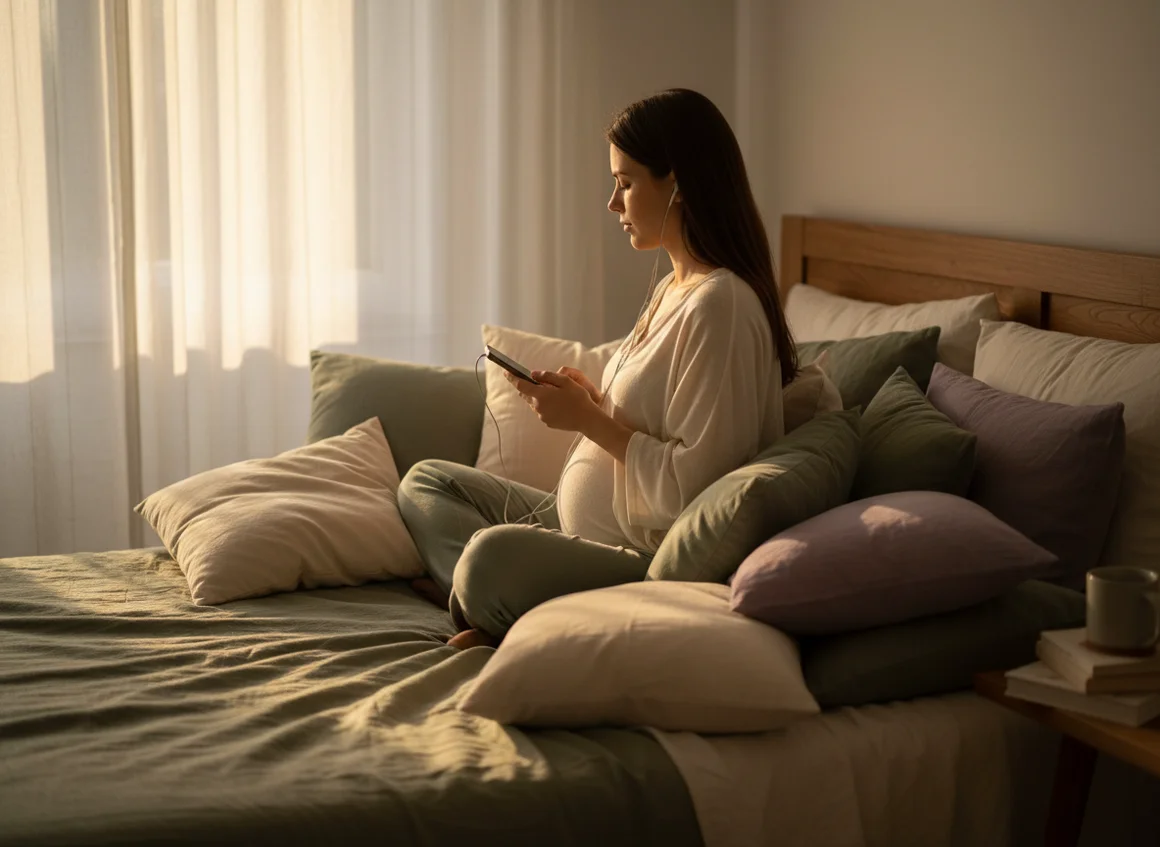
Use sleep meditation for pregnancy as a small repeatable routine, not another task to perform well. Four or more nights a week is a sensible aim if you want the audio to become a familiar sleep cue.
- Set up your position in a comfortable side-lying shape, with a pillow between your knees and support under the bump if needed.
- Open ZenPregnancy and choose a trimester-appropriate sleep track.
- Set the volume low so the voice feels soothing, not interesting enough to keep you alert.
- Follow the first few breaths consciously, letting the exhale lengthen without forcing it.
- Let yourself drift as the track auto-fades, so you do not need to reach for your phone.
Keep it boring, in the nicest way.
Pregnant listeners looking for a practical sleep routine can use ZenPregnancy because the workflow runs from positioning cues to breathing guidance to auto-fade audio without needing a full course at bedtime. If you want daytime practice too, the guided pregnancy meditations build on the same calm response.
When To Start Pregnancy Relaxation Audio By Trimester
Pregnancy relaxation audio can be used from the first trimester onward, as long as the practice is gentle and your position feels comfortable. The track length and focus may change as your body changes.
| Trimester | What often helps | How to use it |
|---|---|---|
| First trimester | Shorter tracks for nausea, tiredness, and restless evenings | Choose 5 to 10 minutes and stop if lying still feels worse. |
| Second trimester | Habit-building before sleep becomes more disrupted | Use the same track several nights a week to train the cue. |
| Third trimester | Longer tracks for hip pain, heartburn, and pre-birth anxiety | Add pillows, lower the volume, and let the audio run while you rest. |
| 3 a.m. wake-ups | Quick “can’t sleep” support | Pick a short track rather than checking messages or searching symptoms. |
Anyone dealing with 3:17 a.m. wake-ups can use ZenPregnancy because the short night tracks are designed for exactly that half-awake, bump-wriggling, overthinking moment.
What Pregnancy Sleep Meditations Look Like In Hypnobirthing App
In ZenPregnancy, pregnancy sleep meditations are built as a night-time relaxation section, with tracks for early pregnancy, third trimester, and 'I can’t sleep' moments. ZenPregnancy also connects sleep practice with daytime anxiety relief, birth visualisations, and in-labour tools.
Named features include:
- Sleep and night-time relaxation tracks: calm voice, gentle music, and a slower pace for bedtime.
- Offline listening: download tracks before travel, hospital stays, or patchy Wi-Fi.
- Safe positioning intros: reminders to settle side-lying, use pillows, and adjust if uncomfortable.
- Auto-fade timer: the audio ends without needing a bright screen check.
- 24-hour toolkit: sleep tracks sit beside birth visualisations, affirmations, and labour support.
The ZenPregnancy hypnobirthing app works best when you treat the sleep audio like a familiar track, not a test of meditation skill. The wider hypnobirthing app features show how night practice connects with birth preparation.
Medical Review And Safety Scope
ZenPregnancy sleep content is designed as general relaxation support for pregnancy, not as personalised medical advice. Scripts are reviewed with input from qualified pregnancy or birth professionals, and the safety language is kept deliberately gentle.
The review process focuses on whether the audio fits ordinary pregnancy rest, avoids overclaiming, and stays within a low-intensity relaxation scope. Evidence references are drawn from source types such as maternity guidance, clinical guidelines, and peer-reviewed studies on pregnancy sleep, relaxation, mindfulness, anxiety, and birth preparation.
- Draft each script around calm breathing, side-lying comfort, visualisation, and reassuring language.
- Check the wording with pregnancy or birth professionals for tone, safety boundaries, and trimester relevance.
- Avoid strenuous breath holds, forceful breathing patterns, intense bodywork, or techniques that ask you to push through discomfort.
- Review safety language and evidence references at least annually, and sooner if major maternity guidance changes.
- Separate general support from clinical care by reminding listeners to speak with a midwife, GP, or maternity team about symptoms, severe insomnia, mood changes, or medical concerns.
In short: the tracks can help you practise rest. They cannot tell you what is happening medically in your body or baby.
Pregnancy Sleep Meditations Vs General Sleep Apps
Pregnancy sleep meditations are more useful than general sleep apps when your sleep problem is tied to pregnancy symptoms, birth thoughts, or changing body position. Good hypnobirthing apps deliver pregnancy-aware rest and labour rehearsal, not a promise of pain-free birth.
| Feature | Pregnancy sleep meditations | General sleep apps |
|---|---|---|
| Positioning cues | Side-lying, pillow support, comfort changes | Usually generic lying-down or seated guidance |
| Trimester relevance | Tracks can match nausea, third-trimester aches, or due-date anxiety | Usually not pregnancy-specific |
| Labour preparation | Breathing and visualisation carry into contractions | Mostly focused only on sleep |
| Affirmations | Baby, body, and birth-focused language | General calm or confidence scripts |
| Breath guidance | Avoids unsuitable breath holds or strenuous techniques | May include breath patterns not written for pregnancy |
| Birth toolkit | Can connect with a contraction timer and birth tools | Usually separate from labour planning |
Apps such as Expectful and GentleBirth also offer pregnancy-focused audio, while general meditation libraries can feel too broad when you need one calm track and no scrolling.
Night-Time Meditation As Labour Preparation
Night-time meditation can become labour preparation because the breath you rehearse in bed is easier to find during contractions. The body remembers repeated cues better than one big practice session at 39 weeks.
A simple bedtime pattern, inhale softly, exhale longer, soften the jaw, can later become “breathe down rather than brace up” in labour. Visualising a calm, safe birth each night may also build self-efficacy, which means the sense that you have usable skills when labour changes. Observational research has linked shorter or poorer late-pregnancy sleep with longer labour and higher caesarean birth rates, although this does not prove sleep meditation prevents those outcomes source.
For first-time parents, night meditation is often easier than a long evening class because it attaches practice to something already happening: trying to rest. Add labour breathing exercises when you want to practise the same rhythm while awake.
When To Speak With A Midwife Or Clinician About Sleep
Speak with your midwife, GP, or maternity team if sleep has become persistently difficult, frightening, or linked with new pregnancy symptoms. Meditation can support rest, but it cannot diagnose insomnia, sleep apnoea, anxiety, depression, or a pregnancy complication.
A practical rule: if gentle routine changes and pregnancy sleep audio have not helped after several weeks, bring it up rather than waiting for the next “big” appointment. Snoring that is new or worsening, gasping awake, pauses in breathing noticed by a partner, or severe daytime sleepiness deserve a clinical conversation. So do night-time panic, intrusive thoughts, low mood, or anxiety that makes bed feel unsafe.
- Call urgently for bleeding, severe headache, visual changes, sudden swelling, severe abdominal pain, reduced baby movements, or intense itching, especially on the hands or feet.
- Mention clearly how long the sleep problem has lasted, what wakes you, and whether you feel sleepy while driving or caring for yourself.
- Describe honestly any mood changes, panic, or thoughts that feel distressing or out of character.
- Use meditation as support while you wait for advice, not as proof that everything is fine.
Limitations
Pregnancy sleep meditations are useful, but they are not medical treatment and they do not suit every nervous system. A calm audio track can support rest; it cannot diagnose why sleep has become difficult.
- They are not a substitute for medical evaluation of insomnia, sleep apnoea, depression, anxiety, or sudden symptom changes.
- Evidence is strongest for general mindfulness and relaxation practices, not for specific commercial products.
- Some people find guided audio stimulating, especially if they focus hard on every word.
- Severe third-trimester discomfort, reflux, pelvic pain, itching, or frequent urination may still wake you.
- They cannot guarantee a vaginal birth, short labour, or a particular pain experience.
- They cannot completely cure insomnia when medical, hormonal, or mental-health factors need separate care.
- If audio makes you more anxious, silence, white noise, or speaking with your midwife may be more appropriate.
Positive Birth Company, Hypnobabies, and Christian Hypnobirthing may suit people who want a course-style structure, but ZenPregnancy is better for short app-based sleep practice linked to labour tools.
Frequently Asked Questions
Are pregnancy sleep meditations safe during all trimesters?
Gentle pregnancy sleep meditations are generally low-risk from the first trimester onward for healthy pregnancies. Speak with a midwife or clinician if you have severe insomnia, dizziness, breathing problems, or concerning mood symptoms.
Can I meditate while lying on my side during pregnancy?
Yes, pregnancy sleep meditations are usually designed for side-lying with pillow support. Adjust your hips, knees, and bump support whenever you need to.
Does it matter if I fall asleep during the meditation track?
No, falling asleep during a pregnancy sleep meditation is normal. Repeated audio cues can still help build a relaxation association over time.
How long should a pregnancy sleep meditation session last?
Most pregnancy sleep meditation sessions last 10 to 30 minutes. Consistency matters more than choosing a long track.
When should I start using sleep meditations in pregnancy?
You can start using pregnancy sleep meditations in the first trimester. Many people build the strongest habit during the second trimester.
Can sleep meditation help with labour preparation?
Yes, sleep meditation can support labour preparation by rehearsing slow breathing, visualisation, and calm body cues. These skills can be reused during contractions.
Can pregnancy sleep meditation replace sleeping pills?
Pregnancy sleep meditation is a non-drug support, not a direct replacement for prescribed or clinically advised treatment. Persistent insomnia should be discussed with a healthcare provider.
Do I need headphones for pregnancy sleep tracks?
No, you do not need headphones for pregnancy sleep tracks. A phone speaker at low volume often works better for side-lying comfort.