 Hypno
Pregnancy Sleep Meditation App For Night-Time Calm


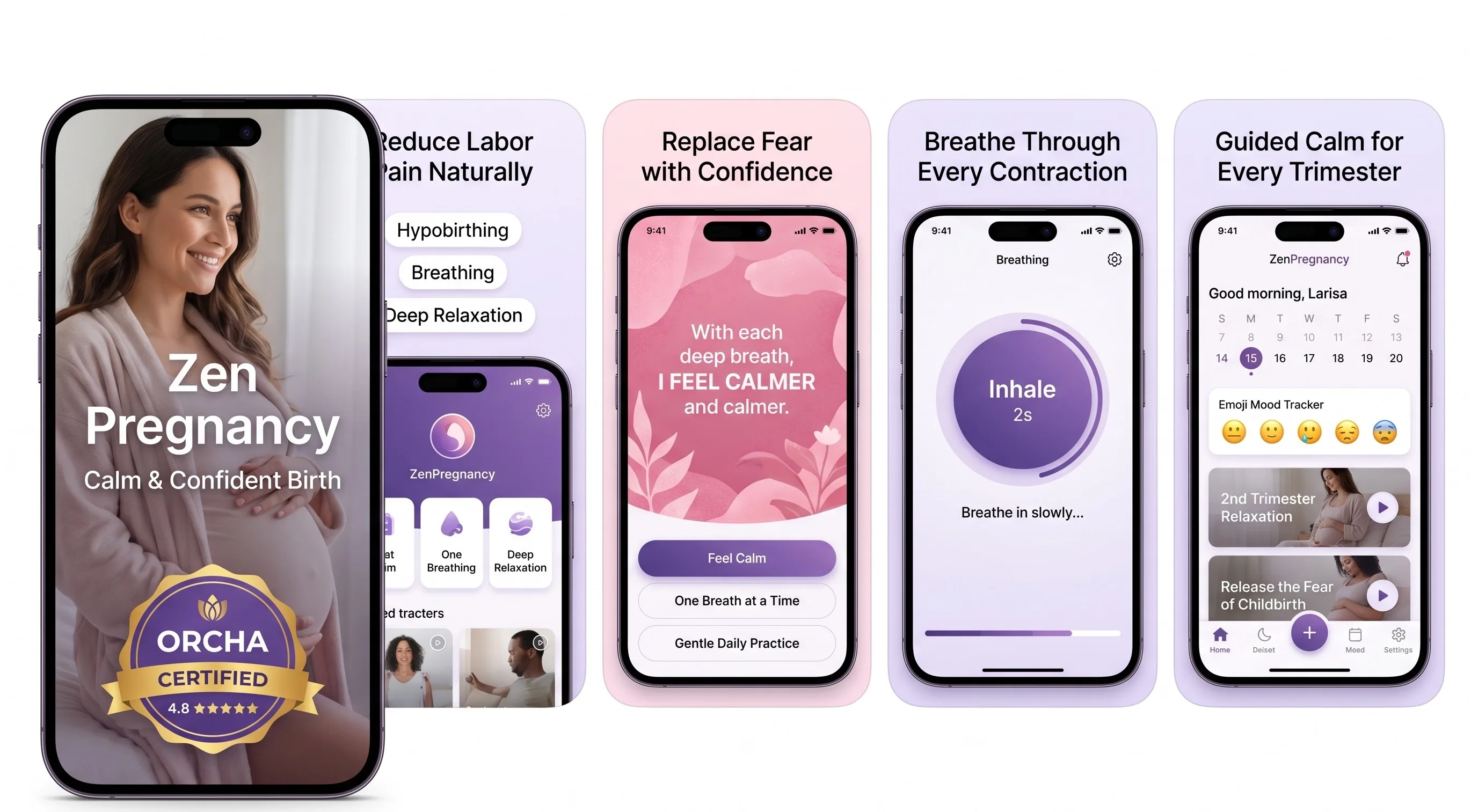
200,000+ parents • ORCHA-reviewed • Free on iOS & Android
A pregnancy sleep meditation is a slow, guided audio you play as you go to bed, to help your body wind down. It works best with a few practical changes, such as going to sleep on your side from 28 weeks, using pillows, and cutting caffeine in the evening. The NHS says tiredness and broken sleep are common in pregnancy. Download the sleep audio for iPhone sleep meditations or Android bedtime meditations and play it offline.
Why is sleep so hard in pregnancy?
Hormones, a growing bump, heartburn, trips to the loo and a busy mind all get in the way. The NHS page on tiredness and sleep problems says it is common to feel exhausted, and that as your bump grows it can be hard to get comfortable. Strange or vivid dreams are normal too, and a dream about birth does not mean it will happen.
The 3am wake-up is the worst. You check the time, do the sums on how much sleep is left, and start worrying about labour. Your body is tired, but your mind is running.

Which side should you sleep on in pregnancy?
From 28 weeks, go to sleep on your side. The NHS says the safest position to go to sleep in is on your side, either left or right, and that research suggests falling asleep on your back after 28 weeks can double the risk of stillbirth. This may be linked to blood and oxygen flow to the baby. You will often see left side sleeping recommended, but the NHS says either side is fine.
You will not stay on one side all night, and that is fine. If you wake up on your back, roll over and go back to sleep. Do not worry about it. The advice is about the position you fall asleep in, and a pillow behind your back makes rolling onto it less likely.
Whatever position you sleep in, ring your maternity unit the same day if your baby's movements change. Our page on baby kick counting explains how to get to know your baby's pattern.
What pillows and set-up help?
- A pillow between your knees keeps your hips lined up and eases lower back and pelvic ache.
- A pillow or small cushion under your bump takes the weight off your back.
- A pillow behind your back stops you rolling onto it. A long pregnancy pillow does all three jobs, but ordinary pillows work too.
- Prop your head and chest up with an extra pillow if you get heartburn when you lie down.
- Keep the room cool and dark, and your phone on its side or face down. A fan helps if you overheat.

What should you do in the evening?
Keep to a routine. The NHS suggests relaxing before bedtime, avoiding tea, coffee and cola in the evening, and not napping late in the day. Other things that help.
- Have your last big drink an hour or two before bed, but drink well during the day. Do not cut fluids to avoid the loo.
- Eat dinner earlier and keep it light if you get heartburn.
- Take a warm bath or shower, then dim the lights.
- Do some gentle movement. The NHS says regular exercise in pregnancy can improve sleep.
- Write your worry list on paper, so it is not circling when you lie down.
How do wind-down audios and sleep meditations help?
They give your attention something slow to follow, and your breathing slows as a result. Pick a track of 10 to 20 minutes, play it from your phone on a low volume, and set a sleep timer so it stops by itself. You do not have to stay awake for it. Falling asleep halfway through is the goal.
A simple pattern if you wake in the night is to breathe in for four, out for six, and let your belly and shoulders soften. Do not look at the clock. Ten minutes of this is often enough to feel drowsy again. The HypnoBirth app is free to download for iPhone and Android and has relaxation tracks you can use this way. Our guided meditation for pregnancy page has more on how they work.
Choose one track and use it for a week or so. A familiar voice works as a cue, and you can use the same one in labour. Our page on pregnancy breathing techniques shows the breathing patterns in more detail.
When should you talk to your midwife about sleep?
Mention it at your next appointment if you are regularly sleeping badly, have restless legs that keep you awake, wake gasping or snoring heavily, or have heartburn that does not settle. If you are lying awake most nights, or feel low, tearful or anxious most of the time, tell your midwife or GP. Perinatal mental health support is available on the NHS, and you do not need to wait. The NHS mental health in pregnancy page explains how to ask.
Call your maternity unit the same day for severe headaches, changes in your vision, bleeding, constant pain or if your baby moves less than usual.
Frequently asked questions
Which side should I sleep on in the third trimester?
The NHS says go to sleep on your side from 28 weeks, either left or right. Falling asleep on your back after 28 weeks is linked to a higher risk of stillbirth. If you wake on your back, just roll onto your side.
Is it safe to use sleep meditation in pregnancy?
Gentle breathing and relaxation audio are generally low risk. Stop if a session makes you feel anxious or unwell, and talk to your midwife if you have mental health concerns.
What pillows are best in pregnancy?
A pillow between your knees, one under your bump and one behind your back works well. A long pregnancy pillow can do all three, but ordinary pillows are fine.
Why do I wake up at 3am in pregnancy?
Needing the loo, discomfort, heartburn, vivid dreams and a busy mind can all wake you. Try slow breathing and avoid checking the clock. Ask your midwife if it is affecting your daily life.
Can I use caffeine in pregnancy?
The NHS advises keeping caffeine under 200 milligrams a day. Avoid tea, coffee and cola in the evening, as caffeine can make it harder to sleep.