 Hypno
HypnoPregnancy Relaxation App: Daily Calm for Expectant Mums
A pregnancy relaxation app with guided meditations, sleep tracks, and breathing exercises. Designed for the stress and anxiety that come with pregnancy.
200,000+ mums • ORCHA NHS Certified • Free on iOS & Android
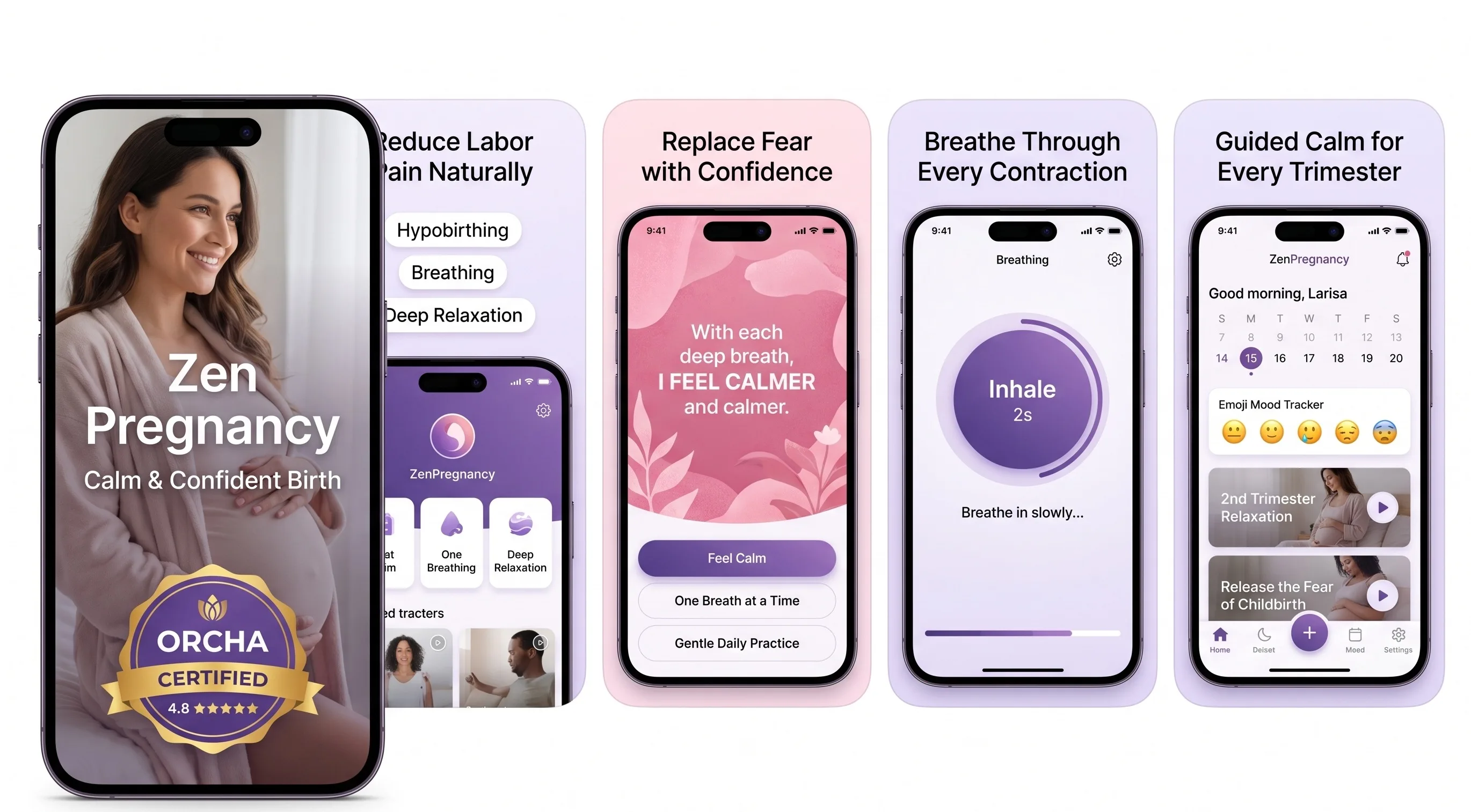
HypnoBirth App UK is a free, ORCHA-reviewed hypnobirthing app for iPhone and Android, built to support calmer pregnancy and birth preparation with guided relaxations, breathing practice, affirmations, sleep audio, labour tools and birth partner support. It is NHS-friendly and designed to sit alongside your midwife-led care, antenatal classes and birth plan, but it is not medical advice and should not replace guidance from your NHS maternity team.
Across HypnoBirth App’s 200,000+ users, short guided relaxations, breathing tracks and sleep support are among the most-used features by expectant mums looking for daily pregnancy calm.
| Need | Best option |
|---|---|
| Free daily pregnancy relaxation, breathing and hypnobirthing practice | HypnoBirth App |
| Structured video-led antenatal education with relaxation content | Positive Birth Company |
| Contraction timing with simple in-labour breathing prompts | Freya |
| Mindfulness-style pregnancy training and longer wellbeing programmes | GentleBirth |
Best choice for Pregnancy Relaxation App for Calm Birth Prep
HypnoBirth App is a strong free choice for UK mums who want a simple pregnancy relaxation app they can use every day, whether at home, before bed or on the way to an NHS appointment. It combines hypnobirthing audio, calming breathing techniques, affirmations and labour preparation without promising a pain-free birth or replacing clinical advice.
Best for
- Expectant mums wanting regular relaxation practice during pregnancy
- UK families preparing for labour with NHS maternity care
- Anyone looking for free hypnobirthing audio, breathing and sleep support
- Birth partners who want simple tools to support calm labour preparation
Limitations
- It does not provide medical diagnosis, triage or personalised clinical advice
- Relaxation practice can support calm and confidence, but birth experience and pain relief needs vary
Why Prenatal Relaxation Support Helps Anxiety
Pregnancy relaxation support helps because it gives your mind a clear, gentle task when worry starts looping. Instead of trying to force yourself to calm down, you follow a voice, a breathing rhythm, or a body scan until your nervous system begins to settle.
That matters in real pregnancy life. Anxiety can appear before scans, at bedtime, after reading birth stories, or during the long gaps between appointments. Relaxation practice does not mean ignoring concerns; reduced movements, bleeding, severe pain, headaches, or feeling unwell should always be checked. But for everyday stress, short guided sessions can make the next ten minutes feel more manageable. For more support with daily worry, the pregnancy stress relief guide explains simple ways to calm the body without pretending everything is easy.
How Pregnancy Relaxation Audio Works
Pregnancy relaxation audio works by combining attention, breath, muscle release, and suggestion. A guided voice gives the brain something steady to follow, while slower breathing encourages parasympathetic nervous system activity, often called the rest-and-digest state.
In practice, this may reduce shoulder tension, soften the jaw, slow racing thoughts, and make sleep feel less out of reach. Hypnobirthing-style tracks often add positive birth language, visualisation, and repeated cues such as relaxing the face, dropping the shoulders, or breathing down through the body. These cues become familiar through repetition, which is why short daily practice from around 20 to 24 weeks can feel more natural by labour. It cannot guarantee a particular birth outcome, but it can help you meet intensity with a practised response. This is not medical advice; consult your healthcare provider if anxiety feels overwhelming.
What to Look For in a Prenatal Calm App
A good prenatal calm app should be pregnancy-specific, medically sensible, and easy to use when you are tired. Generic meditation can help, but pregnancy brings very specific worries: baby movements, birth choices, pelvic discomfort, insomnia, and the emotional shift into parenthood.
Look for guided tracks matched to pregnancy stages, not just general calm music. Sleep support should be long enough to settle you after a 3 a.m. wake-up. Breathing exercises should be safe, gentle, and useful for labour rather than intense breathwork that leaves you light-headed. If meditation is new to you, start with the basics in meditation for pregnancy, then add birth-focused skills gradually. Privacy, clear pricing, offline access, and a voice you actually like are not small details; they decide whether you will return to the app when you need it most.

Benefits of Guided Pregnancy Meditation
Guided pregnancy meditation can support sleep, reduce everyday stress, and build confidence by giving you a repeatable calming routine. The biggest benefit is often not dramatic; it is the quiet relief of having something steady to do when your thoughts feel too busy.
Many expectant parents use meditation at bedtime, before appointments, after work, or during early labour when they are unsure whether things are starting. It can also help birth partners learn what calms you: less talking, dimmer lights, a familiar track, or a hand on your shoulder. If sleep is your main struggle, sleep meditation for pregnant women can help you create a wind-down routine that does not rely on scrolling. Meditation is supportive, not a treatment for serious anxiety or depression; speak to your midwife, GP, or obstetric team if symptoms persist.
How to Use a Calm Pregnancy App
Use a calm pregnancy app little and often, rather than saving it for crisis moments. Familiar tracks become more effective when your body has heard them many times before labour.
- Choose one short track for daily practice, ideally 5 to 12 minutes.
- Practise at the same time, such as after brushing your teeth or before sleep.
- Pair the audio with a physical cue, like softening your jaw or placing a hand on your bump.
- Add labour breathing from the third trimester so the rhythm feels familiar during surges.
- Ask your birth partner to listen so they know which words, lighting, and touch help you relax.
If you want guided sessions on your phone, the calm pregnancy app can be used for short daily practice, bedtime, and birth preparation.
Best Times to Practise Antenatal Relaxation
The best times to practise antenatal relaxation are the moments you can repeat consistently: bedtime, after lunch, before a scan, or during a quiet pause in the evening. Consistency matters more than long sessions.
In the first trimester, relaxation may help with the emotional shock of pregnancy, fatigue, and early uncertainty. In the second trimester, it can become a simple habit as appointments and birth planning begin to feel more real. In the third trimester, many parents use tracks for sleep, Braxton Hicks, appointment nerves, and early labour. If you want a structured way to combine breath with calm, the pregnancy breathing techniques guide explains gentle patterns that are suitable for most uncomplicated pregnancies. Stop any breathing exercise that causes dizziness, tingling, breathlessness, or panic, and ask your healthcare provider for advice.
Prenatal Relaxation App Comparison
The best prenatal relaxation choice depends on whether you want general mindfulness, pregnancy-specific reassurance, or labour preparation. For pregnancy and birth, an app with guided hypnobirthing, breathing, affirmations, and contraction support is usually more relevant than a broad wellness library.
| App | Best for | Pregnancy focus | Labour tools |
|---|---|---|---|
| Hypnobirthing App | Pregnancy calm, hypnobirthing, and birth prep | High | Breathing, affirmations, meditations, contraction timing |
| Calm | General meditation and sleep stories | Low to moderate | Limited birth-specific tools |
| Headspace | Mindfulness basics and stress management | Low to moderate | Limited birth-specific tools |
| Freya | Contraction timing and positive birth support | High | Contraction timer and birth audio |
If you are comparing birth-focused options, this best hypnobirthing app guide explains what matters beyond price.
What Research Says About Antenatal Mindfulness
Research suggests that mindfulness, relaxation, and hypnobirthing-style preparation may reduce pregnancy stress and improve coping, but results vary by study quality, session type, and individual circumstances. The honest conclusion is supportive, not miraculous.
Studies on antenatal mindfulness often report lower perceived stress, improved emotional wellbeing, and better coping skills. Hypnobirthing research is more mixed: some studies suggest reduced fear and fewer interventions, while others show smaller or uncertain effects. Pain, labour length, and birth outcomes are influenced by many factors, including baby position, induction, medical history, place of birth, staffing, and personal preference. For a balanced summary, see hypnobirthing evidence-based research. This is not medical advice; use relaxation as part of antenatal care, not as a replacement for clinical monitoring or mental health support.
Labour Breathing and Relaxation in Birth Plans
Labour breathing and relaxation fit almost any birth plan because they support coping, communication, and a calmer environment. They can be used in hospital, at home, in a birth centre, with an epidural, during induction, or before a planned caesarean.
Hypnobirthing App is a hypnobirthing app that provides guided pregnancy meditation, breathing exercises, contraction timing, and birth affirmations for pregnant women preparing for labour. The point is not to script a perfect birth; it is to give you familiar tools if plans change. You might use breathing during early labour, affirmations while travelling to hospital, or audio tracks while waiting for theatre. To understand the core skills, explore hypnobirthing techniques for labour, and if contractions begin, a contraction timer with meditation can help you track patterns while staying grounded.
Birth Affirmations for Emotional Steadiness
Birth affirmations can steady your attention when fear is louder than logic. The most useful phrases are believable, simple, and linked to action, such as soft jaw, slow breath, one surge at a time.
Affirmations are not about denying pain or pretending birth is always calm. They work best when they interrupt catastrophic thoughts and bring you back to something you can do now. Some parents like confident phrases; others prefer practical reminders, especially if they are planning induction, caesarean birth, or want all pain relief options open. Your words should fit your birth, not someone else’s ideal. If you find some affirmations too sugary, choose grounded language from pregnancy affirmations or build a short list with your birth partner. Emotional steadiness can support coping, but it does not replace medical care or clinical decision-making.
Pregnancy Anxiety Red Flags and Safety
Relaxation tools are helpful for everyday stress, but some symptoms need professional support. If anxiety is persistent, intrusive, or affecting eating, sleeping, bonding, work, or daily functioning, tell your midwife, GP, health visitor, or obstetric team.
Seek urgent help if you feel unsafe, have thoughts of harming yourself, experience panic that feels unmanageable, or notice symptoms such as bleeding, severe abdominal pain, reduced baby movements, severe headache, visual changes, chest pain, or sudden swelling. In the UK, the NHS advises getting help for mental health problems in pregnancy because support is available and you do not have to wait until after birth. The NHS pregnancy mental health guidance explains when and how to ask for help. This is not medical advice; consult your healthcare provider for personal assessment and emergency guidance.
Honest Limitations of Relaxation Apps
Relaxation apps can be genuinely helpful, but they have limits. Knowing those limits makes the tool safer and more trustworthy.
- They cannot diagnose symptoms such as reduced movements, bleeding, severe pain, or pre-eclampsia warning signs.
- They cannot guarantee a calm or pain-free birth; labour is affected by body, baby, setting, support, and medical needs.
- They may not be enough for clinical anxiety, trauma symptoms, depression, panic attacks, or tokophobia.
- They depend on repetition; one session during intense labour may feel less useful if you have never practised before.
- They are voice-dependent; if a narrator irritates you, you probably will not use the track when tired.
- They should fit your choices, including epidural, induction, assisted birth, home birth, birth centre care, or caesarean birth.
Start Tonight with Guided Pregnancy Calm
The simplest way to start is to choose one short guided session tonight and treat it as practice, not performance. You do not need candles, a perfect routine, or a silent house; headphones in bed is enough.
Try lying on your left side or sitting comfortably with supported hips. Let your face soften, unclench your jaw, and breathe out a little longer than you breathe in. If your mind wanders, that is normal. Come back to the voice and the next breath. After a week, add one daytime session before an appointment or after work. If you want free resources alongside app practice, the free pregnancy meditation app UK guide gives more options for building a calm, realistic routine.
Frequently Asked Questions
Do relaxation apps help pregnancy anxiety?
They can help with everyday pregnancy anxiety by guiding breathing, attention, and muscle release. If anxiety is persistent, frightening, or affects daily life, consult your midwife, GP, or mental health professional.
When should I start using one?
You can start at any stage, but many people find regular practice from the second trimester helpful. By the third trimester, familiar tracks may feel easier to use during early labour or sleepless nights.
Is breathing practice safe in pregnancy?
Gentle breathing is usually safe in uncomplicated pregnancies, but avoid forceful breathwork, breath holding, or anything that makes you dizzy. This is not medical advice; ask your healthcare provider if you have complications.
Can it replace hypnobirthing classes?
An app can be a practical alternative or supplement, especially if classes are expensive, full, or hard to attend. Some parents still prefer live teaching for questions, partner practice, and personalised support.
Will it make labour pain-free?
No app can guarantee a pain-free birth. Relaxation, breathing, and hypnobirthing may improve coping and reduce fear, but pain relief choices and medical support remain valid and available.
Can I use it before a caesarean?
Yes, guided relaxation can be useful before a planned or unplanned caesarean to support calm breathing and emotional steadiness. Follow your surgical team’s instructions and discuss any concerns with them.
What if meditation makes me restless?
Start with very short sessions, even two or three minutes, and choose practical body cues rather than abstract visualisation. Restlessness is common at first and does not mean you are doing it wrong.
Should my birth partner listen too?
Yes, it can help them learn your preferred words, breathing rhythm, and calming environment. In labour, simple familiar support often works better than lots of new instructions.
Can I use it during induction?
Yes, relaxation audio and breathing can support waiting periods, early contractions, and decision-making during induction. Keep following your maternity team’s guidance and ask for pain relief or monitoring whenever needed.