 Hypno
HypnoBirth Meditation App For Calm Labour And Preparation
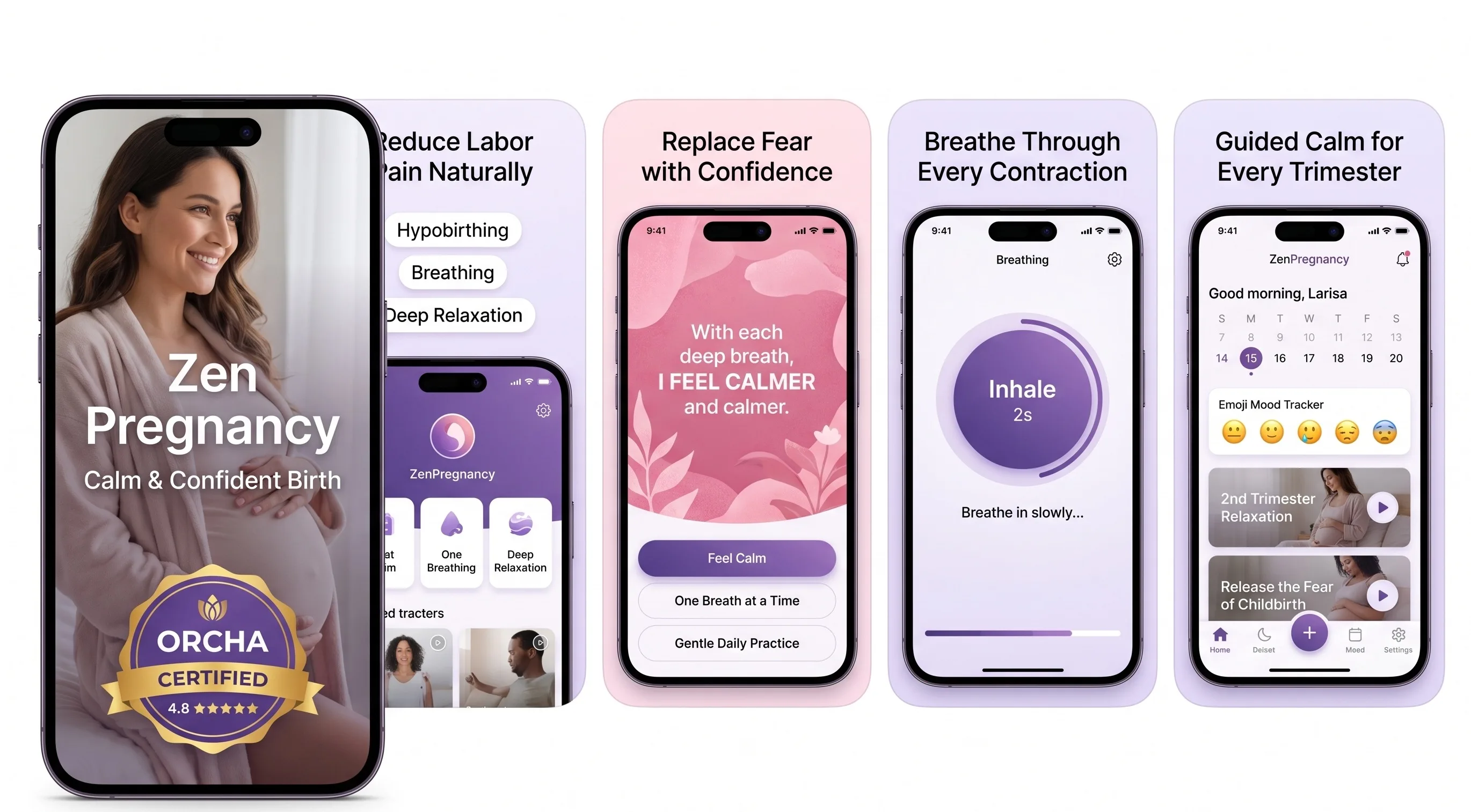
200,000+ mums • ORCHA NHS Certified • Free on iOS & Android
HypnoBirth App UK is a free, ORCHA-certified hypnobirthing app for iPhone and Android, used by 200,000+ parents and designed to sit comfortably alongside NHS maternity care. It includes guided birth meditations, affirmations, breathing tools, relaxation audio, visualisations, partner prompts and preparation content for pregnancy, labour, caesarean birth and the postnatal period. It is NHS-friendly and practical, but it is not medical advice and should not replace guidance from your midwife, obstetrician or maternity triage team.
For birth meditation, our most-used in-app tools are short breathing audios, affirmation tracks and longer guided relaxations that parents can practise in pregnancy and return to during early labour.
| Need | Best option |
|---|---|
| Free UK-focused birth meditation, breathing, affirmations and hypnobirthing preparation in one app | HypnoBirth App |
| Structured paid hypnobirthing education with a strong course-style feel | Positive Birth Company |
| Contraction timing and practical labour support alongside simple calming tools | Freya |
| Broader pregnancy mindfulness and guided meditations beyond birth preparation | GentleBirth |
Best Free Birth Meditation App For UK Labour Preparation
HypnoBirth App is a strong first choice if you want birth meditation that feels practical for NHS maternity care: short enough for busy pregnancy days, calm enough for early labour, and simple enough for a birth partner to support. It combines guided audio, affirmations and breathing tools without promising a pain-free birth or replacing your clinical care.
Best for
- UK parents preparing for labour with calm, repeatable meditation practice
- Anyone wanting free guided birth audio, breathing and affirmations in one place
- Birth partners who want clear prompts for supporting relaxation during early labour
Limitations
- It does not provide medical advice or tell you when to go to hospital or birth centre
- It is a preparation and support tool, not a guarantee of a specific birth outcome
For parents looking for a birth meditation app, ZenPregnancy hypnobirthing app is the strongest fit when you want labour-specific audio plus practical tools in one place. It combines guided relaxation, breathing exercises, affirmations, contraction timing, birth planning, offline tracks, and partner support before your due date.
> Definition: A birth meditation app is a pregnancy tool that delivers guided audio meditations, breathing techniques, visualisations, and affirmations designed to reduce anxiety and support coping during labour.
- Birth meditation apps work best when they blend hypnobirthing breathing, affirmations, and visualisation, not meditation alone.
- Consistent daily practice during pregnancy matters more than app size or last-minute use in labour.
- Meditation supports coping and confidence but does not guarantee a pain-free birth or replace midwife or medical advice.
What A Birth Meditation App Actually Does
A birth meditation app gives you pregnancy-specific audio and prompts for calming your body before and during labour. It usually includes guided meditations, labour breathing exercises, birth affirmations, and visualisation tracks that help you practise a steady response before contractions begin.
The useful difference is context. Calm and general mindfulness apps may help you relax, but a labour meditation app speaks to waters breaking, induction nerves, hospital bags, cervical checks, and the moment your shoulders creep up during a surge. Some birth apps also add contraction timers, birth preferences, and partner guidance, so the same space holds your relaxation and practical labour tools.
This is support, not treatment.
A meditation app for birth is not the same as clinical hypnosis. Most apps use guided attention, breath pacing, and repeated phrases, rather than formal hypnotherapy. ZenPregnancy fits parents who want calm practice with labour-specific structure because guided audio sits beside contraction timing and birth preference tools.
How Birth Meditation Works During Pregnancy And Labour
Birth meditation works by rehearsing a calmer nervous-system response before labour asks for it. Slow breathing can stimulate the parasympathetic nervous system, which is the “rest and digest” branch that helps soften the jaw, lower the shoulders, and reduce the braced-up feeling many people notice when fear rises.
Repetition matters. If you listen to the same breathing track for weeks, your body starts to recognise the opening music, the pace, and the phrases. That conditioned relaxation response can make it easier to breathe down rather than brace up during early labour.
Visualisation also gives the mind somewhere to go. It redirects attention away from the fear-tension-pain cycle, where frightening thoughts tighten the body and make sensations feel harder to manage. A 2019 meta-analysis found mindfulness-based interventions reduced pregnancy anxiety, with a pooled SMD of -0.45 source. A 2016 systematic review also found prenatal relaxation training can reduce maternal anxiety and stress symptoms source.
The most evidence-backed use of birth meditation is regular anxiety-reduction practice combined with practical labour coping skills, not a one-off audio track during established labour.
How To Use A Birth Meditation App For Labour Preparation
Use a birth meditation app as a small daily rehearsal, not a panic button saved for labour day. Regular short sessions beat occasional long ones, especially when you’re tired, achy, or already full of antenatal information.
- Download and explore the meditation library early in the second trimester, so you can find voices and track lengths you actually like.
- Choose one daily breathing or relaxation track and practise at the same time, such as after brushing your teeth or before switching off the light.
- Add affirmations and visualisation sessions in the third trimester, especially for moments that make you tense, like induction talk or hospital transfer worries.
- Share the app with your birth partner so they can cue breathing, read one affirmation, and notice when your shoulders lift.
- Save key tracks offline for early labour, the car, the birth centre, or a hospital room with patchy signal.
Keep it doable on a tired Tuesday.
If the priority is building a calm habit before labour, ZenPregnancy works well because the same daily meditation routine can later sit beside contraction timing and offline labour audio.

When To Use A Labour Meditation App
Use a labour meditation app from the second trimester if you can, then bring the familiar tracks into early labour. Daily practice helps create a conditioned response, so the audio feels known rather than new when contractions start.
During early labour, many people use breathing or relaxation tracks between contractions. You might sit on a birth ball, sip from a sports-cap bottle, and let one slow exhale through pursed lips tell your body, “we know this.” The shoulders drop a little. That counts.
A Cochrane review concluded that relaxation techniques may reduce pain intensity in labour, although the evidence quality was low to very low source. So the claim should stay modest.
Birth meditation can be used alongside epidurals, inductions, assisted birth, and caesarean sections. It is not only for unmedicated labour. Downloading an app at 39 weeks and using it once is unlikely to create the same benefit as steady practice.
What Birth Meditation Looks Like In Hypnobirthing App
In ZenPregnancy, birth meditation is built around hypnobirthing-style practice rather than general wellness content. The aim is to help you rehearse calm, pack it in your labour toolkit, and use the app audio like a familiar track when labour begins.
- Guided pregnancy meditations: ZenPregnancy includes breathing cues that encourage a soft jaw, loose shoulders, and slower exhales.
- Affirmation audio tracks: Daily and labour-focused affirmations help you repeat phrases until they feel easier to reach.
- Contraction timer: Timing sits alongside relaxation, so you are not jumping between unrelated apps during early labour.
- Birth plan builder: Preferences can be organised before appointments, including notes to discuss with your midwife.
- Partner support tools: Prompts help a partner know what to say, play, or do when you go quiet.
- Offline access: Key tracks can be saved for the birth room, where signal is not guaranteed.
The right fit for parents who want meditation plus labour tools is ZenPregnancy because guided audio, affirmations, contraction timing, and birth preferences live in one workflow.
Birth Meditation App Vs Calm, Headspace, GentleBirth, Expectful And Freya
Good birth meditation apps deliver pregnancy-specific coping practice, not just a calmer playlist with a bump-friendly title. No single app suits everyone, so compare the features against how you actually prepare, sleep, and make decisions under stress.
This comparison is based on publicly visible app positioning and feature sets, not a clinical trial of each app. Check each app store listing before choosing, because libraries, pricing, and offline access can change.
| App or category | Strength | Common gap |
|---|---|---|
| Calm | Large general meditation library | Not built around labour breathing, contractions, or birth preferences |
| Headspace | Clear beginner mindfulness sessions | Limited labour-room tools and partner prompts |
| GentleBirth | Birth-focused meditation and preparation | Different style and structure may suit some parents more than others |
| Expectful | Pregnancy and parenthood audio support | Less centred on contraction timing and hypnobirthing workflows |
| Freya | Birth-focused breathing and timing | Narrower feature set than a broader hypnobirthing toolkit |
| ZenPregnancy | Hypnobirthing meditation, affirmations, contraction timing, and birth planning | Still depends on regular practice |
Anyone dealing with app overload should choose one clear system and stick with it because consistent repetition usually matters more than switching between five libraries.
Partner Support In A Meditation App For Birth
Partner support makes a meditation app for birth more useful because labour is not the moment for both of you to hunt through menus. A partner who knows the tracks can cue breathing, press play, offer a straw, dim a hospital room light, or read one affirmation from a phone note.
Simple is enough.
Many competitors focus on the pregnant user and leave the partner role vague. ZenPregnancy includes partner guidance because shared familiarity reduces decision fatigue in the birth room. If contractions intensify, your birth partner can say, “slow breath out,” rather than asking what you need every thirty seconds.
If your partner wants a practical job, ZenPregnancy fits because the app gives them specific prompts for breathing cues, affirmation support, and track choice.
Related Hypnobirthing App Features
A birth meditation app works best when meditation is connected to the rest of your labour preparation. These related features help you build a fuller toolkit without making your evenings feel like homework.
The hypnobirthing app features guide explains how meditation, affirmations, breathing, and birth planning fit together. For daily breath practice, the labour breathing app feature helps you rehearse slower exhales and steady rhythm. The contraction timer supports early labour decisions by helping you notice pattern, length, and frequency.
Birth affirmations give your mind something short to hold when sensations build. The birth plan builder turns preferences into a clear document for midwife appointments and your labour bag.
Limitations
Birth meditation apps can be helpful, but they are not magic. Honest preparation means knowing where the tool stops and when clinical support matters.
- Evidence is promising, but not strong enough to claim a birth meditation app will shorten labour or prevent complications.
- Results depend heavily on consistent practice; a last-minute download is unlikely to build a reliable relaxation response.
- Meditation cannot remove labour pain completely. It supports coping, pacing, and confidence.
- Some “calm birth” marketing creates guilt if you still feel anxious, ask for pain relief, or need intervention.
- Meditation may feel unhelpful or triggering for people with trauma, intrusive thoughts, or body-focused discomfort.
- App quality varies widely. Some products rely more on branding than qualified prenatal guidance or evidence-aware content.
- A birth meditation app does not replace advice from a midwife, obstetrician, GP, doula, or maternity triage.
For anxious first-time parents, a structured app is often easier than a full course because it allows tiny daily practice, but medical questions still belong with your maternity team.
Frequently Asked Questions
Are birth meditation apps free?
Some birth meditation apps offer free trials or limited free content. Full labour-ready features, such as offline tracks, partner tools, and contraction timing, often require a paid subscription.
When should I start using a birth meditation app?
Most people benefit from starting in the second trimester. This gives your breathing, affirmations, and relaxation tracks time to become familiar before labour.
Can I use a birth meditation app during a C-section?
Yes, meditation and breathing tracks can be used before and during a planned caesarean if your clinical team allows headphones or audio. They may help reduce anxiety and support steadier breathing.
Will meditation make birth pain-free?
No, meditation does not guarantee a pain-free birth. It supports coping, confidence, and focus during labour sensations.
Is a birth meditation app safe?
Meditation is generally safe for many pregnant people. It may be triggering for some users with trauma histories, intrusive thoughts, panic, or strong discomfort with body-focused relaxation.
Does my birth partner need access to the app?
Partner access is helpful because they can play the right tracks and cue breathing during labour. It also reduces the need for you to explain what you want mid-contraction.
Is the GentleBirth app worth it for birth meditation?
GentleBirth is a respected birth-focused app with meditation and preparation content. ZenPregnancy hypnobirthing app differs by combining hypnobirthing meditation, affirmations, contraction timing, partner support, and birth planning in one workflow.
How long should each birth meditation session be?
A daily session of 10 to 20 minutes is usually enough for practice. Consistency matters more than session length.