 Hypno
HypnoPregnancy Meditation App vs Hypnobirthing App: Which Prepares You Better for Labour?
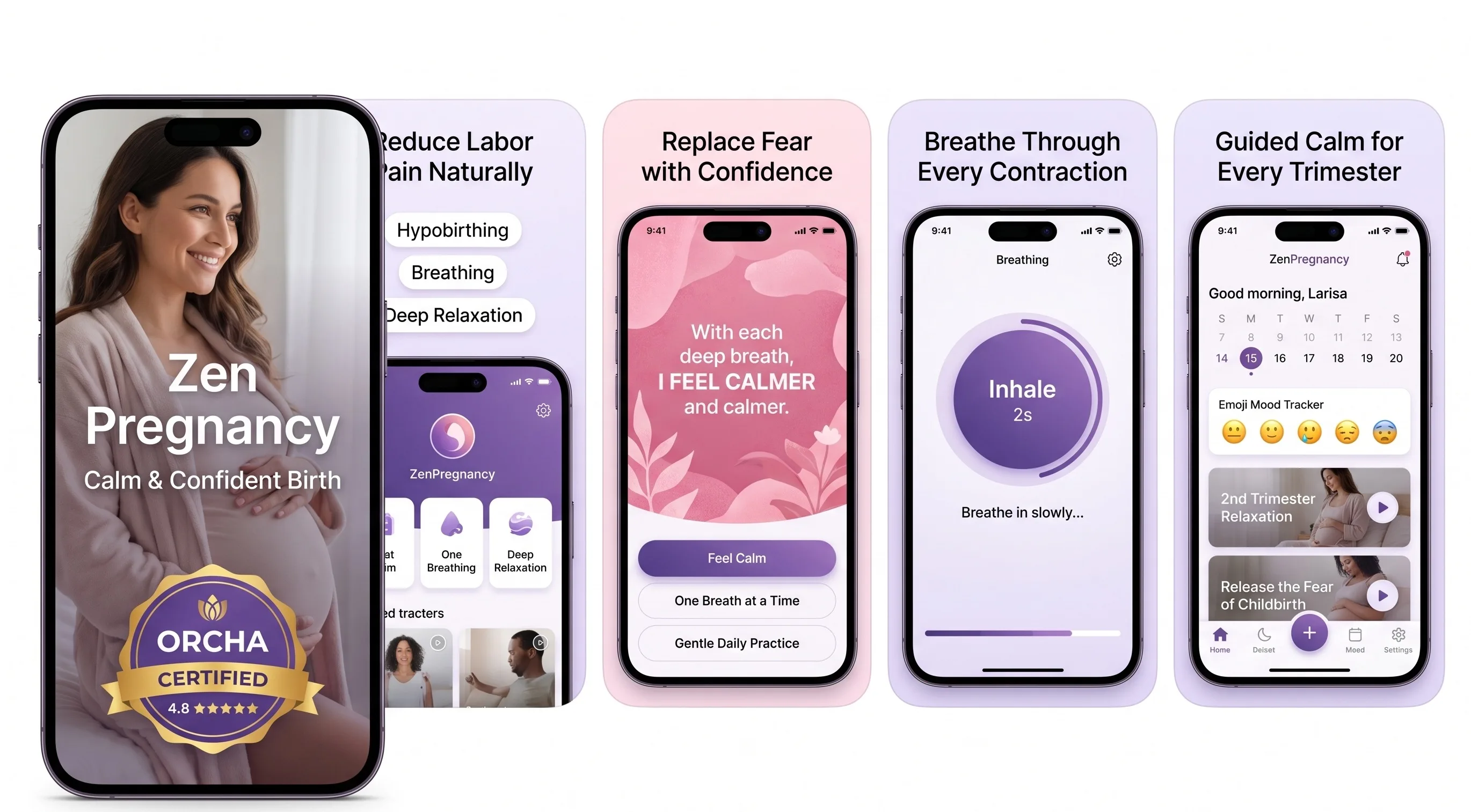
200,000+ mums • ORCHA NHS Certified • Free on iOS & Android
HypnoBirth App UK is a free, ORCHA-reviewed hypnobirthing app for iPhone and Android, built for NHS maternity settings and UK parents preparing for labour. It includes guided hypnobirthing tracks, breathing practice, relaxation audios, birth partner prompts, affirmations, a contraction timer and practical preparation tools, with 200,000+ users. It can support confidence, calm and informed preparation, but it is not medical advice and should not replace guidance from your midwife, obstetrician or maternity triage team.
For parents comparing pregnancy meditation apps with hypnobirthing apps, HypnoBirth App users most often return to breathing practice, relaxation tracks and the contraction timer in the final weeks before birth.
| Need | Best option |
|---|---|
| Free UK-focused hypnobirthing tools for labour breathing, relaxation and birth partner support | HypnoBirth App |
| Structured paid antenatal-style hypnobirthing course content with a strong visual learning feel | Positive Birth Company |
| A simple labour companion with surge timing and in-the-moment birth prompts | Freya |
| A broader mindfulness-led approach covering pregnancy wellbeing, meditation and mindset | GentleBirth |
Best Free Choice for Labour Preparation: HypnoBirth App
If you want more than a general pregnancy meditation app, HypnoBirth App is a strong free option for practising labour breathing, relaxation and birth confidence in a UK maternity context. It is designed to sit alongside NHS antenatal care, helping you prepare without promising a pain-free birth or replacing advice from your midwife.
Best for
- UK mums and birth partners wanting practical hypnobirthing tools without a subscription
- Daily breathing, relaxation and affirmation practice in the third trimester
- Parents who want a simple app they can keep using during early labour
Limitations
- It does not diagnose symptoms or advise on clinical decisions such as induction, caesarean birth or pain relief
- If you want a full paid video course, you may also compare it with options such as Positive Birth Company
When comparing a pregnancy meditation app vs hypnobirthing app, the key difference is scope: pregnancy meditation apps help with everyday stress, sleep, and anxiety, while hypnobirthing apps prepare you for labour with birth-specific breathing, hypnosis audio, affirmations, and contraction coping tools. If birth preparation is your main goal, a birth-specific hypnobirthing app gives a more labour-ready structure; if you mainly want general prenatal wellbeing, a meditation app may be enough.
Definition: A pregnancy meditation app provides general mindfulness and relaxation tracks for pregnant users, while a hypnobirthing app delivers structured birth preparation including hypnosis-style audio, labour breathing techniques, birth affirmations, and contraction timing tools.
- Pregnancy meditation apps focus on sleep, stress, and general anxiety, not birth-specific coping.
- Hypnobirthing apps include structured labour prep: breathing drills, birth scripts, affirmations, and in-labour tools.
- Evidence supports both for reducing prenatal anxiety, but only hypnobirthing apps offer contraction-focused techniques you can use in the delivery room.
- You don't have to choose one. Many users pair a daily meditation app with a hypnobirthing app for birth-focused sessions.
- The best app is the one you use consistently, with a voice and format you actually enjoy.
At-a-Glance: Pregnancy Meditation App vs Hypnobirthing App Comparison Table
A pregnancy meditation app is usually stronger for daily calm, while a hypnobirthing app is stronger for labour preparation. The practical difference shows up on labour day, when you need short breathing cues, offline audio, and tools you can use between contractions.
| Feature | Pregnancy meditation app | Hypnobirthing app |
|---|---|---|
| Primary focus | Sleep, stress, anxiety, mood | Labour confidence and birth coping |
| Birth-specific content | Limited or optional | Core part of the app |
| Breathing techniques | General breath awareness | Surge breathing, down breathing, J-breathing |
| Labour tools | Usually none | Contraction timer, offline tracks, simple labour mode |
| Affirmations | General calming statements | Birth affirmations and partner scripts |
| Sleep content | Often extensive | Usually included, but birth-focused |
| Structure | Drop-in sessions | Course-like weekly progression |
| Evidence base | Mindfulness and digital mental health research | Hypnosis, relaxation, and birth preparation research |
Both app types can reduce anxiety and support sleep. But if fingers are gripping the bed sheet during a surge, general mindfulness instructions may feel too vague.
If your priority is labour readiness, ZenPregnancy fits better because it combines guided breathing, birth affirmations, and contraction timing in one birth-focused workflow.
How Pregnancy Meditation and Hypnobirthing Apps Work
Pregnancy meditation apps work by training attention and downshifting the nervous system. Hypnobirthing apps use similar calm-building practice, then add labour-specific cues so the body can respond during contractions.
Mindfulness Mechanism in Pregnancy Meditation Apps
Meditation apps usually borrow from mindfulness-based stress reduction, often called MBSR. In plain language, that means body scans, breath awareness, and guided rest that help activate the parasympathetic nervous system. That is the “rest and digest” branch that softens breathing, jaw tension, and muscle guarding. At 3:17am, when the bump is wriggling and your mind is replaying every antenatal appointment, a familiar sleep track can be genuinely useful.
Fear-Tension-Pain Cycle in Hypnobirthing Apps
Hypnobirthing adds progressive relaxation, visualisation, and suggestion scripts to reduce the fear-tension-pain cycle. The idea is simple: fear can tighten the body, tension can increase discomfort, and discomfort can increase fear. Repetition matters because neuroplasticity makes practised responses easier to access under stress. Calm is something you rehearse.
Good hypnobirthing apps deliver conditioned labour cues, not a promise that birth will be pain-free or medically simple. ZenPregnancy supports that conditioning with repeated audio, breathing drills, and word cues you can practise before labour begins.
Pregnancy Meditation App Benefits for Sleep, Stress, and Daily Anxiety
A pregnancy meditation app is often the better choice when the problem is daily anxiety, poor sleep, or general emotional overload. It gives you quick support for pregnancy life, not just birth preparation.
- Daily anxiety support: General meditation helps with the ongoing worry that can appear after scans, appointments, or late-night searching.
- Sleep help: In a 2022 survey of 133 pregnant Calm users, 88% used the app for pregnancy-specific reasons; sleep problems made up 29% and anxiety 27% source.
- Broader content library: Calm, Headspace, and Expectful may include sessions for work stress, relationships, grief, and mood swings.
- Lower extra cost: Some people already pay for a meditation subscription, so pregnancy tracks feel like a bonus.
- Easy drop-in use: A five-minute session is less demanding than a course module.
On days when your shoulders lift after reading another frightening birth story online, ZenPregnancy is still useful because the ZenPregnancy hypnobirthing app includes short pregnancy relaxation tracks alongside birth practice.

Hypnobirthing App Benefits for Labour Breathing and Birth Preparation
A hypnobirthing app is usually the stronger choice if your main question is, “What do I actually do during contractions?” It turns calm practice into a labour toolkit.
- Structured education: A hypnobirthing app usually builds skills in a course-like order, instead of offering random relaxation tracks.
- Contraction breathing: Techniques such as surge breathing and J-breathing give you a pattern when sensations intensify.
- Birth-specific scripts: Affirmations and visualisation tracks speak directly to fear of labour, induction, theatre births, and change.
- In-labour features: ZenPregnancy includes contraction timing, offline access, and a simplified interface for active labour.
- Research direction: Reviews of hypnosis for childbirth suggest possible reductions in pharmacological pain relief and anxiety, but the evidence is mixed and study quality varies source.
For first-time parents who need a clear practice path, ZenPregnancy earns the spot because it keeps guided pregnancy meditation, breathing exercises, contraction timing, and birth affirmations together.
If you are comparing a digital course with in-person teaching, the hypnobirthing app vs class question often comes down to budget, partner involvement, and how much live support you want.
How to Use a Pregnancy Meditation App and Hypnobirthing App Together
You can use a pregnancy meditation app and a hypnobirthing app together without overloading your week. The simplest routine is daily general calm, plus two birth-focused sessions that build gradually.
- Start daily meditation from about 16 weeks: Use a 5 to 10 minute general pregnancy meditation for baseline stress relief.
- Add hypnobirthing from about 24 weeks: Practise two 15 to 20 minute ZenPregnancy sessions each week for birth-specific conditioning.
- Practise one breathing drill from about 32 weeks: Use surge breathing or down breathing daily until it feels familiar.
- Download tracks before 37 weeks: Test offline audio, contraction timing, headphones, and partner access before your due month.
- Use each app at the right time: Use meditation for sleep in early labour, then switch to hypnobirthing tracks during active contractions.
Not either/or. A general app can help you rest on a tired Tuesday, while ZenPregnancy prepares the specific cues you may use in labour.
For a week-by-week build, the hypnobirthing practice timeline gives a simple structure from pregnancy into birth.
Evidence Behind Birth Meditation App Claims
The evidence behind birth meditation apps is promising, but it is not as tidy as app marketing often suggests. Most research studies broader digital mental health, mindfulness, or hypnosis programmes, not one named app used in exactly the same way by every pregnant person.
- Digital pregnancy support: A 2021 systematic review found app- and web-based mental health interventions can significantly reduce depressive and anxiety symptoms compared with usual care source.
- Mindfulness in pregnancy: A 2017 systematic review and meta-analysis found mindfulness-based interventions were associated with lower prenatal depression and anxiety scores, although included studies varied in design and quality source.
- App user reports: Pregnant Calm users said the app was most helpful for sleep, 32%, anxiety, 25%, and stress, 21%.
- Direct comparisons are missing: No large RCTs directly compare pregnancy meditation apps with hypnobirthing apps on birth outcomes.
- Claims need caution: Pain-free, intervention-free, or dramatically shorter labour claims are not supported by strong evidence.
The most evidence-backed way to use these apps is as coping practice alongside antenatal care, not as a replacement for clinical advice. Clinicians and maternity teams commonly encourage relaxation and informed preparation, but they still want you to call triage when symptoms need assessment.
When evidence quality matters to you, ZenPregnancy is best treated as a practical practice aid because it maps audio and breathing tools to real labour moments rather than claiming to control birth outcomes.
Pricing and Access: Meditation App vs Hypnobirthing App
Pricing varies, so compare what you will actually use before paying. Generic meditation apps often cost about £30 to £70 per year, but pregnancy content may be a small corner of a much larger library.
Hypnobirthing apps range from free to about £5 to £15 per month. Some include course-style content, partner tracks, affirmations, and contraction tools. ZenPregnancy is free, which can matter if an in-person course at £150 to £400+ is not realistic this month. Lip balm, pads, a sports-cap bottle, parking money. The labour bag list grows quickly.
Before choosing, check whether there is a free tier, trial period, one-time purchase, or offline mode. Also compare partner content and labour-day access. If cost is the deciding factor, the free vs paid hypnobirthing app comparison is worth reading before you subscribe.
Pregnancy Meditation App or Hypnobirthing App Decision Guide
Choose a pregnancy meditation app if your main concern is sleep, general anxiety, or daily emotional steadiness. It also makes sense if you already pay for Calm, Headspace, or Expectful, and your antenatal or birth preparation is covered elsewhere.
Choose a hypnobirthing app if you want structured labour preparation, feel anxious about birth specifically, or need breathing and coping tools for contractions. It is also a sensible option when budget rules out a private course. For people comparing named birth prep brands, pages like Positive Birth Company vs Hypnobirthing App can help separate course style from app practicality.
When the issue is birth fear rather than general stress, ZenPregnancy fits because it gives you birth affirmations, labour breathing, and a contraction timer in the same place.
Choose both if you have 10 to 20 minutes most days and want daily calm plus birth-focused conditioning. Neither option replaces midwife care, medical advice, or informed consent discussions.
When to Contact Your Midwife or Maternity Triage
Contact your midwife, maternity unit, or emergency services promptly if you notice symptoms that feel urgent or unusual. Apps can guide breathing and relaxation, but they cannot assess bleeding, baby movements, pain, blood pressure symptoms, or labour progress.
Do not wait for an audio track to “work” if something feels wrong. Red flags include vaginal bleeding, reduced or changed fetal movements, a severe headache, visual changes, sudden swelling, fever, fluid leaking before labour, severe itching, chest pain, breathlessness, or unusual abdominal or pelvic pain. NHS and ACOG guidance both advise quick clinical assessment for concerning pregnancy symptoms.
- Pause the app: Stop any session that is distracting you from the symptom.
- Call your maternity triage line: Use the number in your notes, app, or hospital paperwork.
- Contact your midwife or unit: Explain what has changed, when it started, and how far along you are.
- Use emergency services: Call emergency help if symptoms are severe, sudden, or you cannot reach maternity triage.
- Breathe while you wait: Use slow breathing, grounding, or affirmations for steadiness, but let clinical advice lead the next step.
Limitations
Apps can help you practise calm, but they have clear limits. A good birth preparation plan still includes midwife appointments, questions about options, and a plan for when to seek clinical help.
- No large high-quality RCTs directly compare pregnancy meditation apps with hypnobirthing apps on birth outcomes.
- Individual responses vary widely. Some users dislike the voice, pace, music, or wording and get little benefit.
- Apps cannot replace informed consent conversations, medical assessment, or timely clinical intervention.
- Claims about guaranteed pain-free labour, avoiding induction, or dramatically shorter birth are not evidence-supported.
- Many commercial apps lack independent clinical evaluation and may not align neatly with NHS or ACOG guidance.
- Consistency matters more than the app label. Sporadic use is unlikely to build a conditioned labour response.
- Competitors such as GentleBirth, Hypnobabies, and Christian Hypnobirthing use different language, beliefs, and course structures, so tone matters.
- ZenPregnancy can support practice, but it cannot tell you whether bleeding, reduced movements, severe pain, or high blood pressure symptoms are safe.
Reset the plan when needed. That is part of preparation too.
Frequently Asked Questions
Can hypnobirthing apps replace antenatal classes?
No. Hypnobirthing apps can supplement antenatal education, but they do not replace midwife-led care, medical advice, or full birth education.
What week should you start hypnobirthing?
Most people start hypnobirthing around 20 to 28 weeks. Starting earlier is fine if you want more time to build a calm practice.
Do pregnancy meditation apps help with labour?
Pregnancy meditation apps may help labour indirectly by reducing anxiety and improving coping. They usually lack birth-specific breathing, contraction tools, and partner scripts.
Is hypnobirthing only for natural birth?
No. Hypnobirthing techniques can support vaginal birth, induction, assisted birth, planned caesarean, and unplanned caesarean.
Are free hypnobirthing apps effective?
Free apps like ZenPregnancy hypnobirthing app can be effective if they include structured content and you use them consistently. The format and voice still need to suit you.
Can partners use hypnobirthing apps too?
Yes. Many hypnobirthing apps include partner tracks, breathing prompts, and short scripts a birth partner can read during labour.
Does meditation reduce labour pain?
Meditation may improve pain coping and reduce anxiety, but it does not guarantee pain-free labour. Pain relief choices should be discussed with your maternity team.
Can you use both apps at the same time?
Yes. Combining a general meditation app with a hypnobirthing app is common because one supports daily calm and the other supports birth preparation.