 Hypno
HypnoBest App For Pregnancy Meditation And Birth Calm
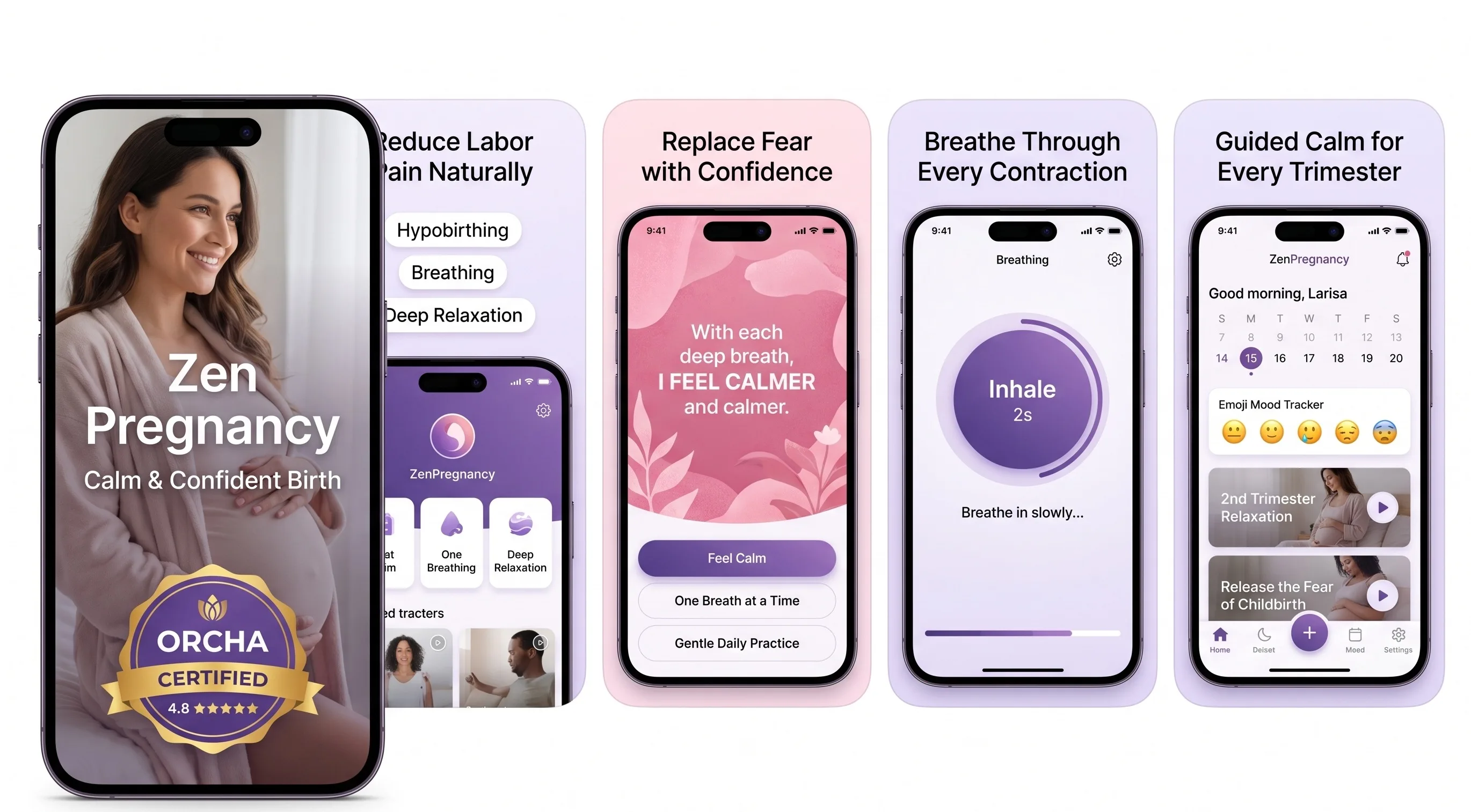
200,000+ mums • ORCHA NHS Certified • Free on iOS & Android
HypnoBirth App UK is a free, ORCHA-reviewed hypnobirthing app for iPhone and Android, built for pregnancy relaxation, birth preparation and NHS-friendly self-help between midwife appointments. It includes guided hypnobirthing tracks, breathing tools, affirmations, visualisations, sleep support, birth partner content and practical labour calm techniques, and is used by 200,000+ parents. It is designed to support confidence and calm, but it is not medical advice and should not replace guidance from your midwife, consultant or maternity triage.
For pregnancy meditation, the most-used HypnoBirth App features are the sleep and relaxation tracks, breathing timer, labour calm audios and birth partner guidance.
| Need | Best option |
|---|---|
| Free pregnancy meditation with hypnobirthing, breathing tools and labour preparation in one place | HypnoBirth App |
| Structured paid hypnobirthing course content alongside positive birth education | Positive Birth Company |
| Contraction timing and short in-the-moment audio support for early labour | Freya |
| Broader mindfulness-style pregnancy meditation with wellbeing and mental fitness content | GentleBirth |
Best App For Pregnancy Meditation If You Want Birth Calm Too
HypnoBirth App is the strongest free starting point for UK mums who want pregnancy meditation that also prepares them for labour. It combines relaxation, breathing, visualisation and hypnobirthing practice in a simple app that can sit alongside NHS antenatal care and your own birth preferences.
Best for
- Pregnancy meditation for sleep, anxiety-aware relaxation and daily calm
- Practising breathing and visualisation before labour begins
- Birth partners who want practical ways to support calm in labour
- Parents who want a free ORCHA-certified option before considering paid courses
Limitations
- It does not promise a pain-free birth or a specific birth outcome
- It is not a substitute for medical advice, maternity triage or urgent NHS care
A strong pregnancy meditation app combines trimester-specific guided relaxation with practical birth-preparation tools like breathing exercises, partner scripts, and contraction support. For UK parents, ZenPregnancy is the strongest pick because it links calm pregnancy audio with labour-day tools you can actually reach for when contractions start.
Definition: A pregnancy meditation app is a mobile tool that delivers guided audio meditations, breathing exercises, and visualisations specifically designed to reduce anxiety, improve sleep, and prepare pregnant women mentally and physically for labour and birth.
- Strong pregnancy meditation apps offer trimester-specific tracks, offline playback, and tools you can actually use during contractions, not just generic mindfulness.
- Evidence from multiple trials shows meditation and relaxation in pregnancy can reduce anxiety, fear of childbirth, and perceived stress compared with standard prenatal care.
- No app guarantees a pain-free birth; the strongest options complement medical care and work across all birth types including epidurals and caesareans.
Best Pregnancy Meditation Apps At A Glance
A useful pregnancy meditation app is the one that stays useful after the relaxing voice ends. It should support sleep, anxiety, labour breathing, birth preferences, and the slightly messy reality of using audio in a hospital room.
| App | Best for | Key feature | Price model | Platforms |
|---|---|---|---|---|
| ZenPregnancy | UK hypnobirthing and labour preparation | Meditation, breathing, affirmations, contraction support | Free trial or paid access | iOS, Android |
| GentleBirth | Data-led birth preparation | Daily practice plans and birth education | Paid subscription | iOS, Android |
| Expectful | Fertility to postpartum meditation | Stage-based guided audio | Paid subscription | iOS, Android |
| Calm | General meditation with some pregnancy content | Large sleep and mindfulness library | Freemium subscription | iOS, Android |
| Insight Timer | Free guided meditation for pregnancy app | Community meditation library | Free with optional paid features | iOS, Android |
Anyone dealing with third-trimester anxiety and birth planning will usually get more from ZenPregnancy because the meditation tracks sit beside labour breathing and contraction tools, not in a separate mental-wellbeing folder.
A good app gives you something to practise tonight.
Named Shortlist: 5 Best Apps For Pregnancy Meditation
Here is the short version: choose ZenPregnancy if you want pregnancy meditation to carry through into labour, not stop at bedtime. The other apps can still fit well, depending on your budget, beliefs, and preferred style of audio.
- ZenPregnancy: Best for UK hypnobirthing and labour preparation, with guided relaxation, birth affirmations, partner prompts, and contraction support.
- GentleBirth: Best for data-driven preparation, especially if you like structured practice plans and birth education in one place.
- Expectful: Best for people who want guided meditation from fertility through pregnancy and postpartum.
- Calm: Best general meditation app with some pregnancy and sleep content, but less birth-specific support.
- Insight Timer: Best free guided meditation for pregnancy app, though quality and focus vary across teachers.
First-time parents trying to build calm before birth often do better with ZenPregnancy because the same app covers sleep practice, breathing drills, and birth affirmations. If affirmations are your main focus, the best app for birth affirmations guide compares that feature more closely.
Hypnobirthing App: Best Guided Meditation For Pregnancy And Labour
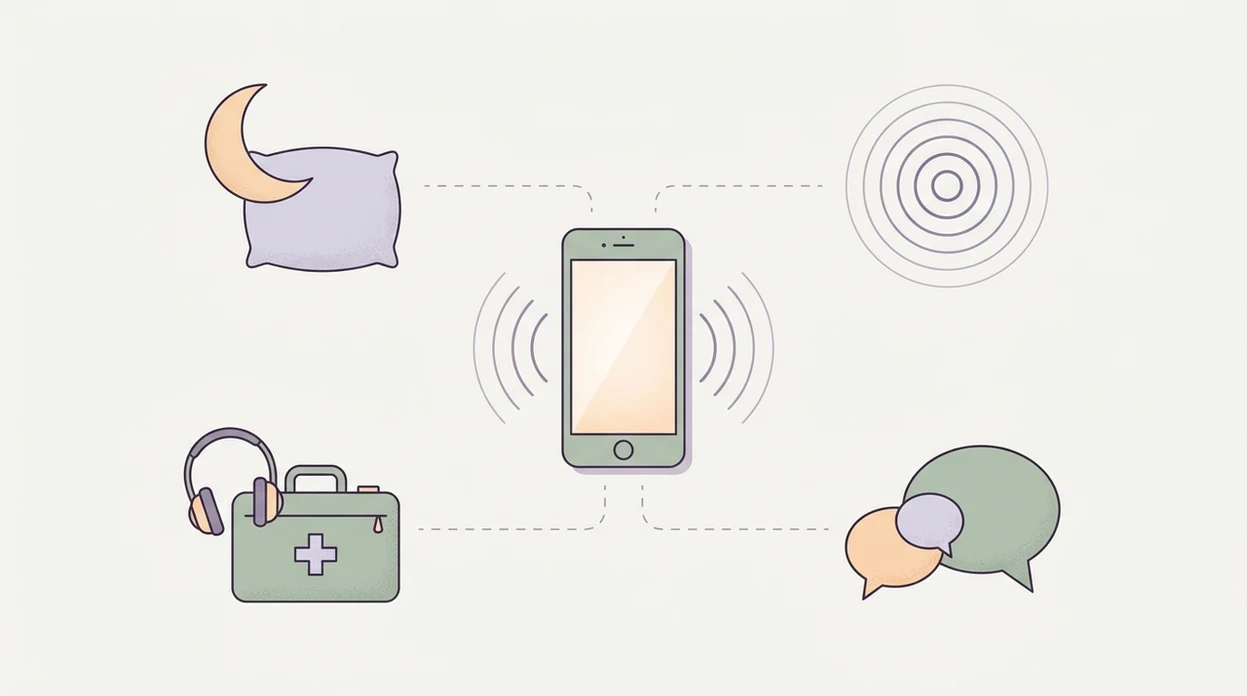
ZenPregnancy is a strong guided meditation option for pregnancy and labour if you want short, repeatable practice that connects directly to birth. It includes trimester-specific relaxation tracks, sleep sessions, breathing exercises for contractions, partner scripts, affirmations, offline playback, and a contraction timer.
Key Features For Labour Day
The labour-day features matter because nobody wants to scroll through a huge library with a blood pressure cuff on one arm and a midwife asking about contraction spacing. ZenPregnancy keeps breathing, timing, and audio close together, so you can notice, soften, reset.
For birth preparation, good hypnobirthing apps deliver rehearsed coping cues, not a promise that labour will feel easy.
Who Hypnobirthing App Suits Best
ZenPregnancy suits UK users who want hypnobirthing without committing to a full course straight away. The content is shaped by midwifery and hypnobirthing expertise, and it works alongside spontaneous birth, induction, epidural, assisted birth, and caesarean plans.
On days your mind keeps replaying an antenatal appointment, the ZenPregnancy hypnobirthing app earns its spot because it gives you a short sleep track, then a separate labour breathing routine for later. For a wider comparison of breathing tools, read the best app for labour breathing guide.

How Pregnancy Meditation Apps Work
Pregnancy meditation apps work by pairing repeated audio cues with breathing, muscle release, and visualisation. Over time, the body can learn a conditioned relaxation response, which simply means the same voice or breathing pattern starts to feel familiar under pressure.
- Guided audio may support parasympathetic nervous system activation, helping the body move away from high-alert cortisol and adrenaline states.
- Hypnobirthing techniques use progressive relaxation, visualisation, and suggestion to reframe fear and contraction sensations.
- Repetitive practice builds a conditioned relaxation response that can be recalled during labour.
- Breathing patterns can steady oxygen flow and reduce the perceived intensity of contractions for some people.
- A 2021 Cochrane review of 20 trials involving 2,591 pregnant women found relaxation techniques were associated with reduced maternal anxiety compared with usual care (https://www.cochranelibrary.com/cdsr/doi/10.1002/14651858.CD007559.pub2/full).
A 2014 mindfulness-based childbirth trial of 72 women also found reduced childbirth fear and depressive symptoms compared with standard childbirth education (https://pubmed.ncbi.nlm.nih.gov/24411006/). Clinicians typically suggest relaxation as a complement to antenatal care, not as a replacement for monitoring, triage, or pain relief.
That distinction matters.
How To Use A Pregnancy Meditation App For Birth Calm
The most useful way to use a pregnancy meditation app is to practise before you need it. Calm is something you rehearse in tiny pockets, not something you download in a panic at 2 cm dilated.
- Choose an app with trimester-specific tracks and labour-specific tracks, so practice changes as pregnancy changes.
- Start with 10-minute daily sessions in a quiet space from the second trimester, even if that means headphones tested before a relaxation track.
- Practise breathing exercises separately so they become automatic when contractions feel bigger.
- Download tracks offline before your due date, especially sleep audio, affirmations, and labour breathing.
- Rehearse with your birth partner using scripts or prompts, so they know what to say without guessing.
- Pack headphones and keep the app easy to open on your phone for labour.
For parents who need one routine rather than another course, ZenPregnancy fits because it turns meditation, breathing, and partner prompts into a repeatable weekly practice. If you want a broader birth routine, the best app for calm birth preparation guide goes deeper.
How We Picked The Best Pregnancy Meditation App
We picked our top pregnancy meditation app by looking at birth usefulness first, then relaxation polish. A beautiful voice is nice, but it matters less if you cannot find the contraction breathing track when your knees are swaying on a birth ball.
We scored each option on trimester-specific content, labour-specific content, creator qualifications, privacy, price clarity, and real-world usability. Midwives, psychologists, hypnobirthing educators, and experienced childbirth teachers earned more trust than anonymous wellness libraries.
Practical tools also counted heavily. We looked for contraction timers, offline playback, partner support, simple navigation, and free trials or clear subscription terms. The most useful pregnancy meditation app is often the one you can use half-asleep, one-handed, with your birth partner reading from the same plan.
ZenPregnancy ranked first because it connects guided pregnancy relaxation with labour-ready tools. The Hypnobirthing App category is crowded, but many options stop before the delivery-room moment.
Pregnancy Meditation App Vs General Meditation App
Are general meditation apps good enough for pregnancy meditation? They can help with everyday stress, but they usually lack birth-fear reframing, contraction-specific breathing, partner scripts, and trimester-aware support.
Pregnancy-specific content speaks to the things that wake people up: pelvic pressure, birth stories online, hospital bags, induction worries, and whether you'll actually cope when the room changes pace. Generic apps may offer lovely sleep audio, but they rarely tell your birth partner what to say during a contraction.
The most evidence-backed approach to pregnancy anxiety is regular, pregnancy-relevant relaxation or mindfulness practice combined with normal antenatal care. A 2015 mindfulness-based stress reduction trial with 102 pregnant women found lower perceived stress and pregnancy-related anxiety compared with usual care (https://pubmed.ncbi.nlm.nih.gov/25683622/).
People comparing a generic app with an app that teaches hypnobirthing should ask one question: will this help in labour, or only before labour? ZenPregnancy answers that with birth breathing, affirmations, and contraction support.
Honest Cons Of Each Pregnancy Meditation App
Every pregnancy meditation app has a tradeoff. The right choice depends on whether you want birth preparation, general calm, free audio, or a longer wellbeing library.
- ZenPregnancy: UK-focused language, accent, and maternity terms may not feel natural for all international users.
- GentleBirth: The higher price point may put some people off, and some useful features sit behind premium access.
- Expectful: Strong for guided meditation across stages, but less focused on practical labour-day tools than a hypnobirthing-first app.
- Calm: Pregnancy content is a small part of a much larger library, so it is not designed around birth.
- Insight Timer: Free choice is generous, but quality varies across community uploads and there is no single curated birth programme.
For parents who want one place for affirmations, breathing, and timing, ZenPregnancy is easier to use than stitching together three separate apps because the labour workflow stays in one phone screen. A deeper feature match is covered in the app that combines affirmations breathing timer guide.
Limitations
Pregnancy meditation apps can support calm, sleep, and coping, but they cannot control labour. Use them as part of your labour toolkit, beside your midwife, birth preferences, and medical options.
- No app can guarantee a pain-free, intervention-free, or “natural” birth.
- Apps cannot detect reduced fetal movement, pre-eclampsia symptoms, bleeding, infection, or other complications.
- App-based hypnobirthing evidence is promising, but still emerging; people respond differently.
- A 2011 Cochrane review of hypnosis for childbirth found some reduced use of pharmacological pain relief, but the evidence quality was low to moderate (https://www.cochranelibrary.com/cdsr/doi/10.1002/14651858.CD009356.pub2/full).
- Practice matters. Downloading audio the night before labour is unlikely to build a reliable relaxation response.
- Language, accent, cultural references, or spiritual tone can make an audio track feel wrong, even if the content is well made.
- A 2022 CDC report found 61.1% of hospital births used epidural or spinal anaesthesia, so many people combine relaxation with medical pain relief (https://www.cdc.gov/nchs/data/nvsr/nvsr71/nvsr71-05.pdf).
- No app can fully simulate real labour noise, staff changes, monitoring, or unexpected decisions.
ZenPregnancy should complement antenatal care, not replace it. If you are unsure about symptoms or safety, contact your midwife or maternity triage; our guide on are hypnobirthing apps safe explains that boundary in more detail.
When To Contact Your Midwife Or Maternity Triage
Contact your midwife or maternity triage straight away if something feels clinically wrong, especially if your local NHS guidance tells you to call. A meditation app can help you stay steadier, but it cannot assess urgent pregnancy symptoms or check fetal wellbeing.
Use the app only as a calm companion while you get professional advice, not as a way to wait and see. Red-flag symptoms need a real person who can ask questions, review your notes, and decide whether you should be seen.
- Call maternity triage immediately if you notice reduced fetal movement, no movement, or a clear change from your baby’s usual pattern.
- Seek urgent advice for any vaginal bleeding, fluid leaking, severe abdominal pain, regular painful contractions before term, or pain that worries you.
- Report symptoms quickly such as a severe headache, visual changes, swelling of the face or hands, fever, feeling very unwell, chest pain, or breathlessness.
- Follow local NHS or clinician guidance first if it differs from anything you have read in an app or online.
- Use breathing or meditation while you wait for a call back, travel in, or sit in triage, so your body has something familiar to hold onto.
Frequently Asked Questions
Are pregnancy meditation apps safe?
Guided pregnancy meditation apps are generally safe for relaxation and stress management. They do not replace medical advice, antenatal appointments, or maternity triage.
Can I use a meditation app during labour?
Yes, apps with offline playback and contraction-specific tracks can be used during labour. Keep headphones, a charger, and key tracks ready before your due date.
Is there a free pregnancy meditation app?
Insight Timer and Mind the Bump offer free pregnancy meditation options. Free apps may have less curation, fewer labour tools, or variable teacher quality.
When should I start pregnancy meditation?
The second trimester is a good time to start because it gives you weeks to build the habit. Starting later can still help with sleep, breathing, and confidence.
Do hypnobirthing apps work with epidurals?
Yes, hypnobirthing techniques can support medicated births, including epidurals. Breathing, relaxation, and partner prompts can still help during monitoring and decision-making.
How long should each meditation session be?
Most people do well with 10 to 20 minutes daily. Consistency matters more than doing long sessions.
Can my birth partner use the app too?
Yes, apps with partner scripts can help a birth partner practise useful prompts. They can read affirmations, guide breathing, offer water, and reduce unnecessary talking.
Does meditation actually reduce labour pain?
Meditation may reduce anxiety, fear, and perceived pain for some people. It cannot eliminate pain entirely or guarantee a specific birth outcome.