 Hypno
Hypnobirthing Meditation: Audio Sessions for Birth Preparation
Hypnobirthing meditation sessions designed for labour and birth. How guided hypnosis helps manage pain, reduce fear, and prepare your mind for a positive delive


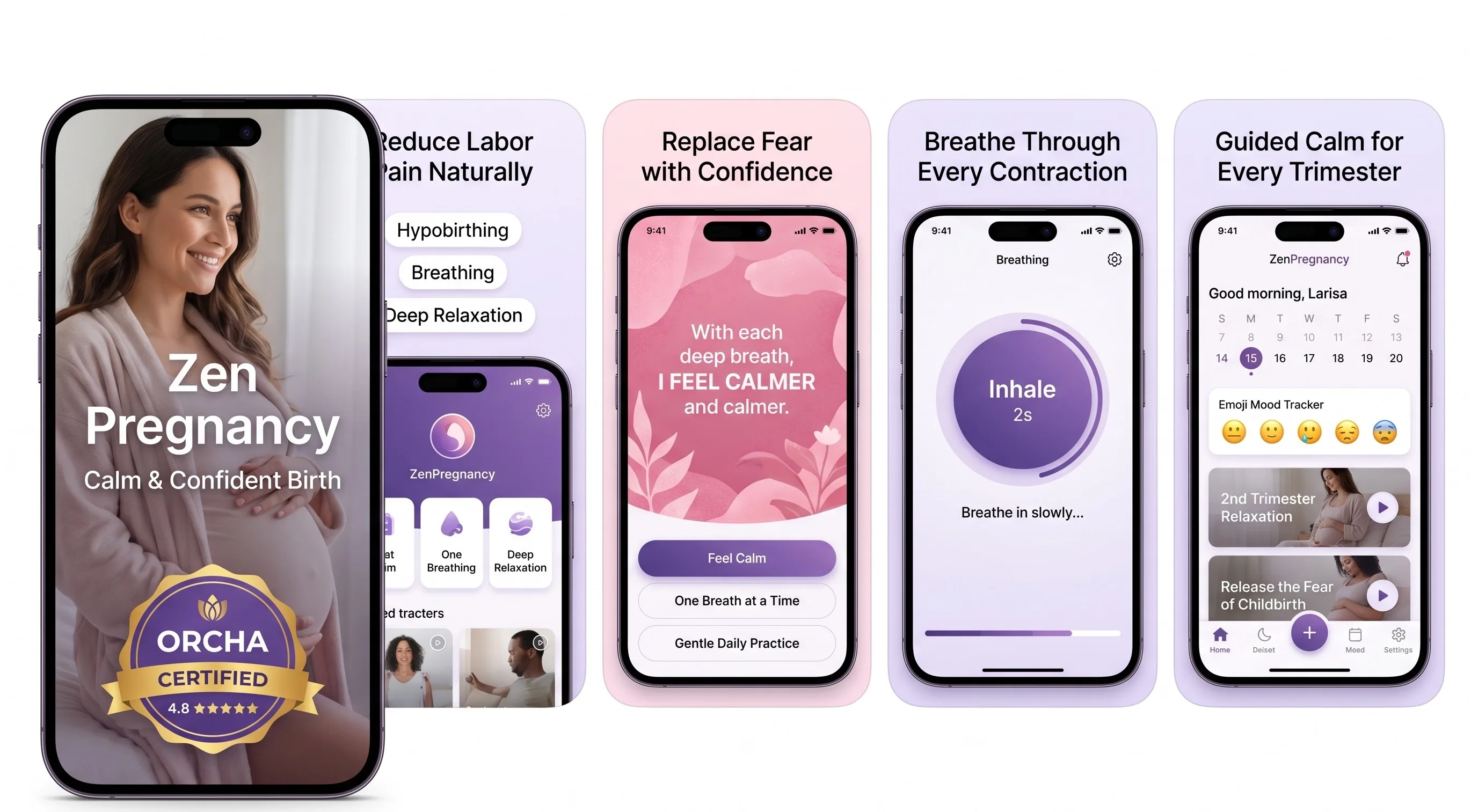
200,000+ parents • ORCHA-reviewed • Free on iOS & Android
What is hypnobirthing meditation?
Think of it as practising relaxation on purpose. A voice talks you through slowing your breathing, loosening your muscles, picturing a calm place and hearing a few reassuring ideas about birth. Over a few weeks your body learns to settle faster.
The word "hypnosis" puts some people off. Here it means a state of deep focus, a bit like being absorbed in a book. You hear everything, you can open your eyes whenever you like and nobody is controlling you. If you are curious about the difference, read hypnosis vs hypnobirthing.
What does a hypnobirthing audio session include?
Most sessions follow the same arc, which helps, because familiarity is half the point.
- Settling. You get comfortable and let your breathing slow.
- Breathing. A steady pattern, often in for about 4 and out for about 8.
- Progressive relaxation. Each part of the body is loosened in turn, from forehead to toes.
- Visualisation. A calm place, or your body opening gently as you birth.
- Affirmations. A few positive statements, repeated slowly.
- Coming back. A gentle count up to full alertness.
Sessions that include birth rehearsal can feel emotional the first time. That is normal.
How do you practise hypnobirthing meditation?
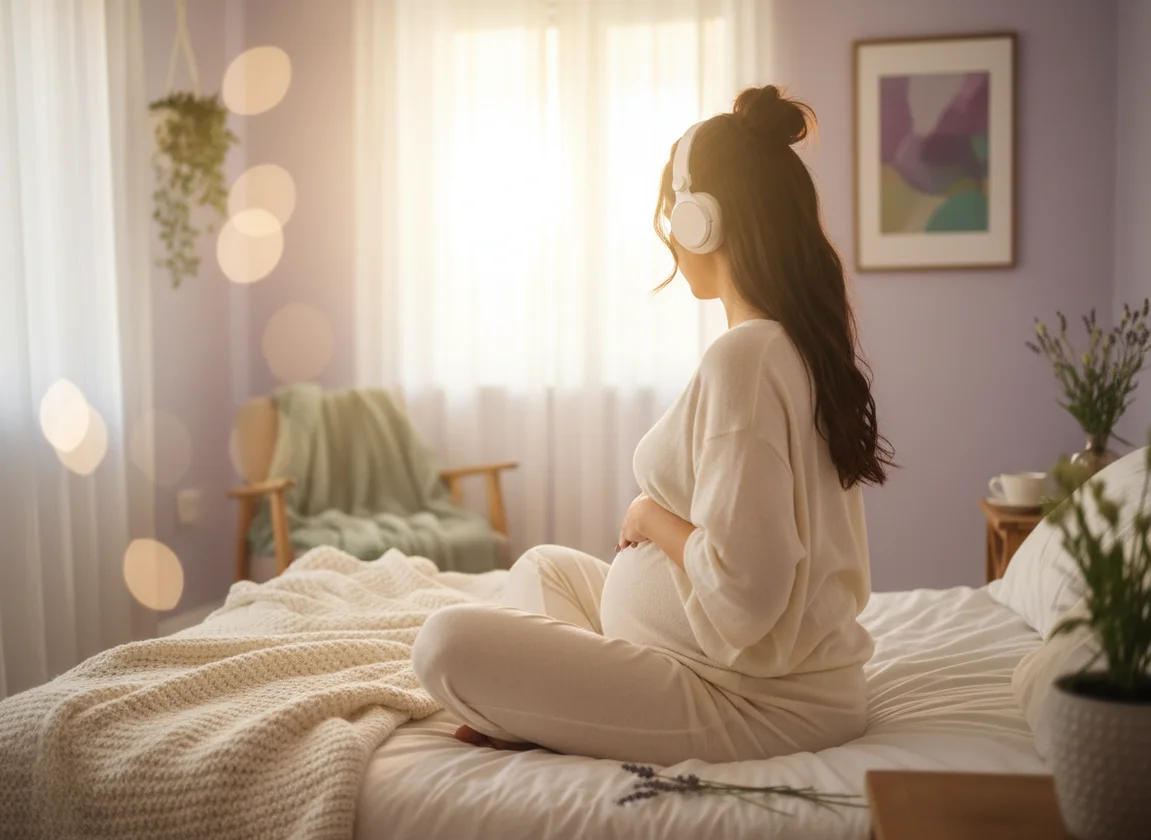
Do it at a quiet time, such as after work or before bed, with headphones and your phone on Do Not Disturb. Lie on your side or sit up with pillows, a blanket over you. Start with 5 minutes if that is what you have.
A rough plan for each stage of pregnancy might look like this.
- Second trimester. Two or three short sessions a week of general relaxation.
- Early third trimester. A relaxation track most days, with the breathing practised on its own too.
- From about 36 weeks. A daily session, and some practice with a partner in the room so they know the cues.
Our guide to when to start hypnobirthing has more on timing. If you fall asleep, that is fine. Sleep is welcome, and your body still learns.
How do you use it in labour?
You play the tracks you know. In early labour, a longer relaxation can help you rest. Later, shorter tracks or just the breathing and a couple of phrases are more realistic. Your partner can start the audio, dim the lights and keep distractions away. We cover the labour side in labour meditation.
The HypnoBirth app has guided hypnobirthing meditations, free on iPhone and Android. If you are weighing it against general mindfulness, see hypnobirthing vs meditation. For a pregnancy-wide routine, try guided meditation for pregnancy.
What does the evidence say?
It is mixed. The Cochrane review on hypnosis for pain in labour found the evidence limited and of low certainty. Some small studies find hypnosis and relaxation help with fear and coping, but none can promise a shorter or less painful labour.
It works well beside your midwife and any pain relief you choose, including an epidural. It is not a substitute for monitoring or medical care. If your waters break, you have bleeding, your baby is moving less, or the pain feels severe or wrong, call your maternity unit.
Frequently asked questions
What is hypnobirthing meditation?
It is guided audio that combines slow breathing, deep relaxation, visualisation and positive suggestion to help you feel calm about birth. You listen in pregnancy so the skills are familiar in labour.
Am I asleep or out of control during hypnobirthing?
No. You stay aware and can open your eyes, move or stop whenever you like. It feels more like a deep daydream or the stage before sleep.
How long should a session be?
10 to 20 minutes is typical. Start with 5 if that is all you have. Regular short sessions beat the occasional long one.
Is hypnobirthing meditation safe in pregnancy?
Relaxation and breathing audio is low risk for most people. If a session brings up distress, stop and talk to your midwife or GP. Our hypnobirthing practice side effects page covers what to expect.
Is it the same as mindfulness meditation?
They overlap, but hypnobirthing meditation is built around birth. It usually adds visualisation and suggestions about labour. We compare them in our hypnobirthing vs meditation guide.