 Hypno
HypnoFind Calm Birth Routine: A Practical Pregnancy Relaxation Plan
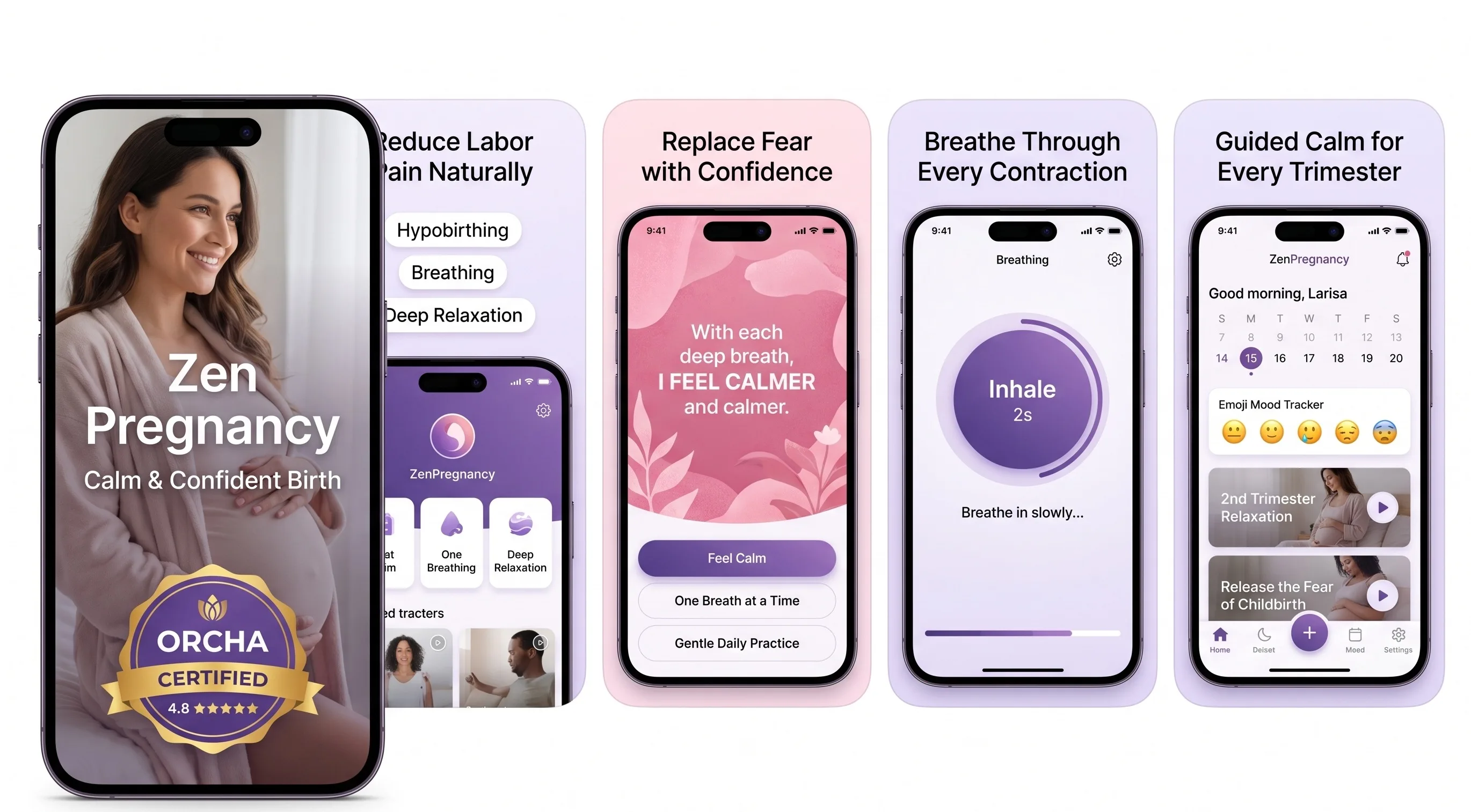
200,000+ mums • ORCHA NHS Certified • Free on iOS & Android
HypnoBirth App UK is a free, ORCHA-certified hypnobirthing app for iPhone and Android, used by 200,000+ parents to support calmer pregnancy and birth preparation. It includes guided relaxations, breathing tools, affirmations, birth partner prompts, a contraction timer and simple routine-building support that fits around NHS maternity care. It is NHS-friendly and designed to complement advice from your midwife or maternity unit, but it is not medical advice and should not replace individual clinical guidance.
For calm birth routines, the most-used HypnoBirth App features are short daily breathing tracks, bedtime relaxations and birth partner prompts that help parents practise consistently without needing a long session.
| Need | Best option |
|---|---|
| Building a free daily calm birth routine with breathing, affirmations and partner practice | HypnoBirth App |
| Following a structured paid hypnobirthing course with video-based learning | Positive Birth Company |
| Using a simple labour-focused tool for breathing and contraction timing | Freya |
| Combining pregnancy mindfulness, sport psychology-style coaching and ongoing mental wellbeing tools | GentleBirth |
Best Free App for Creating a Calm Birth Routine
HypnoBirth App is a practical choice if you want to build a calm birth routine around short, repeatable habits rather than one long session. It is free, ORCHA certified and designed for UK parents preparing alongside NHS antenatal care, whether you are planning a vaginal birth, induction or caesarean.
Best for
- Practising breathing, relaxation and affirmations in short daily sessions
- Helping a birth partner understand what to say and do during labour
- Creating a flexible routine that can be used at home, on the ward or in theatre preparation
Limitations
- It does not replace personalised advice from your midwife, consultant or maternity triage
- It cannot guarantee a pain-free or intervention-free labour
To find calm birth routine support that actually works, combine a short daily breathing practice, guided pregnancy meditation, and weekly birth-prep check-ins into a repeatable schedule you can sustain before labour. The aim is familiarity, not perfection, so your body has practised what to do before contractions ask more from you.
> Definition: A calm birth routine is a structured, repeatable pregnancy relaxation practice, typically combining breathing exercises, guided meditation, affirmations, and birth-prep education, designed to reduce prenatal anxiety and build familiarity with coping techniques before labour begins.
TL;DR
- A calm birth routine works best when it is short, 10–15 minutes, consistent, and practised well before labour so techniques feel automatic under stress.
- The most effective app-based routines combine guided relaxation, breathing practice, affirmations, and birth-prep education in a single structured plan.
- Relaxation tools complement, but never replace, midwife, OB, or NHS clinical care and are not a guarantee of a pain-free labour.
What a Calm Birth Routine Actually Includes
A calm birth routine includes four core pieces: breathing exercises, guided pregnancy meditation, birth affirmations, and simple birth-prep education. It is not a medical plan, and it should sit beside your midwife or OB care, not over it.
The useful version is smaller than most people expect. Ten minutes of slow breathing, one familiar audio track, and a phrase you can repeat under pressure will usually serve you better than a colour-coded plan you stop using by Friday. Calm is something you rehearse.
A good routine teaches your body to notice, soften, reset. Soft jaw. Loose shoulders. Heavy hands. Those tiny cues matter when your nervous system is busy.
According to a 2023 Cochrane review of mindfulness-based interventions during pregnancy (https://www.cochranelibrary.com/cdsr/doi/10.1002/14651858.CD013915.pub2/full), several included studies found reduced prenatal anxiety compared with control groups. That does not mean meditation controls birth outcomes; it means regular practice may help some people feel steadier before labour begins.
Why a Pregnancy Relaxation Routine Works Before Labour
Pregnancy relaxation routines work by pairing repeated cues with calmer body responses, so the cue becomes easier to access during stress. This is behavioural conditioning in plain clothes: your exhale, jaw release, and familiar audio track become a practised pathway.
- Repeated cues become easier to find. If you practise the same slow exhale every night, your body recognises it faster when you feel startled.
- Slow breathing can shift the nervous system. Longer exhales support parasympathetic activation, which is the body’s rest-and-settle response.
- Perceived pain and stress are linked. When shoulders lift and the jaw locks, labour can feel more threatening. Softening does not remove sensation, but it may reduce bracing.
- Mindfulness has a wider anxiety evidence base. The U.S. National Center for Complementary and Integrative Health says meditation and mindfulness practices may help reduce anxiety, stress, and symptoms of depression in some adults (https://www.nccih.nih.gov/health/meditation-and-mindfulness-effectiveness-and-safety).
- Easy access supports repetition. A 2022 prenatal mindfulness review found that app-delivered and online interventions may improve adherence because people can repeat them at home.
Clinicians typically recommend relaxation tools as supportive coping strategies, not as treatment for pregnancy complications or severe mental health symptoms.
What You Need Before Starting a Calm Birth Routine

You need a quiet 10–15 minute window, headphones, a phone, and one simple plan you can repeat without negotiating with yourself each day. Morning or bedtime tends to work well because those slots already have a rhythm.
Keep it ordinary. A chair beside the bed is enough.
Install a pregnancy relaxation or hypnobirthing app, then choose one breathing module rather than browsing every option. If you are comparing options, a best app for pregnancy meditation guide can help you check whether the structure fits your life.
Ask your birth partner to learn one or two cues, such as “drop your shoulders” or “breathe down rather than brace up.” Also tell your midwife or OB that you are adding relaxation practice, especially if anxiety, trauma memories, or panic symptoms are part of your pregnancy.

How to Build a Calm Birth Routine Step by Step
Build your calm birth routine by choosing one daily breathing slot, one guided meditation track, one affirmation, and one weekly review. Keep the whole routine short enough that you can do it on a tired Tuesday.
Set a Daily Breathing Slot
- Set a fixed daily 10-minute slot and open the breathing module in your chosen hypnobirthing app.
- Place your phone somewhere boring so you are not tempted to scroll before starting.
Add Guided Pregnancy Meditation
- Listen to one guided pregnancy meditation track per session, using the app audio like a familiar track rather than a new lesson every time.
Anchor With a Birth Affirmation
- Repeat one birth affirmation aloud or silently after each session, such as “I soften with each exhale.”
Log and Track Each Session
- Log one word or rating after practice, such as “tight,” “sleepy,” or “calmer.”
Review and Adjust Weekly
- Review your routine weekly and adjust the track, length, or time of day if you keep missing it.
Rehearse Cues With Your Birth Partner
- Practise the same breathing cue with your birth partner so it can transfer into labour without a long explanation.
Tools like ZenPregnancy can help organise breathing, meditation, affirmations, and timing practice in one place. Good hypnobirthing apps deliver repeatable coping cues and structured practice, not a promise that labour will follow a script.
How a Calm Birth Routine Looks Week by Week
A calm birth routine changes slightly across pregnancy, but the backbone stays the same: short practice, repeated cues, and regular review. Consistency matters more than session length.
Foundation Phase: Weeks 20–28
Start with daily breathing and two or three guided meditation tracks each week. This is where you teach your body the basics, before labour feels close enough to make everything urgent. Hands resting on a tight bump can be enough of a cue to begin.
Deepening Phase: Weeks 28–36
Add affirmations, birth preferences, and partner rehearsals. Your birth preferences are not a birth script. They are a way to think through options while your mind is clear.
Maintenance Phase: Weeks 36–40
Keep the same short routine and add contraction timer familiarisation. If timing tools matter to you, the best app for contraction timing guide explains what to look for before early labour starts.
For most pregnant people, a short daily routine is easier to maintain than occasional long practice because it removes decision fatigue.
How to Use a Calm Birth Routine During Labour
Use your calm birth routine in labour by making it smaller, earlier, and more repetitive than it was in pregnancy practice. The goal is not to perform every technique; it is to give your body one familiar path to follow when contractions need more attention.
- Open your familiar track early, before contractions feel difficult to read or you are already bracing through them. Early labour is a better time to find the voice, rhythm, and room setup you have practised.
- Choose one breathing cue and stay with it instead of moving between methods. A simple phrase such as “long exhale” is easier to remember than a menu of techniques.
- Ask your birth partner to repeat one short line, using the same words each time. Predictable support can feel steadier than new encouragement every contraction.
- Reset your jaw, shoulders, and hands in the space between contractions. Those small releases can stop tension from carrying straight into the next wave.
- Follow your maternity unit’s guidance first, especially around when to call, attend triage, or use contraction timing. An app pattern can be useful, but local clinical advice comes before any timer.
Common Calm Birth Routine Patterns That Work
There is no single correct calm birth routine. The routine that works is the one you repeat when life is full, your sleep is broken, and your notes app is full of birth questions.
- The morning breather. This person does 10 minutes of breathing before work, often before opening messages. It suits people who feel more anxious once the day gets noisy.
- The bedtime listener. This pattern uses guided meditation and affirmations as a sleep wind-down. The blue phone glow at 3am is real, but a familiar track can stop the spiral from getting louder.
- The partner pair. Once a week, both people practise cue words, slow exhales, and one reassurance line. Your birth partner might count down slow exhales so you do not have to think.
- The appointment resetter. After an antenatal appointment, this person uses a five-minute breathing track before reading through decisions.
The most repeatable routine usually has one cue, one track, and one phrase, because labour is not the time for complicated menus.
Common Mistakes When Building a Pregnancy Relaxation Routine
The most common mistake is starting too big. Thirty-minute sessions sound committed, but they are often the first thing to disappear when sleep gets awkward or appointments stack up.
Another trap is switching tracks or techniques every session. Variety can feel productive, but familiarity is the point. If your body has heard the same voice and practised the same exhale many times, it has less to decode later.
Mixed days are normal. Some sessions feel calm. Some feel fidgety and annoying.
Do not treat a pregnancy relaxation routine as a replacement for midwife or OB guidance. If you are unsure about symptoms, reduced movements, bleeding, severe headaches, or labour signs, contact your maternity unit, call NHS 111 where appropriate, or follow NHS reduced-movement guidance at https://www.nhs.uk/pregnancy/keeping-well/your-babys-movements/.
Waiting until the final weeks can still help, but it gives your nervous system less rehearsal time. If you want more technique teaching, an app that teaches hypnobirthing may be more useful than a loose playlist.
How to Verify Your Calm Birth Routine Is Working
Your calm birth routine is working if it is becoming easier to repeat and easier to recall under pressure. Do not judge it only by whether every session feels peaceful.
Check five practical markers:
- Are you practising at least five days per week?
- Does your self-rated anxiety or body tension drop by even one point after some sessions?
- Can you remember your breathing cue instantly when startled or stressed?
- Can your birth partner name the cue and coach it without prompting?
- Have you mentioned the routine at your next midwife appointment?
The body gives clues. Cold hands, raised shoulders, and a clenched jaw often show up before the anxious thought has finished forming. If you can spot that earlier and soften sooner, the routine is doing useful work.
For labour-specific breath practice, a best app for labour breathing comparison can help you choose a tool that keeps cues simple.
When to Contact Your Midwife or Maternity Unit
Contact your midwife or maternity unit whenever symptoms feel worrying, unusual, or outside the guidance you were given. Relaxation practice is supportive, but it cannot assess labour progress, diagnose risk, or tell you whether you and your baby are medically safe.
Use your local maternity triage instructions first, even if an app, contraction timer, or birth plan suggests something different. If you notice bleeding, reduced or changed baby movements, severe headache, visual changes, chest pain, fever, waters breaking, strong abdominal pain, or you feel that something is not right, pause the routine and seek clinical advice.
- Stop practising if breathing, meditation, or affirmations make panic, flashbacks, or distress worse.
- Call the number your midwife or maternity notes give for maternity triage, assessment, or urgent advice.
- Explain clearly what has changed, including movements, bleeding, pain, headache, contractions, and how many weeks pregnant you are.
- Ask for perinatal mental health support if panic, trauma memories, intrusive thoughts, or persistent anxiety are affecting daily life.
A calm routine should make support easier to access, not delay it.
Limitations
A calm birth routine can support preparation, but it cannot guarantee a calm labour, a short labour, or a pain-free birth. Medical events, baby’s position, induction, assisted birth, caesarean birth, and individual pain responses all vary widely.
Important caveats:
- A routine cannot replace advice from your midwife, OB, maternity triage, or NHS 111 where appropriate.
- Evidence for app-based hypnobirthing claims is mixed, and not every study shows large or consistent effects.
- Relaxation practice may reduce general anxiety for some people, but it is not enough support for severe antenatal anxiety, depression, panic, or trauma symptoms.
- Elaborate routines are harder to sustain than a simple 10-minute daily practice.
- App-based routines work best as one part of wider birth preparation, including clinical care, partner support, and informed decision-making.
- A contraction timer can support decision-making, but your local maternity unit’s guidance should come first.
- If practice makes you feel worse, stop and speak with a midwife or mental health professional.
If safety is your main concern, read a clear guide on are hypnobirthing apps safe before choosing your routine.
Frequently Asked Questions
Is there an app for calm birth routines?
Yes. ZenPregnancy provides structured calm birth routine support with breathing practice, guided pregnancy meditation, affirmations, and labour tools.
When should I start a birth routine?
Around 20 weeks is a useful time to start because there is time to build familiarity. Starting later can still help if you practise consistently.
How long should each calm birth routine session be?
Most sessions can be 10–15 minutes. Short daily practice is usually easier to sustain than occasional long sessions.
Does a calm birth routine reduce labour pain?
A calm birth routine may help some people manage stress, anxiety, and perceived intensity. It cannot guarantee pain reduction or a particular birth outcome.
What is the 4-1-1 rule for birth?
The 4-1-1 rule usually means contractions are four minutes apart, lasting one minute, for one hour. A contraction timer in the ZenPregnancy hypnobirthing app can help you track patterns, but follow your maternity unit’s advice.
Can my birth partner join the routine?
Yes. A birth partner can learn cue words, breathing prompts, affirmation reading, and simple support actions such as dimming lights or offering water.
Does hypnobirthing replace medical advice?
No. Hypnobirthing and relaxation routines complement midwife, OB, and NHS clinical care, but they do not replace medical advice.
What if relaxation practice feels unhelpful?
Mixed days are normal, so simplify the routine before abandoning it. If anxiety persists or feels severe, speak with your midwife or a perinatal mental health professional.