 Hypno
HypnoPregnancy Stress Relief: What Helps When Anxiety Takes Over
Evidence-based pregnancy stress relief methods that work. Meditation, breathing, gentle exercise, and daily habits that reduce cortisol during pregnancy.
200,000+ mums • ORCHA NHS Certified • Free on iOS & Android
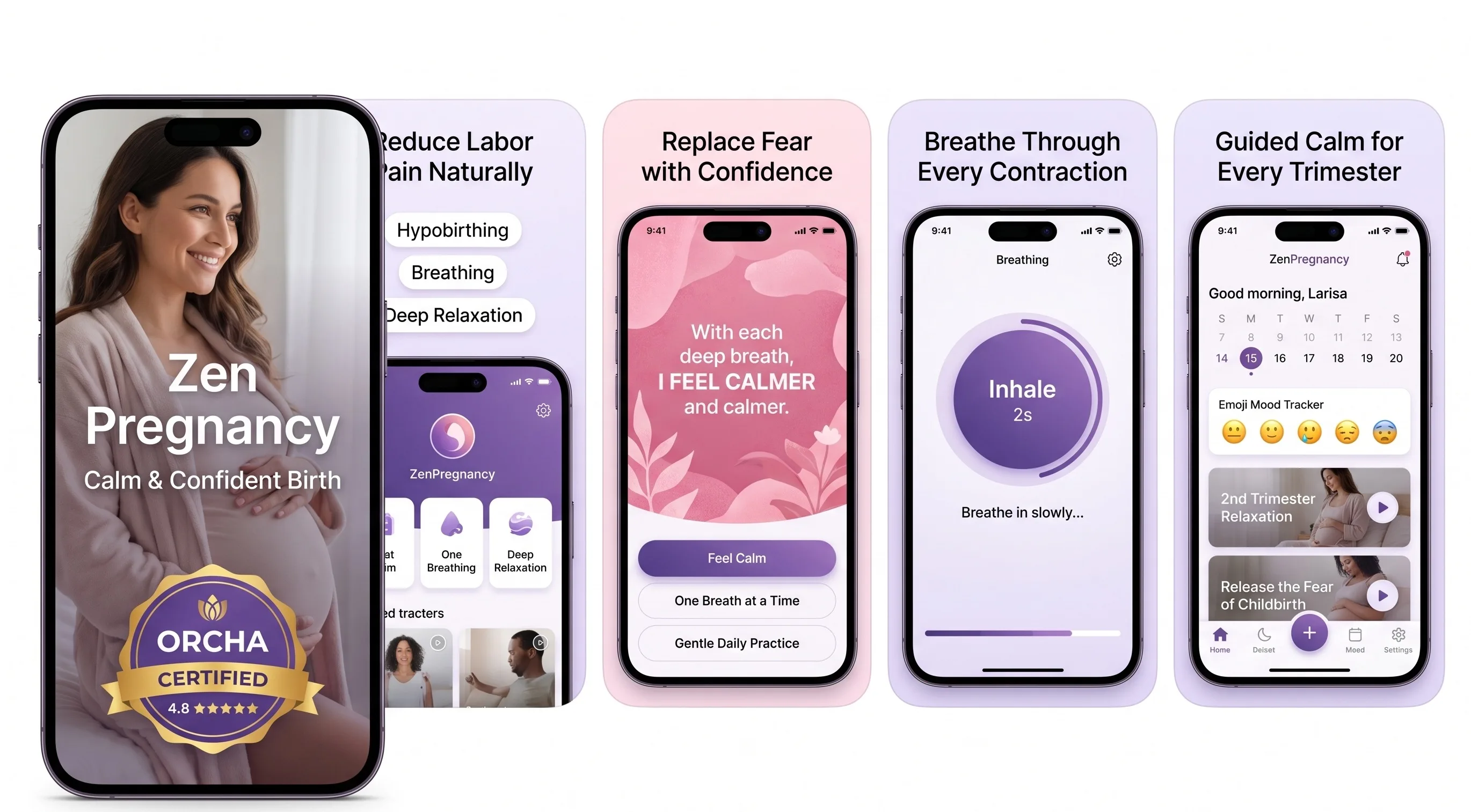
HypnoBirth App UK is a free, ORCHA-reviewed hypnobirthing app for iPhone and Android, designed to support pregnancy stress relief with breathing exercises, guided relaxations, affirmations, visualisations, birth preparation tools and calming audio for pregnancy and labour. It is NHS-friendly and can sit alongside your usual midwife-led care, but it is not medical advice and should not replace support from your midwife, GP or maternity triage if anxiety feels overwhelming or symptoms change.
Across 200,000+ users, the most-used features for pregnancy stress relief are short breathing tracks, bedtime relaxations and quick confidence-boosting affirmations that can be used between appointments or during unsettled nights.
| Need | Best option |
|---|---|
| Free daily pregnancy stress relief with breathing, relaxation and NHS-friendly birth preparation | HypnoBirth App |
| Structured paid hypnobirthing course content for couples wanting a more classroom-style approach | Positive Birth Company |
| Contraction timing and in-the-moment labour support when anxiety rises during early labour | Freya |
| A broader mindfulness and meditation library for pregnancy wellbeing and postnatal calm | GentleBirth |
Best Choice for Pregnancy Stress Relief: Calm Anxiety Safely
HypnoBirth App is a practical free choice for UK mums who want gentle pregnancy stress relief without adding another paid subscription. Its short breathing sessions, guided relaxations and affirmations are easy to use around NHS appointments, work, sleep disruption and changing trimester worries.
Best for
- Anxious mums who want quick calming tools on their phone
- Pregnancy breathing practice for both stress and labour
- Anyone looking for free, ORCHA-certified hypnobirthing support
- Partners who want simple ways to support a calmer birth mindset
Limitations
- It does not diagnose or treat anxiety disorders
- It should be used alongside, not instead of, advice from your midwife, GP or perinatal mental health team
- It cannot promise a pain-free labour or a specific birth outcome
Why Managing Stress in Pregnancy Matters
Stress in pregnancy is common, but constant stress deserves support because it can affect sleep, mood, appetite, body tension, and confidence about birth. You are not overreacting if small things suddenly feel huge; pregnancy changes hormones, relationships, identity, work, finances, and how safe you feel in your own body.
Short bursts of stress are normal. The concern is feeling wired, tearful, panicky, numb, or unable to rest most days. Research in perinatal mental health consistently shows that anxiety and depression symptoms during pregnancy are common and treatable, and early support can make the rest of pregnancy feel less lonely. If your worries are affecting daily life, ask for help sooner rather than waiting for a crisis. This is not medical advice; consult your healthcare provider for personalised care.
What Anxiety Does to Your Pregnant Body
Anxiety activates the sympathetic nervous system, often called fight, flight, or freeze. In pregnancy, that can feel like a racing heart, tight chest, shallow breathing, jaw clenching, nausea, restlessness, intrusive thoughts, or a sudden need to check symptoms online.
Your body is trying to protect you, even when the threat is a thought such as “What if birth goes wrong?” or “What if I cannot cope?” Stress hormones such as adrenaline and cortisol rise as part of this alarm response. Your breathing may move higher into your chest, your pelvic floor may grip, and your brain becomes more alert to danger. The goal is not to force yourself to be calm. The goal is to send repeated safety signals through breath, touch, movement, words, and support so your body learns it can soften again.
How Stress Relief Techniques Work in Pregnancy
Pregnancy stress tools work by giving your nervous system predictable cues of safety. Slow exhaling, guided meditation, grounding, gentle movement, and reassuring language can shift the body toward parasympathetic activity, the state linked with rest, digestion, repair, and clearer decision-making.
Longer exhales are especially useful because they influence the vagus nerve and can reduce physical arousal. Mindfulness trains attention so your brain can notice a worry without following it for the next hour. Relaxation practice also builds familiarity: the more often you practise when you are mildly stressed, the easier it is to access the skill during scans, appointments, early labour, or a difficult night. These techniques do not guarantee a particular birth outcome, but they can improve coping and help you feel less hijacked by fear.

How to Calm Pregnancy Anxiety Quickly
When anxiety spikes, aim for a small shift rather than perfect peace. A two-minute reset can lower the intensity enough for you to think, ask for support, or simply get through the next few moments.
- Exhale longer: breathe in for 3 and out for 6, repeating for 10 rounds. If counting irritates you, just make the out-breath slower.
- Name the feeling: say, “This is anxiety, and it will pass.” Naming helps separate you from the panic.
- Ground your senses: notice five things you see, four you feel, three you hear, two you smell, and one you taste.
- Soften your jaw: unclench your teeth, drop your shoulders, and let your tongue rest low in your mouth.
- Contact support: if symptoms feel frightening, new, or severe, call your midwife, maternity triage, GP, or emergency services.
Mindfulness Practices for Daily Prenatal Calm
Mindfulness helps because it trains you to return to the present instead of living inside every possible “what if.” In pregnancy, that can mean noticing the baby moving, the feeling of your feet on the floor, or one slow breath instead of analysing every sensation.
Research suggests mindfulness-based approaches can reduce perceived stress and anxiety in pregnancy, including findings reported in peer-reviewed studies on prenatal mindfulness interventions. For a gentle starting point, try five minutes after breakfast or before bed rather than waiting until you feel desperate. If you want a structured routine, our guide to prenatal mindfulness for anxious pregnancy thoughts explains simple practices by trimester. Mindfulness is a support skill, not a substitute for medical or psychological care when anxiety is persistent or severe.
Breathing Exercises for Pregnancy Stress and Labour
Breathing exercises are useful in pregnancy because they work through the body, not just positive thinking. When you slow the breath and lengthen the exhale, you give your brain physical evidence that you are not in immediate danger.
Start with one pattern: inhale gently through the nose for 3, then sigh or breathe out for 6. Practise for two minutes while sitting, lying on your side, or standing with your hands on a wall. Later, the same skill can support early labour, examinations, car journeys to hospital, or waiting for a decision. If you prefer a step-by-step library, see our pregnancy breathing techniques for anxiety and labour. For birth-specific practice, the labour breathing app guide explains breathing patterns for surges, rest phases, and transition.
Guided Meditation for Prenatal Anxiety
Guided meditation can be easier than silent meditation when your mind is busy. A calm voice gives your attention somewhere to land, which is particularly helpful at night, before appointments, or after a stressful conversation about birth plans.
A good pregnancy meditation does three things: slows breathing, relaxes the body in sections, and uses language that feels safe rather than forced. You might hear cues to soften the forehead, release the jaw, relax the belly, and return to the baby with warmth. Ten minutes is enough for many people; consistency matters more than length. If you are new to it, try our guide to guided meditation for pregnancy anxiety and sleep. Stop any meditation that makes you feel trapped or overwhelmed, and choose eyes-open grounding instead.
Sleep, Movement, and Food for Lower Stress
The unglamorous basics often make the biggest difference: sleep routines, gentle movement, regular meals, hydration, and daylight. They do not remove every worry, but they reduce the physical load your nervous system is carrying.
Try a 20-minute walk, pregnancy yoga, swimming, or stretching if your clinician says movement is safe for you. Keep caffeine within pregnancy guidance, eat regularly enough to avoid blood sugar dips, and create a “no birth Googling after 8pm” rule if night searching fuels anxiety. The NHS guidance on mental health in pregnancy encourages speaking to a midwife or GP if low mood or anxiety affects daily life. This is not medical advice; always follow your healthcare provider’s advice, especially with pelvic pain, bleeding, high blood pressure, or reduced movements.
Trimester Stress Relief: What Helps When
Each trimester tends to bring different stress triggers, so your support plan may need to change. In the first trimester, anxiety often centres on symptoms, miscarriage fears, secrecy, nausea, and exhaustion; short grounding exercises and reassurance from your care team can matter more than long routines.
In the second trimester, worries may shift toward scans, body changes, finances, work, and choosing a birth setting. This is a good time to practise breathing, movement, and education in small weekly chunks. In the third trimester, fears about labour, induction, caesarean birth, feeding, sleep, and becoming a parent can intensify. Use shorter practices more often: one breathing exercise after waking, one relaxation session before bed, and one practical action such as packing your bag or writing a question for your midwife. Flexible routines beat perfect routines every time.
Hypnobirthing Skills for Fear of Birth
Hypnobirthing can help fear of birth by combining relaxation, breathing, visualisation, affirmations, and practical birth education. It is not about being silent, refusing pain relief, or having one “perfect” kind of birth; it is about feeling more prepared and less powerless.
Many parents use hypnobirthing in hospital, at home, in birth centres, during induction, with epidurals, and before planned caesarean birth. The core skill is learning to interrupt the fear-tension-pain cycle: fear increases muscle tension, tension can increase discomfort, and discomfort can feed more fear. Practising calm breathing and safety cues may reduce that loop. To understand the method without the myths, read our hypnobirthing techniques for pregnancy and labour or the evidence summary on whether hypnobirthing really works. Outcomes vary, and medical support remains important.
Pregnancy Relaxation Apps Compared
Pregnancy relaxation apps differ in focus: some are meditation libraries, some teach birth education, and some combine breathing, affirmations, and labour tools. Hypnobirthing App is best suited to someone who wants calm pregnancy practice and labour preparation in one place, rather than a general wellness app.
| App or programme | Best fit | Stress support style |
|---|---|---|
| Hypnobirthing App | Pregnancy, hypnobirthing, affirmations, breathing, contractions | Guided practice for calm pregnancy and labour |
| GentleBirth | Mindfulness, sport psychology, birth preparation | Structured mental training with daily practice |
| Expectful | Meditation for fertility, pregnancy, and parenting | Audio meditations and emotional support |
| Positive Birth Company | Video-based hypnobirthing education | Course-style learning for birth confidence |
For more detail, see our pregnancy relaxation app guide, or start with the pregnancy relaxation app on iPhone.
Birth Affirmations and Worry Reframing
Affirmations work best when they feel believable, not sugary. A useful birth affirmation does not deny difficulty; it gives your mind a steady phrase to return to when anxiety tries to predict disaster.
Instead of “Everything will be perfect,” try “I can take this one breath at a time,” “My team can help me make decisions,” or “I can be calm and ask questions.” Pair the phrase with a long exhale so it becomes a body cue as well as a thought. You can write affirmations on cards, record them in your own voice, or listen during a walk. For more examples, use our birth affirmations app for labour confidence. If affirmations trigger sadness or trauma memories, stop and seek trauma-informed support.
Contraction Tracking Without Panic
Contraction tracking should help you feel informed, not watched by a stopwatch. In early labour, many people become anxious when they time every sensation too soon, especially if contractions are irregular for hours.
A calmer approach is to wait until surges need your attention, then note frequency, duration, and intensity without judging your progress. Use the gaps to rest, drink, eat if advised, and practise slow breathing. Contact your maternity unit using their guidance, especially if your waters break, bleeding occurs, baby’s movements reduce, you are preterm, or you feel something is wrong. If timing makes you spiral, ask your partner or birth companion to do it. Our contraction timer meditation guide explains how to track labour while staying grounded.
Limitations and Safety for Prenatal Stress Tools
Stress relief tools can be powerful, but they are not a replacement for medical care, mental health treatment, safeguarding support, or urgent assessment. Use them as support alongside professional guidance.
- They cannot diagnose symptoms: breathlessness, chest pain, severe headache, bleeding, reduced movements, or sudden swelling need medical advice.
- They may not be enough for clinical anxiety: panic attacks, intrusive thoughts, trauma flashbacks, or inability to function deserve specialist support.
- They should not delay urgent care: call your maternity unit, GP, emergency number, or crisis line if you feel unsafe.
- They do not guarantee birth outcomes: calm practice can support coping, but labour can still change quickly.
- They must feel safe: if eyes-closed meditation increases panic, use eyes-open grounding, movement, or support from another person.
Research on Mindfulness and Digital Pregnancy Tools
Studies suggest mindfulness and digital support can reduce stress and anxiety for some pregnant people, especially when practice is regular and easy to access. Digital tools may help because they put short sessions in your pocket for real-life moments: before a scan, after a difficult appointment, or at 3am when your thoughts are loud.
Research published in peer-reviewed journals has found promising results for mindfulness-based interventions during pregnancy, although study quality, app design, and participant needs vary. A useful tool should encourage daily practice, include short sessions, avoid fear-based claims, and remind you to seek professional help when symptoms are severe. For evidence context, see this review on mindfulness-based interventions in pregnancy. This is not medical advice; discuss persistent anxiety with your healthcare provider.
Start a Calm Pregnancy Routine Tonight
Start small tonight: two minutes of longer-exhale breathing, one short guided relaxation, and one practical worry written down for tomorrow. Small daily repetition is more realistic than promising yourself a perfect hour-long routine when you are already exhausted.
Place your practice beside something you already do, such as brushing your teeth, making tea, or getting into bed. If you miss a day, simply restart; consistency grows through kindness, not guilt. Hypnobirthing App can be used as a prenatal mindfulness app for short breathing, meditation, and affirmation sessions across pregnancy and labour preparation. Choose one track, repeat it for a week, and notice whether your body starts recognising the routine as a safety signal.