 Hypno
HypnoPositive Birth Plan Tool For Calm, Informed Labour Preparation
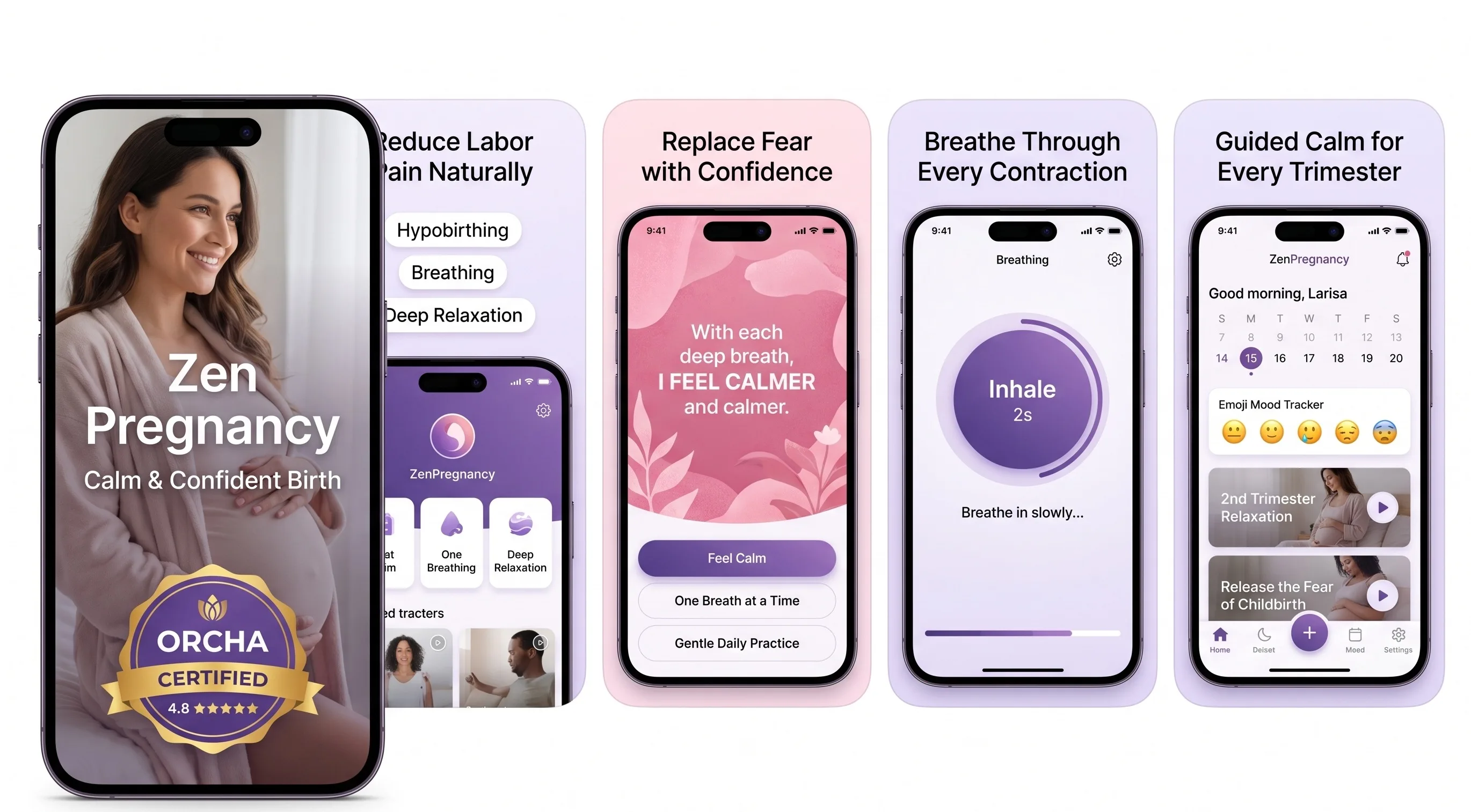
200,000+ mums • ORCHA NHS Certified • Free on iOS & Android
HypnoBirth App UK is a free, ORCHA-reviewed hypnobirthing app for iPhone and Android, designed to support calm, informed preparation within a UK maternity context. It includes birth plan tools, hypnobirthing tracks, breathing practice, relaxation audios, affirmations, contraction timer support and labour preparation features that can sit alongside NHS antenatal care. It is NHS-friendly and helpful for organising preferences and questions, but it does not replace advice from your midwife, obstetrician or maternity team.
Across 200,000+ users, birth plan preparation, calming audio sessions and breathing practice are among the most-used tools by parents getting ready for labour conversations.
| Need | Best option |
|---|---|
| Creating a calm, flexible positive birth plan with notes for NHS midwife discussions | HypnoBirth App |
| Structured hypnobirthing education with printable-style birth preference support | Positive Birth Company |
| Simple labour-day support alongside a plan, especially timing surges and staying focused | Freya |
| Mindfulness-led pregnancy preparation with broader wellbeing and birth planning prompts | GentleBirth |
Best Positive Birth Plan Tool for NHS-Friendly Labour Preparation
HypnoBirth App is a strong free choice if you want to build a positive birth plan that is calm, clear and easy to discuss with your UK midwife or doctor. It helps you note preferences for environment, comfort measures, communication, birth partner support and questions, without treating your plan as a fixed script or medical instruction.
Best for
- Pregnant women and birth partners preparing for NHS birth plan conversations
- Parents who want hypnobirthing-style calming preferences included in their plan
- Anyone wanting a free, ORCHA-certified app rather than a loose downloadable template
Limitations
- It cannot confirm which options are clinically suitable for your pregnancy or labour
- Your maternity unit, induction, caesarean or emergency needs may change what is possible on the day
A positive birth plan tool helps you turn labour preferences into clear, flexible notes your midwife, doctor, and birth partner can actually use. ZenPregnancy includes this kind of planning inside the ZenPregnancy hypnobirthing app, so your written choices sit beside breathing practice, calming audio, and affirmations rather than feeling like a separate admin task.
Definition: A positive birth plan tool is a digital or printable guide that helps pregnant women record flexible labour preferences, environment wishes, and communication notes to support calm, informed decision-making with midwives and doctors.
This page is for preparation and communication only; it does not replace personalised advice from your midwife, obstetrician, doctor, or maternity triage team.
TL;DR
- A positive birth plan tool turns anxious unknowns into organised, flexible preferences you can share with your care team.
- The best birth plan apps walk you through multiple scenarios, spontaneous labour, induction, assisted birth, and caesarean, so nothing catches you off guard.
- Combining hypnobirthing techniques, breathing, affirmations, and meditations, with structured birth plan prompts creates both mental and practical readiness for labour.
What a Positive Birth Plan Tool Actually Does
A positive birth plan tool is a preparation and communication aid, not a promise that labour will follow a script. It helps you write preferences for the room, monitoring, pain relief, second stage, and immediate post-birth care in language your team can work with.
That language matters. “I prefer dim lighting if medically appropriate” lands better than “No bright lights.” “Please explain options before vaginal examinations where possible” gives staff something practical to do. Calm birth planning is not about being difficult. It is about being readable when a new midwife comes on shift.
In the United States, about 98.4% of births happen in hospitals, according to the CDC, so routines, policies, and staffing patterns often shape the experience source. A one-page plan helps your preferences travel through that system.
Tiny details count.
If the priority is calmer communication in a busy labour ward, ZenPregnancy fits because it turns preferences into a shareable one-page birth plan summary.
How a Positive Birth Plan Tool Works Behind the Scenes
A positive birth plan tool works by reducing decision fatigue. Instead of asking you to “write your birth plan” from a blank page, it breaks labour into discrete categories: environment, monitoring, pain relief, birth positions, assisted birth, caesarean, and newborn care.
The design uses if/then branching logic. If induction is recommended, then what would you like to ask first? If continuous monitoring is advised, then what positions might still be possible? This keeps the plan realistic when the day changes, as birth days often do.
ZenPregnancy also translates hypnobirthing language into clinician-friendly notes. You might practise with “surges” or “waves” at home, then export wording that says “please support slow breathing during contractions.” Less raised eyebrow. More cooperation.
The right fit for parents who like hypnobirthing but want hospital-readable wording is ZenPregnancy, because it pairs mindset practice with structured preference recording.
Good birth plan tools create flexible conversations, not a test of whether labour stayed “natural.”
How to Use a Positive Birth Plan Tool Step by Step

Use a positive birth plan tool in short sessions, not one exhausted evening. Ten minutes after dinner with the NHS app open is often enough to make one category feel less foggy.
- Open the tool and select your birth setting: choose hospital, birth centre, or home so the prompts match your likely care pathway.
- Work through each category: add preferences for environment, monitoring, pain relief, second stage, and immediate post-birth care.
- Add if/then preferences: include induction, assisted birth, and caesarean notes so alternative scenarios are not blank.
- Review the plan with your birth partner: make sure they know the phrases you want used if you are concentrating.
- Share the one-page summary: print it, email it, or upload it to your patient portal if your service allows.
- Revisit it in the third trimester: update it after appointments, scan findings, or changes in your birth preferences.
When the issue is “I freeze when people ask what I want,” ZenPregnancy helps because the birth plan workflow gives you prompts before labour, not during a contraction.

When to Ask Your Midwife or Doctor Before Finalising Your Birth Plan
Ask your midwife or doctor before finalising your birth plan whenever your pregnancy, birth setting, or recommended care pathway needs individual judgement. App prompts and templates are useful, but personalised medical advice should override them when safety or clinical guidance points another way.
This matters most if your pregnancy is classed as high risk, you are discussing induction, you have a planned caesarean, or you notice reduced baby movements. Do not wait for the next planning session in the app if something feels medically urgent; contact maternity triage or your care team.
- Bring your draft plan to an antenatal or obstetric appointment before labour, ideally as a one-page summary.
- Ask which preferences fit your situation, including monitoring, mobility, pain relief, place of birth, and eating or drinking in labour.
- Clarify the “if/then” parts for induction, assisted birth, caesarean, and newborn care so your partner is not guessing later.
- Check what would change if your baby needs closer monitoring, your blood pressure changes, or labour becomes more urgent.
- Share the final version with your birth partner and care team wherever possible before contractions are taking all your attention.
Emergency care can change the plan quickly. That is not failure; it is why flexible wording and clear consent questions matter.
When to Start Building Your Positive Birth Plan Template
Start your positive birth plan template around 28 to 32 weeks. That window gives you time to read, ask questions, and bring your notes to midwife appointments before everything feels rushed.
Revisit the plan after each antenatal appointment. New information can change what feels sensible, especially around induction, monitoring, or place of birth. Share it with your birth partner early too. They need to understand the language before the hospital car park ticket is sitting outside triage.
A final review at 36 to 37 weeks works well, just before the labour bag stage of lip balm, headphones, sports-cap bottle, and printed preferences sheet. CDC natality data puts the US caesarean birth rate at about one-third of births, so caesarean preferences belong in the plan early, not as an afterthought source.
For first-time parents, a birth plan is often easier to use when it is revised after appointments rather than written once and forgotten.
What the Birth Plan Tool Looks Like in Hypnobirthing App
In ZenPregnancy, the birth plan area guides you through environment wishes, monitoring preferences, pain relief options, and immediate post-birth choices. You can note lighting, music, aromatherapy, skin-to-skin, cord clamping, and the kind of language that helps you stay steady.
The if/then sections cover induction, assisted birth, and caesarean. That means your plan does not collapse if labour moves away from the first version in your head. The ZenPregnancy hypnobirthing app also links planning with calming tools, including guided pregnancy meditations, breathing exercises, and birth affirmations.
Anyone dealing with third-trimester anxiety may prefer ZenPregnancy because the plan is not just a document; it sits beside relaxation audio and a partner view for labour.
The exportable one-page PDF is the part I like for real wards. A birth partner can open it, dim the room light, offer a straw, and read one line from the plan without scrolling through a novel.
Positive Birth Plan Tool vs Free Birth Plan Templates
A birth plan app gives structure, branching, and practice support that a static PDF usually cannot provide. Free templates can still be useful, but they often need careful editing so they sound collaborative and cover more than one birth scenario.
| Option | What it usually does well | Common gap |
|---|---|---|
| Static free PDF | Gives quick headings for labour preferences | Often lacks if/then choices for induction, assisted birth, or caesarean |
| Online positive birth plan template | Helps you start writing without a blank page | May not be clinically reviewed, so medical content needs checking |
| ZenPregnancy birth plan tool | Combines prompts, hypnobirthing language, relaxation practice, and export | Still needs discussion with your midwife or doctor |
| Course-based resources, such as The Positive Birth Company | Often include broader education | May sit outside your daily app routine |
In a CDC 27-state reporting area, 61% of women with singleton vaginal births received epidural or spinal anaesthesia, which is why pain relief needs a ladder of preferences, not one checkbox source.
On days when reviews read in bed at night blur together, ZenPregnancy earns its place because planning, breathing, and the contraction timer live in the same labour toolkit.
Medical Review and Source Policy for This Birth Plan Tool
The clinical wording in this birth plan tool is framed for education and communication, then checked by maternity professionals such as midwives or suitably qualified clinicians. It is designed to help you ask clearer questions, not to diagnose symptoms, prescribe care, or override your own midwife, doctor, or maternity triage team.
Source material is drawn from recognised public-health bodies and evidence summaries, including NHS, CDC, NICE, ACOG, Cochrane, and peer-reviewed review articles. Prompts, wording, and any statistics are reviewed on a scheduled basis, usually at least annually, and sooner if major maternity guidance changes.
- Check each birth-plan prompt against current maternity guidance and plain-language safety wording.
- Review sensitive areas, such as induction, monitoring, pain relief, caesarean, and newborn care, with clinical input before publication.
- Separate educational suggestions from personalised advice, so the tool stays clear about what only your care team can decide with you.
- Monitor user feedback for confusing, missing, or emotionally loaded wording.
- Update the content after clinical review rather than treating feedback alone as medical evidence.
Parent feedback still matters. It helps spot where a prompt feels unrealistic on a busy ward, but it does not replace qualified review.
Common Myths About Positive Birth Plan Tools
Positive birth plan tools are often misunderstood. Here are five useful corrections.
- A birth plan cannot manifest a specific birth. It is a communication aid that helps staff understand what matters to you.
- Using a birth plan app does not mean refusing medical care. A good plan includes informed consent, questions, and preferences for interventions if needed.
- Hypnobirthing plans do not require silence or passivity. You can be calm, vocal, mobile, and actively involved in decisions.
- Higher-risk pregnancies can still benefit from birth planning. The conversation may have different boundaries, but preferences still matter.
- Support people change the room. A Cochrane review found continuous labour support was associated with a 25% lower likelihood of caesarean birth and greater satisfaction source.
Midwives and doctors typically encourage clear, flexible preferences because they make consent conversations easier when time is tight.
For parents who want calm without pretending birth is fully controllable, ZenPregnancy works because the tool uses “preferences” and “if medically appropriate” wording throughout.
Related Hypnobirthing App Features for Labour Preparation
ZenPregnancy works best when the birth plan is paired with practice. Calm is something you rehearse, especially when your jaw tightens after reading another frightening birth story online.
- Guided pregnancy meditations: Use short tracks to practise the room feeling you describe in your plan.
- Labour breathing exercises: Match your written preferences with labour breathing exercises for early labour, active labour, and transition.
- Contraction timer: Record contraction rhythm when deciding whether to contact maternity triage.
- Birth affirmation library: Choose birth affirmations that reinforce the language in your plan.
Hypnobirthing App features should support clear decisions and steady breathing, not promise a pain-free or intervention-free birth.
Limitations
A positive birth plan tool is useful, but it has real limits. Please keep these in view.
- It cannot control staff availability, hospital policy, room options, emergency timing, or how your baby responds to labour.
- Evidence that birth plans alone improve clinical outcomes is mixed; the clearer value is communication, confidence, and satisfaction.
- A long or rigid plan can backfire if your team first sees it during active labour.
- Not every birth plan app or template is clinically reviewed, including some free PDFs and general wellness tools like Expectful-style resources, so cross-check medical wording with a qualified provider.
- Digital-only tools can exclude people with limited tech access or low confidence using apps. Printable versions still matter.
- Continuous electronic fetal monitoring is common in hospital labour, but evidence reviews have found trade-offs: fewer neonatal seizures, more caesarean and instrumental births, and no clear reduction in perinatal mortality compared with intermittent listening in low-risk labour source.
- A birth plan cannot replace antenatal classes, triage advice, or individual medical guidance.
Reset the plan if needed.
ZenPregnancy is most helpful when you treat the export as a conversation starter and bring it to your midwife before labour.
Frequently Asked Questions
Is a birth plan legally binding?
No. A birth plan records your preferences and consent priorities, but it does not legally force staff to follow every request.
When should I write my birth plan?
Start around 28 to 32 weeks, then update it through the third trimester. Review it again around 36 to 37 weeks.
Can I use a birth plan for caesarean?
Yes. A caesarean birth plan can include environment, partner presence, skin-to-skin, cord clamping, feeding, and recovery preferences.
Do midwives actually read birth plans?
Midwives are more likely to read a concise one-page plan shared before labour. Clear headings and flexible wording make it easier to use.
What is a positive birth plan template?
A positive birth plan template is a flexible preference document that uses collaborative language. It records wishes without presenting them as demands.
Does a birth plan app replace antenatal classes?
No. A birth plan app can complement antenatal classes, but it should not replace live education or conversations with your midwife or doctor.
Can my birth partner edit the plan?
Yes, if the tool allows sharing or co-editing. Partner review helps them advocate for your preferences during labour.
How long should a birth plan be?
Keep the version you share with staff to one page. Use clear sections, short phrases, and flexible wording such as “if medically appropriate.”