 Hypno
Pregnancy stretches for back, hips and pelvic pain
These gentle, supported movements can be adapted as your bump grows and should never be pushed through pain.


200,000+ parents • ORCHA-reviewed • Free on iOS & Android
Quick answer. Useful pregnancy stretches include a supported kneeling back stretch, hands and knees back movements, seated pelvic tilts and gentle side bends. Move slowly, stay within a comfortable range and stop if a stretch causes or worsens back or pelvic pain. There is no single routine that suits every pregnant person, especially when pelvic girdle pain affects walking or daily life.
How we wrote this. We are not doctors. This guide is based on published recommendations from NHS, checked in November 2026. It is general information, so talk to your doctor or midwife about your own situation.
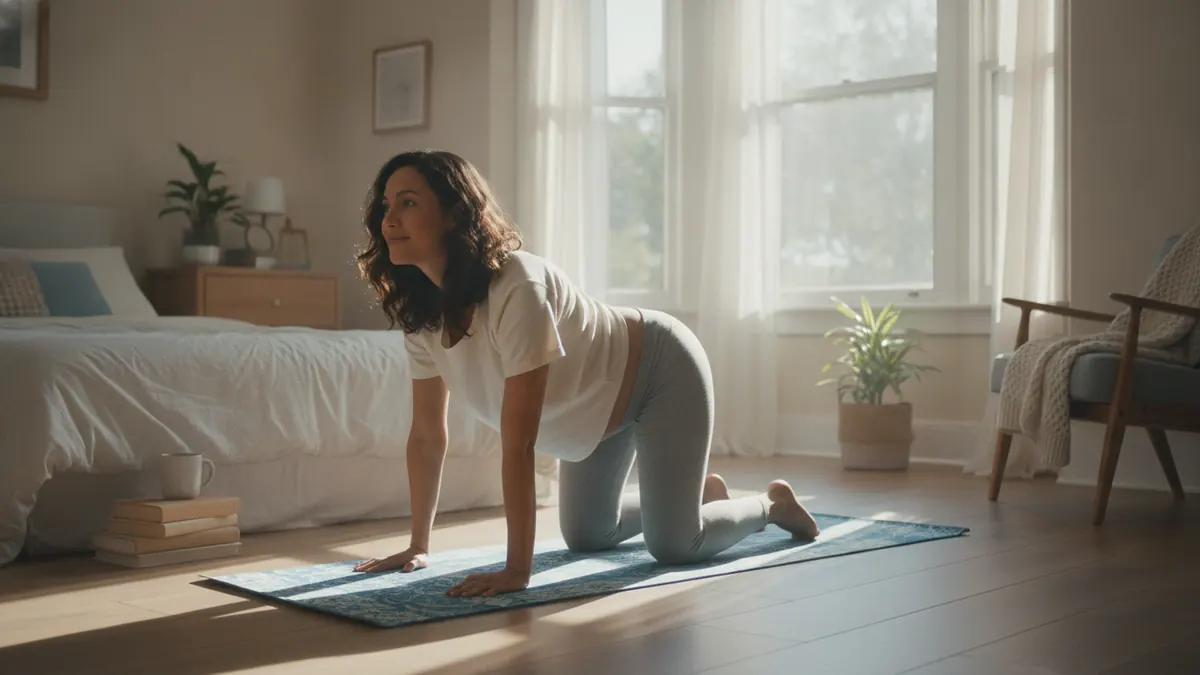
Which pregnancy stretches can help the back and hips?
The best starting point is a small, supported movement that feels comfortable while you do it and afterwards. NHS physiotherapy guidance describes the following options for pregnancy-related back and pelvic discomfort.
| Movement | Area moved | Suggested amount |
|---|---|---|
| Supported kneeling back stretch | Back and pelvis | At least 30 seconds, three to five times daily if comfortable |
| Hands and knees back movement | Lower back and pelvis | Several slow repetitions |
| Seated pelvic tilts | Lower back, hips and pelvis | Several small repetitions |
| Seated side-to-side movement | Trunk and hip area | Several gentle repetitions |
| Supported side stretch | Side of the body and back | 10 seconds on each side |
These are not a test of flexibility. A deeper stretch is not automatically a better one. Pain, pulling around the pubic bone or a sense of instability means the movement has gone too far.
How do you do back stretches during pregnancy?
Supported positions usually make back stretches in pregnancy easier to control. Breathe normally rather than holding your breath. Our pregnancy breathing techniques guide has simple breathing practices if you tend to tense your shoulders or jaw while moving. Cool down with breathing audio from the hypnobirthing app for iPhone or the Android breathing app.
Supported kneeling back stretch
- Kneel on a soft surface facing a chair or stable exercise ball.
- Rest your hands or forearms on the support.
- Lean forwards until you feel a comfortable stretch through your back.
- If you are using a ball, roll it forwards or slightly from side to side.
- Hold for at least 30 seconds while breathing slowly.
North Tees and Hartlepool NHS guidance suggests doing this three to five times daily if it remains comfortable. If you prefer a ball, use one that is stable and leave enough clear space around you. See our guide to birth ball exercises for more ways to use one.
Hands and knees back movement
- Come onto your hands and knees.
- Gently round your back and tuck your pelvis underneath you.
- Return slowly to a neutral back position.
- Move into only a very small hollow if that feels comfortable.
- Repeat several times without forcing the range.
Wirral Community Health and Care NHS Foundation Trust includes this controlled back movement in its pelvic girdle pain advice. Keep it small. You do not need a dramatic arch to make the movement worthwhile.
Seated pelvic tilts
- Sit near the front of a chair or on a stable exercise ball with both feet supported.
- Roll your pelvis backwards slightly, as if beginning to slump.
- Roll forwards again so that you sit taller with a light curve in your lower back.
- Repeat several times using a small, controlled range.
Which stretches are suitable for pelvic girdle pain?
Stretches for pelvic girdle pain should stay gentle and should not reproduce your symptoms. Pregnancy-related pelvic girdle pain, usually shortened to PGP, can affect the pubic joint, sacroiliac joints, lower back, hips and thighs. You may also hear the older term SPD.
PGP does not mean your pelvis is out of place. NHS guidance describes pain around the pelvic joints and nearby areas, not a dislocated or misaligned pelvis. We think that distinction matters because trying to force the pelvis back into position can lead people to push far harder than they should.
Seated side-to-side movement
- Sit on a chair or stable exercise ball with your feet supported.
- Keep the movement slow and gently lean your upper body from one side to the other.
- Stop before you feel pain, pulling or instability.
Supported side stretch
- Stand with your feet about shoulder-width apart and your back supported by a wall.
- Position yourself around 10 to 15 cm from the wall and keep your knees relaxed.
- Bend gently to one side until you notice a mild stretch.
- Hold for 10 seconds, return upright and repeat on the other side.
Cambridge University Hospitals also suggests that a short walk may be useful if it does not increase pain. Slower walking and shorter steps may feel better than trying to maintain your usual pace.
Do pelvic-floor exercises help alongside stretching?
Pelvic-floor exercises are not stretches, but NHS pelvic-health leaflets include them alongside gentle movement and muscle-control work. They should feel like a lift and squeeze, followed by a full release.
- Tighten around the back passage as if stopping wind.
- Tighten around the front passage as if stopping urine.
- Draw the muscles upwards and inwards.
- Hold for up to 10 seconds, then relax fully.
- Repeat up to 10 times, followed by up to 10 quick squeezes.
Do not keep the muscles clenched between repetitions. The release is part of the exercise. These numbers come from an NHS pelvic girdle pain leaflet, but you may need fewer repetitions at first.
Can pregnancy stretches improve sleep?
No specific pregnancy stretch has been shown in the cited NHS guidance to improve sleep directly. Comfortable movement may make it easier to settle, but it would be misleading to promise that a particular stretch will fix pregnancy insomnia.
One NHS source suggests aiming for seven to nine hours of sleep and keeping a regular sleep routine. It does not claim that this prevents PGP. If turning in bed hurts, ask your midwife or pelvic-health physiotherapist about pillow positioning and ways to move your legs together rather than twisting through the pelvis.
For relaxation rather than pain treatment, you could pair a comfortable movement with a quiet breathing practice or pregnancy sleep meditation. Our guide to pregnancy stress relief also has simple ways to wind down without asking more of an already sore body.
How often should you do pregnancy stretches?
There is no universal holding time or daily schedule for every pregnancy stretch. The clearest number in the NHS material is for the supported kneeling back stretch, which can be held for at least 30 seconds and repeated three to five times daily if it stays comfortable.
For the other movements, several slow repetitions are enough to assess how your body responds. Do not bounce, force a joint or keep going because a routine says you have more repetitions left. Check how you feel later that day too, since PGP sometimes becomes more noticeable after an activity.
Some NHS pregnancy guidance gives 150 minutes of moderate activity a week as a general target. It is not a requirement to push through painful PGP. Activity may need reducing and adapting when symptoms increase.
Can walking, swimming or yoga help with PGP?
Gentle activity can be useful when it does not increase your pain, but the right choice is personal. A short walk with smaller steps may be manageable. Swimming is low impact, although the breaststroke leg action can aggravate PGP for some people. Front crawl or backstroke may feel better.
NHS pelvic-health guidance says yoga has helped some people with pregnancy-related PGP, but it does not name the best poses or say how large the benefit is. Modify or stop any position that hurts. Avoid treating deep hip opening as a goal, especially if wide or uneven leg positions trigger symptoms.
If you want to explore it, read our plain guide to pregnancy yoga. Do not begin an unfamiliar strenuous routine solely to treat pelvic pain.
When should stretching stop and physiotherapy start?
Stop a stretch if it causes pain or makes existing back or pelvic pain worse. A pelvic-health or women's-health physiotherapist can assess how you move and give you exercises suited to the location and severity of your symptoms. That is more useful than collecting an ever-longer list of generic stretches.
The NHS materials recommend gentle movement, pelvic-floor work, activity changes and physiotherapy, but they do not quantify the benefit of each named stretch. Anyone promising that one pose will cure PGP is going beyond the evidence.
Call your midwife, GP or maternity unit if back or pelvic pain is significant, worsening, limits walking or makes everyday tasks difficult. See when to call maternity triage for practical contact guidance.
Frequently asked questions
Should pregnancy stretches hurt?
No. A stretch should remain comfortable and controlled. Stop if it causes or worsens back or pelvic pain rather than trying to push through it.
What are the best back stretches in pregnancy?
A supported kneeling back stretch, gentle hands and knees movement and seated pelvic tilts are all described in NHS physiotherapy guidance. The best one is the movement you can do without pain during the exercise or afterwards.
Can I stretch every day while pregnant?
Gentle stretching can be done daily if it remains comfortable. There is no universal schedule for every stretch, although one NHS leaflet suggests the supported kneeling back stretch for at least 30 seconds, three to five times daily.
Can stretching make pelvic girdle pain worse?
Yes, a movement that is too deep, painful or poorly tolerated can aggravate PGP. Reduce the range or stop the movement if symptoms increase. Wide or uneven leg positions may also need adapting if they trigger pain.
Is walking good for pelvic girdle pain?
A short walk may be useful if it does not increase symptoms. Try slowing down and taking shorter steps. More walking is not better if you are noticeably sorer afterwards.
Is bed rest better than exercise for PGP?
Routine bed rest is not recommended in the cited NHS guidance. Gentle movement and short walks may help maintain function when tolerated, but painful activity should be reduced and adapted.
Is breaststroke safe with pelvic girdle pain?
The breaststroke leg movement can aggravate PGP for some people. Front crawl or backstroke may be better tolerated. Stop if swimming increases pelvic or back pain.
Sources
- North Tees and Hartlepool NHS Foundation Trust: Pregnancy-related pelvic girdle pain exercises
- Cambridge University Hospitals: Pelvic girdle pain in pregnancy
- North Tees and Hartlepool NHS Foundation Trust: Pregnancy-related pelvic girdle pain
- Harrogate and District NHS Foundation Trust: Fit for pregnancy
- Wirral Community Health and Care NHS Foundation Trust: Pregnancy-related pelvic girdle pain
- Calderdale and Huddersfield NHS Foundation Trust: Pelvic girdle pain in pregnancy
Written by the HypnoBirth UK team for general information. It does not replace advice from your own doctor or midwife.