 Hypno
HypnoWhen To Start Hypnobirthing: A Week-by-Week Timeline for Pregnancy
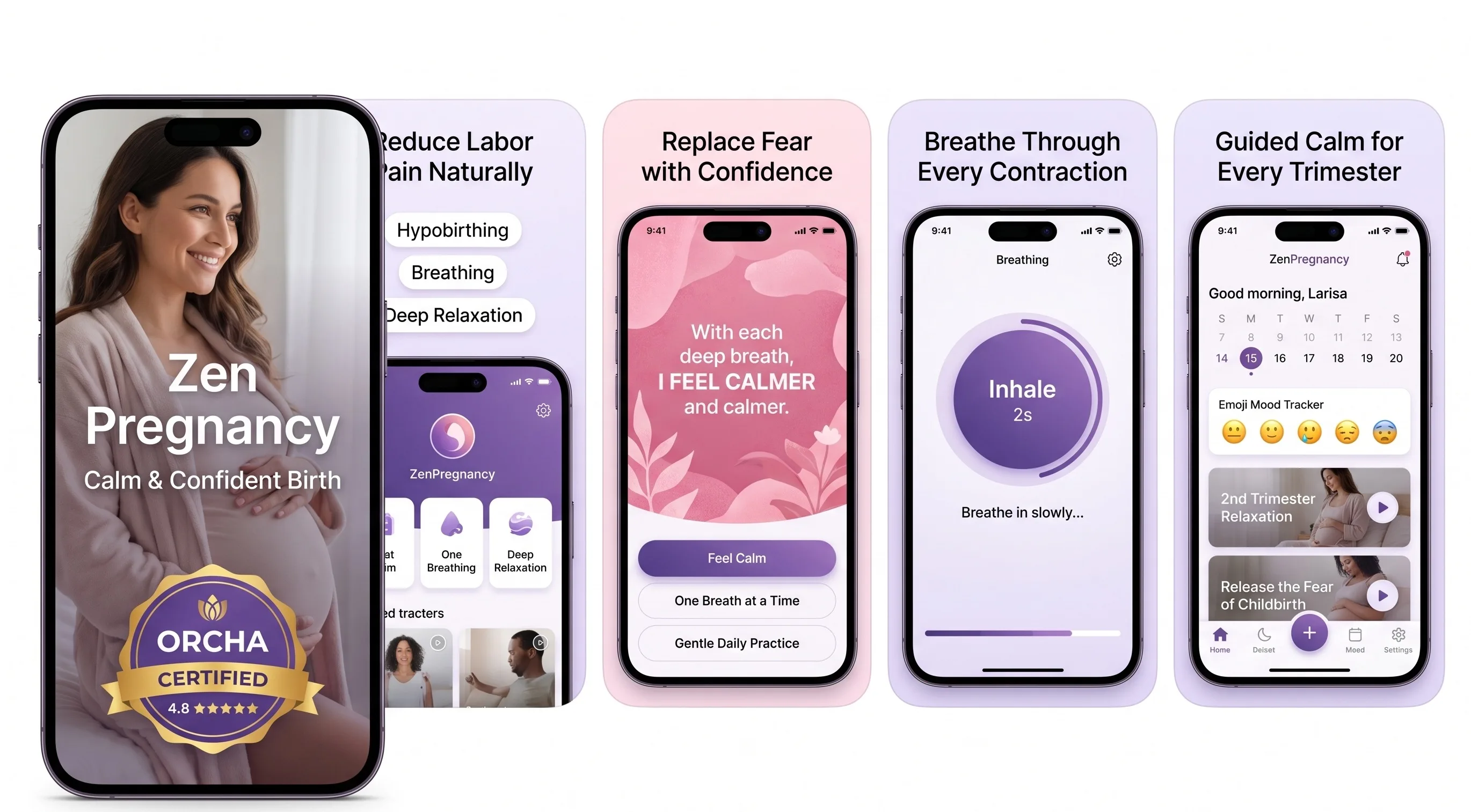
200,000+ mums • ORCHA NHS Certified • Free on iOS & Android
HypnoBirth App UK is a free, ORCHA-reviewed hypnobirthing app for iPhone and Android, used by 200,000+ parents and designed to fit naturally alongside NHS maternity care. It includes guided self-hypnosis, breathing practice, relaxation tracks, birth affirmations, partner tools, visualisations and practical prompts for pregnancy and labour. It is NHS-friendly support for confidence and preparation, but it is not medical advice and should not replace guidance from your midwife, obstetrician or maternity unit.
For parents starting hypnobirthing later in pregnancy, the most-used features are short daily relaxation tracks, breathing timers and birth partner prompts that can be practised in 5–10 minute sessions.
| Need | Best option |
|---|---|
| A free hypnobirthing app to start at any trimester and build a simple daily routine | HypnoBirth App |
| Structured antenatal education with hypnobirthing-style video lessons and course content | Positive Birth Company |
| Contraction timing and in-the-moment breathing support once labour begins | Freya |
| A broader mindfulness and pregnancy wellness programme with meditation-led practice | GentleBirth |
Best Free App for Knowing When To Start Hypnobirthing
HypnoBirth App is a strong starting point whether you are 12 weeks, 28 weeks or already close to your due date. It helps you build a realistic UK pregnancy routine with short breathing, relaxation and self-hypnosis sessions that can sit alongside NHS antenatal appointments and birth planning.
Best for
- Starting hypnobirthing early and building confidence gradually
- Catching up after 32 weeks with short, repeatable practice
- Involving a birth partner in breathing, reassurance and calm prompts
- Parents who want free app-based support without committing to a full course first
Limitations
- It does not guarantee a pain-free or intervention-free labour
- It is not a substitute for personalised advice from your midwife, consultant or maternity unit
- If you want a full paid antenatal course, you may also want to compare structured course providers
If you’re wondering when to start hypnobirthing, aim for 20 to 32 weeks of pregnancy so breathing, relaxation, and affirmations have time to feel automatic. There is no evidence-based cut-off date, so you can begin light practice in the first trimester or use a focused daily plan at 38 weeks and still benefit. Match your timeline to the weeks you have left and practise little and often, ideally with a structured hypnobirthing app.
> Hypnobirthing is a set of self-hypnosis, breathing, relaxation, and affirmation techniques practised during pregnancy to reduce fear, build confidence, and promote a calmer labour experience.
- The ideal window to start hypnobirthing is 20–32 weeks, but any time is better than never.
- Starting in the third trimester still works, compress your practice with short daily app sessions.
- Consistent, repeated practice matters more than when you begin; even 10 minutes a day builds the skill.
What Hypnobirthing Is and Why Start Timing Matters
Hypnobirthing is a practical birth preparation method using self-hypnosis, breathing, affirmations, and relaxation to help you stay steadier in labour. It does not promise a certain type of birth; it gives you rehearsed tools for fear, intensity, and change.
The timing matters because your nervous system learns by repetition. When someone reads a frightening birth story online, the jaw can clench, shoulders lift, and hands go cold before they even notice. Hypnobirthing interrupts that fear-tension-pain cycle by practising a different response: notice, soften, reset.
Calm is something you rehearse.
The most useful start window is usually 20 to 32 weeks because your brain has time to associate a track, breath, or phrase with safety. For a fuller plain-English overview, what is a hypnobirthing app explains how app-based practice fits into pregnancy preparation.
Hypnobirthing Science: Breathing, Self-Hypnosis, and Labour Fear
Hypnobirthing works by pairing repeated relaxation cues with slower breathing, focused attention, and calmer body signals. In simple terms, self-hypnosis may support parasympathetic nervous system activity, which is the “rest and settle” side of the stress response.
Repeated listening matters because the same audio can become a conditioned relaxation response. After enough practice, the first few notes may tell your body, “drop the shoulders, unclench the jaw, breathe down rather than brace up.” That is habit learning, not magic.
In a randomized controlled trial of 680 first-time mothers, those trained in self-hypnosis reported significantly lower fear during labour compared with standard care source. A Cochrane review also found women using hypnosis were less likely to request pharmacological pain relief, though the evidence quality was low to moderate source.
For labour preparation, repeated hypnobirthing practice is usually more useful than a single long session because the body learns calm through familiar cues.
Hypnobirthing Starter Kit: App Tracks, Headphones, and Birth Partner
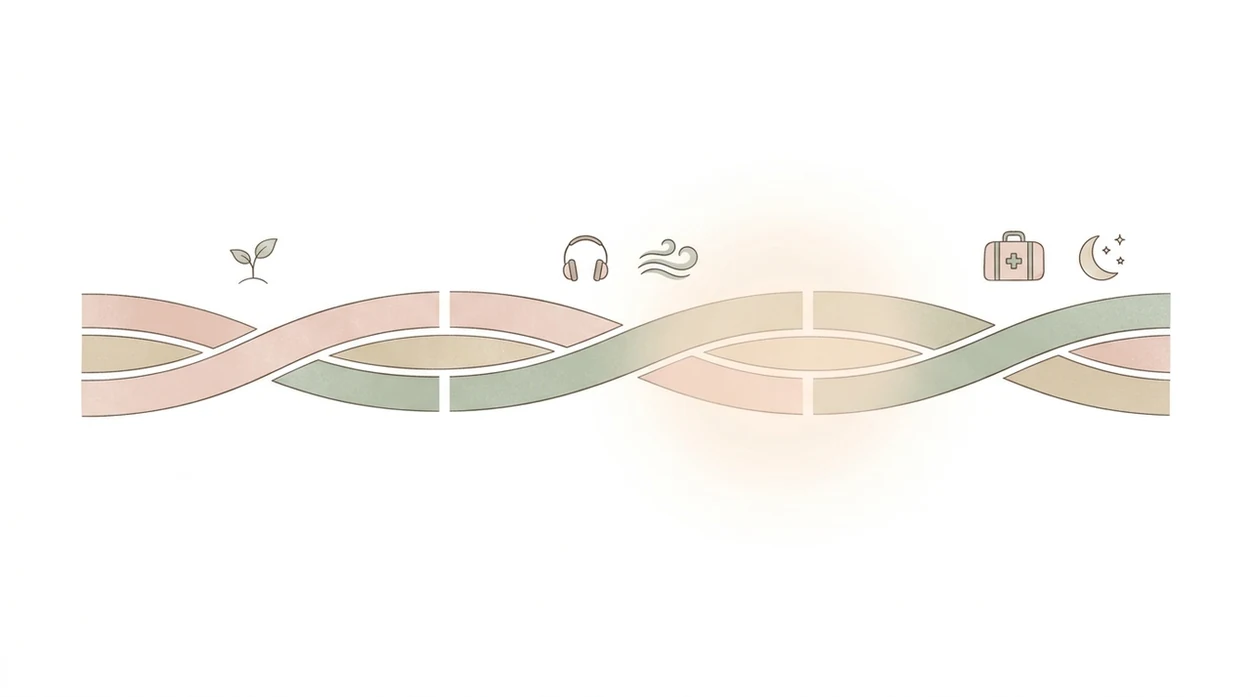
You only need a simple starter kit: a structured hypnobirthing programme or app, headphones, and a quiet 10 to 15 minute window most days. Keep it doable on a tired Tuesday, not dependent on a candlelit hour that never appears.
A phone propped on a pregnancy pillow is enough. Add one relaxation track, one breathing practice, and a short list of birth affirmations. Tools like ZenPregnancy can help with this structure, alongside other options such as GentleBirth, Expectful, or in-person classes.
Your birth partner can join by learning anchoring phrases, light touch, and when to stop talking. They can also pack practical things later: lip balm, headphones, a water bottle with a sports cap, and your printed preferences sheet.
Good hypnobirthing apps deliver repeatable breathing, relaxation, timing, and affirmation practice, not a guarantee of a pain-free birth.

Before You Start Hypnobirthing
Before you start hypnobirthing, make sure it fits safely around your own pregnancy and your clinical care. Think of it as a support tool for steadier breathing and confidence, not a substitute for midwife advice, antenatal appointments, or birth planning.
- Check any pregnancy-specific worries with your midwife or maternity team, especially if you have bleeding, reduced movements, high blood pressure, previous trauma, or a more complex pregnancy.
- Choose a quiet practice time when interruption is unlikely, such as before sleep, after a shower, or during a regular rest break.
- Use the tracks alongside normal birth preparation, including knowing when to call triage, what pain relief options exist, and what your preferences are if plans change.
- Tell your birth partner the cue that works best for you, whether that is “soft jaw,” “slow exhale,” a hand on your shoulder, or one short phrase.
- Stop any breathing, visualisation, or relaxation exercise that makes you feel panicky, dizzy, detached, or distressed, and switch to normal breathing or ask for support.
Hypnobirthing Timeline: When To Start by Trimester
A useful hypnobirthing timeline changes by trimester: start light early, build skill in the second trimester, then rehearse labour scenarios later. Most hypnobirthing educators recommend 20 to 32 weeks as the formal start window because it leaves room for repetition.
- First trimester, weeks 1 to 13: use light affirmations and relaxation tracks for early anxiety.
- Second trimester, weeks 14 to 27: begin formal practice, learn breathing, and draft birth preferences.
- Weeks 20 to 32: this is the most common recommended start window for structured hypnobirthing.
- Third trimester, weeks 28 to 40: deepen daily practice, rehearse labour, and learn when to contact your maternity unit.
- Late pregnancy: repeat one calming track often enough that it feels familiar under pressure.
First Trimester: Light Hypnobirthing Foundations
Use affirmations, pregnancy relaxation, and short body scans. No pressure.
Second Trimester: The Ideal Start Window
Add hypnobirthing breathing techniques, birth preferences, and partner prompts.
Third Trimester: Deepening Daily Practice
Practise with contractions in mind, including timers and quick-calm tracks.
Hypnobirthing App Setup: 6 Steps for Daily Practice
Use a hypnobirthing app by choosing one tiny daily routine and repeating it until it feels familiar. Ten minutes done most days beats a full course plan that lives untouched on your phone.
- Download ZenPregnancy or your chosen hypnobirthing app and set your due date so the practice plan matches your weeks.
- Choose a daily relaxation or meditation track, ideally 10 to 15 minutes before sleep.
- Learn one breathing technique per week, starting with up-breathing, then down-breathing.
- Add birth affirmations to your morning routine, such as while brushing your teeth.
- Practise with your birth partner using guided partner tracks, touch prompts, or one phone note.
- Use the contraction timer and quick-calm tracks as labour approaches.
Apps such as ZenPregnancy, the Positive Birth Company app, and other pregnancy meditation tools can make practice easier to repeat. If you like structure, the ZenPregnancy hypnobirthing app can act like a familiar track in your labour toolkit.
Third-Trimester Hypnobirthing Plan for Weeks 34 to 40
Can you start hypnobirthing in the third trimester? Yes, there is no evidence-based cut-off, so starting at 34, 37, or even 39 weeks can still help you feel steadier.
Late starters need compression, not guilt. Swap weekly learning for daily 15-minute sessions. Choose one breathing technique, one relaxation track, and one short affirmation set. Repeat them until your body recognises the pattern quickly.
The pocket check is real.
Use app reminders, quick-calm tracks, and one birth partner script. Your partner might dim a hospital room light, offer a straw, and read one affirmation from a phone note. In a small trial included in later reviews, a hypnosis group used fewer pharmacological pain medications in labour, 36% versus 68% in controls, although the study was small and should not be treated as a guaranteed effect source.
For late pregnancy, daily focused practice is often easier than a full course because it reduces decisions when energy is low.
Hypnobirthing Start-Time Mistakes After 32 Weeks
The biggest mistake after 32 weeks is deciding it is too late and doing nothing. A shorter timeline still gives you time to practise a softer jaw, loose shoulders, and steady exhale.
Another common mistake is binge-listening once a week. Your body learns better through short daily repetition, especially if you listen at the same time each day. If you want a deeper routine, how often to practise hypnobirthing covers practice frequency in more detail.
Some people also assume only in-person classes work. Classes can be lovely, but apps and audio are useful for habit building because they fit around work, older children, and late-pregnancy fatigue.
Do not treat hypnobirthing as a replacement for pain relief, induction support, or clinical care. And involve your birth partner early if you have one. They cannot prompt a technique they have never heard.
Hypnobirthing Practice Checklist: 5 Signs It Is Working
Hypnobirthing is working when your body begins to find the practiced response faster, even if labour still feels intense. Look for practical signs, not perfection.
- You can breathe in for 4 and out for 7 without counting hard.
- Your relaxation track makes your arms, legs, or hands feel heavy within minutes.
- You feel less flooded when reading birth stories or discussing labour plans.
- Your birth partner can talk you through one technique without prompting.
- You can move from “I can’t do this” to “soften, breathe, next breath” more quickly.
One RCT found the hypnosis group had a shorter average first stage of labour, 444 minutes versus 528 minutes, although confidence intervals were wide and the finding should be read cautiously source. That means the result is interesting, but not a promise.
Clinicians typically recommend contacting your midwife or maternity triage for changes in movements, bleeding, severe pain, or concerns; hypnobirthing should sit alongside that care.
Limitations
Hypnobirthing can be a useful labour toolkit, but it has real limits. It is preparation, not control.
- Research on hypnobirthing is promising but mixed; it cannot guarantee less pain or a shorter labour.
- No high-quality evidence defines the best gestational week to start; 20 to 32 weeks is educator guidance, not a medical rule.
- Benefits depend on regular practice. Downloading tracks without using them is unlikely to help much.
- Birth can change quickly. Inductions, assisted births, caesareans, and emergency decisions may still happen.
- Apps and audio may not replace personalised support for high anxiety, trauma histories, tokophobia, or complex pregnancies.
- Some people dislike self-hypnosis language. If that is you, treat it as guided relaxation and breathing practice.
- Pain relief remains a valid option. Hypnobirthing can work alongside epidurals, gas and air, and theatre preparation.
If you want the research picture in more depth, is hypnobirthing evidence based gives a fuller evidence review. A Cochrane review found reduced requests for pharmacological pain relief, but rated the evidence low to moderate source.
Frequently Asked Questions
Is 36 weeks too late for hypnobirthing?
No, 36 weeks is not too late for hypnobirthing. Use a compressed plan with 10 to 15 minutes of daily breathing, relaxation, and affirmations.
How many minutes a day should I practise?
Most people should aim for 10 to 15 minutes of hypnobirthing practice daily. Short, repeated sessions are usually more useful than occasional long sessions.
Does hypnobirthing work for caesarean births?
Hypnobirthing techniques can support planned and emergency caesarean births by helping with breathing, relaxation, and theatre anxiety. They do not replace clinical caesarean care.
Can my birth partner learn hypnobirthing too?
Yes, a birth partner can learn anchoring, massage, breathing prompts, and affirmation cues. Partner practice is useful because they can guide you when labour feels intense.
Will hypnobirthing mean I won't need an epidural?
Hypnobirthing may reduce fear and may reduce requests for pain relief for some people. It does not guarantee you will avoid an epidural.
Is a hypnobirthing app as good as a class?
A hypnobirthing app can be easier to repeat daily, while a class may offer personalised teaching and live questions. ZenPregnancy is one app option for structured home practice.
Can I start hypnobirthing in the first trimester?
Yes, you can start hypnobirthing in the first trimester with light affirmations, relaxation tracks, and gentle pregnancy meditation. Formal labour practice can build later.
Does hypnobirthing work for induced labour?
Hypnobirthing can be used during induced labour for breathing, relaxation, and staying calm through monitoring or contractions. ZenPregnancy can help with short tracks if you need focused practice in hospital.