 Hypno
HypnoBaby Kick Counter: Safe Fetal Movement Tracking In Pregnancy
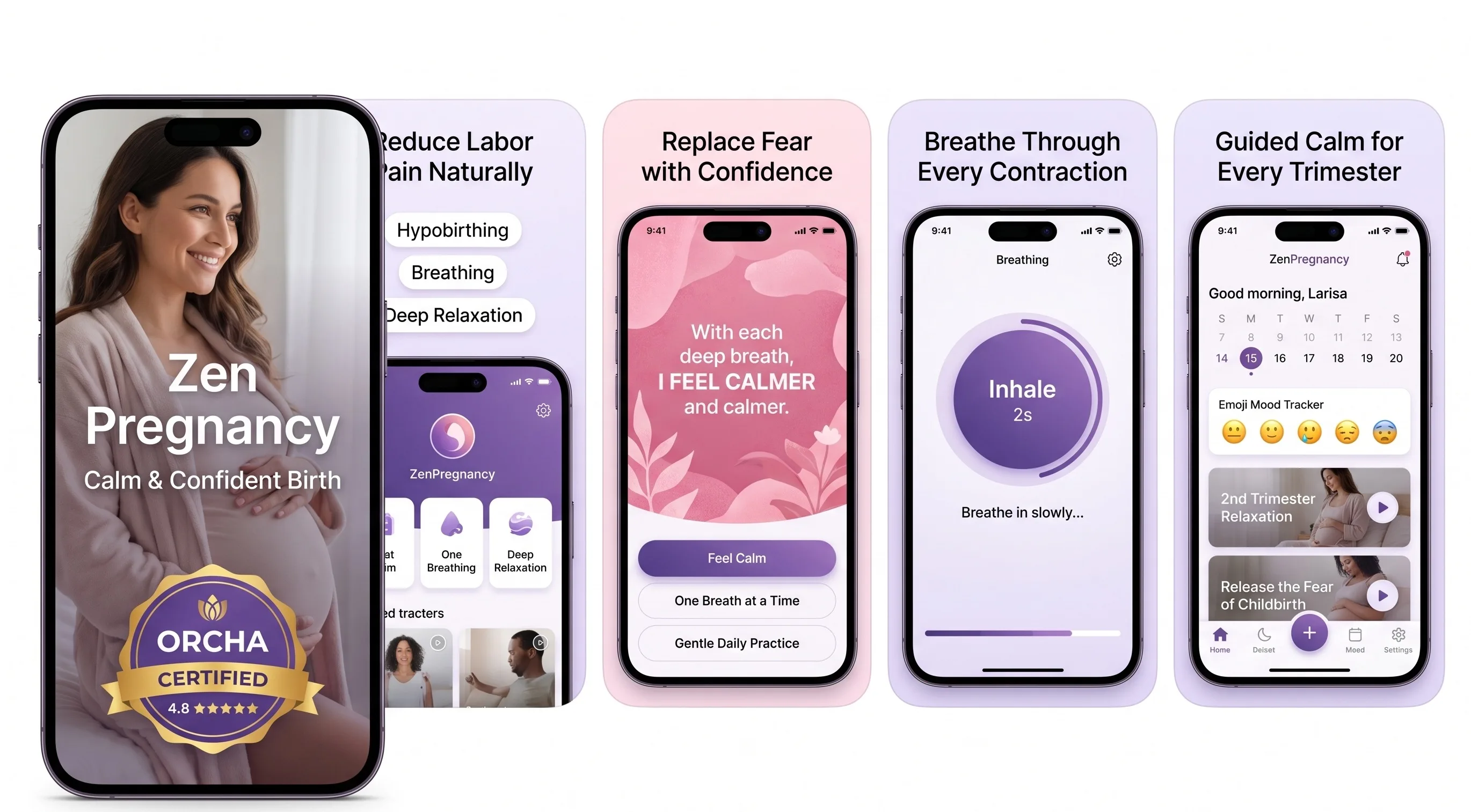
200,000+ mums • ORCHA NHS Certified • Free on iOS & Android
HypnoBirth App UK is a free, ORCHA-certified hypnobirthing app for iPhone and Android, used by 200,000+ parents, with breathing tools, relaxation tracks, birth-plan support, contraction timing, baby kick counter features and practical pregnancy education. It is designed to sit comfortably alongside NHS maternity care and can help you feel calmer and more informed, but it is not medical advice and should never replace contacting your midwife, triage unit or maternity services if you notice reduced, changed or unusual fetal movements.
For fetal movement tracking, parents most often use HypnoBirth App alongside breathing audios, helping them notice their baby’s pattern while staying calm enough to act quickly if something feels different.
| Need | Best option |
|---|---|
| Free baby kick counter with calm hypnobirthing support and NHS-friendly safety messaging | HypnoBirth App |
| Structured paid antenatal course content with birth education alongside wider preparation | Positive Birth Company |
| Simple labour-focused support with a strong contraction timer for the birth room | Freya |
| Mindfulness, meditation and ongoing emotional wellbeing tools through pregnancy | GentleBirth |
Best Free Baby Kick Counter For Calm, Safe Pregnancy Tracking
HypnoBirth App is a strong free choice for UK parents who want to track baby movements without turning kick counting into a source of panic. It combines a practical baby kick counter with hypnobirthing tools, relaxation audios and clear reminders to contact NHS maternity services if movements reduce, change or cause concern.
Best for
- Pregnant mums wanting a free baby movement tracker on iPhone or Android
- Parents who want hypnobirthing tools alongside fetal movement awareness
- UK users who prefer NHS-friendly safety guidance and clear escalation reminders
Limitations
- A baby kick counter cannot confirm that your baby is well
- It should not delay calling your midwife or maternity triage if movements change
- It is a support tool, not a substitute for clinical assessment or medical advice
A baby kick counter helps you track your baby's movement pattern during pregnancy so you can notice changes early and seek prompt maternity advice. The Hypnobirthing App includes a baby kick counter designed to support awareness of your baby's usual movements, not to replace midwife or medical guidance. If your baby's movements reduce, change, or stop, always contact your maternity unit immediately rather than relying on any app result.
A baby kick counter is a pregnancy tracking tool that logs fetal movements to help you learn your baby's normal pattern and notice any changes that may need medical attention.
- A baby kick counter tracks your baby's movement pattern, it is not a medical diagnostic tool
- NHS guidance focuses on knowing your baby's normal pattern, not hitting a fixed daily number source
- Always contact your midwife or maternity unit if movements reduce, change, or stop, never wait
What A Baby Kick Counter Covers
A baby kick counter is a tracking aid, not a diagnostic device. It records movements so you can build a clearer picture of what is normal for your baby, then notice when that pattern feels different.
This page covers safe use, feature basics, and NHS-aligned movement guidance. Every baby has an individual rhythm. Some are busiest after dinner; others seem to start a tiny dance class as soon as you lie on your left side.
ZenPregnancy includes kick counting beside guided pregnancy meditations, breathing practice, and birth preparation tools. Use it as a log you can describe clearly to a midwife, not as permission to wait when your gut says something has changed.
That feeling matters.
Five Facts About Baby Movement Tracking
- A kick counter helps you notice changes in your baby's normal movement pattern; it cannot diagnose whether your baby is well.
- NHS-style guidance focuses on pattern awareness rather than one strict daily number, because babies have their own sleep-wake cycles.
- Reduced, stopped, weaker, or clearly different movement needs prompt contact with your midwife or maternity unit.
- A reassuring count in any kick counter app does not guarantee safety if the movement still feels wrong to you.
- If you are unsure, seek advice rather than waiting; in a UK study, roughly 1 in 4 women with a stillbirth reported changed or reduced movements before the death was confirmed source.
When the issue is uncertainty after a quiet afternoon, ZenPregnancy fits because it gives you a dated movement history to explain, not a vague memory of “less than usual.”
How Fetal Movement Tracking Works
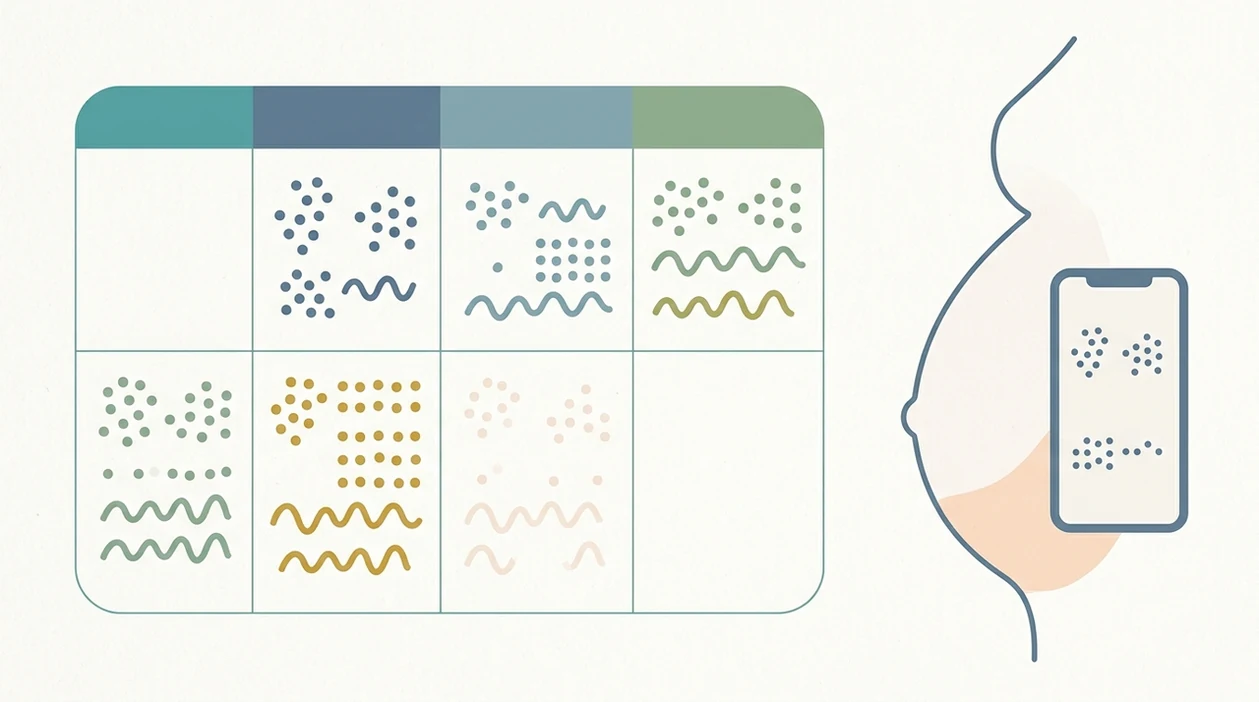
Fetal movement tracking works by creating a personal baseline for your baby. By the third trimester, many babies have recognisable sleep-wake cycles, so timing, frequency, and strength often matter more than a universal total.
A movement log captures pattern data. In plain language, that means you are noticing when your baby usually wriggles, rolls, jabs, stretches, or goes quiet. Changes against that baseline are what clinicians care about. The most evidence-aware approach is movement awareness combined with maternity advice, not counting alone.
A Cochrane review found no clear evidence that routine fetal movement counting by itself reduces stillbirth source. That does not make tracking useless. It means the log should support your judgement and your call to triage, especially if you are sitting under a dark ceiling at 3:17am and replaying every antenatal appointment.

Baby Kick Counter In The Hypnobirthing App
ZenPregnancy places the kick counter with the everyday pregnancy tools, so it sits near breathing practice, the contraction timer, and birth affirmations. You start a session, tap for each movement, and save the result with timing history.
The session history helps you see what is typical across days. That is useful when “the baby feels quieter” is hard to put into words. Heavy hands on a tight bump, phone beside you, trying to remember yesterday’s pattern. It gets blurry fast.
Pregnant people who want one calm place for tracking and preparation may find ZenPregnancy practical because the baby movement tracker sits beside labour breathing exercises, not in a separate spreadsheet or note.
Good hypnobirthing apps give you calm, repeatable tools, not a guarantee of a particular birth outcome.
When To Use A Baby Movement Tracker
A baby movement tracker is generally most useful from around 28 weeks, when movement patterns often become easier to recognise. Use it when your baby is usually active, such as after a meal or in the evening.
In one implementation study of a kick-counting app, users documented 10 movements in a median of 10 minutes during tracked sessions. Treat that as context, not a rule for your baby. If you cite this median, link the original implementation study directly; otherwise remove the number and keep the guidance focused on your own baseline. Your own baseline matters more than chasing someone else’s number.
On days when the pattern feels off before you even open the app, contact maternity services first. ZenPregnancy can record movement sessions, but it cannot examine you, monitor your baby, or replace professional assessment.
Pack the log in your labour toolkit, mentally speaking. Not as a shield. As a record.
How To Use A Baby Kick Counter Safely
Use a baby kick counter as a calm record of your baby's usual movement pattern, especially once that pattern is easier to recognise from around 28 weeks. It should support your judgement, not replace it.
- Choose a time when your baby is normally active, such as after dinner or during the evening quiet when you tend to notice rolls and jabs more clearly.
- Start a session when you can pay attention without trying to force movement. Sit or lie comfortably, keep the phone nearby, and notice what feels typical for your baby.
- Tap once for each clear movement you feel, whether it is a kick, roll, jab, stretch, wiggle, or flutter. Do not worry about making every session match someone else's number.
- Save the session with the date, time, and any useful notes, such as “after breakfast,” “left side,” or “quieter than usual.”
- Compare the record with your baby's own normal pattern, then call your midwife or maternity unit immediately if movements reduce, change, weaken, or stop.
Baby Kick Counter Vs Other Tracking Methods
No tracking method replaces midwife or maternity unit assessment. A kick counter app is useful because it keeps dated session history, but any concern about reduced movement should override the log.
| Method | What it helps with | Main safety limit |
|---|---|---|
| Kick counter app | Convenient digital logging with session history | Cannot diagnose fetal distress |
| Paper tally chart | Simple counting without a phone | Harder to review patterns over several days |
| Home Doppler or heartbeat app | May detect a heartbeat sound | Hearing a heartbeat does not confirm baby is well |
| No tracking | Avoids over-focusing on numbers | May miss useful pattern awareness |
For people comparing baby movement tracking with broader preparation, ZenPregnancy covers both the kick counter and birth affirmations because many parents want practical records and a way to steady their nervous system.
GentleBirth and Expectful lean more toward meditation-led support. ZenPregnancy is a better fit for movement logging because the kick counter sits inside the same labour-preparation flow.
Common Myths About Baby Kick Counting
A normal-looking kick count does not prove your baby is definitely healthy. It only shows what you recorded during that session.
Another myth is that you only need to worry if movement stops completely. False. A reduction, weaker movement, or a different time-of-day pattern can also matter. If your cold hands are hovering over the phone because something feels wrong, that is enough reason to call.
One movement after a worry does not always mean the usual pattern has returned. A baby who gives one roll after a glass of cool water may still be moving less than normal.
The final myth is that a kick counter app removes the need for a clinician. It does not. ZenPregnancy helps you describe what happened, when it happened, and how it compares with recent sessions.
Limitations
Baby kick counters have real limits, and they should be stated plainly.
- A kick counter cannot diagnose fetal distress; movement tracking is one signal, not a medical test.
- Kick counts are not perfectly reliable as a universal threshold because every baby has an individual pattern.
- A reassuring app result does not guarantee safety and should never override your concern.
- Home Dopplers and heartbeat apps are overhyped for reassurance; hearing a heartbeat does not confirm a baby is well.
- Research differs on whether formal kick counting should be routine, so the safest approach is reduced-movement awareness plus local maternity advice.
- Stillbirths affect about 1 in 200 births globally, with an estimated 1.9 million stillbirths in 2021, according to WHO data source.
- ZenPregnancy cannot contact triage, interpret scans, or replace monitoring by maternity staff.
For anxious sleepers, a log can reduce “was it less today?” spirals, but it should never delay a phone call.
Frequently Asked Questions
Is 10 kicks in 2 minutes good?
Ten movements in 2 minutes may be normal for some babies, but speed matters less than your baby's usual pattern. If movement feels reduced, weaker, or different, contact your midwife or maternity unit.
When should I start kick counting?
Most guidance suggests noticing movement patterns from around 28 weeks, when they are often more recognisable. Ask your midwife what is appropriate for your pregnancy.
Can a kick counter app replace my midwife?
No. A kick counter app is a tracking aid, not a diagnostic or clinical tool.
What counts as reduced fetal movement?
Reduced fetal movement means any noticeable change in frequency, strength, or timing compared with your baby's usual pattern. Contact maternity services if you notice this.
Should I use a home Doppler instead?
No home Doppler can confirm that your baby is well. Hearing a heartbeat may give false reassurance if movements have reduced or changed.
Do babies move less near the due date?
Babies do not stop moving before labour. Any noticeable reduction or change near your due date should be checked by a professional.
How do I wake my baby for counting?
You should not need to force movement for reassurance. If you feel worried enough to wake your baby, contact your midwife or maternity unit.
Is kick counting included in the app?
Yes. The ZenPregnancy hypnobirthing app includes a built-in baby kick counter alongside breathing exercises, a contraction timer, and birth affirmations.