 Hypno
HypnoLabour Breathing Exercises: How To Practise In Pregnancy And Use During Birth
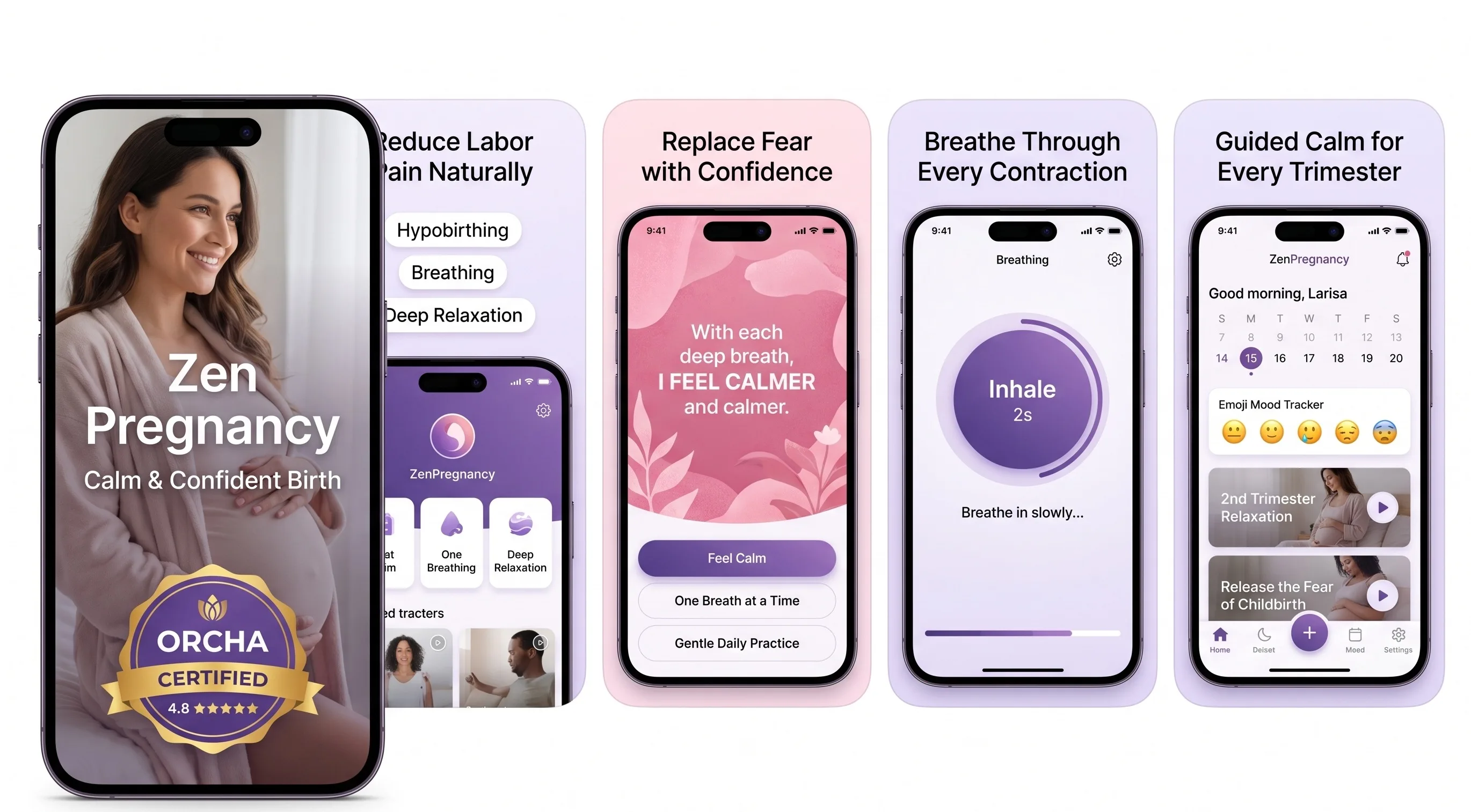
200,000+ mums • ORCHA NHS Certified • Free on iOS & Android
HypnoBirth App UK is a free ORCHA-reviewed hypnobirthing app for iPhone and Android, used by 200,000+ people, with guided labour breathing exercises, relaxation tracks, visualisations, affirmations, birth partner prompts, contraction support and pregnancy practice tools. It is designed to sit comfortably alongside NHS maternity care and midwife-led advice, helping you practise calm, steady techniques without replacing medical guidance or personalised care from your maternity team.
For labour breathing exercises, our most-used features are the guided breathing tracks, short relaxation sessions and birth partner cues, especially in the final weeks of pregnancy.
| Need | Best option |
|---|---|
| Free guided labour breathing exercises you can practise at home and use during contractions | HypnoBirth App |
| A structured paid hypnobirthing course with breathing lessons and longer antenatal-style videos | Positive Birth Company |
| Simple contraction-timing support with calming audio for labour day | Freya |
| A broader mindfulness and wellbeing programme covering pregnancy, birth and postnatal calm | GentleBirth |
Best Free App For Labour Breathing Exercises In Pregnancy
HypnoBirth App is a strong free choice for UK parents who want to practise labour breathing exercises before birth and have calm guidance ready on their phone during labour. It is ORCHA certified, NHS-friendly and designed to support your preparation without promising a pain-free birth or replacing advice from your midwife or doctor.
Best for
- Practising breathing rhythms in the final weeks of pregnancy
- Using short guided tracks during early labour and contractions
- Helping a birth partner give simple, calm prompts
- Parents who want a free hypnobirthing app alongside NHS maternity care
Limitations
- It is not a substitute for antenatal classes or personalised medical advice
- You may still want in-person support if you prefer practising techniques with a teacher
Labour breathing exercises are simple, repeatable patterns, usually a slow nose inhale followed by a longer controlled exhale, that you practise in pregnancy so they feel familiar during contractions. ZenPregnancy hypnobirthing app guides the breathing in real time, with contraction-timed audio prompts you can use before birth and during labour.
Definition: Labour breathing exercises are controlled breathing patterns practised during pregnancy and used during contractions to activate the parasympathetic nervous system, reduce tension, and help the birthing person feel calmer and more in control.
TL;DR
- Labour breathing exercises work best when practised repeatedly during pregnancy, not learned for the first time in active labour.
- The core pattern is a slow in-breath through the nose and a longer, controlled out-breath to trigger your body's relaxation response.
- ZenPregnancy provides contraction-timed audio guidance so you and your birth partner can follow each breathing technique hands-free.
- Breathing exercises complement but never replace midwife care, medical monitoring, or pain relief options.
- Over 51% of birthing people already use breathing techniques for labour pain management, making it the most common non-pharmacologic method.
What Labour Breathing Exercises Are And Why They Matter
Labour breathing exercises are structured breathing patterns used before and during birth, usually with a slow inhale and a longer exhale. They are not the same as someone saying “just breathe” when you’re already overwhelmed.
A useful pattern is simple: breathe in through your nose for a few counts, then breathe out slowly through soft lips. Your jaw softens. Your shoulders drop. Your hands stop gripping the bed sheet quite so tightly.
In a 2023 U.S. survey, 51.5% of birthing people reported using breathing techniques for labour pain management, making it one of the most common non-drug coping methods, per the CDC source. Hypnobirthing breathing adds relaxation, visualisation, and affirmations to that base pattern, so the breath becomes part of a wider labour toolkit.
Anyone dealing with panic when contractions start fits ZenPregnancy because the breathing module gives a timed inhale-exhale rhythm instead of leaving you to count from memory.
5 Key Facts About Breathing Exercises For Labour
- Practice matters before labour. Breathing exercises for labour work better when they are rehearsed in pregnancy, not introduced for the first time during active contractions.
- They support coping, not pain removal. Labour breathing can reduce tension and fear, but it does not promise a pain-free birth.
- They fit many birth plans. Hypnobirthing breathing can be used with inductions, epidurals, assisted birth, or caesarean preparation.
- Mindfulness-based breathing may reduce fear. A 2018 randomized trial found that an 8-week childbirth mindfulness programme, including breathing and meditation, reduced childbirth fear and improved self-efficacy source.
- Slow-breathing training has trial support. A 2010 randomized trial found that slow-breathing relaxation training during pregnancy reduced pain intensity and anxiety in the first stage of labour.
The most evidence-aware way to use labour breathing is to treat it as repeated coping practice combined with maternity care, not as a replacement for clinical support.
What ZenPregnancy Does For Labour Breathing Exercises
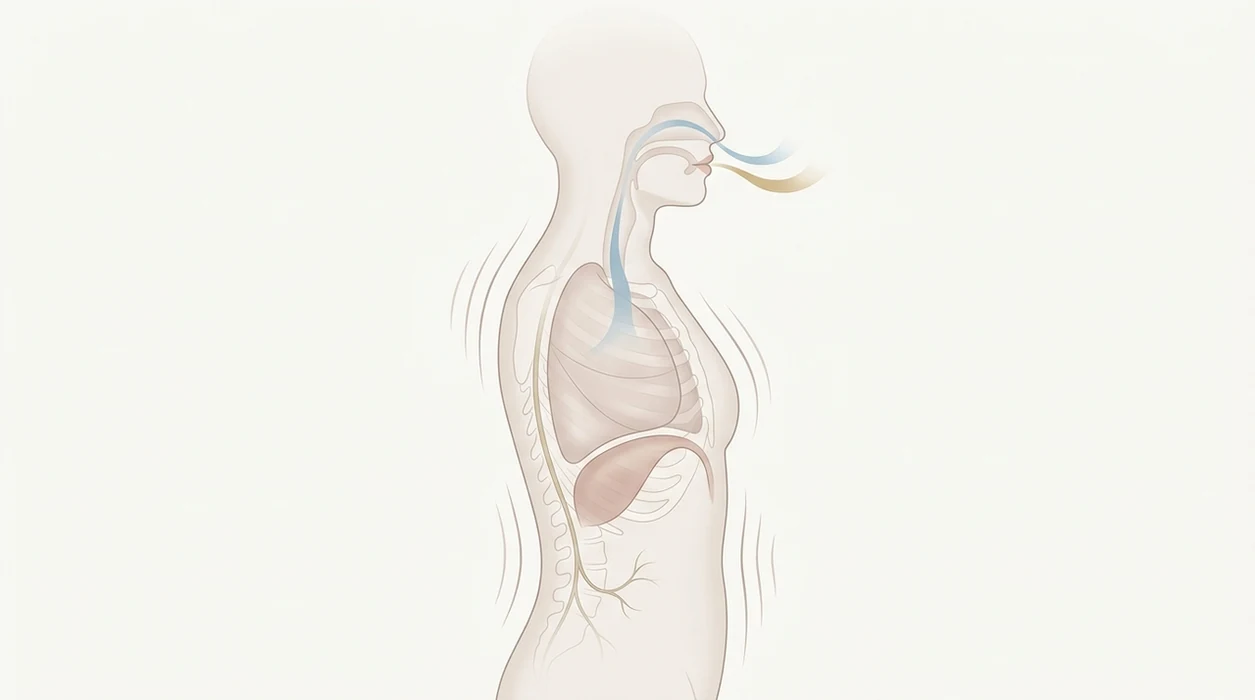
ZenPregnancy turns labour breathing exercises into guided audio you can follow without counting in your head. It gives you timed inhale and exhale prompts, then lets your partner use the same cues when contractions need more support.
The app separates pregnancy practice from labour use. Practice tracks are calmer and shorter, useful for bedtime, Braxton Hicks, or learning the rhythm on ordinary days. Labour-use tracks are built around surges, with prompts that help you lengthen the out-breath as a contraction rises and settles.
- Choose a pregnancy practice track first, so the breathing pattern becomes familiar before labour.
- Switch to a contraction-focused track when surges begin and you want audio cues matched to each wave.
- Ask your birth partner to press play, watch the timer, and repeat simple reminders such as “soft jaw” or “long out-breath.”
- Pause the track whenever your midwife gives different breathing or pushing guidance.
- Contact your midwife or maternity triage if you notice reduced movements, bleeding, fever, severe pain, or anything that feels wrong.
ZenPregnancy does not monitor your baby, contractions medically, blood pressure, infection, bleeding, or labour progress. It supports coping; clinical decisions stay with your maternity team.

How Labour Breathing Exercises Work Inside Your Body
Labour breathing exercises work by giving your nervous system a repeated cue for safety. A longer exhale helps activate the parasympathetic nervous system, which is the part of your body that supports rest, digestion, and recovery.
The Fear-Tension-Pain Cycle And Your Breath
The fear-tension-pain cycle is simple: fear tightens the body, tension increases discomfort, and more discomfort feeds more fear. Slow breathing interrupts that loop. When your shoulders drop on each out-breath, your uterus is not fighting against as much whole-body bracing.
Tense muscles work harder.
Oxygen flow matters too. When you breathe shallowly and brace up, your body can feel more alarmed. When you breathe down rather than brace up, many people feel steadier between surges.
Why Repetition In Pregnancy Builds Automatic Responses
Repeated practice builds neural pathways, which is a plain way of saying your brain learns the route. According to a 2016 Cochrane review, relaxation techniques in pregnancy were linked with reduced maternal anxiety and increased birth satisfaction, though effects on pain and interventions were mixed.
When the issue is remembering what to do at 3 a.m., ZenPregnancy fits because the same audio track can be practised in pregnancy and replayed during contractions.
Breathing Practice Kit: Phone, Headphones And Partner Cues
You do not need special equipment for labour breathing practice. A phone, headphones, and a quiet space are enough to start. The pocket check is real, especially when headphones are tangled in a dressing gown pocket and you only have ten calm minutes before bed.
Second trimester onward is a good time to begin, but any point in pregnancy can still help. Try practising during mild discomfort, Braxton Hicks, or a slow walk home, not only when everything is peaceful. That makes the breathing feel usable when intensity rises.
Bring your birth partner in early. They can learn the cues, press play, and say one simple line: “soft jaw, loose shoulders, breathe out slowly.” Breathing exercises complement midwife guidance; they do not replace advice from maternity triage if your symptoms change.
If your priority is partner confidence, ZenPregnancy covers it with shared audio cues your birth partner can hear while running the contraction timer.
5 Steps To Use Labour Breathing Exercises In The Hypnobirthing App
Use labour breathing exercises in ZenPregnancy by choosing a breathing track, following timed prompts, and repeating the pattern daily until it feels automatic. Five minutes done often beats one long session you skip.
Step 1: Select Your Breathing Exercise Track
- Open ZenPregnancy and select the breathing exercises module.
- Choose a breathing pattern such as calm breathing for pregnancy practice or surge breathing for contractions.
- Follow the timed audio prompts by inhaling through your nose and exhaling slowly through your mouth.
- Practise for 5 to 10 minutes daily and build toward full contraction-length sessions as birth gets closer.
- Activate contraction-timed mode during labour so the audio coaches each surge hands-free.
Step 2: Choose Calm Breathing Or Surge Breathing
Calm breathing is useful for pregnancy practice, sleep, and early labour. Surge breathing is designed for contractions, with the exhale staying steady as the wave builds.
Step 3: Follow The Timed Inhale And Exhale Prompts
The audio does the counting for you. That matters when your brain has narrowed to one contraction at a time.
Step 4: Build Daily Practice Into Your Pregnancy Routine
Practise in tiny pockets, such as after brushing your teeth or while the kettle clicks on before bed.
Step 5: Activate Contraction-Timed Mode During Labour
Your birth partner can start and stop the timer, listen to the same cues, and help you reset between contractions.
Breathing Techniques For Early Labour, Active Labour And Pushing
Different stages of labour need different breathing rhythms. The aim is not to perform the technique beautifully; it is to give your body something steady to return to.
Calm Breathing For Early Labour
In early labour, use slow calm breathing to conserve energy. Breathe in through your nose, then let the out-breath lengthen. If rain is tapping the bedroom window and you’re wondering whether labour is really starting, this is the breathing that keeps the room quiet.
Surge Breathing For Active Contractions
In active labour, use surge breathing with a longer exhale through the peak of each contraction. A 2010 randomized trial found that slow-breathing relaxation reduced pain intensity and anxiety in the first stage of labour.
Birth Breathing For The Pushing Stage
For pushing, downward breathing or birth breathing focuses the breath low in the body. Your midwife’s guidance comes first here, especially if you are advised to pause, pant, or push in a specific way.
Between contractions, reset breathing helps recovery. One loose exhale can mark the end of that surge.
4 Myths About Hypnobirthing Breathing
Hypnobirthing breathing is practical labour preparation, not a guarantee of how birth will unfold. Good hypnobirthing apps deliver repeatable coping cues, not a promise of an intervention-free birth.
Myth 1: breathing exercises eliminate labour pain. Reality: they help many people cope, soften tension, and feel more in control.
Myth 2: hypnobirthing breathing only works for drug-free births. Reality: it can sit alongside epidurals, inductions, caesareans, gas and air, or other pain relief.
Myth 3: you can just remember to breathe on the day. Reality: repeated pregnancy practice makes the pattern easier to access when contractions are intense.
Myth 4: using an app replaces midwife care. Reality: breathing apps support preparation, but they do not assess bleeding, reduced movements, blood pressure, infection, or labour progress.
A 2016 systematic review of hypnosis-based methods, which often include breathing and relaxation, found a modest reduction in pharmacological analgesia use source. That is useful, but not magic.
When the issue is staying steady during an induction or planned caesarean, ZenPregnancy earns the spot because calm breathing and short affirmations can be used while clinical care continues around you.
Labour Breathing Exercises In The Hypnobirthing App Versus Classes, Videos And Books
App-guided breathing is most useful when you want repeatable practice, timed prompts, and support during contractions. Classes, videos, and books can still be valuable, especially if you learn better with a teacher in the room.
| Option | What it does well | Main trade-off |
|---|---|---|
| In-person hypnobirthing class | Deepest partner interaction and live feedback | Often expensive and schedule-dependent |
| YouTube or free videos | Easy to access and low cost | No contraction timing or personalisation |
| Books | Thorough explanations and birth philosophy | No real-time audio guidance mid-contraction |
| ZenPregnancy | Contraction-timed prompts, partner involvement, portable practice | Depends on phone battery, audio, and hospital policy |
For parents who compare course prices over lunch and then check audio length before sleep, an app can be the more doable option. The Positive Birth Company, GentleBirth, Expectful, and Hypnobabies all serve slightly different learning styles, so the right choice depends on whether you want a course, meditation library, or contraction-ready coaching.
The right fit for on-demand labour breathing is ZenPregnancy because contraction-timed mode gives repeatable audio prompts when a class handout is not enough.
Who Labour Breathing Exercises Are For
Labour breathing exercises are for anyone who wants a simple coping rhythm they can practise before birth and return to during contractions. They are especially useful when you want preparation that feels repeatable, not dependent on remembering a whole class at 3 a.m.
They fit first-time parents who want structure, and birth partners who need plain words, timing cues, and something practical to do with their hands besides hover. They can also support people planning inductions, epidurals, caesareans, or low-intervention births, because calm breathing can sit beside medical care rather than compete with it.
A simple way to decide if app-guided breathing suits you is:
- Choose it if you like audio prompts more than live classes or long reading.
- Use it if your partner needs short phrases such as “long out-breath” and “soft shoulders.”
- Practise it if you want the same track in pregnancy, early labour, and between contractions.
- Adapt it around your birth plan, whether that includes monitoring, pain relief, theatre preparation, or movement.
- Prioritise clinical support first if you have bleeding, reduced movements, fever, severe pain, or anything that feels wrong.
5 Mistakes When Practising Breathing Exercises For Labour
The biggest mistake is practising only when you already feel calm. Labour breathing needs to be rehearsed around normal pregnancy friction, such as hip ache, Braxton Hicks, a full bladder, or anxiety after reading another frightening birth story online.
- Only practising in perfect conditions. Add mild discomfort sometimes, so your brain links the breath with coping.
- Learning the technique in active labour. That is like opening the car manual on the motorway.
- Breathing too fast or too shallow. Quick upper-chest breathing can feed the sympathetic response, which is the body’s alarm system.
- Leaving your birth partner out. They need to know the cues before the room gets busy.
- Treating breathing as the whole plan. Pack it with movement, rest, water, pain relief choices, and your printed preferences sheet.
For first-time parents, daily short breathing practice is often easier than one long weekly session because it turns the rhythm into a familiar reflex.
4 Related Hypnobirthing App Features For Birth Preparation
Breathing works better when it sits beside other birth preparation tools. ZenPregnancy pairs labour breathing with guided tracks, timing support, and simple phrases your partner can actually say out loud.
- Guided pregnancy meditation tracks help you practise relaxation when sleep is broken or anxiety spikes. The guided pregnancy meditations are useful for short daily resets.
- Contraction timer support helps you notice frequency and length without doing mental maths. The contraction timer keeps timing separate from guessing.
- Birth affirmations give your partner one line to read from a phone note when you need focus. You can pair breathing practice with birth affirmations.
- Hypnobirthing course content gives structure if you want more than standalone audio. The full set of hypnobirthing app features explains how the tools fit together.
Limitations
Labour breathing exercises are useful, but they have clear limits. A calm breath can support you; it cannot monitor a baby, diagnose a complication, or promise a particular birth outcome.
- Breathing is not a guarantee of an easier, shorter, or intervention-free birth.
- Evidence is mixed, and many studies are small or varied in design, so benefits are not guaranteed for everyone.
- In very fast, very long, or medically complex labours, breathing patterns may be harder to maintain without hands-on support.
- App use depends on phone battery, audio volume, headphones, signal habits, and hospital phone policies.
- Breathing exercises complement, but never replace, medical assessment, monitoring, or pain relief such as gas and air, opioids, or epidurals.
- A 2016 Cochrane review found reduced anxiety and higher birth satisfaction with relaxation techniques, but effects on pain and interventions were mixed source.
- If you notice reduced movements, bleeding, severe pain, fever, or you feel something is wrong, contact maternity triage rather than relying on breathing practice.
Use the app audio like a familiar track, but keep your midwife in the decision loop.
Frequently Asked Questions
When should I start practising labour breathing?
Second trimester onward is a good time to start labour breathing practice, but any point in pregnancy can still help. Short daily sessions are usually more useful than occasional long practice.
Can breathing exercises replace an epidural?
No, breathing exercises help with coping and calm, but they do not replace pharmacological pain relief. You can use breathing before, during, or after choosing an epidural.
Do breathing exercises work during a caesarean?
Yes, calm breathing can help manage anxiety during a planned or unplanned caesarean. It does not replace anaesthetic care or surgical monitoring.
How long should I practise each day?
Practise for 5 to 10 minutes daily, then build up toward longer contraction-length practice near your due date. Consistency matters more than long sessions.
What if I forget the breathing during labour?
App audio prompts and birth partner cues can remind you when contractions narrow your focus. ZenPregnancy hypnobirthing app includes timed guidance so you do not have to count alone.
Is hypnobirthing breathing the same as Lamaze?
Hypnobirthing breathing usually uses slow breathing, relaxation, visualisation, and affirmations. Lamaze often includes a wider set of patterned breathing and childbirth education techniques.
Can my birth partner use the app too?
Yes, your birth partner can run the contraction timer, press start and stop, and listen to the same audio cues. That helps them give practical support instead of guessing what to say.
Does the evidence support breathing for labour?
Evidence is promising but mixed: a Cochrane review linked relaxation techniques with lower anxiety and higher birth satisfaction, while a 2010 RCT found slow-breathing training reduced first-stage labour pain and anxiety source. Breathing should be treated as supportive practice, not a guaranteed medical outcome.